The annual release of Apple’s flagship wearable devices brings perennial questions for tech consumers, endurance athletes, and everyday users alike: How do the standard and extreme tiers stack up against one another? Following the simultaneous rollout of the Apple Watch Series 12 and the Apple Watch Ultra 4, a side-by-side evaluation reveals a product lineup characterized by an identical internal core and divergent physical architecture. While both models run on the same silicon, incorporate identical health sensors, and share nearly every software capability introduced in watchOS, they target distinctly different user profiles through their hardware build, price points, and battery performance.
Understanding the distinction between these two devices requires looking past the surface-level marketing to examine pricing structures, physical dimensions, sensor capabilities, and real-world functional utility.
Market Positioning and Pricing Architecture
For most consumers, the primary barrier and deciding factor between the Apple Watch Series 12 and the Apple Watch Ultra 4 remains the price point. The Apple Watch Ultra 4 is positioned firmly at the top of Apple’s consumer wearable tier, demanding a baseline investment that is roughly double that of the entry-level Series 12.
The Apple Watch Series 12 begins with the aluminum 42mm model priced at $399 USD, while the slightly larger 46mm aluminum variant retails for $449 USD. Upgrading the Series 12 to include cellular (5G) capabilities adds a $100 premium to the aluminum versions, bringing them to $499 and $549 respectively. Furthermore, Apple offers premium casing materials for the Series 12, including titanium editions priced at $699 (42mm) and $749 (46mm), as well as ceramic editions commanding $899 (42mm) and $949 (46mm).
Conversely, the Apple Watch Ultra 4 comes in a single 49mm titanium case size as its baseline configuration, priced at $799 USD, which inherently includes 5G cellular connectivity. Because the price of higher-end Series 12 configurations quickly overlaps with the base cost of the Ultra 4, buyers choosing between a premium Series 12 material and the Ultra 4 must weigh aesthetic preferences against specialized durability and hardware features.
Hardware Engineering and Structural Differences
While software updates can bridge functional gaps over time, hardware specifications remain permanent constraints of the physical device. The divergence between the Series 12 and the Ultra 4 is almost entirely rooted in their physical construction, durability certifications, and operational limits.
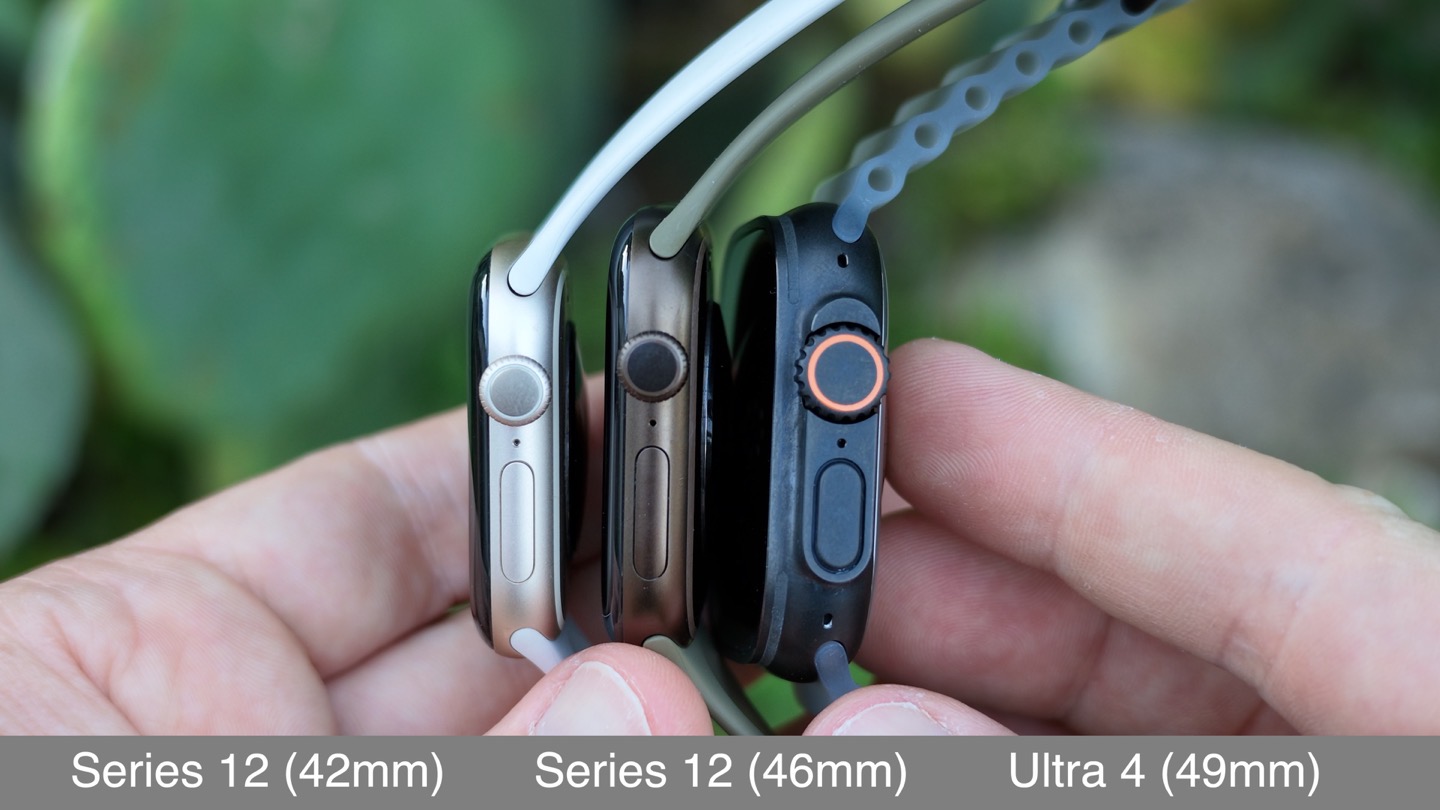
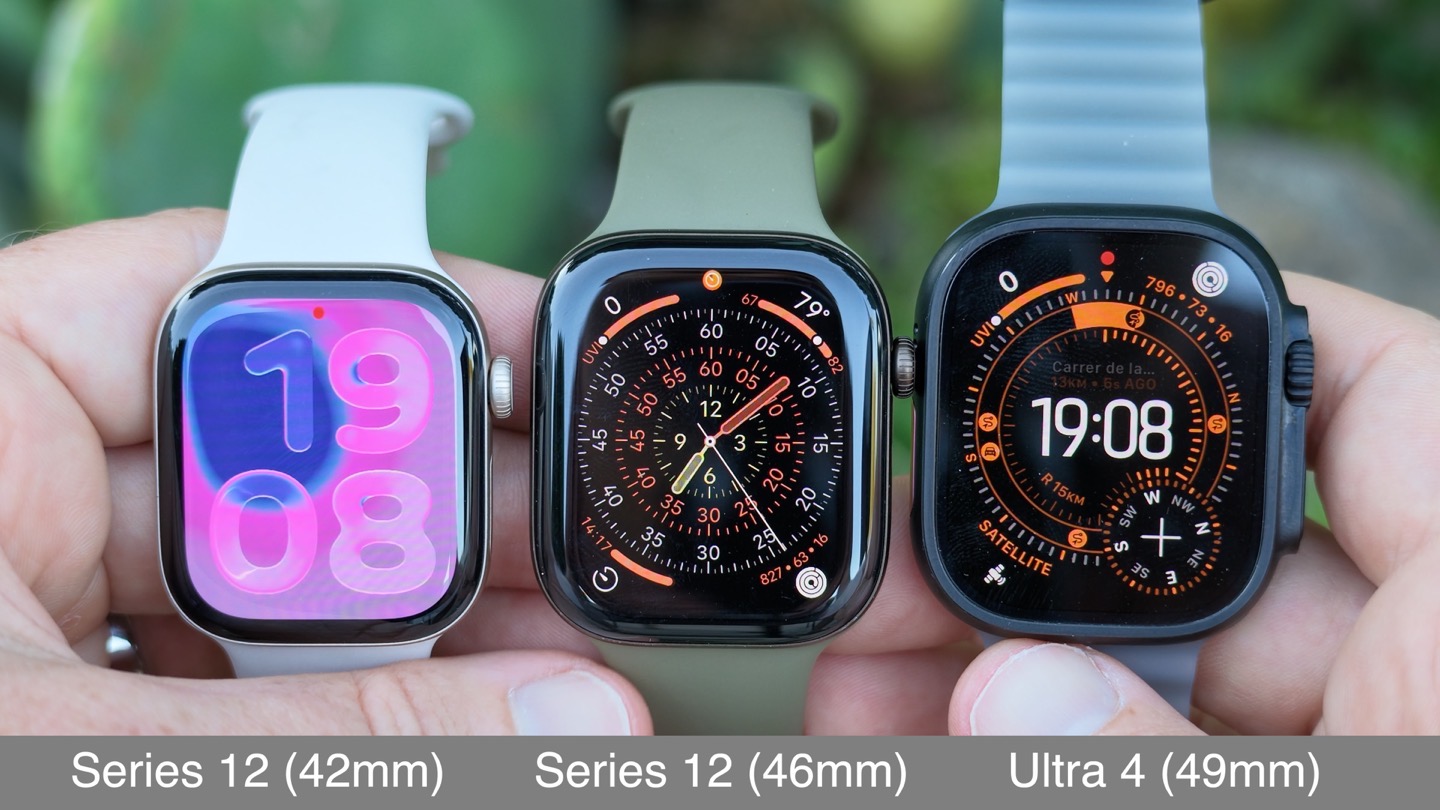
The Apple Watch Ultra 4 features a robust 49mm aerospace-grade titanium case, a flat sapphire crystal display lens protected by raised case edges around the Digital Crown, and a physical Action Button designed for immediate workout or shortcut triggers. It boasts water resistance down to 100 meters, is certified for scuba diving to 40 meters (meeting the EN13319 standard), and includes an 86dB emergency siren. Additionally, the Ultra 4 incorporates a multi-band (dual-frequency) GNSS for superior GPS tracking precision, three dedicated microphones for enhanced wind and noise cancellation, and a peak display brightness of 3,000 nits.

In contrast, the Apple Watch Series 12 is offered in 42mm and 46mm configurations. Its base model utilizes an aluminum case paired with a CeramicShield 2 glass display, which Apple rates as significantly tougher than previous iterations, though it lacks the flat protective bezel design of the Ultra. The Series 12 features a single microphone, a single speaker, standard single-frequency GPS, a maximum brightness of 2,000 nits, and a water resistance rating of 50 meters, with a depth gauge certified only up to 6 meters, making it suitable for snorkeling rather than scuba diving.
Environmental and durability metrics further separate the two devices. The Ultra 4 is validated against military-standard MIL-STD 810H, operates in extreme temperatures ranging from -4°F to 113°F (-20°C to 45°C), and supports an expanded altimeter range from -1,600 feet to 29,500 feet (-500m to 9,000m). The Series 12 operates within a standard consumer range of 32°F to 95°F (0°C to 35°C) and an altimeter range capped at 10,000 feet (3,000m).
Battery Performance and Power Management
Battery endurance continues to be one of the most significant operational differentiators between the two product lines. The Apple Watch Ultra 4 delivers approximately 2.5 days of real-world use under standard operating conditions, translating to an official rating of 50 hours, which can extend up to 84 hours in Low Power Mode. Its dedicated GPS battery life stands at 18 hours, with extended sports modes pushing capability to 25 hours and a "Max Extended" battery mode delivering up to 45 hours of continuous tracking.
The Apple Watch Series 12 provides a standard real-world battery life of roughly one to 1.5 days, or an official rating of 24 hours (extending to 38 hours in Low Power Mode). Its continuous outdoor GPS tracking capability is rated at 10 hours. While both devices support fast-charging protocols—capable of gathering enough power for a full night of sleep tracking in just five minutes—the Ultra 4 requires roughly 45 minutes to charge from zero to 80 percent, whereas the Series 12 accomplishes the same benchmark in 30 minutes.
Advanced Connectivity and Safety Features
The Apple Watch Ultra 4 maintains exclusive hardware architecture for remote connectivity, specifically housing a redesigned antenna array capable of two-way satellite messaging. Introduced in previous iterations and refined in the Ultra 4, this system enables emergency SOS via satellite, off-grid text messaging, and Find My location sharing when cellular networks are unavailable. However, regional availability varies, with emergency and location services supported in roughly 17 countries (including the United States, Canada, and parts of Europe), while satellite iMessage support is currently restricted to North America and select Asian markets like Japan.
The Series 12 relies entirely on terrestrial cellular (5G) and Wi-Fi networks for communication and lacks satellite hardware capabilities.
Parallels in Software, Sensors, and Processing Power
Despite the stark physical differences, both the Apple Watch Ultra 4 and the Apple Watch Series 12 achieve parity in computational performance, operating system capabilities, and health metrics.
Both smartwatches run on watchOS and are powered by the S11 System in Package (SIP) featuring a 4-core Neural Engine. This hardware foundation enables advanced on-device processing for features such as offline Siri commands, Audio Intelligence applications (including Instant Shazam and Sound Recognition), and upcoming tools like Siri Recap and Siri Rewind.
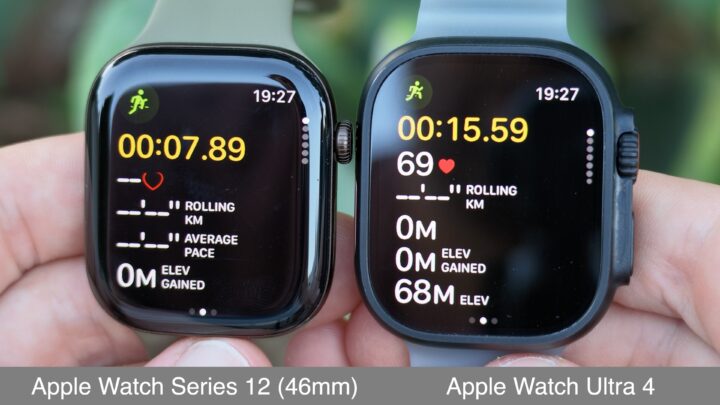
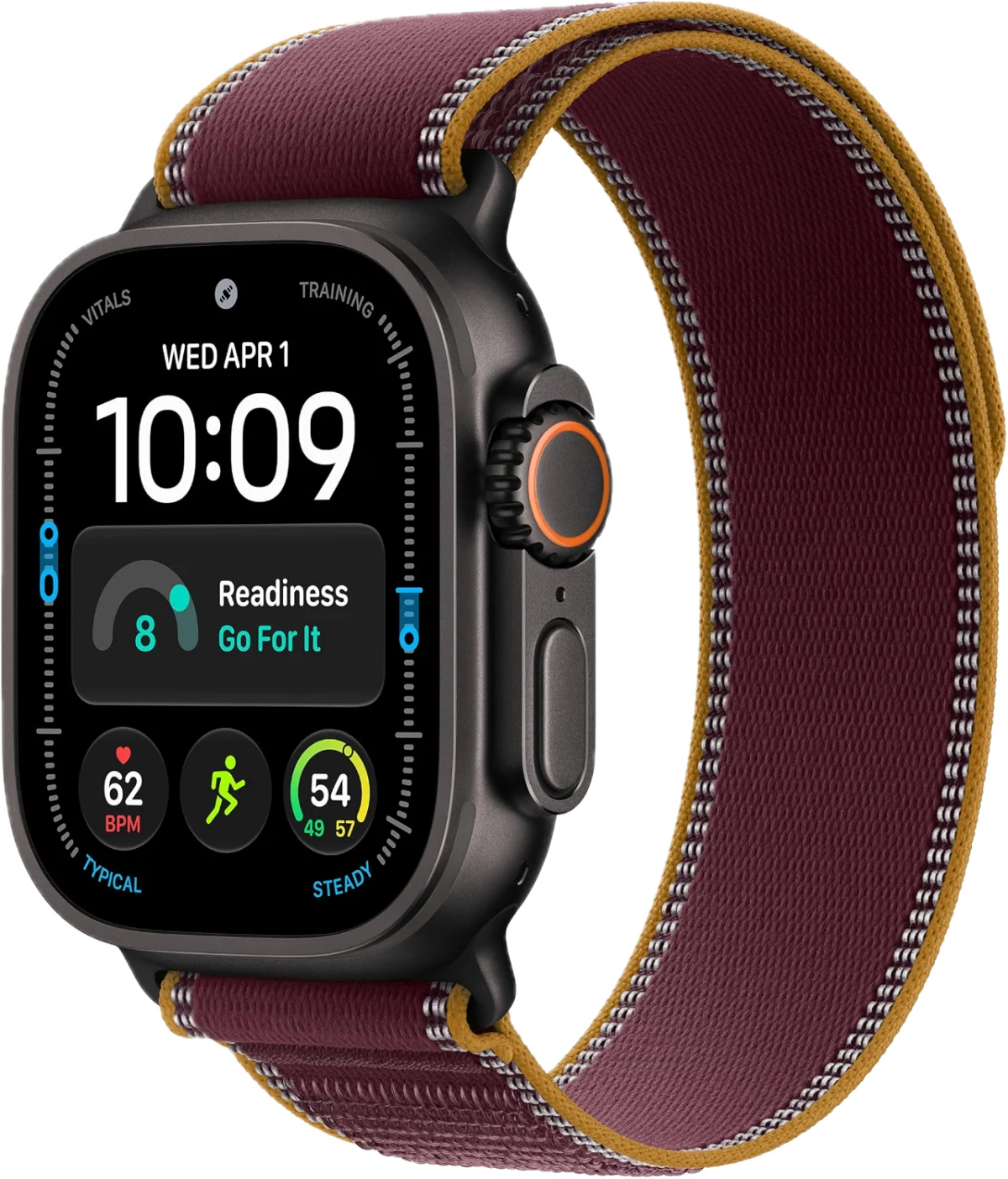
Health and fitness tracking remain identical across both platforms. Both watches incorporate the same advanced optical heart rate sensing system, high-resolution electrocardiogram (ECG) functionality, blood oxygen monitoring, wrist temperature sensing, sleep apnea detection, and high-frequency heart rate variability (HRV) recording. Furthermore, both devices utilize the new Readiness Score metric and feature the full suite of workouts found in the native fitness application.
Software customization shows only minor divergences: the Ultra 4 supports exclusive watch faces like Modular and Waypoints with a dedicated night mode that shifts interface elements to red for low-light visibility, and permits up to seven data fields per sports screen compared to the six-field maximum on the Series 12.
Broader Implications and Industry Impact
The simultaneous release of the Series 12 and the Ultra 4 underscores Apple’s refined strategy in the wearables market: decoupling software capability from hardware form factor. By ensuring that a consumer purchasing a $399 aluminum Series 12 receives the exact same health analytics, processor speeds, and software features as a buyer investing in the $799 titanium Ultra 4, Apple democratizes access to core technological advancements.
At the same time, the distinct physical engineering of the Ultra line solidifies Apple’s presence in the rugged sports and outdoor adventure market, competing directly with specialized athletic brands such as Garmin and Suunto. For the average consumer, the choice hinges entirely on lifestyle requirements—specifically whether an extended multi-day battery, rugged titanium chassis, and satellite connectivity justify the financial premium over an exceptionally capable, streamlined daily smartwatch.