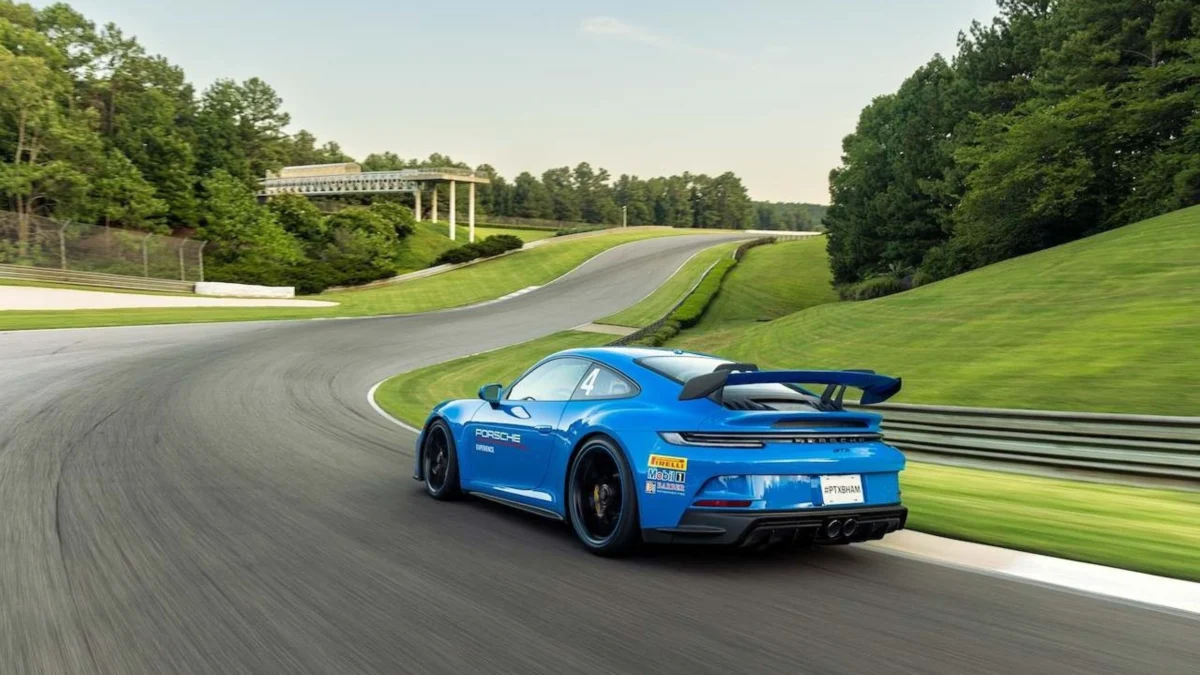
Owning a Porsche is widely considered a pinnacle of automotive achievement, a status symbol that bridges the gap between high-performance engineering and daily utility. However, the manufacturer has long recognized that the raw capability of its vehicles often exceeds the skill set of the average enthusiast. To bridge this gap, the Porsche Track Experience (PTX) has announced a significant expansion of its curriculum, introducing two new specialized courses that utilize the 911 GT3 to push drivers toward the absolute limits of vehicle control.
The Porsche Track Experience has served as the brand’s premier educational platform for decades. Historically, these programs were structured around a tiered progression, starting from foundational single-day basics and ascending to comprehensive three-day advanced courses. By incorporating the 911 GT3—a machine characterized by its track-focused architecture and motorsport-derived pedigree—into these new modules, Porsche is effectively bringing the environment of professional racing to its consumer base.
The Evolution of the Porsche Track Experience
The history of the Porsche Track Experience is rooted in the belief that high-performance vehicles demand a high-performance operator. Over the last twenty years, the program has evolved from a simple driving school into a sophisticated training ground. This evolution reflects a shift in the automotive industry, where manufacturers are increasingly responsible for ensuring that the owners of high-horsepower vehicles are equipped to handle their machines safely and effectively.
The curriculum expansion arrives at a time when vehicle dynamics are becoming more complex. While modern electronic aids like Porsche Stability Management (PSM) offer significant safety nets, the company emphasizes that true mastery requires an understanding of physics, weight transfer, and car rotation. By focusing on the 911 GT3, Porsche is utilizing a platform that is famously communicative, allowing drivers to feel the subtle shifts in grip and balance that define high-speed maneuvering.

Program Overview: GT Drift
The first of the two new offerings, GT Drift, represents a departure from traditional track-day racing lines. Spanning a half-day, this course is dedicated to the art of managing a vehicle when the front and rear tires are no longer aligned, commonly referred to as oversteer.
The curriculum is structured into two distinct phases. Participants begin with an intensive classroom session focusing on the theoretical fundamentals of vehicle dynamics, including slip angles, yaw rates, and the mechanics of weight distribution. Once the theory is established, the instruction transitions to a controlled skid pad environment.
In this setting, drivers are taught trail braking—a technique where a driver continues to apply brake pressure while turning into a corner to shift weight to the front tires—and throttle-induced rotation. The goal is to provide participants with the muscle memory required to maintain composure when the vehicle loses traction. By limiting the course to the 911 GT3, Porsche ensures that students are working with a platform that provides immediate feedback. The cost of entry for this specialized skill development is set at $1,500 per participant.
The Pinnacle of Training: Masters GT
For the most dedicated enthusiasts, Porsche has introduced the Masters GT, a highly exclusive, invitation-only, three-day advanced program. This course is designed to serve as the capstone of the PTX portfolio, requiring participants to have already completed the Masters RS curriculum.
The intensity of the Masters GT program is reflected in its $23,000 price point, a fee that covers not only the seat time but also an exhaustive level of personalized coaching and technical analysis. The program is held at the Barber Proving Grounds, a facility chosen for its technical layout and ability to stress-test both the driver and the machine.

The chronology of the three-day event is as follows:
- Day 1: Advanced vehicle control dynamics, focusing on refining inputs and perfecting the racing line.
- Day 2: On-track transition, alternating between high-speed lapping and professional data review sessions.
- Day 3: Comprehensive performance analysis, where instructors use telemetric data to identify specific areas for improvement in the driver’s braking points, turn-in speed, and exit acceleration.
By integrating data-driven feedback, the Masters GT course mirrors the environment of a professional racing team. Students are taught to interpret their own performance metrics, allowing them to make objective adjustments to their driving style in real time.
Official Perspective and Strategic Intent
Timo Resch, President and CEO of Porsche Cars North America, emphasized the strategic importance of these programs during the announcement. "Nothing compares to the experience of driving a Porsche with the beating heart of a race car," Resch stated. "The 911 GT3 doesn’t just promise, but delivers a motorsport-derived driving experience, one that’s rooted in real-world competition. The best way to truly appreciate what makes a GT3 special is from behind the wheel, and there is no better place to do that than on a racetrack with professional instruction."
This statement highlights a broader industry trend: the "experiential" marketing approach. Rather than relying solely on traditional advertising, Porsche is investing in a tangible, high-touch experience that builds long-term brand loyalty. By providing a safe, controlled, and professional environment to explore the limits of their vehicles, Porsche reinforces the engineering superiority of their lineup while fostering a community of highly skilled drivers.
Implications for the High-Performance Market
The introduction of these courses has several implications for the automotive sector. First, it highlights the growing demand for "authentic" driving experiences. As the automotive world moves toward increased automation and electric powertrains, there is a renewed appreciation for the raw, mechanical connection between human and machine.

Second, the move serves as a form of risk mitigation. High-performance vehicles are capable of speeds and cornering forces that can easily overwhelm an untrained driver. By professionalizing the training process, Porsche is arguably contributing to a safer environment for its owners.
Finally, the exclusivity of the Masters GT program serves to enhance the prestige of the brand. It creates a hierarchy of skill within the owner community, incentivizing owners to invest not just in the hardware of the car, but in the software of their own capabilities.
Analytical Outlook
From a data-centric perspective, the expansion of the PTX curriculum is a calculated move to capitalize on the increasing number of Porsche owners who are taking their vehicles to track days. As track usage among non-professional drivers increases, so does the demand for qualified instruction.
The use of the 911 GT3 as the primary platform is critical. As one of the few remaining naturally aspirated, high-revving sports cars on the market, the GT3 is highly sought after by collectors and drivers alike. By providing a venue to use these vehicles as they were intended, Porsche is protecting the value proposition of the model.
Looking forward, it is likely that other premium automotive manufacturers will follow suit, expanding their own driving programs to offer more granular, data-heavy, and personalized instruction. As the line between a "road car" and a "race car" continues to blur, the value of professional driving education will only continue to rise.

For Porsche, these new offerings are more than just training courses; they are a reaffirmation of the brand’s identity. By teaching owners how to properly extract the potential from their machines, Porsche ensures that its legacy remains not just in the showrooms of dealerships, but on the asphalt of the world’s most challenging racetracks. Whether a participant is looking to master the controlled chaos of a drift or the surgical precision of an advanced racing line, these programs provide a structured path toward total automotive proficiency.