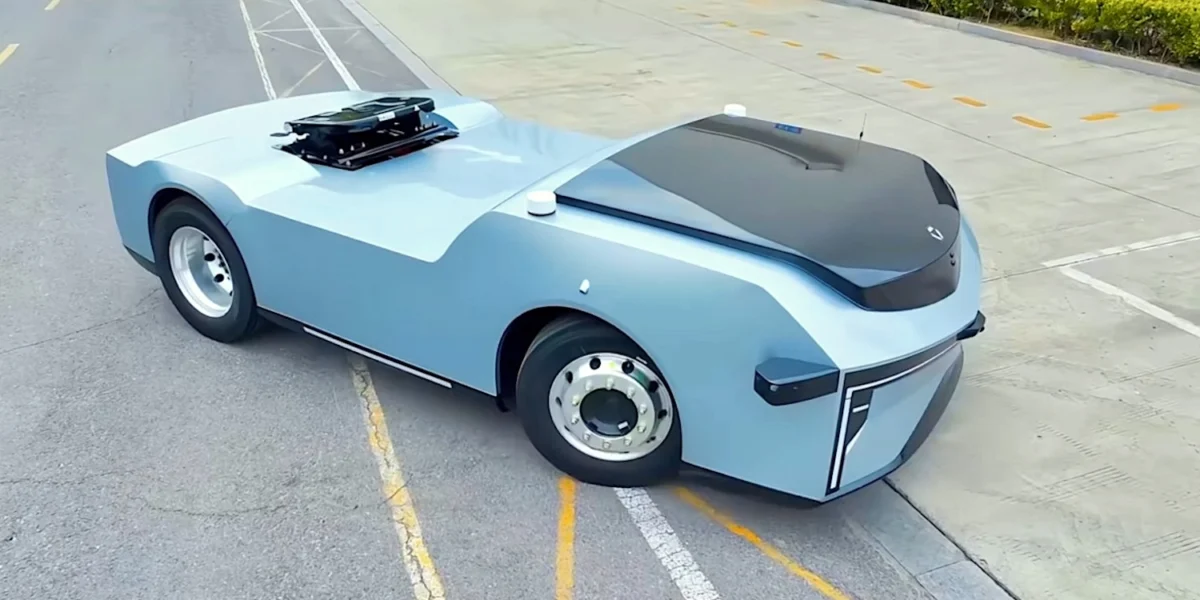
The global logistics and drayage sector is undergoing a profound structural transformation, driven by the dual imperatives of decarbonization and severe workforce shortages. Amidst this backdrop of industrial evolution, Chinese heavy machinery manufacturer XCMG has formally introduced the SDA411, a fully electric, Level 4 (L4) autonomous terminal truck designed entirely without a driver’s cabin. Engineered specifically for confined industrial environments such as container ports, rail hubs, distribution centers, and massive manufacturing yards, the SDA411 represents a significant leap forward in unmanned logistics technology.
By eliminating the physical cabin and integrating advanced perception suites with high-torque electric powertrains, XCMG aims to redefine how heavy freight is moved across short distances. This conceptual vehicle signals a shift not only in how industrial yards are managed but also in how equipment manufacturers address the persistent challenges of labor scarcity and operational efficiency in modern supply chains.
The Operational Logic of Electrified Yard Logistics
Terminal trucks—frequently referred to in the logistics industry as yard trucks, yard goats, or hostlers—perform tasks that are uniquely suited to battery-electric propulsion. Unlike long-haul semi-trucks that require massive energy reserves, high-speed sustained output, and rapid cross-country charging infrastructure, terminal trucks operate within tightly bounded geographies. Their daily duty cycles consist predominantly of low-speed maneuvering, high-torque hauling, precise trailer positioning, and frequent stop-and-go routines.
These characteristics make traditional internal combustion engine (ICE) yard trucks inefficient and environmentally taxing. Diesel-powered yard tractors often idle for extended periods, consuming fuel and emitting particulate matter and greenhouse gases in concentrated industrial zones, which are frequently located near urban population centers. Consequently, electrification has gained considerable momentum in this segment over recent years. Companies like Orange EV and Kalmar have deployed hundreds of electric yard trucks to global logistics giants such as DHL, proving that battery-electric drivetrains can deliver the instant torque and vibration-free operation required for grueling 24/7 terminal duties.
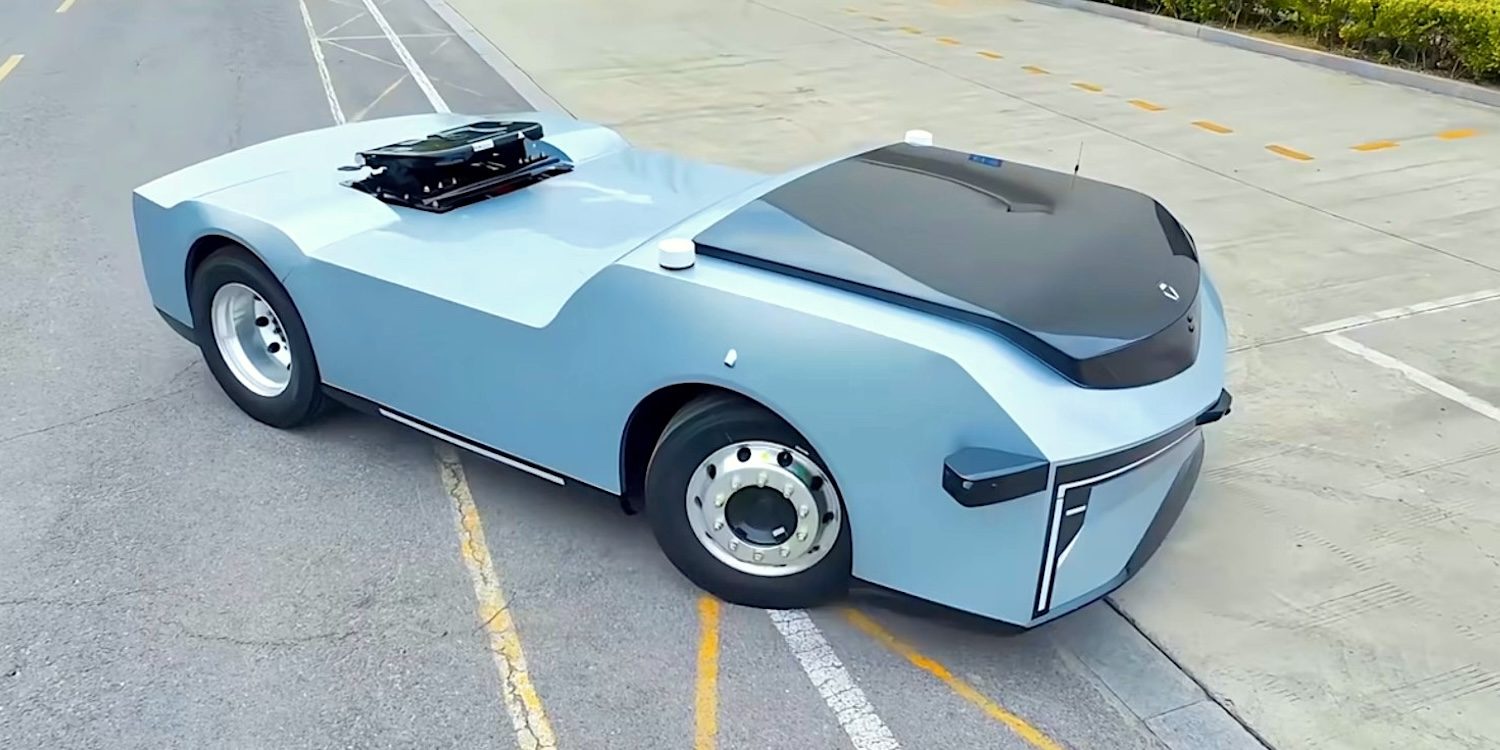
XCMG’s SDA411 builds directly upon this electrified foundation but removes the human element entirely. By dispensing with the cab, the vehicle architecture is optimized strictly for autonomous task execution, shedding weight, improving aerodynamic efficiency in reverse maneuvers, and reducing overall manufacturing complexity.
Advanced Technological Architecture and Capabilities
The core of the XCMG SDA411 lies in its robust L4 autonomous driving stack. Level 4 autonomy dictates that a vehicle can operate completely independently under specific conditions without human intervention, handling all safety-critical driving functions and roadway monitoring within its operational design domain.
According to technical disclosures provided by XCMG, the SDA411 is equipped with a comprehensive 360-degree perception system. This sensor array typically integrates a fusion of LiDAR, high-definition cameras, radar, and ultrasonic sensors, allowing the machine to construct a real-time, high-fidelity digital map of its immediate surroundings. This sensory capability underpins the vehicle’s core functions, which include autonomous navigation along pre-programmed or dynamically generated routes, advanced dynamic obstacle avoidance, precision task execution (such as coupling with trailers), and automated parking routines.
In demonstration footage released via corporate channels, the SDA411 was showcased navigating complex environments within XCMG’s industrial campus. The vehicle successfully executed emergency braking maneuvers when encountering simulated obstacles, demonstrated fluid trajectory adjustments, and navigated accurately to a designated charging station. While the vehicle featured in the demonstration still required a human attendant to manually plug in the charging cable, the broader ecosystem of heavy electric machinery is rapidly moving toward fully automated robotic charging solutions, pointing toward a future of entirely unattended round-the-clock operations.
Addressing the Global Industrial Labor Shortage

The introduction of cab-less autonomous terminal trucks arrives at a critical juncture for the global supply chain. Across North America, Europe, and Asia, the logistics and transportation sectors face an escalating labor crisis. An aging workforce, combined with a distinct lack of younger talent entering heavy transport professions, has created chronic operator shortages.
Even with significant wage increases and the prospect of lucrative compensation packages, fleet operators frequently struggle to recruit and retain qualified drivers for yard operations. The work is often repetitive, physically demanding, and confined to monotonous industrial yards under adverse weather conditions.
Industry analysts suggest that autonomous platforms like the SDA411 offer a viable technological countermeasure to these demographic headwinds. Rather than serving purely as a tool for workforce displacement, the integration of L4 autonomy in controlled environments can fundamentally alter the nature of human labor in logistics. Instead of sitting inside a vibrating cab for a twelve-hour shift to move trailers fifty yards at a time, human operators can transition into supervisory, remote-monitoring, and fleet-management roles. A single trained supervisor could theoretically oversee a fleet of multiple autonomous trucks, dramatically multiplying productivity while keeping experienced personnel within the industry in safer, less physically taxing capacities. Furthermore, automated systems open up employment opportunities in logistics coordination for individuals who may face physical barriers to traditional truck-driving roles.
Market Implications and the Competitive Landscape
The unveiling of the SDA411 places XCMG in direct dialogue with an evolving global market for autonomous and electric yard logistics. Established Western and international competitors, including terminal equipment heavyweights like Kalmar and specialized electric fleet providers like Orange EV—which recently integrated Outrider’s self-driving technology into its electric platforms—have been steadily advancing their own automation portfolios.
However, the deliberate choice by XCMG to design a platform explicitly without a cab highlights a growing divergence in the market. While many fleet operators favor retrofitting existing chassis or building autonomous systems into traditional truck designs to maintain fallback manual operations, dedicated cab-less architectures represent a clean-sheet approach. These vehicles cannot be driven manually on public roadways, restricting their utility strictly to private yards, closed logistics parks, ports, and intermodal facilities. Yet, within those boundaries, the absence of a cab yields economic and engineering efficiencies that traditional designs cannot match.

Future Outlook and Industry Integration
As the logistics sector continues to grapple with the demands of net-zero carbon targets and structural labor deficits, concepts like the XCMG SDA411 transition from science fiction to practical engineering realities. The commercial viability of such platforms will ultimately depend on regulatory acceptance, reliability in adverse weather conditions, and seamless integration with existing warehouse management systems (WMS) and port operating systems (POS).
While widespread commercial deployment of fully cab-less, autonomous terminal trucks will take time to scale globally, pilot programs and campus demonstrations are accelerating. If XCMG and its industry peers successfully prove the safety, uptime, and economic return on investment of these unmanned systems, the landscape of port drayage and freight yard management will look fundamentally different over the next decade. For now, the SDA411 serves as a clear indicator of the direction heavy machinery manufacturers are taking to solve the foundational logistics bottlenecks of the twenty-first century.