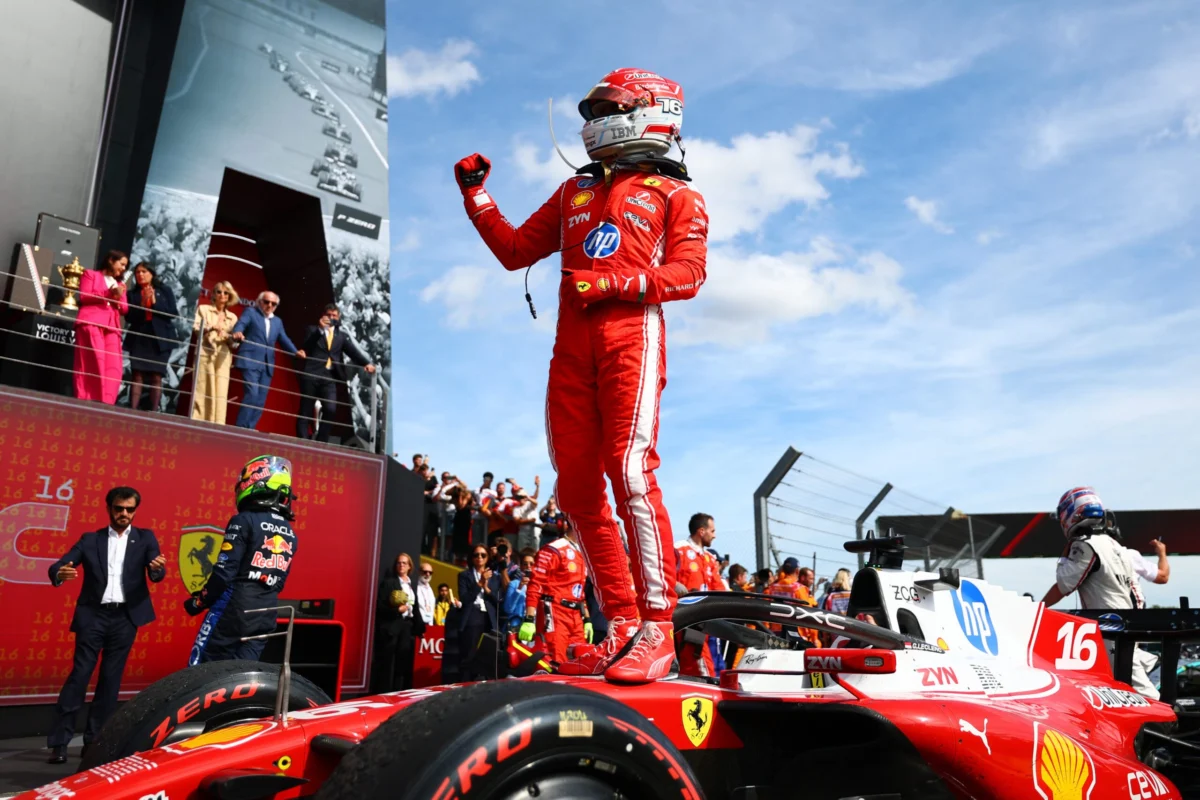
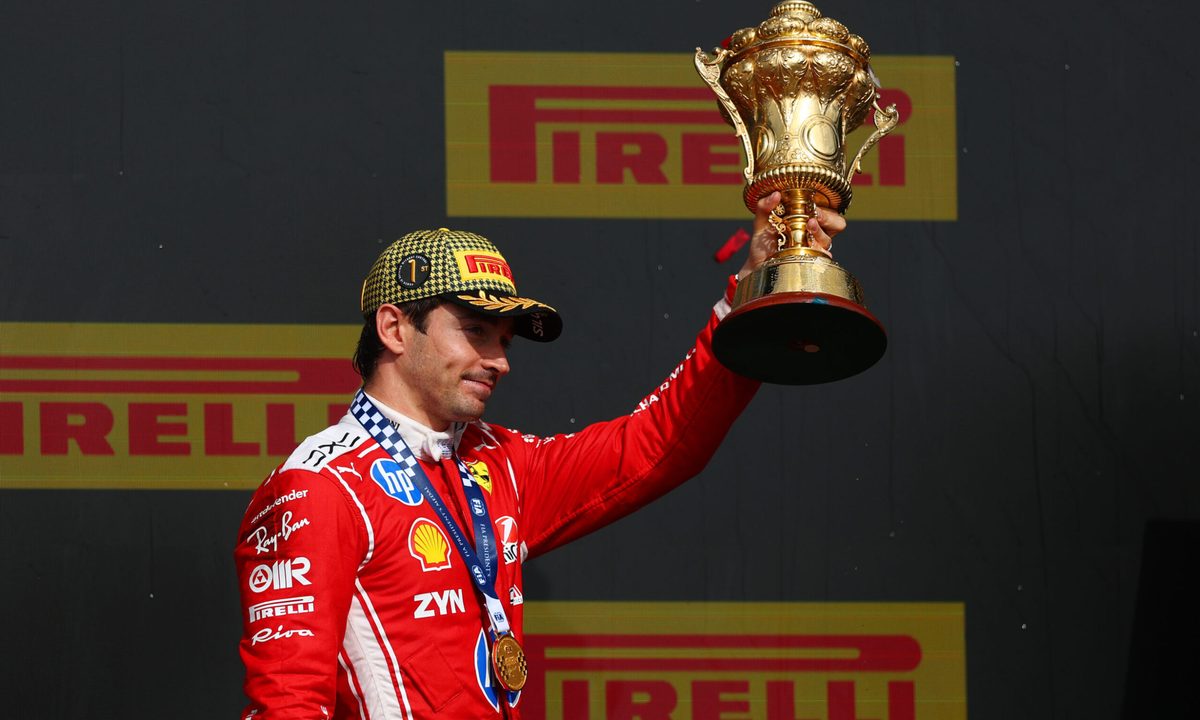
Charles Leclerc secured a significant victory at the British Grand Prix, his first in nearly two years, in a race that was ultimately overshadowed by a controversial and anticlimactic finish. The massive crowd of 175,000 spectators at Silverstone, expecting a thrilling conclusion, was left disappointed and vocal in their displeasure as the race concluded under the Safety Car, denying them a final lap showdown.
The day began with promise and early drama. Leclerc, driving for Ferrari, quickly established a leading position, with his teammate Lewis Hamilton in close pursuit. However, the seasoned veteran was soon challenged by the prodigious talent of 19-year-old Kimi Antonelli. The young driver, piloting a Mercedes-AMG, made a decisive move to overtake Hamilton, and it appeared he was on course for a remarkable sixth Formula 1 victory. Antonelli took the lead shortly after Leclerc pitted, setting the stage for what many believed would be a memorable battle for the win.
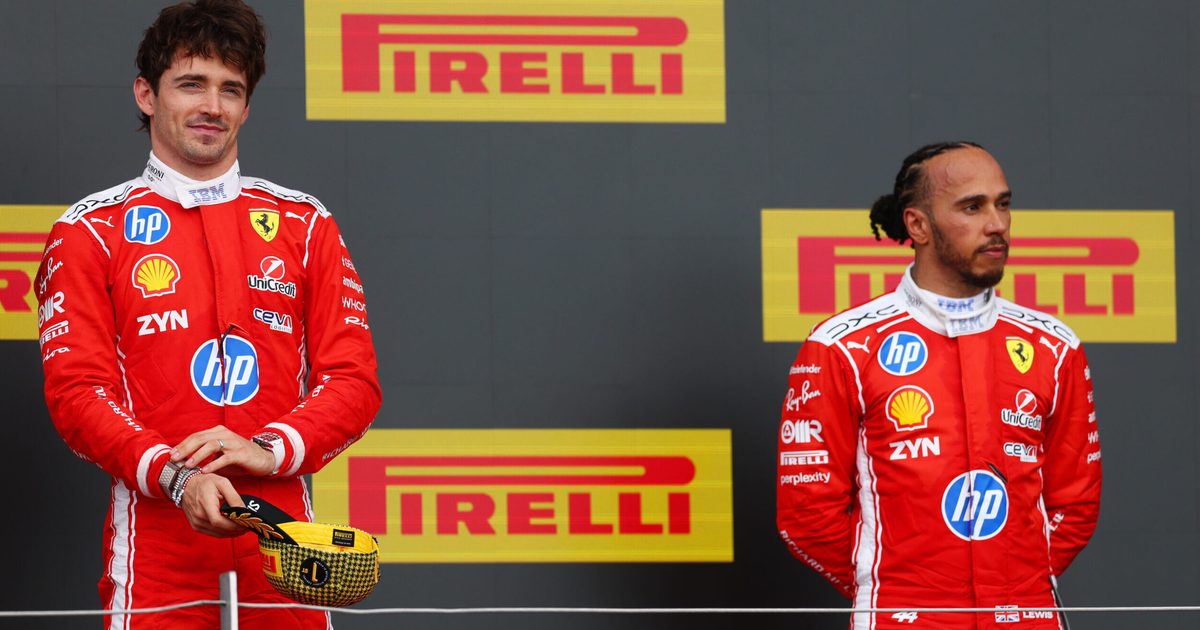
Tragedy, in the form of mechanical failure, struck Antonelli on Lap 41. His Mercedes-Benz machine suffered what the team later identified as a failure of the left front wheel shield. This incident relegated the promising youngster to 16th place, extinguishing his hopes of a podium finish. His teammate, George Russell, managed to secure second place, a commendable result given the circumstances. Lewis Hamilton ultimately finished third, but even his podium position was subject to post-race scrutiny for a potential yellow flag violation. While he received a reprimand, the penalty did not affect his finishing position.
The most significant controversy, however, unfolded on Lap 48. Max Verstappen, the Red Bull Racing driver and reigning world champion, spun out and found himself stranded in the gravel just four laps before the scheduled 52-lap race distance. This incident triggered the deployment of the Safety Car, a situation that, under normal circumstances, would have bunched up the field for a thrilling final sprint. According to reports from The Independent, the initial intention was for the Safety Car to return to the pits at the end of the 51st lap, setting up a one-lap finale that the enthusiastic crowd had eagerly anticipated.
However, the dramatic conclusion never materialized. The British Grand Prix concluded with Leclerc crossing the finish line under the Safety Car, officially clinching his victory. This outcome, while a win for Leclerc and Ferrari, left a bitter taste for the spectators who had witnessed a race filled with potential for a more exciting end.
The Controversy Unfolds: A Software Glitch and a Denied Spectacle
The immediate reaction from the 175,000-strong crowd was a chorus of boos directed at the drivers as they crossed the finish line. Their frustration was palpable and, as details emerged, demonstrably justified. The dramatic finish that the fans were denied was reportedly a consequence of an error by the governing FIA.
The Independent reported that the Safety Car was prematurely signaled to enter the pits by the FIA, an action described as an "error." This decision was made because the unlapped cars had not yet completed a full lap, a crucial procedural step before the Safety Car can return to its designated position. The consequence was the abrupt cancellation of what promised to be a thrilling, high-stakes final lap.
A spokesperson for the FIA later confirmed the misstep, stating that the "safety car in" message was "displayed erroneously due to a software error." The automated notification, intended to signal the end of the Safety Car period, was apparently loaded into the system and transmitted incorrectly. An investigation has since been launched by the FIA to ascertain the precise cause of this significant technical malfunction.
This human error, manifesting as a software glitch, robbed the fans of a potentially electrifying conclusion to a race that had already provided its share of excitement. F1 analyst Martin Brundle, a prominent voice during Sky Sports’ broadcast, expressed his profound disappointment and frustration. Visibly agitated, he implored his producers during the live coverage, "Have you got a bleeping machine? I’m going to need it shortly." He further lamented, "We were all denied a proper end to the Grand Prix."
This incident occurred during a week that had already presented challenges for Formula 1’s public relations. Earlier in the week, the sport had navigated the fallout from Carlos Sainz’s proposal for a penalty that could alter the qualifying landscape and faced criticism regarding a pre-race "LEGO parade" event ahead of the British Grand Prix, adding to a sense of a challenging period for the sport’s image.
Race Day Chronology and Key Incidents
The British Grand Prix at Silverstone unfolded with a series of pivotal moments that shaped the race’s narrative before the controversial conclusion:

- Lap 1: Charles Leclerc of Ferrari takes an early lead, with Lewis Hamilton of Mercedes-AMG in second place.
- Early Laps: 19-year-old Kimi Antonelli, driving for Mercedes-AMG, demonstrates impressive pace and overtakes Lewis Hamilton, moving into second position behind Leclerc.
- Mid-Race Pit Stops: Leclerc makes a pit stop, and Kimi Antonelli assumes the lead of the race, positioning himself for a potential victory.
- Lap 41: Antonelli’s race is dramatically impacted by a mechanical failure, identified as a left front wheel shield issue, forcing him down the order. George Russell, his teammate, inherits a strong position.
- Lap 48: Max Verstappen of Red Bull Racing spins and becomes stranded in the gravel, triggering the deployment of the Safety Car.
- Lap 51 (Intended): According to reports, the intention was for the Safety Car to return to the pits at the end of this lap, setting up a one-lap shootout.
- Lap 51 (Actual): An erroneous "Safety Car in" message is displayed by the FIA due to a software error. This leads to the race concluding under Safety Car conditions.
- Finish: Charles Leclerc crosses the finish line under the Safety Car, officially winning the British Grand Prix.
Supporting Data and Context
The British Grand Prix, a cornerstone of the Formula 1 calendar, is held annually at the historic Silverstone Circuit. This iconic track, with its rich motorsport heritage, often provides thrilling races due to its challenging layout, characterized by high-speed corners and demanding braking zones. The 2026 edition, held on July 12th, saw an attendance of 175,000 spectators, a testament to the enduring popularity of Formula 1 in the United Kingdom.
Charles Leclerc’s victory marked his first Grand Prix win since the Belgian Grand Prix in August 2024, ending a prolonged winless streak for the Monegasque driver. This victory is particularly significant for Ferrari, a team steeped in motorsport history, as it represents a crucial step in their ongoing efforts to challenge the dominance of Red Bull Racing.
The performance of Kimi Antonelli, despite his eventual misfortune, highlighted the emerging talent within the sport. At just 19 years old, his ability to compete at the front against established champions underscores the depth of talent in current Formula 1 grids. His early pace and strategic positioning demonstrated a maturity beyond his years.
The issue of Safety Car procedures and their impact on race outcomes has been a recurring theme in Formula 1. Controversies surrounding the timing and deployment of the Safety Car have, in the past, significantly influenced championship results and spectator experiences. The FIA’s commitment to reviewing and refining these procedures is crucial for maintaining the integrity and excitement of the sport.
Broader Implications and Analysis
The conclusion of the British Grand Prix raises several critical points for the future of Formula 1. Firstly, the reliance on automated systems for critical race operations, while offering potential for efficiency, also introduces new vulnerabilities. The FIA’s admission of a "software error" points to the need for robust testing, redundancy protocols, and human oversight to prevent such incidents. The investigation into the incident will likely focus on identifying the specific points of failure within the system and implementing measures to ensure it does not recur.
Secondly, the incident has amplified the ongoing debate about the balance between sporting fairness and the entertainment factor in Formula 1. While the rules are designed to ensure a fair competition, the perception of a manufactured or flawed conclusion can erode fan trust and dilute the excitement of the sport. The boos from the Silverstone crowd were a clear indication of this disconnect.
Thirdly, the controversy inadvertently shines a light on the resilience and performance of the drivers and teams. Despite the anticlimactic finish, Leclerc’s victory demonstrates his continued skill and the competitive strength of the Ferrari package. Similarly, the performances of drivers like Antonelli and Russell showcase the evolving talent pool within Formula 1.
For Ferrari, this victory is a morale boost and a significant step towards their championship aspirations. It validates their development efforts and provides tangible proof of their ability to contend for wins. For Leclerc, it is a much-needed personal triumph, reaffirming his status as a top-tier driver capable of winning Grands Prix.
The broader impact extends to the FIA’s credibility. As the sport’s governing body, any perceived error in judgment or execution can have far-reaching consequences. The swift acknowledgement of the error and the commitment to an investigation are positive steps, but the focus will now be on the actions taken to prevent future occurrences. The goal remains to ensure that future races are decided on the track by the drivers’ skill and the teams’ strategies, rather than by technical malfunctions or procedural missteps. The 2026 British Grand Prix will undoubtedly be remembered not just for Leclerc’s return to the top step of the podium, but also for the stark reminder of how technological advancements, if not perfectly implemented, can undermine the very essence of motorsport competition.