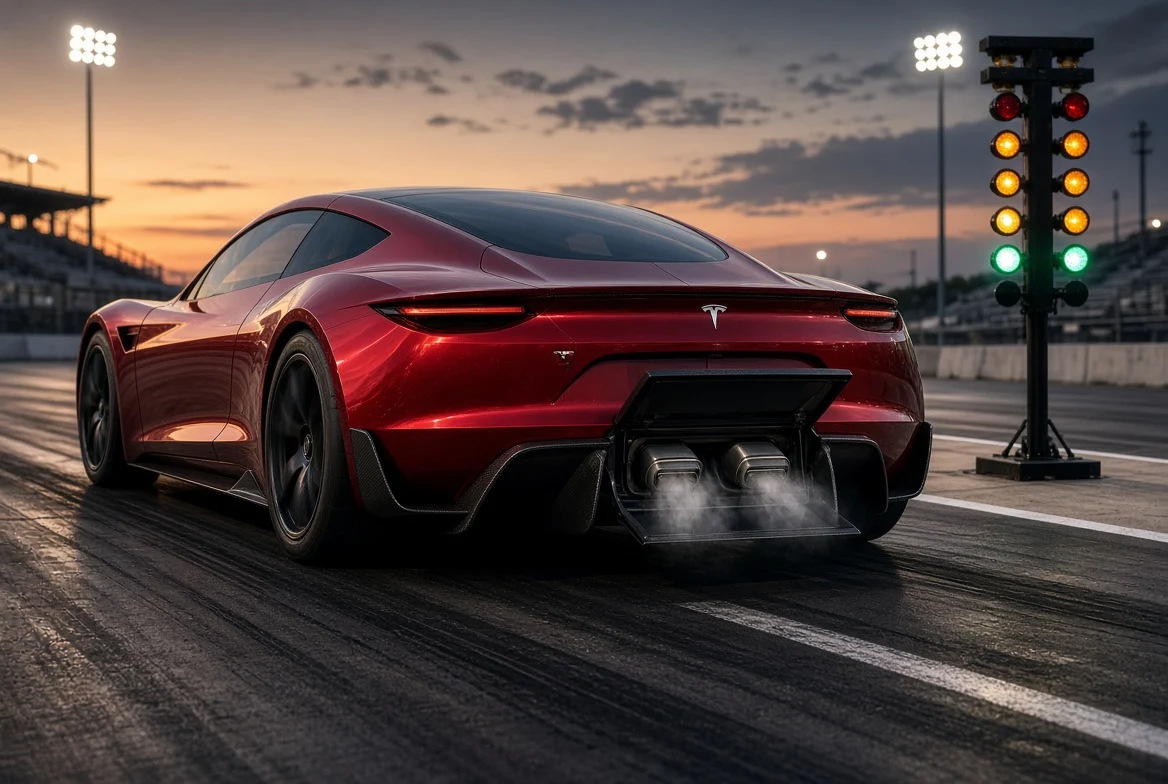
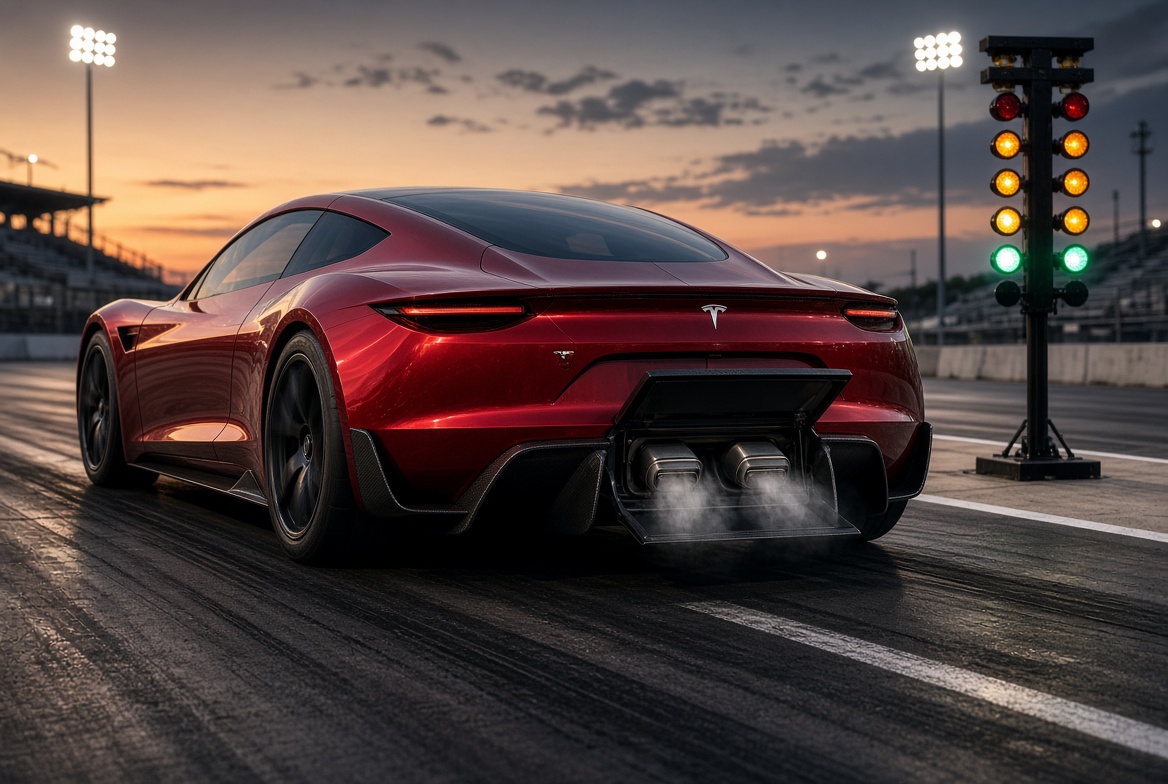
Tesla has officially signaled that the long-awaited next-generation Roadster is finally ready for the spotlight, scheduling a high-stakes reveal event for October 1. The electric vehicle manufacturer ignited widespread speculation across social media platforms by publishing a striking promotional image on X. The visual depicts the sports car illuminated against a launch pad backdrop, accompanied by the bold stamp “10.01” and the evocative caption, “Go for launch.” Simultaneously, a dedicated countdown clock on the official Tesla Roadster order portal locked onto the exact same date, which falls on a Thursday. While initial announcements omitted specific logistical details regarding public streaming or exact venues, subsequent developments have clarified the scope of the upcoming gathering.
Formal invitations distributed to reservation holders have confirmed that the exclusive unveiling will take place in Waco, Texas, situated approximately 90 minutes north of Tesla’s corporate headquarters in Austin. Digital tickets shared by prominent automotive community members indicate that the presentation is slated for 8:30 p.m. Eastern time on October 1. The invitation outlines stringent attendance parameters, requiring mandatory RSVPs by midnight on September 16, restricting entry to individuals aged 21 and older, and designating all passes as strictly non-transferable. Although the precise venue remains undisclosed in public notices, Waco’s geographic proximity to SpaceX’s rocket development and test facility in McGregor, Texas, aligns with previous industry reports pointing toward a specialized location capable of hosting aerospace-grade demonstrations.
A Chronology of Delays and Unprecedented Specifications
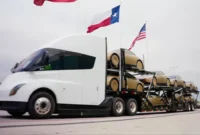
The journey toward the October 1 unveiling spans nearly nine years, characterized by a combination of breathtaking performance metrics and repeated timeline revisions. CEO Elon Musk originally pulled the wraps off the second-generation Roadster as a dramatic "one more thing" surprise at the conclusion of the Tesla Semi reveal event in November 2017. During that initial presentation, Musk outlined a jaw-dropping set of performance targets: acceleration from zero to 60 miles per hour in under two seconds, a top speed exceeding 250 miles per hour, and an unprecedented driving range of 620 miles powered by a massive 200-kilowatt-hour battery pack. Initial projections pointed toward a commercial production launch in 2020.
However, the path to production faced continuous recalibration as engineering teams prioritized scaling core volume vehicles like the Model Y and developing structural manufacturing innovations. During the annual shareholder meeting held in November of the previous year, Musk injected a dose of humor into the prolonged timeline by setting a provisional demonstration date for April 1, remarking that the calendar choice provided built-in "deniability" should schedules slip. True to form, the target shifted iteratively—moving from late April to "a month or so," and subsequently sliding into August, before finally culminating in the newly solidified October 1 launch window.
Engineering the Impossible: The SpaceX Thruster Package
Industry analysts and automotive enthusiasts anticipate that the core attraction of the October 1 event will center on the integration of the aerospace-inspired thruster package, a concept Musk has discussed publicly since 2018. Internally designated under the codename A71—a direct homage to the iconic Lockheed SR-71 Blackbird reconnaissance aircraft—the system reportedly utilizes cold gas thrusters powered by composite overwrapped pressure vessels. This specialized tank architecture mirrors the flight-proven technology utilized by SpaceX within the Falcon 9 launch vehicle ecosystem.
Technical discussions surrounding the hardware suggest that a Roadster equipped with the SpaceX package could dramatically shatter conventional automotive limits, achieving a zero-to-60-mph time of approximately 1.1 seconds under a heavy load of roughly 2.75 g’s of acceleration force. Such figures far outpace the standard model’s already formidable 1.9-second baseline. Industry insiders note that this extreme variant may not conform to standard federal motor vehicle safety standards for public road use, leading to expectations that it will be marketed as a limited-edition, track-only variant targeted at collectors and high-performance enthusiasts.
Pricing, Production Footprint, and Strategic Outlook

Despite the integration of bleeding-edge aerospace technology, the core pricing structure established during the vehicle’s initial 2017 unveiling remains largely intact. The base specification of the Roadster is expected to carry a starting price of $200,000, while the limited Founders Series tier maintains its $250,000 price point. Securing a production slot required substantial financial commitments upon reservation, with baseline deposits set at $50,000 and the Founders Series requiring the full $250,000 upfront.
Manufacturing logistics have also come into sharper focus through statements from corporate leadership. Lars Moravy, Tesla’s Vice President of Vehicle Engineering, has confirmed that volume production of the Roadster will take place at Gigafactory Texas. While the October 1 event serves as a critical technological showcase, commercial deliveries are projected to commence between 2027 and 2028. This anticipated delivery window places full-scale manufacturing roughly 12 to 18 months beyond the upcoming autumn demonstration, giving the company adequate runway to refine both the conventional vehicle architecture and the specialized tracking systems.
Market Implications and Technological Validation
The impending debut of the production-intent Roadster carries profound implications for both Tesla’s brand positioning and the broader electric vehicle landscape. For over a decade, traditional automakers and startup competitors alike have chased Tesla’s performance benchmarks, yet few have attempted to bridge the gap between automotive engineering and commercial aerospace applications. By integrating cold-gas thruster technology directly into a passenger vehicle chassis, Tesla aims to redefine the outer boundaries of terrestrial vehicle dynamics.
Beyond raw performance figures, the Roadster serves as a halo vehicle designed to demonstrate the pinnacle of the company’s manufacturing prowess, battery management systems, and materials science capabilities. As the October 1 event approaches, attention will center not only on the vehicle’s aesthetic design and final specifications, but also on how Tesla plans to transition these experimental aerospace systems into a scalable, manufacturable reality at Gigafactory Texas.