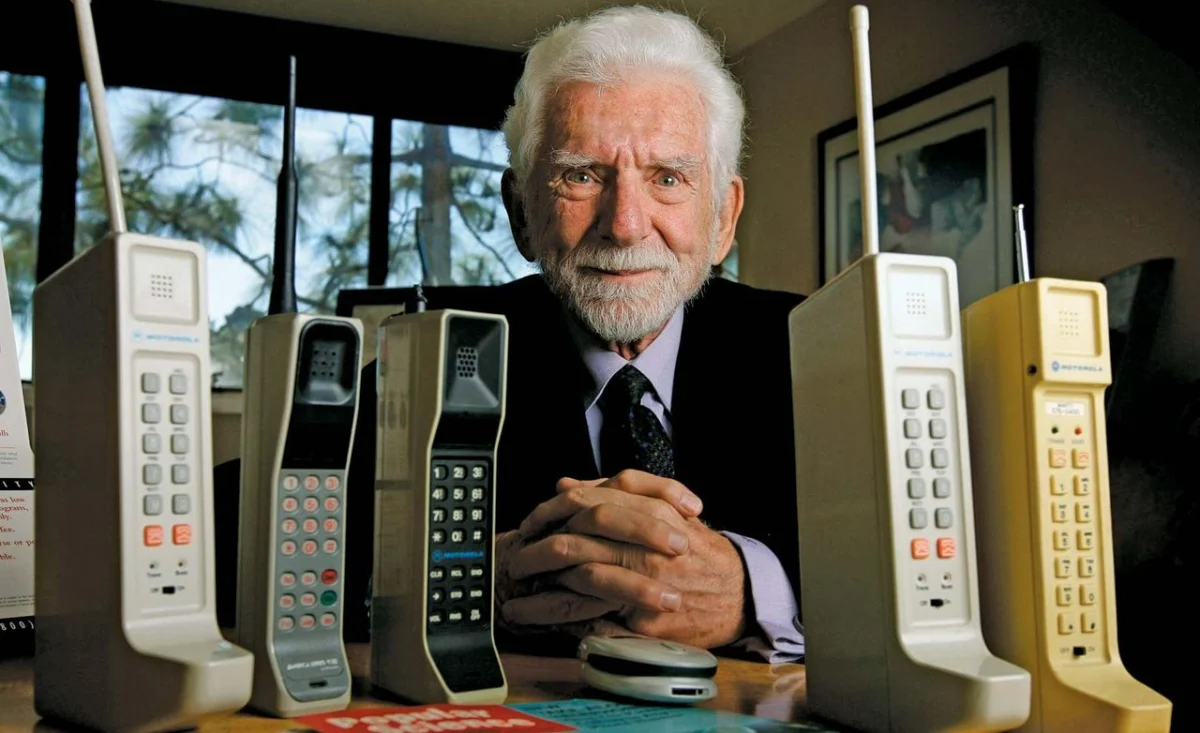
American engineer Mark Cooper stands as a foundational figure in the history of telecommunications, widely recognized for pioneering a world where human communication is untethered from physical locations. Without his mid-20th-century vision and engineering breakthroughs, the multi-trillion-dollar mobile communications industry as it exists today would be fundamentally unrecognizable or arguably non-existent.
The conceptual architecture of modern connectivity rests on a simple yet revolutionary premise: shifting telephone numbers from fixed physical addresses to individual human beings. This departure from copper-wire infrastructure sparked a global transformation in how society interacts, does business, and navigates daily life.
From Fixed Wires to Free Movement
To understand the magnitude of Cooper’s contribution, one must examine the technological landscape of the mid-20th century. Before the advent of handheld cellular technology, telephony was inextricably linked to real estate. A telephone number belonged to a building, an office desk, or a residential wall jack. If an individual needed to make or receive a call, they had to be physically present at one of these designated locations. While car phones existed in rudimentary forms—operated through heavy, power-hungry radio equipment managed by local exchange carriers—true personal mobility was an unrealized dream.
During the 1970s, Cooper headed Motorola’s communications systems division. In an era dominated by corporate telecommunications monopolies, Cooper and his team challenged the prevailing industry dogma that mobile communications should be restricted to vehicular setups. Instead, they envisioned a device small enough to be carried by hand, giving working professionals absolute freedom and autonomy to communicate from anywhere.
The philosophy behind the innovation was profound. Cooper argued that a telephone number should represent a person, not a place. This philosophical pivot meant that callers could reach a specific individual directly, bypassing intermediaries, receptionists, or fixed-line routing. It laid the psychological and technical groundwork for the hyper-connected global society of the 21st century.
The Historic Milestone: April 1973
The culmination of years of theoretical design and intense engineering pressure materialized in the spring of 1973. In April of that year, Cooper orchestrated a public demonstration that would alter the trajectory of human history.
Standing on the streets of Manhattan, New York, Cooper brandished a heavy, brick-like prototype device known as the DynaTAC (Dynamic Adaptive Total Area Coverage). In front of astonished journalists and onlookers, he placed the world’s first public handheld cellular phone call.
The call connected through a base station installed on the rooftop of the then-Burlington House in New York. With typical engineering bravado, Cooper used the historic moment to call his chief rival and competitor in the telecommunications space, Dr. Joel S. Engel of Bell Labs. As the story goes, Cooper informed Engel from the pavement of Manhattan that he was speaking to him via a real, handheld, portable cellular phone.
Despite this monumental public success, bringing the technology to commercial viability was far from instantaneous. The prototype demonstrated in 1973 kicked off a grueling, decade-long regulatory, financial, and engineering process to transition the device from a laboratory curiosity into a marketable consumer product.
A Decade-Long Journey to Commercialization
The path from the 1973 prototype to the first commercially available cellular phone was fraught with administrative hurdles and technical obstacles. Securing Federal Communications Commission (FCC) approval required navigating a regulatory landscape that had not yet accounted for cellular frequencies or commercial mobile spectrum allocation. Furthermore, manufacturing costs, battery life limitations, and the massive capital expenditure required to build out cellular tower grids posed significant barriers.
Cooper was named the lead inventor on the pivotal "radio telephone system" patent filed in October 1973. Throughout the remainder of the decade, Motorola invested tens of millions of dollars into refining the technology, reducing the weight and power consumption of the handset, and developing the cellular infrastructure necessary to hand off calls seamlessly between cells.
It was not until 1983—ten years after Cooper’s public demonstration—that the Motorola DynaTAC 8000X finally became available to the public. Retailing at an eye-watering price of $3,995 (equivalent to over $10,000 adjusted for inflation), the device weighed nearly 2.5 pounds and offered a mere 30 minutes of talk time after a 10-hour battery charge. Despite these limitations, demand outstripped supply, marking the official birth of the consumer mobile phone era.
Broader Economic and Societal Implications
Decades after Cooper’s historic street-side call, the economic and operational impacts of his work are immeasurable. The mobile communications sector has expanded into a global powerhouse, with hundreds of millions of smartphone units shipping annually and supporting millions of jobs worldwide.
The ability to communicate instantly, anytime and anywhere, has revolutionized global commerce. In the business world, productivity has soared as professionals are no longer constrained by office hours or tethered to physical desks. Supply chains, emergency services, remote workforces, and financial markets all rely entirely on the continuous, unbroken connectivity pioneered by Cooper and his Motorola team.
Reflecting on the milestone years later during a retrospective interview with CNN on the 38th anniversary of the first cell phone call, Cooper noted that while he and his team knew they were building something important, they could scarcely have predicted the ubiquity smartphones would achieve. They saw the device as a tool for business efficiency, failing to foresee that it would eventually evolve into a pocket-sized computer, camera, navigation system, and social hub for billions of people across the globe.
As technology marches toward future frontiers—including 6G networks, satellite-to-phone connectivity, and ubiquitous edge computing—the foundational ethos remains unchanged. The modern digital ecosystem continues to build directly upon the blueprint established in 1973: a world where technology adapts to humanity, freeing individuals from the constraints of geography and physical infrastructure.