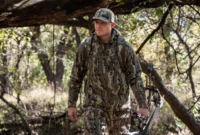
Under crisp autumn skies in the remote canyons of southern Utah, a group of ten backpackers and five domestic canines gathered in late 2025 to commemorate a milestone birthday. The chosen campsite, situated beneath a towering hundred-foot natural sandstone arch, offered an optimal setting for an expedition into the backcountry. The topography featured a natural widening of the gulch, providing ample space for the party to disperse while maintaining visual contact.
While the ostensible purpose of the excursion was recreational, the unfolding scene provided a real-time display of an ancient human behavior: the spatial organization of temporary settlements. The systematic arrangement of tents, cooking gear, and personal equipment in the wilderness is not merely a matter of convenience or aesthetic preference. According to behavioral scientists and evolutionary anthropologists, the meticulous process of organizing a backcountry camp is deeply rooted in human neurological architecture, shaped by millennia of survival pressures, threat assessment, and territorial instinct.
The Architecture of Wilderness Settlement
When faced with an open landscape, human beings engage in an instinctive process of environmental scanning and micro-habitat selection. This phenomenon was clearly visible beneath the Utah arch. Ace, Devaki, and Walter pitched their shelters within the protective overhang of a natural stone alcove, securing overhead shelter and lateral defense. Axel selected an elevated knoll flanked by rock outcrops, optimizing visibility and establishing a defensible perimeter. Elliot, a professional photographer, chose a vantage point beneath the intertwined canopy of hackberry and maple trees, backing his camp against a sheer orange cliff face while meticulously arranging his photographic equipment on stable sandstone slabs.
This instinctive dispersion pattern mirrors the habitation strategies of early hominids. Anthropological studies indicate that prehistoric camp layouts—evident in paleolithic sites across the globe—consistently balanced the need for communal cohesion with the imperative of individual territorial security. In modern backpacking, these primal drivers manifest as campers instinctively seek out what environmental psychologists term "prospect-refuge theory" landscapes: locations that offer unobstructed views of potential threats (prospect) combined with physical shielding from the elements or predators (refuge).
Dr. Helena Vance, an environmental psychologist specializing in spatial cognition, notes that the human brain processes wilderness environments through an evolutionary lens. "When we enter an unbuilt environment, our neural networks immediately begin mapping for safety, resource availability, and thermal regulation," Vance explains. "The meticulous organization of a camp—placing the sleeping quarters away from the kitchen, positioning gear for rapid access, and establishing perimeter boundaries—activates the same cognitive pathways our ancestors used to secure permanent settlements."
Chronology of the 2025 Utah Expedition
The planning and execution of the Utah backcountry excursion followed a precise timeline characteristic of experienced wilderness travelers, reflecting both logistical preparation and instinctive spatial ordering.
- Months Prior to Departure: Route planning, permit acquisition, and gear inventory. Expedition members coordinate nutrition, hydration strategies, and emergency communication protocols.
- Day One – Arrival and Assessment: The group navigates the final miles of the canyon trail, arriving at the natural arch site during the mid-afternoon. The party conducts a collective environmental assessment, identifying potential hazards such as flash flood channels, loose overhead rock, and wind corridors.
- Day One – Spatial Allocation: Within thirty minutes of reaching the site, spontaneous territorial mapping occurs. Members evaluate individual psychological needs—introverts seeking isolation from potential snoring, photographers prioritizing immediate access to natural light and subjects—and establish distinct micro-campsites.
- Day Two to Four – Operational Routine: The camp transitions from a transient arrival point to an established habitat. Latrine zones, water filtration stations, and communal cooking areas are formally designated and maintained, reflecting a structured micro-society.
- Final Day – Deconstruction and Leave No Trace: The systematic dismantling of the camp, restoring the landscape to its original condition, underscores the temporary nature of human intervention in protected wilderness areas.
Empirical Data on Wilderness Recreation and Spatial Behavior
The surge in backcountry camping observed over the past decade has provided researchers with extensive data regarding human interaction with wild environments. According to statistics compiled by the Outdoor Industry Association (OIA) and the National Park Service, participation in backpacking and primitive camping has risen steadily, with an estimated 15 million Americans engaging in overnight backcountry trips annually.
This demographic shift has prompted increased academic interest in the physiological and psychological impacts of wilderness immersion. A landmark 2023 study published in the Journal of Environmental Psychology utilized GPS tracking and behavioral observation to analyze how campers organize their immediate surroundings. The research revealed several consistent behavioral patterns across diverse geographic locations:
- Perimeter Establishment: Over 88% of observed campers establish a clear, defined boundary between their sleeping quarters and communal areas within the first twenty minutes of site selection.
- Elevation Preference: Approximately 65% of participants preferentially select elevated positions or features that back up against permanent physical barriers (cliff faces, dense brush walls) rather than camping in open, central areas.
- Acoustic Mitigation: Camp spatial distribution strongly correlates with noise management. Groups naturally distance themselves based on known auditory behaviors, such as snoring or nocturnal movement, averaging a dispersal radius of 15 to 30 meters between independent sleep units.
These empirical findings support the hypothesis that wilderness camping behaviors are standardized responses to environmental stimuli, rather than random choices.
Physiological and Neurological Implications
The act of organizing a camp engages the prefrontal cortex, responsible for executive function, risk assessment, and spatial reasoning. Neurological imaging studies conducted during wilderness immersion tasks indicate a significant reduction in cortisol levels—the primary stress hormone—following the successful establishment of a secure base camp.
Dr. Marcus Thorne, a neuroscientist studying human-nature interactions, explains that the transition from the chaotic sensory input of modern urban environments to the structured simplicity of the wilderness promotes cognitive restoration. "When you organize a camp, you are exerting micro-control over an unpredictable environment," Thorne states. "This satisfies an evolutionary drive for mastery over one’s immediate habitat. The brain recognizes the newly formed camp as a safe zone, triggering parasympathetic nervous system dominance and allowing for psychological recovery."
Furthermore, the communal aspect of organizing camp reinforces social bonding. Collaborative tasks—such as gathering firewood, filtering water, and erecting group shelters—stimulate oxytocin production, fostering trust and cohesion among expedition members. In the Utah canyon, these cooperative behaviors reinforced group solidarity, transforming a collection of individual backpackers into a cohesive unit capable of navigating environmental challenges.
Broader Impact and Industry Response
The growing understanding of human spatial dynamics in the wilderness has influenced various sectors, from outdoor gear manufacturers to land management agencies.
Designers of backpacking equipment increasingly factor ergonomic and psychological principles into product development. Tents, stoves, and pack systems are engineered not only for weight reduction and weather resistance but also for ease of deployment, allowing users to efficiently secure their environment with minimal cognitive friction. The inclusion of modular components and intuitive color-coding systems helps reduce setup time, lowering stress levels upon arrival at a remote site.
Simultaneously, public land managers utilize insights from behavioral research to mitigate human impact on fragile ecosystems. By understanding where and how campers instinctively congregate, agencies such as the Bureau of Land Management (BLM) and the U.S. Forest Service can better designate sustainable campsites, install targeted erosion-control measures, and educate the public on Leave No Trace principles. Recognizing that campers have an innate drive to occupy alcoves, elevated knolls, and areas near water sources allows land managers to anticipate high-impact zones and implement proactive conservation strategies.
As participation in wilderness recreation continues to expand, the intersection of evolutionary psychology, spatial design, and environmental stewardship remains a critical area of study. The quiet ritual of pitching a tent beneath a desert arch or an alpine ridge is far more than a recreational pastime; it is a direct continuation of an ancient human tradition—a momentary domestication of the wild, driven by the enduring architecture of the human mind.