Apple has officially unveiled its next-generation wearable lineup, introducing the Apple Watch Ultra 4 and the Apple Watch Series 12 during a major hardware event at its corporate campus. Industry analysts are calling this release the most substantial generational leap in Apple Watch architecture since the debut of the original Ultra series. Rather than staggering major component updates between standard and high-end editions—as seen in previous release cycles—Apple has equipped both the Series 12 and the Ultra 4 simultaneously with the new S11 chipset, incorporating architectural foundations derived from the iPhone 18 Pro’s A20 Pro processors.
This simultaneous deployment marks a strategic shift for the technology giant, ensuring that mainstream consumers and extreme endurance athletes alike gain immediate access to the company’s latest advancements in silicon efficiency, health monitoring, and on-device machine learning. Alongside the upgraded processing power, both devices introduce a heavily revamped sensor array and a suite of controversial audio intelligence capabilities designed to process ambient sound continuously.
Chronology of the Launch and Core Hardware Innovations
The announcement follows months of intense speculation within the consumer technology sector regarding the timeline of Apple’s biometric sensor upgrades. The integration of the S11 chip represents a milestone in wearable computing, enabling local execution of complex neural tasks without relying on a paired iPhone.
At the hardware level, the Apple Watch Series 12 and the Apple Watch Ultra 4 introduce distinct physical and performance enhancements tailored to their respective target markets. The Series 12 features a display cover material engineered to be 60 percent stronger than its predecessor, addressing long-standing consumer demands for enhanced scratch and impact resistance. It will be available in four core aluminum and titanium colorways—Grey, Black, Gold, and a newly introduced Dark Bronze—alongside premium ceramic options in white and blue, as well as a specialized Hermès edition. Despite the influx of new processing power, the Series 12 maintains Apple’s standard 24-hour battery life claim.
Conversely, the Apple Watch Ultra 4 focuses heavily on extended autonomy for endurance athletes and outdoor adventurers. Offered in black and silver colorways, the Ultra 4 extends its baseline battery life to "over two days" under normal operating conditions. Furthermore, Apple has introduced a revamped "Extended Battery" mode alongside a new "Max Extended Mode," which delivers up to 45 continuous hours of GPS workout tracking without sacrificing the precision of GPS sampling or recorded heart rate data. Both watches are accompanied by an expanded catalog of bands, most notably featuring new translucent Ocean bands designed specifically for the Ultra 4.
A Paradigm Shift in Heart Rate and Biometric Sensing
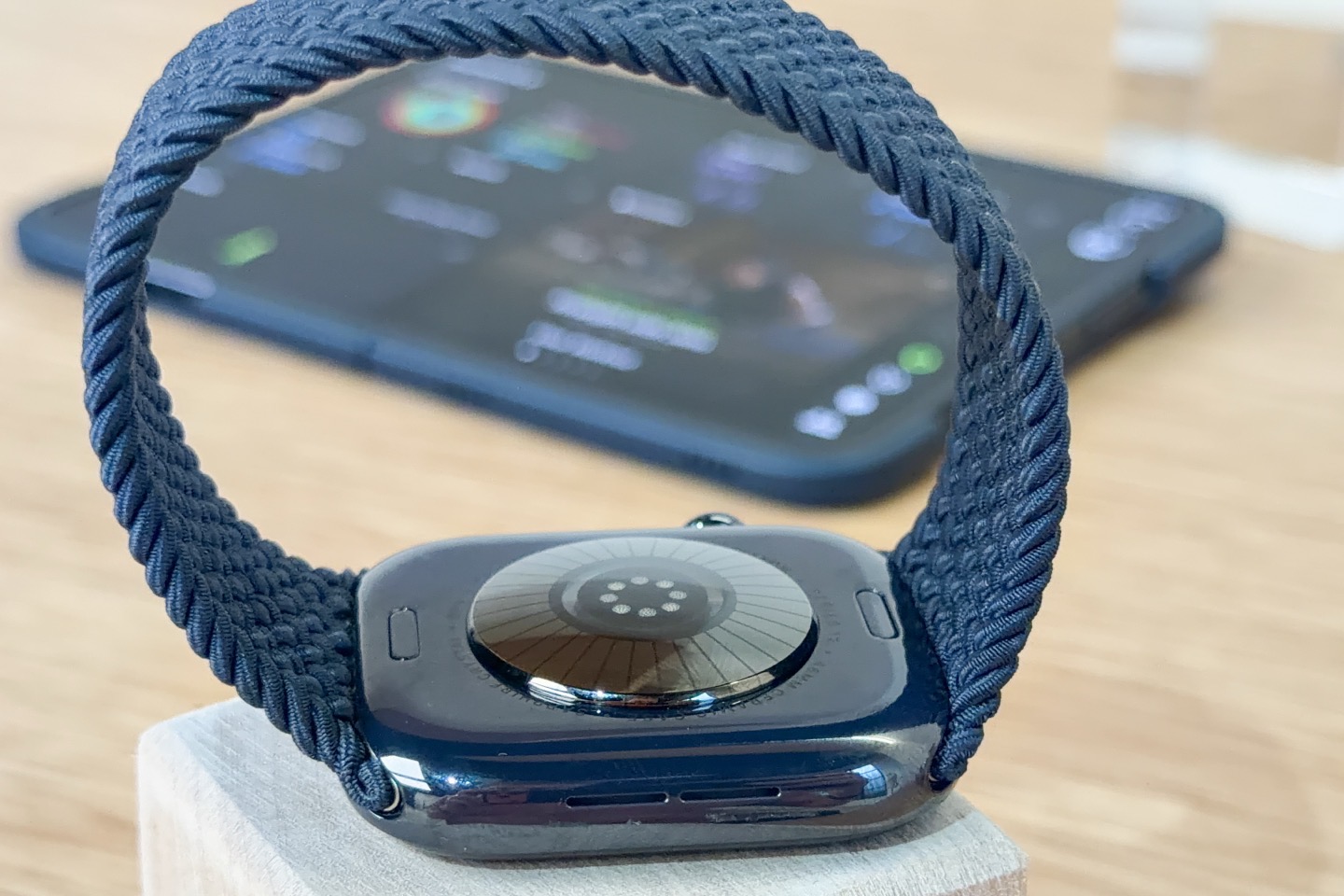
Perhaps the most significant physiological update to the wearable line lies in the complete redesign of the heart rate sensor package. For years, athletes and data scientists have pushed for higher sampling frequencies and reduced sensor artifacts during high-intensity training. Apple’s new hardware layout addresses these concerns through a multi-tiered structural overhaul.
The updated sensor array features a significantly increased electrode surface area designed to improve the fidelity and speed of electrocardiogram (ECG) readings. Directly beneath the surface electrodes, newly configured photodiodes enhance workout capture accuracy, while a revised LED array underneath optimizes continuous 24/7 heart rate tracking. Despite the increased density of components, the physical sensor bump on the rear crystal has been made thinner than previous generations.
This hardware evolution has enabled a massive increase in background data collection. Background heart rate monitoring frequency has been accelerated to every five seconds—representing a sixtyfold increase over previous models—while Heart Rate Variability (HRV) readings are now sampled every five minutes, a twenty-fourfold increase. Apple asserts that these enhancements make the Series 12 and Ultra 4 the most accurate heart rate sensing wearables on the market, a claim backed by a comprehensive public white paper comparing the new devices against industry competitors.
The expanded biometric data pipeline feeds directly into newly established software features, most notably overnight HRV trending within the Vitals app and a newly introduced "Daytime" HRV view. To synthesize this influx of physiological metrics, Apple has introduced a daily "Readiness Score." Ranging from a scale of 0 to 10, the score evaluates sleep architecture, Vitals metrics, recent training load, and daytime activity to categorize user readiness into four distinct descriptors: Recover, Pace Yourself, Ready, and Go For It. Like many advanced health algorithms, the Readiness Score requires a baseline calibration period of seven nights to establish accurate personal baselines.
Redesigned Health Application and Longevity Metrics
Complementing the hardware changes on the wrist, Apple previewed a major redesign of the iOS Health application, slated for release later this year in English-language beta. The revamped software leverages Apple Intelligence to deliver personalized health summaries, automated recommendations, and adaptive training guidance, including suggested interval workouts based on recovery data.
Among the most notable additions to the Health app are two forward-looking metrics: "Health Age" and a dedicated "Longevity Tab." Health Age calculates an estimated physiological age based on a holistic review of sleep patterns, VO2 Max, HRV, heart rate, active exercise minutes, daily step counts, and optional laboratory bloodwork. The Longevity Tab aggregates data across nutrition, metabolic health, overall movement, hearing preservation, heart metrics, and mental wellbeing.
Furthermore, the updated Health app expands diagnostic capabilities by integrating support for external lab work and introducing simplified, home-based physical assessments. Users can now complete a validated VO2 Max test within their living room in approximately six minutes, alongside standardized mobility tests evaluating flexibility, movement mechanics, and muscular strength over time.
Audio Intelligence and Privacy Implications
Perhaps the most innovative—and potentially contentious—aspect of the new Apple Watch generation is the introduction of on-device Audio Intelligence features, powered by a secure audio processing enclave within the S11 chipset. Operating entirely on the device without requiring an active connection to an iPhone for immediate processing, these tools utilize continuous ambient microphone monitoring to deliver real-time utility.
Among the less controversial additions are enhanced Sound Recognition alerts, which detect environmental hazards such as sirens, breaking glass, crying babies, and doorbells, converting them into visual text alerts on the watch face. Additionally, an "Instant Shazam" feature leverages always-on background listening to display the title of any playing background music the moment a user raises their wrist.
However, features designed to assist with memory and conversation tracking are expected to spark significant debate regarding personal privacy. The new "Live Rewind" function allows users to double-tap the Digital Crown to instantly generate a text-only transcription of the preceding 15 seconds of spoken dialogue. More expansive is the "Siri Recap" feature, which continuously processes ambient conversations and compiles a 24/7 summary of spoken interactions into a digestible log viewable on the paired smartphone.
To mitigate privacy concerns, Apple has structured the architecture of Audio Intelligence with strict safeguards. The company states that no raw audio files are stored locally or made accessible to the user or Apple. Furthermore, summaries generated by Siri Recap intentionally omit specific speaker identities and exact direct quotations, functioning instead as conceptual summaries of topics discussed. The sole exception to the quotation rule occurs when a user explicitly initiates a Live Rewind and forwards that specific 15-second transcript snippet to Siri.
Users retain granular control over these capabilities, with the ability to independently enable or disable individual audio features. The Siri Recap function can also be automated using parameters akin to iOS Focus Modes, restricting its operation based on specific times of day, calendar events, or geographical locations.
Broader Market Impact and Industry Outlook
The introduction of the Apple Watch Series 12 and Ultra 4 underscores Apple’s aggressive push to transition its wearable ecosystem from a fitness companion into a comprehensive preventive health and ambient computing platform. By standardizing high-performance silicon and advanced sensor packages across both consumer and rugged tiers, Apple has narrowed the feature gap between its entry-level devices and specialized sports watches.
While the inclusion of continuous ambient audio processing will likely draw scrutiny from privacy advocates and regulatory bodies, the technical achievement of running complex machine learning summaries locally on silicon enclosures highlights the company’s focus on on-device data security. Full, in-depth hardware evaluations, long-term battery testing, and real-world validation of the new biometric sensors are expected in the coming weeks as review units become widely available prior to the official retail launch.