The wearable technology landscape has reached a significant milestone with the official announcement of the Signal Ring by health-tech startup Vital Signals. Priced at $399 and scheduled for delivery in October 2026, the Signal Ring distinguishes itself as the first consumer-grade smart ring capable of providing comprehensive systolic and diastolic blood pressure readings without the need for regular calibration against a traditional arm cuff. This development marks a pivotal shift in the "silent killer" monitoring market, offering a level of data granularity that current leaders in the space, including Apple and Oura, have yet to fully implement in a standalone capacity.
The Challenge of Monitoring the Silent Killer
Hypertension, or high blood pressure, is frequently referred to by medical professionals as the "silent killer" due to its ability to cause catastrophic damage to the cardiovascular system without presenting overt symptoms. According to data from the World Health Organization (WHO), an estimated 1.28 billion adults aged 30–79 years worldwide have hypertension, with the majority living in low- and middle-income countries. Alarmingly, approximately 46% of adults with hypertension are unaware that they have the condition.
The risks associated with unmanaged blood pressure are severe, including myocardial infarction (heart attack), stroke, and chronic kidney disease. While hypotension (low blood pressure) can cause dizziness and fainting, the chronic nature of hypertension leads to the gradual hardening of arteries and the enlargement of the heart. Traditionally, monitoring this vital sign required the use of an oscillometric arm cuff—a bulky device that, while accurate, does not lend itself to the continuous, passive monitoring necessary to capture "white coat hypertension" or nocturnal blood pressure spikes.
A New Standard in Wearable Health Data
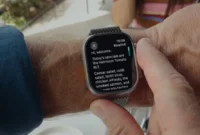
The Signal Ring enters the market at a time when the demand for preventative health tech is at an all-time high. While the Apple Watch has integrated various health sensors over the years, including ECG and blood oxygen monitoring, its blood pressure capabilities remain focused on trend analysis rather than raw data. With the introduction of watchOS 26, Apple enabled five specific models to monitor for signs of hypertension. These models analyze pulse wave patterns to detect irregularities, but they do not provide users with their actual blood pressure numbers (e.g., 120/80 mmHg). Instead, they issue notifications advising users to seek a clinical measurement if a potential issue is detected.

The Signal Ring bypasses this limitation. By utilizing advanced photoplethysmography (PPG) sensors and proprietary algorithms developed by Vital Signals, the device claims to deliver medical-grade accuracy. Most importantly, it eliminates the "calibration hurdle." Previous attempts at wearable blood pressure monitoring, such as those by Samsung, required users to calibrate the watch with a traditional cuff every few weeks to maintain accuracy. The Signal Ring’s promise of a "calibration-free" experience is backed by a clinical trial involving thousands of participants, which the company asserts demonstrates parity with clinical-grade arm cuffs.
Technical Evolution and Chronology
The journey toward calibration-free wearable blood pressure monitoring has been a decade-long pursuit for the tech industry.
- 2015–2018: The first generation of smartwatches introduced basic heart rate monitoring. During this period, researchers began exploring the use of Pulse Transit Time (PTT)—the time it takes for a pulse wave to travel between two points—as a proxy for blood pressure.
- 2019–2021: Companies like Omron released the HeartGuide, a smartwatch with a built-in inflatable cuff. While accurate, the device was bulky and lacked the aesthetic appeal of mainstream wearables.
- 2022–2024: Samsung integrated BP monitoring into the Galaxy Watch series, but required monthly calibration. Apple intensified its research, filing numerous patents related to non-invasive blood pressure monitoring.
- 2025: Rumors began to circulate regarding a specialized health-centric ring from Vital Signals, a company founded by veterans of the tech industry.
- July 2026: Vital Signals officially unveils the Signal Ring, positioning it as a specialized tool for hypertension management rather than a general-purpose fitness tracker.
Founder’s Vision and Target Demographic
The impetus for the Signal Ring was deeply personal for Tom Moss, the CEO of Vital Signals. Moss, a seasoned executive with a background at Google, Razer, and the drone-maker Skydio, founded the company following a near-fatal health crisis involving undiagnosed hypertension. "Fundamentally, there’s almost no real way for you to truly know your blood pressure as a consumer, and it’s kind of crazy," Moss stated during the product launch.
His experience highlighted a gap in the market: while gadgets for tracking steps and sleep are ubiquitous, tools for managing life-threatening cardiovascular conditions remain largely clinical or cumbersome. Interestingly, Moss has adopted a transparent marketing strategy that acknowledges the Signal Ring’s specific niche. He does not position the device as a "do-it-all" wearable.
"For younger, less-at-risk individuals or anyone confident their blood pressure is healthy, just buy an Oura or an Apple Watch," Moss suggested. This admission implies that while the Signal Ring excels at blood pressure monitoring, it may not compete with the sophisticated sleep staging of the Oura Ring or the deep ecosystem integration of the Apple Watch. The Signal Ring is explicitly targeted at older populations, individuals with a family history of heart disease, and patients who have been medically advised to monitor their pressure daily.
Market Implications and Subscription Models
A notable aspect of the Signal Ring’s market entry is its pricing structure. At $399, it sits at the premium end of the smart ring market, but it carries a significant advantage: no subscription fees. In an era where companies like Oura and Whoop require monthly payments to access long-term data trends and "readiness" scores, Vital Signals is offering a one-time purchase model.
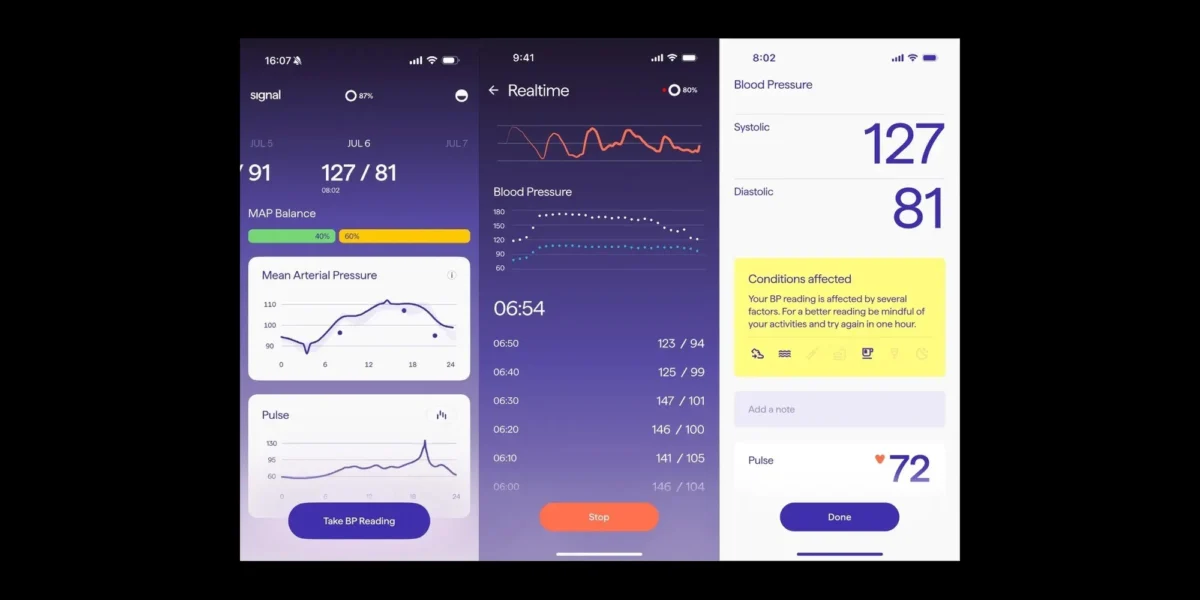
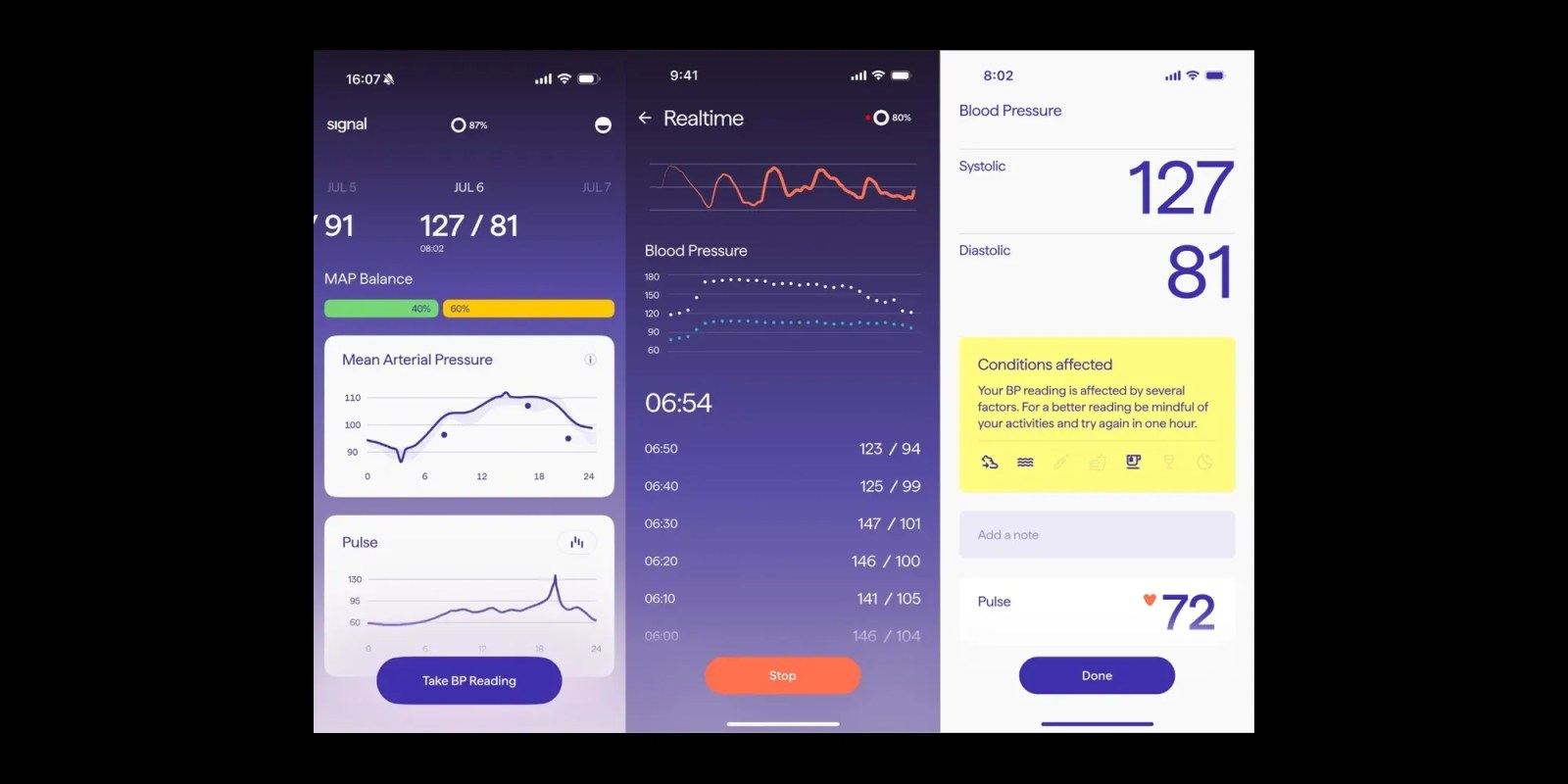
The companion app for the Signal Ring provides live readings and historical tracking, allowing users to share detailed reports with their primary care physicians. This "hardware-as-a-service" avoidance could prove attractive to older demographics who are often wary of recurring digital costs.
Regulatory Hurdles and Clinical Validation
Despite the promising trial data, the Signal Ring faces the significant hurdle of FDA clearance. While the company has conducted extensive internal and third-party trials, the "Medical Device" designation from the U.S. Food and Drug Administration is a rigorous process. Currently, many wearables operate in a "wellness" gray area, providing data for "informational purposes only" to avoid the strict liabilities associated with medical-grade hardware.
Industry analysts suggest that if Vital Signals can secure FDA Class II clearance for its blood pressure monitoring, it would force tech giants like Apple and Samsung to accelerate their own development cycles. The ability to monitor blood pressure accurately from the finger is technically challenging because the arteries in the finger are smaller and more susceptible to temperature changes and movement artifacts compared to the wrist or upper arm.
Analysis of Broader Impact
The launch of the Signal Ring signifies a shift toward "specialized wearables." For the past decade, the trend has been toward the "Swiss Army Knife" approach—one device that tracks everything from GPS coordinates to menstrual cycles. However, as the hardware matures, we are seeing the emergence of "best-in-class" devices for specific chronic conditions.

The Signal Ring’s focus on blood pressure addresses a massive global health burden. If successful, it could significantly reduce the incidence of strokes and heart attacks by providing users with the data they need to seek medical intervention or adjust medication under a doctor’s supervision. Furthermore, the continuous nature of ring-based monitoring allows for the detection of "nocturnal hypertension," a condition where blood pressure fails to drop during sleep, which is a high-risk indicator for cardiovascular events that a morning cuff reading would likely miss.
As the pre-sale opens and the industry looks toward the October delivery date, the Signal Ring stands as a testament to the potential of dedicated health technology. It challenges the status quo of the wearable market by prioritizing a single, critical vital sign over a broad suite of general fitness metrics, potentially saving lives through the democratization of clinical-grade data.