In a forceful declaration broadcast across the social media platform X, SpaceX founder and CEO Elon Musk has issued his inaugural public warning to firms engaging in short selling against the burgeoning aerospace giant. Musk’s pronouncement, made on July 17, 2026, directly addresses the recent volatility surrounding SpaceX’s initial public offering (IPO), stating unequivocally that “The survival probability of firms who maintain a significant short position in SpaceX over time is very low.” This statement signals Musk’s unwavering confidence in SpaceX’s long-term trajectory and his willingness to publicly confront financial entities betting against the company’s success.
The IPO of SpaceX, which debuted on the NASDAQ under the ticker symbol $SPCX, was heralded as the largest in history. However, in the five weeks following its highly anticipated debut, the stock experienced a significant downturn, shedding approximately 30% from its peak valuation, which had briefly surpassed the market capitalization of tech behemoths like Microsoft and Amazon. This dip presented an opportune moment for short sellers, who reportedly reaped substantial gains estimated at around $8.7 billion. Musk’s sharp rejoinder, however, dismisses these short-term gains as ephemeral in the face of SpaceX’s ambitious, multi-trillion-dollar vision for the future of space exploration and commerce.
The Multi-Trillion Dollar Space Economy: Musk’s Vision
Musk’s warning is deeply rooted in a comprehensive bullish thesis that posits Starship, SpaceX’s revolutionary super heavy-lift launch vehicle, as the foundational pillar of a new space-based economy. Proponents of this vision argue that Starship’s inherent cost-reduction capabilities will unlock unprecedented economic opportunities, ranging from orbital solar power generation and asteroid mining to the establishment of extraterrestrial data centers and the ambitious undertaking of Mars terraforming. Collectively, these ventures are projected to generate over $100 trillion in new market capitalization.
Within this expansive framework, SpaceX is positioned not merely as a launch service provider but as the indispensable infrastructure backbone, analogous to Amazon Web Services (AWS) in the cloud computing sector. The company is anticipated to command monopolistic revenues derived from its comprehensive suite of services, including launch operations, crew transportation, and the facilitation of data traffic across an ever-expanding celestial frontier. This strategic positioning, according to Musk and his supporters, renders any short-term bearish sentiment a fundamental miscalculation of the exponential growth potential inherent in humanity’s push into space.
A Pattern of Confrontation with Short Sellers
This latest public admonishment of short sellers is far from an isolated incident for Elon Musk. Throughout his career, particularly with his electric vehicle company Tesla, Musk has consistently adopted an adversarial stance against those who bet against his ventures. He has frequently characterized persistent short sellers as individuals destined for significant financial losses, framing their positions as a direct opposition to innovation and progress.

In July 2024, for instance, Musk declared that once Tesla achieved full autonomy and the mass production of its Optimus humanoid robots, "anyone still holding a short position will be obliterated." He even extended this warning to prominent figures, referencing Microsoft co-founder Bill Gates and his reported short bets against Tesla. This sentiment echoes a similar taunt from 2018, when Musk cryptically informed short sellers that they had "about three weeks before their short position explodes," a statement that preceded a sharp surge in Tesla’s stock price. Musk has on multiple occasions voiced his strong disapproval of short selling, once suggesting it "should be illegal" due to its perceived nature of betting against innovation.
Critics, however, often dismiss Musk’s often audacious optimism as mere hyperbole, particularly when faced with short-term market fluctuations or less-than-stellar quarterly performance metrics. Nevertheless, Musk’s pattern of predicting significant gains and framing short positions as fundamentally flawed analyses of exponential technological advancement remains consistent across his companies. For SpaceX short sellers, the implied message is clear: betting against the realization of multi-planetary ambitions and the foundational infrastructure required to achieve them carries an existential risk for the financial entities involved.
SpaceX’s Starship Program: The Engine of Future Growth
The underlying strength of Musk’s conviction in SpaceX’s long-term prospects lies in the continued progress and ambitious goals of its Starship program. As of July 20, 2026, SpaceX is actively preparing for the thirteenth integrated flight test of its Starship system, designated as Flight 13. This test, while subject to the iterative nature of rapid development, represents another critical step in validating the full reusability of the world’s most powerful rocket.
The launch window for Flight 13 was initially targeted for Thursday, July 23, 2026, with a 90-minute opening starting at 5:45 p.m. Central Time from SpaceX’s Starbase facility in South Texas. This date followed a previous postponement from July 20, underscoring the dynamic and adaptive planning inherent in complex aerospace endeavors. The previous launch attempt on July 16 was aborted at T-0 due to issues with several Raptor engines on the Super Heavy booster failing to ignite as expected. This incident triggered the automatic abort system, preventing liftoff.
Elon Musk confirmed that the engine startup anomalies necessitated the replacement of two Raptor engines on Booster 20 to ensure mission reliability, a decision made despite a successful full-duration static fire test conducted prior to the aborted launch. This situation highlights the intricate challenges of orchestrating 33 engines simultaneously under real flight conditions and reinforces SpaceX’s commitment to a safety-first approach, even amidst an aggressive testing cadence.
Objectives and Innovations of Starship Flight 13
Flight 13 builds upon the valuable data and lessons learned from Flight 12, which took place in May 2026. The primary objectives for the Super Heavy booster are to achieve a successful liftoff, ascent, stage separation, a controlled boostback burn, and a safe splashdown in the Gulf of Mexico. Significant hardware and software modifications have been implemented to address issues encountered during the previous flight, including problems with the nominal flip and boostback burn phases, which were attributed to propellant slosh and engine relight challenges, ultimately leading to an uncontrolled impact.
For the Starship upper stage, the mission carries a significant payload: the deployment of 20 operational Starlink V3 satellites. This marks the first time Starship will carry a real payload of this nature. Additionally, the flight aims to perform a single Raptor engine relight in space and execute a controlled entry, descent, and splashdown in the Indian Ocean. Propulsion system upgrades are specifically designed to enhance engine-out capability, a critical factor given the loss of one vacuum Raptor engine during Flight 12.
Further test elements are focused on validating the performance of Starship’s heat shield. Six of the deployed satellites will be equipped with cameras to capture imagery of the heat shield tiles during atmospheric re-entry. Moreover, the inclusion of white-painted tiles and upgraded attachments on the vehicle’s flaps and aft skirt will provide crucial data for future reusability assessments. The Federal Aviation Administration (FAA) has completed its mishap investigation into Flight 12, thereby clearing the regulatory path for subsequent tests. This suborbital mission, the second to utilize V3 vehicles, is pivotal in advancing Starship towards operational capabilities, including potential crewed flights and critical support for NASA’s Artemis program. A successful Flight 13 would represent a substantial leap forward in achieving rapid reusability and demonstrating the system’s capacity for large-scale satellite deployment.
Tesla’s Cybercab to Feature Starlink Integration
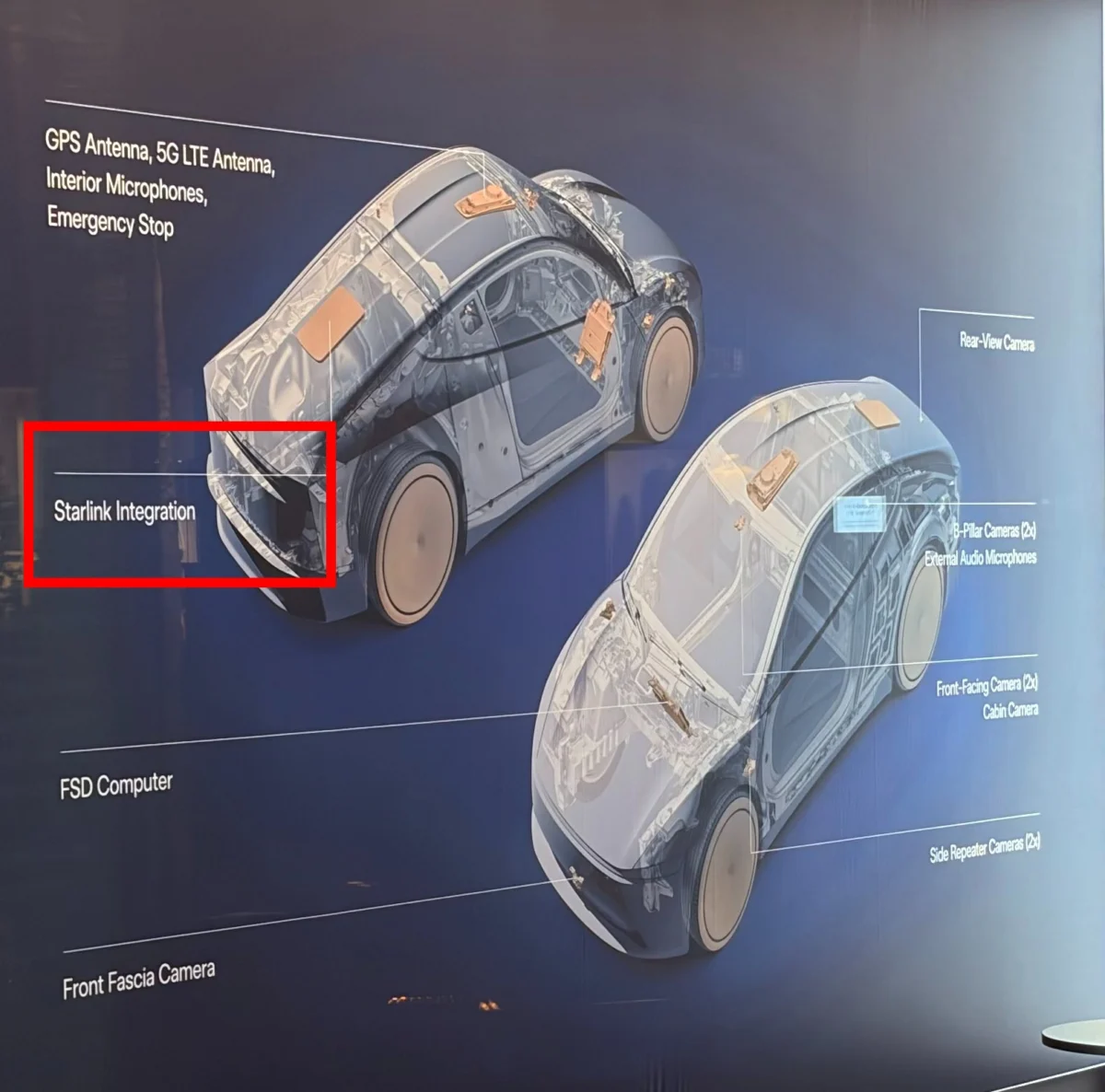
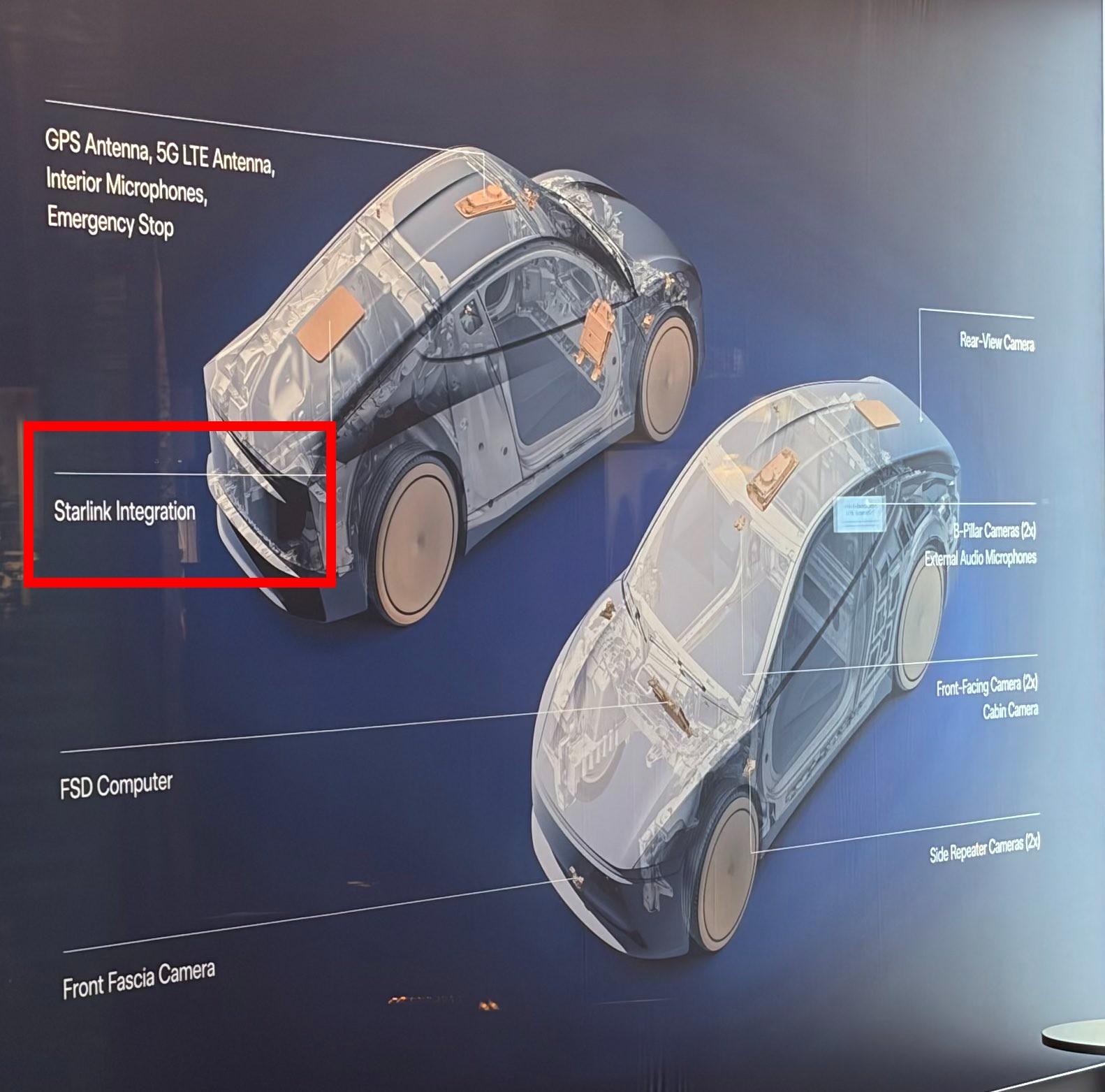
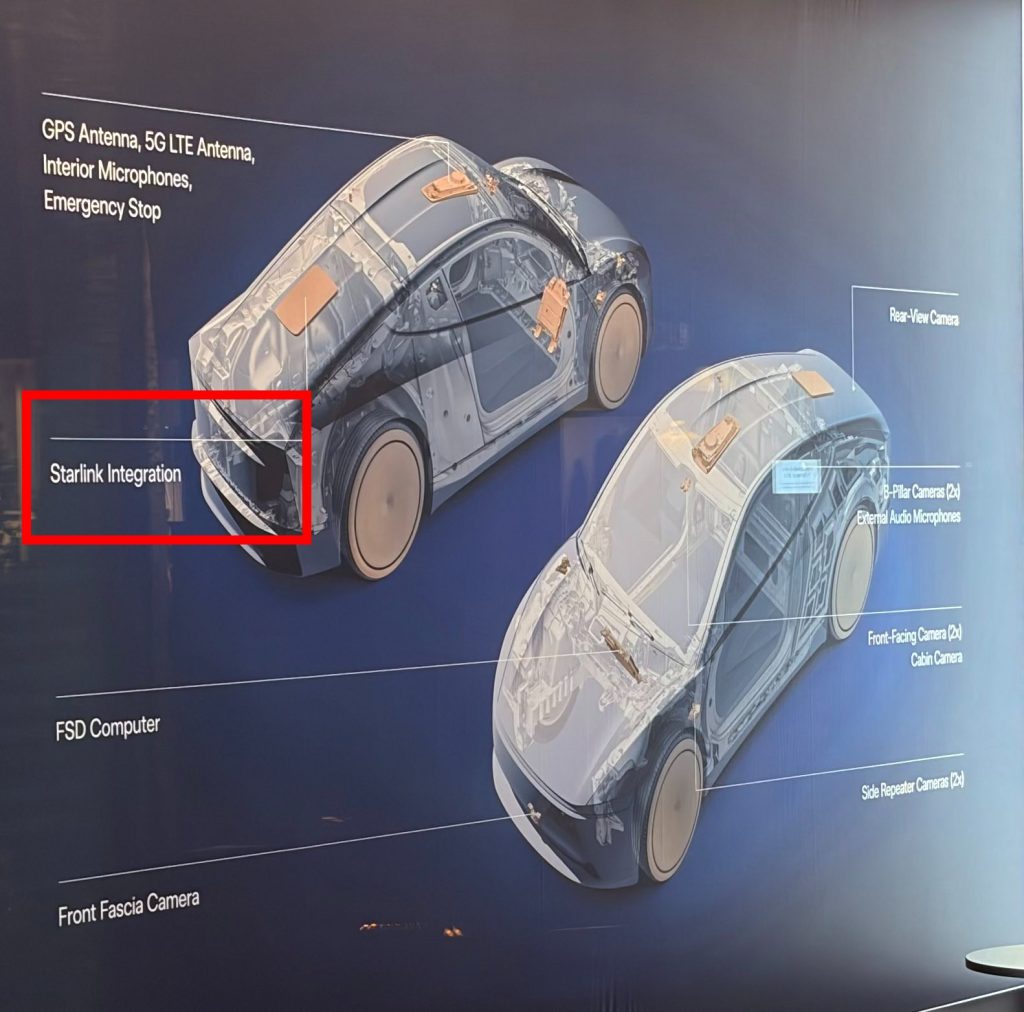
In parallel with SpaceX’s ambitious launch endeavors, Tesla is advancing its own groundbreaking innovations. The company has confirmed that its Cybercab, a vehicle designed specifically for autonomous ride-hailing, will be the first Tesla model to integrate Starlink, SpaceX’s satellite internet constellation. This development was revealed through an exhibit at Tesla’s Santana Row showroom, showcasing a production Cybercab model equipped with an integrated Starlink antenna. This feature promises to provide secure and reliable internet access for passengers during their journeys.
The Cybercab is engineered for autonomous operation, with production units rolling off the assembly line at Gigafactory Texas devoid of traditional steering wheels, side mirrors, or pedals. This design signifies that when public rides commence, passengers will not require human intervention or direct control of the vehicle, relying instead on the infotainment system displayed on the center screen for entertainment and trip management.
Tesla’s decision to integrate Starlink into the Cybercab aligns with the vehicle’s core purpose of enabling seamless and connected autonomous travel. The company had previously hinted at potential Starlink integration in a December 2025 patent filing that described a vehicle roof assembly with integrated radio frequency (RF) transparency. This patent application suggested the use of high-strength polymer blends, such as Polycarbonate, Acrylonitrile Butadiene Styrene, or Acrylonitrile Styrene Acrylate, to facilitate the integration of technologies requiring RF transmission and reception, distinguishing them from conventional metallic or glass roof elements.
The Cybercab’s display elaborates on its autonomous capabilities, stating: "Cybercab is built for autonomy. It has no steering wheel, no side mirrors, and no pedals. It goes where you tell it to go and how you want it to, so you can relax along the way. It is hyper aware and responsive to your surroundings, monitoring other drivers, responding to emergency vehicles, utilizing its expertise in the rarest scenarios to help keep you safe." The integration of Starlink is expected to further enhance the passenger experience, allowing for maximum productivity during work-related commutes or providing entertainment options like streaming services for leisure trips. This synergy between SpaceX’s satellite network and Tesla’s autonomous vehicle technology underscores a broader strategy of vertical integration and technological synergy within Elon Musk’s diverse business empire.