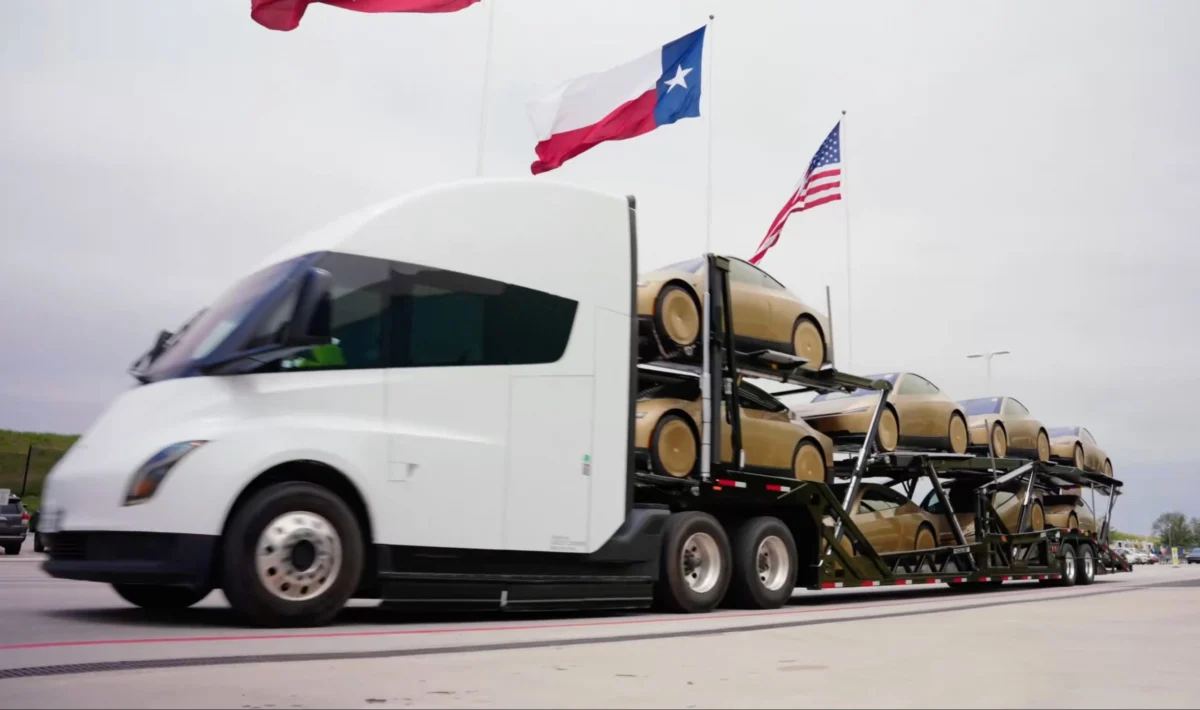
Tesla has implemented a unified thermal management architecture across two of its most divergent vehicle platforms, engineering a shared system for both the compact Cybercab and the heavy-duty Class 8 Semi. Revealed by Tesla executives Lars Moravy and Dan Priestley during the Semi Handover event at the dedicated production facility in Sparks, Nevada, the cross-platform thermal design highlights an ongoing manufacturing strategy focused on component commonality, supply chain scale, and reduced operational downtime for commercial fleets.
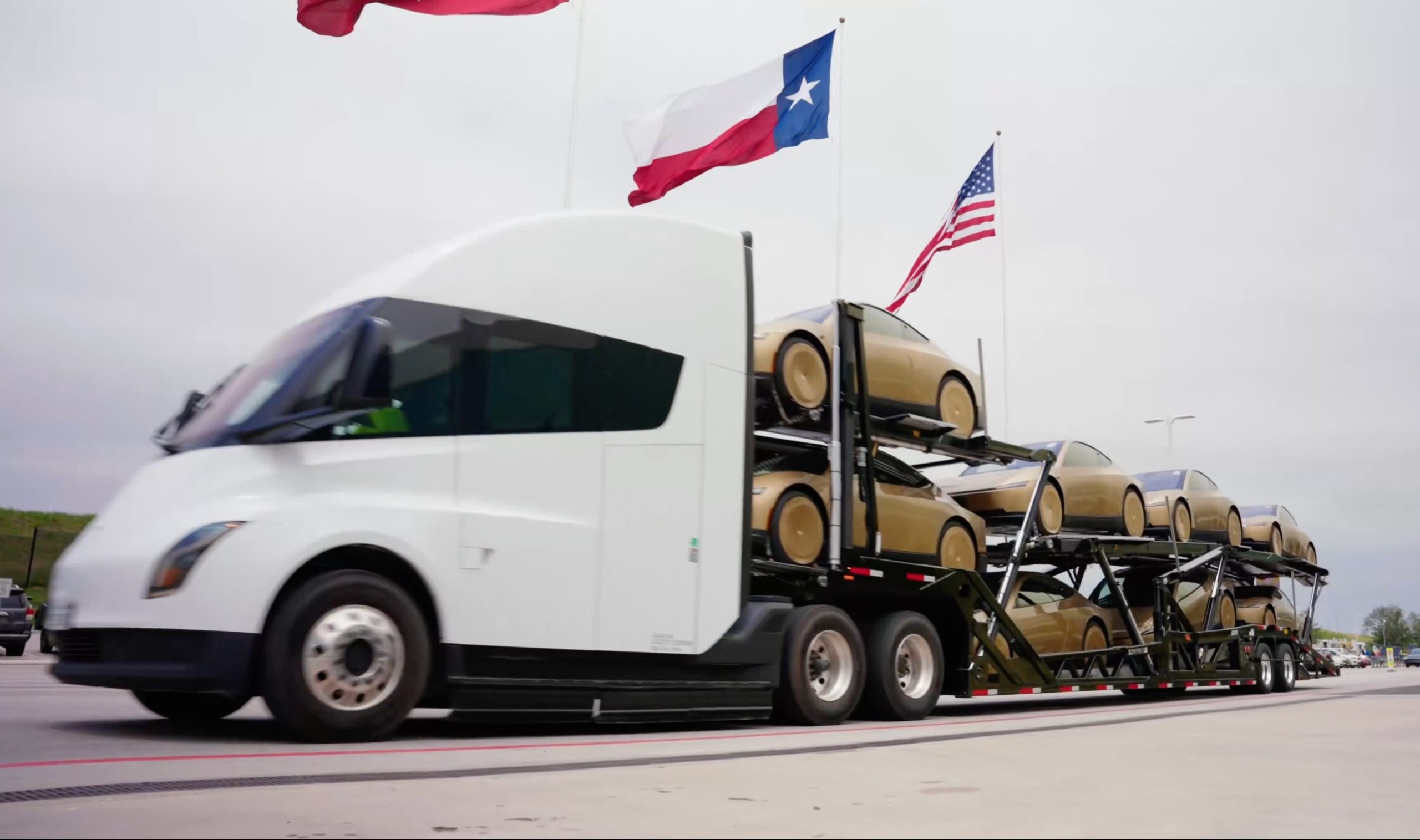
Strategic Engineering and Shared Component Architecture
The development of a single thermal architecture for vehicles occupying opposite ends of the size and purpose spectrum represents a calculated engineering choice within Tesla’s production lineup. During the Sparks, Nevada presentation, leadership detailed how the thermal stack was conceived concurrently for both platforms.
"We designed it at the same time we designed the Cybercab and we said okay we’re going to take our most efficient vehicle and our biggest vehicle and we’re going to take one thermal system and make it work for both," company engineers noted during the briefing.

Core components—including the refrigerant compressor, electronic water pumps, and primary heat exchangers—are shared directly between the Cybercab and the Semi. Differentiation between the two vehicles is limited to modest adjustments in cooling-loop sizing and the integration of a larger radiator on the Class 8 truck to handle heavier continuous thermal loads. By utilizing a common compressor and thermal stack proven across millions of passenger vehicle miles, Tesla aims to ensure day-one reliability for commercial operators without designing a bespoke, unproven heavy-duty system from scratch.
The design relies on an indirect thermal configuration that removes complex refrigerant lines from the passenger cabin and forward chassis. "There’s no AC lines, there’s no refrigerant lines… It comes from the factory fully charged, sealed with refrigerant, and it just exchanges coolant. It doesn’t actually run refrigerant up to the front of the vehicle," Priestley explained. This elimination of extensive high-pressure plumbing reduces potential leak points, lowers maintenance requirements, and protects commercial transport businesses from unplanned downtime and high service costs.

Furthermore, the vehicle’s megamanifold orchestrates cabin climate control alongside powertrain heating and cooling loops simultaneously. The system actively captures waste heat generated by the electric drive units and battery packs, repurposing thermal energy rather than dissipating it as traditional internal combustion engines do with exhaust and radiator heat.
Chronology of Tesla’s Thermal Evolution
The integration of the Cybercab and Semi thermal systems builds upon a multi-year engineering progression aimed at simplifying fluid management and maximizing thermal efficiency across Tesla’s product ecosystem:
- Model Y (2020): Introduced the Octovalve, consolidating multiple coolant and refrigerant valves into a single integrated unit to optimize cabin conditioning and powertrain thermal regulation.
- Cybertruck & S/X Refreshes (2023–2024): Evolved the Octovalve design into the Super Manifold, scaling the architecture to handle the distinct structural demands of the Cybertruck and updated flagship passenger cars.
- Cybercab Integration (2025–2026): Debuted the Supermanifold V3, manufactured with an 80 percent automated production process and designed to deliver up to 38 percent greater energy efficiency than standard automotive thermal systems.
- Semi Handover Event (September 2026): Formally validated that the Supermanifold V3 architecture had been successfully adapted for heavy-duty commercial transport applications alongside the Cybercab fleet.
Production Scaling and Cost Implications
Tesla’s cross-platform component strategy extends beyond thermal management. The company has successfully leveraged high-volume passenger car components across its heavier vehicle lines, including the widespread deployment of 4680 battery cells in both the Cybertruck and the Semi, as well as heat-pump compressors common across its entire consumer fleet.
Concurrent development of core vehicle systems provides substantial economic and logistical advantages. By manufacturing shared components at the scale required for high-volume passenger vehicles, Tesla reduces per-unit production costs and ensures high component reliability for commercial operators. For fleet managers deploying the Tesla Semi and autonomous Cybercab fleets, the approach translates into reduced auxiliary energy consumption for cabin heating during winter months, a significant decrease in refrigerant-related service interventions, and a mature thermal architecture validated by millions of real-world miles before initial high-volume deliveries.

Broader Industry Impact on Fleet Efficiency
The integration of advanced thermal systems into commercial freight transport addresses one of the primary historical hurdles of electrification: auxiliary energy drain. In cold-weather operations, heavy-duty commercial trucks typically suffer from significant range reduction due to the high energy demands of cabin heating and battery thermal maintenance.
By capturing waste heat from the drivetrain via an integrated megamanifold, Tesla’s shared architecture minimizes the parasitic load on the battery pack. Combined with a sealed, factory-charged coolant loop that mitigates maintenance risks, the design offers commercial enterprises a predictable, low-maintenance operating profile. As Tesla scales its production facilities in Nevada and Texas to support growing commercial demand for the Semi and the expanding autonomous Cybercab footprint, standardized engineering practices remain central to the company’s manufacturing roadmap.