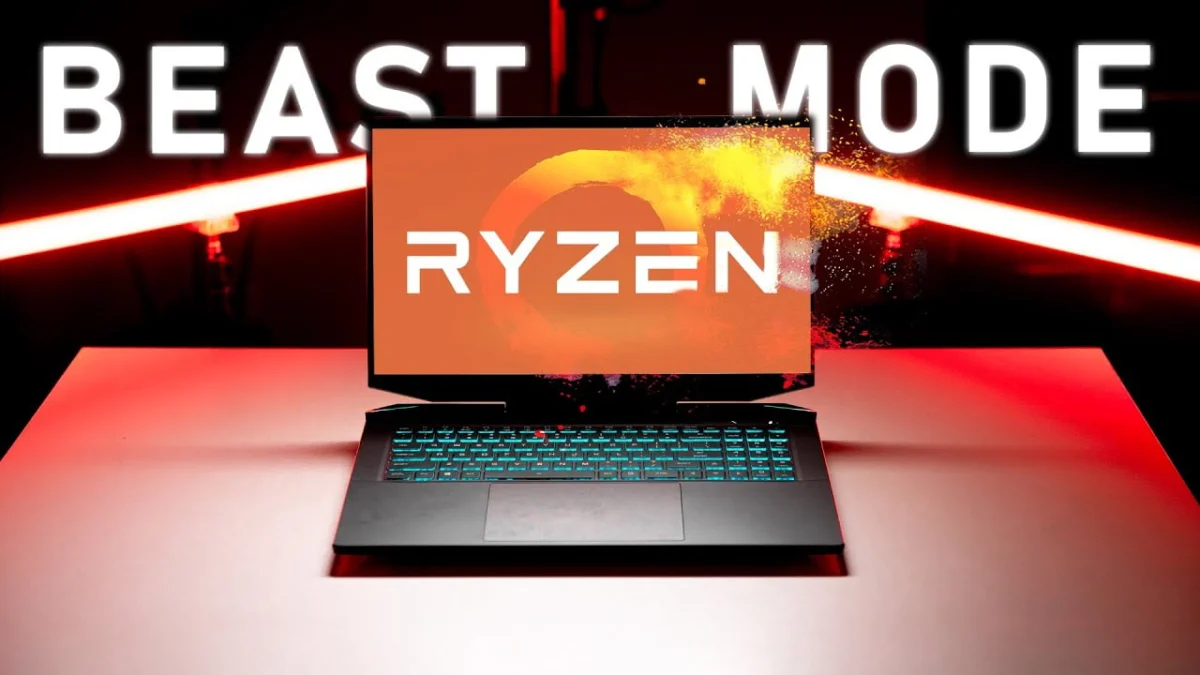
Eluktronics, a niche player in the competitive landscape of high-performance laptops, has unveiled its latest offering, the Prometheus XVII Ultra, a machine designed to bridge the gap between bespoke enthusiast-grade systems and mass-market gaming laptops from industry giants like Dell, HP, ASUS, and MSI. Following the success of their RP-15 model, which garnered attention approximately six months prior for its impressive Ryzen-powered performance, the Prometheus XVII Ultra aims to elevate the mobile gaming experience further, leveraging a potent combination of AMD’s Ryzen 5000H series processors and NVIDIA’s GeForce RTX 3080 graphics, engineered for maximum wattage in a proprietary "Beast Mode." This ambitious product arrives at a time of significant evolution in the mobile computing sector, marked by AMD’s resurgent performance in the CPU space and NVIDIA’s latest generation of high-efficiency, high-power mobile GPUs.
Eluktronics’ Position in a Dynamic Market
Eluktronics operates in a unique segment, often utilizing Clevo or Tongfang barebones chassis designs to offer highly configurable laptops that appeal to a discerning audience prioritizing raw performance and user control. This business model allows them to compete on specifications and price against larger manufacturers, who often invest heavily in proprietary chassis designs, branding, and extensive research and development. The company’s strategy typically involves integrating cutting-edge components and providing robust cooling solutions, a critical factor for sustained high performance in gaming laptops. The introduction of the Prometheus XVII Ultra, aptly named after the Greek titan associated with fire and foresight, signals Eluktronics’ continued commitment to pushing performance envelopes, with the "Ultra" suffix denoting a premium, top-tier experience within their product line.
The launch of the Prometheus XVII Ultra is also set against a backdrop of global supply chain disruptions and an unprecedented demand for high-end computing components, particularly semiconductors. The period spanning late 2020 and early 2021 saw significant challenges in sourcing both AMD Ryzen 5000 series CPUs and NVIDIA RTX 30 series GPUs, leading to widespread product shortages and extended lead times for consumers. Eluktronics has acknowledged these market conditions, advising customers of potential production delays as they diligently work to fulfill backorders, a common scenario for manufacturers navigating this turbulent period. This context underscores the difficulty in bringing such a high-spec product to market and highlights the dedication required to maintain availability.
Performance Prowess: Ryzen and RTX Unleashed
At the heart of the Prometheus XVII Ultra’s performance capabilities are its configurable CPU and GPU options. The base model begins at approximately $1,700 USD, featuring an AMD Ryzen 7 4800H CPU, 16GB of RAM, a 512GB NVMe SSD, and an NVIDIA GeForce RTX 3060. An intermediate tier, priced around $2,100 USD, surprisingly offers an Intel 10th Gen Core i7-10875H CPU paired with an RTX 3070, demonstrating Eluktronics’ flexibility in catering to different processor preferences. The flagship configuration, and the subject of closer scrutiny, commands a price of approximately $2,600 USD, housing AMD’s latest Ryzen 7 5800H CPU alongside an NVIDIA GeForce RTX 3080 with 16GB of VRAM. The reviewed sample, equipped with doubled memory and storage, reached an approximate retail price of $2,800 USD.
The integration of a Ryzen 7 5800H processor marks a significant advancement, as AMD’s Zen 3 architecture has proven highly competitive in multi-core performance and power efficiency, making it an ideal choice for demanding gaming and productivity tasks. Paired with the RTX 3080, which represents NVIDIA’s most powerful mobile GPU at the time, the Prometheus XVII Ultra is positioned as a formidable gaming machine. A critical differentiator for Eluktronics is its ability to push the RTX 3080 to higher Total Graphics Power (TGP) limits, leveraging NVIDIA’s Dynamic Boost 2.0 technology and custom software controls. While many RTX 3080 laptops typically operate within a TGP range of 80W to 150W, the Prometheus XVII Ultra’s "Beast Mode" allows the GPU to reach an impressive 150W, with the option to further optimize power delivery by disabling Dynamic Boost for a dedicated 150W to the GPU. This aggressive power allocation is intended to maximize frame rates and raw graphical horsepower, often distinguishing it from competitors that may limit TGP to achieve thinner designs or better battery life.
Pricing, Availability, and Value Proposition
The pricing structure for the Prometheus XVII Ultra positions it competitively within the high-end gaming laptop segment. While a $2,800 investment is substantial, Eluktronics asserts that its configuration, particularly with the high-wattage RTX 3080, offers a compelling value proposition when compared to similarly equipped models from larger brands. These competing models often carry higher price tags for comparable or even lower GPU TGP, which directly impacts in-game performance. Furthermore, Eluktronics enhances its offering with a gaming bundle for purchases exceeding $2,500, including a gaming mouse pad, a lightweight gaming mouse, a gaming headset, and a 10-foot HDMI cable, a thoughtful addition for serious gamers. This strategy aims to provide a performance-per-dollar advantage, appealing to enthusiasts who prioritize raw power above all else.
Design Philosophy: Function Over Form?
In terms of aesthetics, the Prometheus XVII Ultra adopts a minimalist and understated design, a characteristic often seen in laptops built around generic Clevo or Tongfang chassis. The exterior features a mix of plastic and aluminum components, giving it a clean, if not particularly distinctive, appearance. For users seeking personalization, Eluktronics offers a dbrand black matrix skin as an optional extra. Subtle RGB light bars along the edges provide a touch of gamer flair, customizable via included software. As a 17-inch laptop, portability is inherently a secondary consideration. Weighing approximately 6 pounds and just under an inch thick, it qualifies as a "desktop replacement" rather than a highly portable device.
One notable design element, or rather a point of concern, is the centrally placed hinge. Its construction leads to some chassis flex when opening the laptop with one hand and noticeable screen wobbling during use, particularly when placed on a lap. This aspect highlights a potential area for refinement in the generic chassis design, which, by its nature, is not exclusive to Eluktronics and is shared across several smaller manufacturers. The choice of a generic chassis allows for cost efficiency and speed to market with new components but can sometimes lead to compromises in bespoke design elements and overall build rigidity when compared to custom-engineered chassis from major OEMs.
Input Devices: Keyboard and Trackpad Analysis
The interior design presents a clean keyboard layout complemented by a notably large trackpad. The inclusion of a full numpad is a practical feature for a 17-inch form factor, though the positioning of the arrow keys, which are the same size as standard keys and awkwardly placed, can lead to accidental presses. The omission of a secondary Enter key on the numpad might also be a minor inconvenience for data entry professionals. Despite these layout quirks, the keyboard itself receives high praise for its tactile feedback. The keys exhibit minimal wobble, offering a rigid typing surface with optimal travel distance, resulting in a satisfying bottom-out feel. This quality places it alongside highly regarded laptop keyboards such as those found in the ASUS ROG Zephyrus G15, making it suitable for both intense typing sessions and competitive gaming. The single-zone RGB backlighting provides adequate brightness for low-light environments, though customization options are limited.
The trackpad, a prominent feature due to its sheer size, boasts a smooth glass surface, facilitating effortless navigation within Windows. Its dimensions are even larger than those on premium laptops like the Dell XPS 17. However, the expansive size introduces a significant challenge: palm rejection. Users frequently experience unintended inputs when resting their hand near the primary left and right click zones. While the software offers an option to disable the right side of the trackpad, this compromise effectively halves the usable area and detracts from the overall user experience. This issue suggests that further fine-tuning of the palm rejection algorithms is required to match the seamless performance of trackpads found in devices like the Razer Blade 15 or Dell XPS 17 series. Additionally, the generous palm rest area, while comfortable for users with larger hands, might pose ergonomic challenges for those with smaller hands, requiring a longer reach to the main keys.
Webcam, Audio, and Connectivity
The Prometheus XVII Ultra’s webcam delivers adequate, though not exceptional, video quality. Its audio performance, however, is noted to be superior to some competitors, such as the Razer Blade 15 Advanced model. A minor concern related to the hinge’s flexibility is its tendency to wobble during video calls, which can be distracting. The laptop’s speakers are bottom-firing, a common placement that often compromises sound quality. In this instance, they exhibit limited bass response and a harsh treble, resulting in a generally unpleasing audio experience for music or video consumption. For an optimal audio experience, the use of external headphones is strongly recommended.
Connectivity options are robust and well-distributed across the laptop’s chassis. The left side features a USB 3.1 Gen2 Type-A port and separate audio jacks. The right side includes two USB Type-A Gen1 ports and a full-size UHS-I SD card reader, a welcome inclusion for content creators, despite its moderate transfer speeds. The rear of the laptop houses the power input, a gigabit Ethernet port, an HDMI 2.1 output, and a USB Type-C port with DisplayPort passthrough. This rearward placement of critical ports significantly enhances cable management, particularly for users who connect external displays or prefer to keep cables away from their mouse hand.
Display and Upgradeability
The display offered with the Prometheus XVII Ultra is a single configuration: a 17-inch matte IPS-type panel with Quad HD (2560×1440) resolution and a 165Hz refresh rate. This resolution is highly suitable for a 17-inch screen, providing sharp visuals and ample screen real estate without requiring aggressive scaling. The panel delivers good color reproduction, covering 99% sRGB, 76% Adobe RGB, and 79% DCI-P3. While sufficient for general use, gaming, and basic photo/video editing, the color gamut coverage is considered modest for a laptop in this price bracket, with expectations for wider coverage in professional-grade displays. Furthermore, the display’s peak brightness of approximately 350 nits is relatively dim, potentially hindering outdoor visibility and limiting its utility in brightly lit environments.
For enthusiasts, the Prometheus XVII Ultra includes a MUX switch, allowing users to toggle between NVIDIA’s Optimus technology (for power efficiency) and a direct connection to the discrete GPU (for maximum performance). This feature is highly valued in the gaming community for its ability to bypass potential performance bottlenecks. In terms of upgradeability, the laptop offers convenient access to two RAM slots, which are typically occupied in the reviewed configurations. The primary NVMe SSD provides respectable, though not class-leading, read and write speeds, and an additional M.2 slot is available for storage expansion, providing flexibility for future upgrades.
Software and User Control: A Double-Edged Sword
Eluktronics provides its proprietary software for power management, offering granular control over CPU and GPU behavior. The system features three primary power profiles: Office Mode, Balanced Mode, and Beast Mode. Within Balanced and Beast modes, users can further customize fan curves and overclock settings, including increasing CPU power levels up to 80W, adjusting GPU clock speeds, setting target temperatures, and enabling/disabling Dynamic Boost. The ability to disable Dynamic Boost and push the GPU to a dedicated 150W is a testament to Eluktronics’ performance-first approach. However, the software interface has been noted as somewhat clunky, particularly concerning saving custom profiles, representing a step backward in user experience compared to the more intuitive software found on previous Eluktronics models like the RP-15. This suggests that while the functionality is powerful, the user interface design requires further refinement.
Battery Life: A Desktop Replacement’s Reality
Given its powerful components and a relatively modest 62Wh battery, the Prometheus XVII Ultra exhibits challenging battery life, even when operating in power-saving modes. This characteristic reinforces its identity as a "desktop replacement" rather than a truly portable device. While performance modes have minimal impact on battery life under light loads, the laptop’s endurance is significantly curtailed during higher load scenarios. For a 17-inch gaming laptop of this caliber, a small battery capacity is a common compromise, as the primary expectation is for sustained high performance when connected to a power source.
Performance Benchmarks and Thermal Management
In performance testing, the various power modes play a crucial role. Office Mode significantly curtails performance to maximize battery life, making it unsuitable for demanding tasks. Balanced Mode and standard Beast Mode offer comparable performance, with a minor 10W difference in CPU power. The "Beast Mode Maxed" setting, with CPU power sliders pegged at 80W, initially delivers a burst of power before settling to a consistent 73W. While frequencies across Balanced, Beast, and Beast Maxed modes remain within a 350MHz range, Office Mode drastically reduces speeds. Intriguingly, the additional 20W in Beast Mode Maxed leads to a substantial increase in CPU temperatures, causing the CPU to reduce clock speeds to maintain thermal stability—a somewhat disappointing outcome for a thick, 17-inch chassis designed for robust cooling.
The GPU’s power behavior also presents interesting observations. Despite the ability to push the RTX 3080 to 150W (with Dynamic Boost disabled), the GPU often does not reach its maximum power targets across various settings. Office Mode restricts the GPU to slim-and-light laptop power levels, while Balanced and standard Beast Mode presets cap around 125W. This discrepancy, where the GPU doesn’t consistently hit its configured wattage targets, is peculiar, especially given that thermal limits (maxing out at 87°C) are rarely approached. This suggests that other internal limits, potentially not controllable via software, might be at play. Nevertheless, pushing the GPU power slider to its maximum does yield a noticeable frequency boost over lower power modes.
In gaming benchmarks, the Prometheus XVII Ultra lives up to its "Beast Mode" moniker. It delivers exceptionally high frame rates, consistently ranking among the fastest gaming laptops available. At its native 1440p resolution, the laptop maintains a strong lead. However, comparisons reveal nuances in performance scaling. While the 150W RTX 3080 in the Prometheus XVII Ultra significantly outperforms GPUs with lower TGPs, such as the RTX 3070 in a Razer Blade 15 Advanced, the performance increase is not always linear with power consumption. For instance, consuming approximately 50% more power than the Blade 15’s RTX 3070 might only result in a 15% higher frame rate, illustrating the diminishing returns of pushing GPU power beyond certain thresholds.
Regarding acoustics, the fan noise levels correlate directly with the selected power mode, ranging from quiet in Office Mode to audibly loud in Beast Mode. Balanced Mode is suggested as the optimal compromise for acoustic performance. Surface temperatures remain generally good, although the sides of the chassis can become noticeably warm during extended gaming sessions, which might affect users who rely on external mice positioned close to the laptop.
Conclusion and Market Implications
The Eluktronics Prometheus XVII Ultra stands as a testament to uncompromising performance in the mobile gaming arena. Its combination of a powerful Ryzen 5000H CPU and a high-wattage RTX 3080 GPU, coupled with extensive user control over power profiles, positions it as a top contender for enthusiasts prioritizing raw gaming and application performance. The comprehensive port selection and the high-quality keyboard (despite minor layout issues) further enhance its appeal.
However, the laptop is not without its compromises. The generic chassis design, while enabling competitive pricing and rapid component integration, leads to observable drawbacks such as the flexible hinge, an imperfect trackpad experience hampered by palm rejection issues, and a merely adequate webcam. The display, while sharp and vibrant at QHD 165Hz, falls short in color gamut coverage and peak brightness compared to expectations for its premium price point. The software, while powerful in its underlying functionality, requires interface improvements to match the user-friendliness of its predecessors.
Ultimately, the Prometheus XVII Ultra is a highly specialized machine. For users whose primary directive is maximum gaming performance and who value granular control over their hardware, often at the expense of premium design flourishes, battery life, or certain ergonomic refinements, it represents a compelling proposition. Its aggressive pricing for its class of performance makes it a strong value contender in a market where high-end mobile gaming laptops frequently command higher prices. However, for consumers seeking a more refined, all-encompassing premium laptop experience that balances cutting-edge performance with exquisite design, superior build quality, and a flawless user interface, the trade-offs inherent in the Prometheus XVII Ultra might warrant consideration of alternative options, even at a slightly higher cost. The Eluktronics Prometheus XVII Ultra decisively carves out its niche as a performance beast, reflecting the ongoing evolution of the high-end gaming laptop market where power and control are increasingly paramount.