The landscape of Artificial Intelligence has shifted from simple, single-turn chat interfaces to complex, autonomous systems known as AI agents. While standard Large Language Model (LLM) implementations excel at answering straightforward queries, they often falter when faced with multi-step reasoning, external database integration, or the need for long-term memory. To address these limitations, developers are increasingly turning to LangGraph, a specialized library built on top of LangChain designed to create stateful, multi-actor applications with cyclic computational patterns.
LangGraph provides a structured framework for building agentic workflows where the execution flow is represented as a graph. In this architecture, nodes represent discrete units of work—such as calling a model or executing a tool—while edges define the path between these units. Unlike traditional linear chains, LangGraph allows for cycles, enabling agents to iterate on a problem, self-correct, and maintain a persistent state across multiple interactions. This approach solves the "custom plumbing" problem that often plagues developers trying to move beyond basic RAG (Retrieval-Augmented Generation) systems into fully autonomous agents.
The Architectural Foundation: State, Nodes, and Edges
To understand how LangGraph operates, one must first grasp its three core primitives. These components serve as the building blocks for every graph, regardless of its complexity.
The first primitive is State. In LangGraph, the state is typically defined using a Python TypedDict. It serves as a shared memory repository that persists throughout the graph’s execution. Every node in the graph reads from this state and returns updates to it. This centralized approach ensures that no data is passed directly between nodes in an ad-hoc manner; instead, the state acts as the "single source of truth." For instance, a support ticket agent might maintain a state that includes the customer’s message, a log of internal actions, and a flag indicating whether the issue has been resolved.
The second primitive is Nodes. Nodes are essentially standard Python functions that execute logic. A node receives the current state as an input, performs an operation—such as querying a database or invoking an LLM—and returns a dictionary containing the fields it wish to update in the state. By registering these functions using the add_node method, developers can build modular, testable components that are decoupled from the overall flow logic.
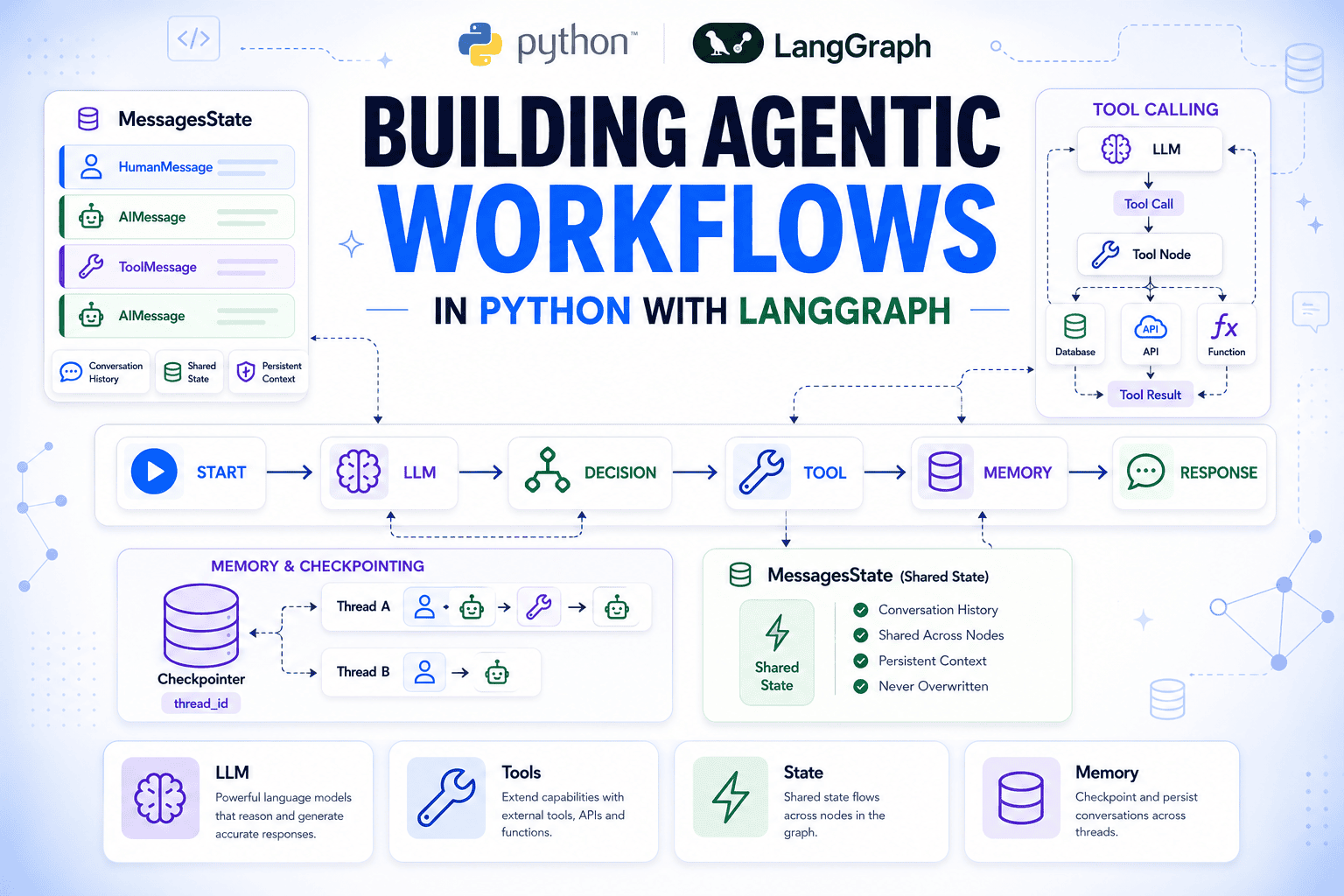
The third primitive is Edges. Edges define the "traffic rules" of the graph. A standard edge connects node A to node B, ensuring that B runs immediately after A finishes. However, the true power of LangGraph lies in conditional edges. These allow the graph to branch based on the output of a node. For example, after an LLM generates a response, a conditional edge can check if the model requested a tool call. If so, the graph routes to a "tools" node; if not, it routes to the end of the process.
A Chronology of the Agentic Framework Evolution
The development of LangGraph represents a significant milestone in the timeline of generative AI development.
- Late 2022: The release of ChatGPT and the initial surge of LangChain. Developers focused on "chains"—linear sequences of LLM calls.
- 2023: The rise of the "Agent" concept. Early agents used a loop where the LLM decided which tools to use. However, these were often "black boxes" that were difficult to debug or constrain.
- Early 2024: LangChain identifies the need for more granular control over agentic loops. The community began demanding a way to define "State Machines" for AI.
- Mid 2024: LangGraph is introduced as a standalone library. It shifts the focus from "pre-built agents" to "customizable agentic workflows," allowing developers to define the exact logic of the reasoning loop.
- Present: LangGraph has become the industry standard for enterprise-grade agents, supporting complex features like human-in-the-loop verification, time travel (reverting to previous states), and multi-agent orchestration.
Technical Implementation: Building the Core Logic
The transition from a conceptual graph to a working Python implementation begins with environment setup. Developers typically utilize packages such as langgraph, langchain-openai, and python-dotenv to manage dependencies and API credentials.
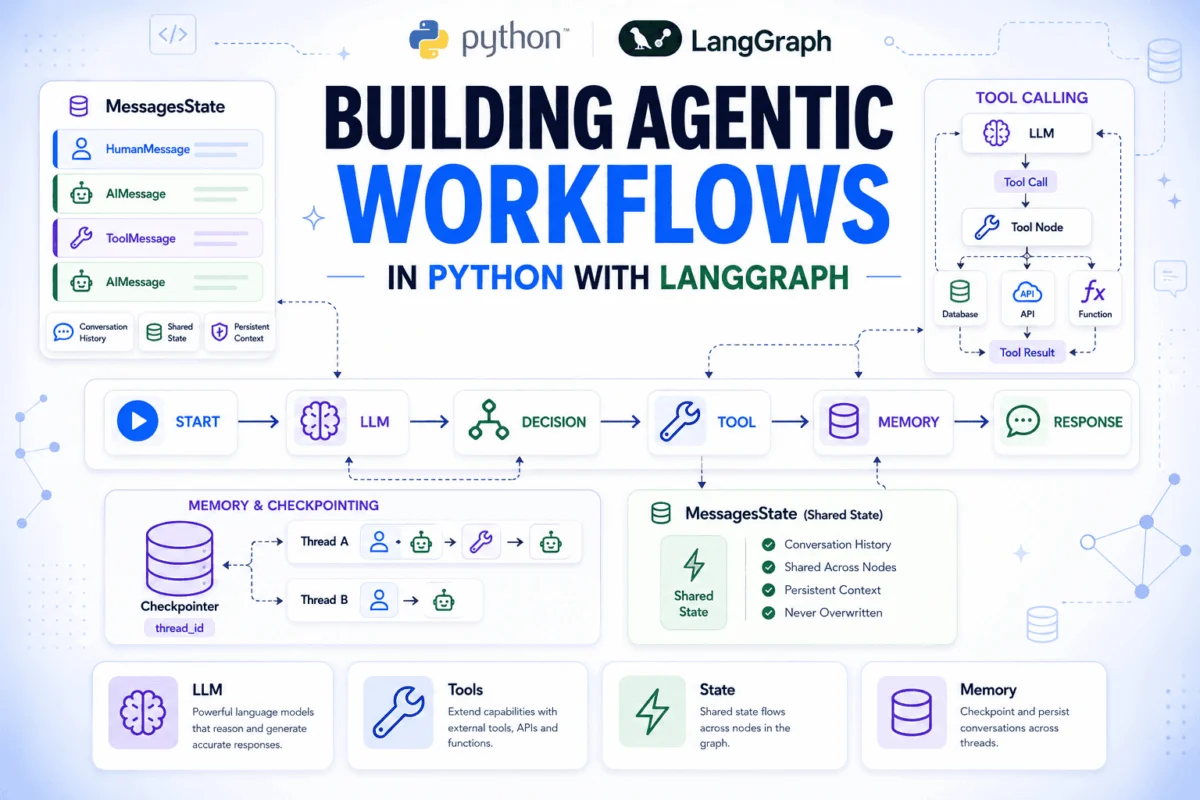
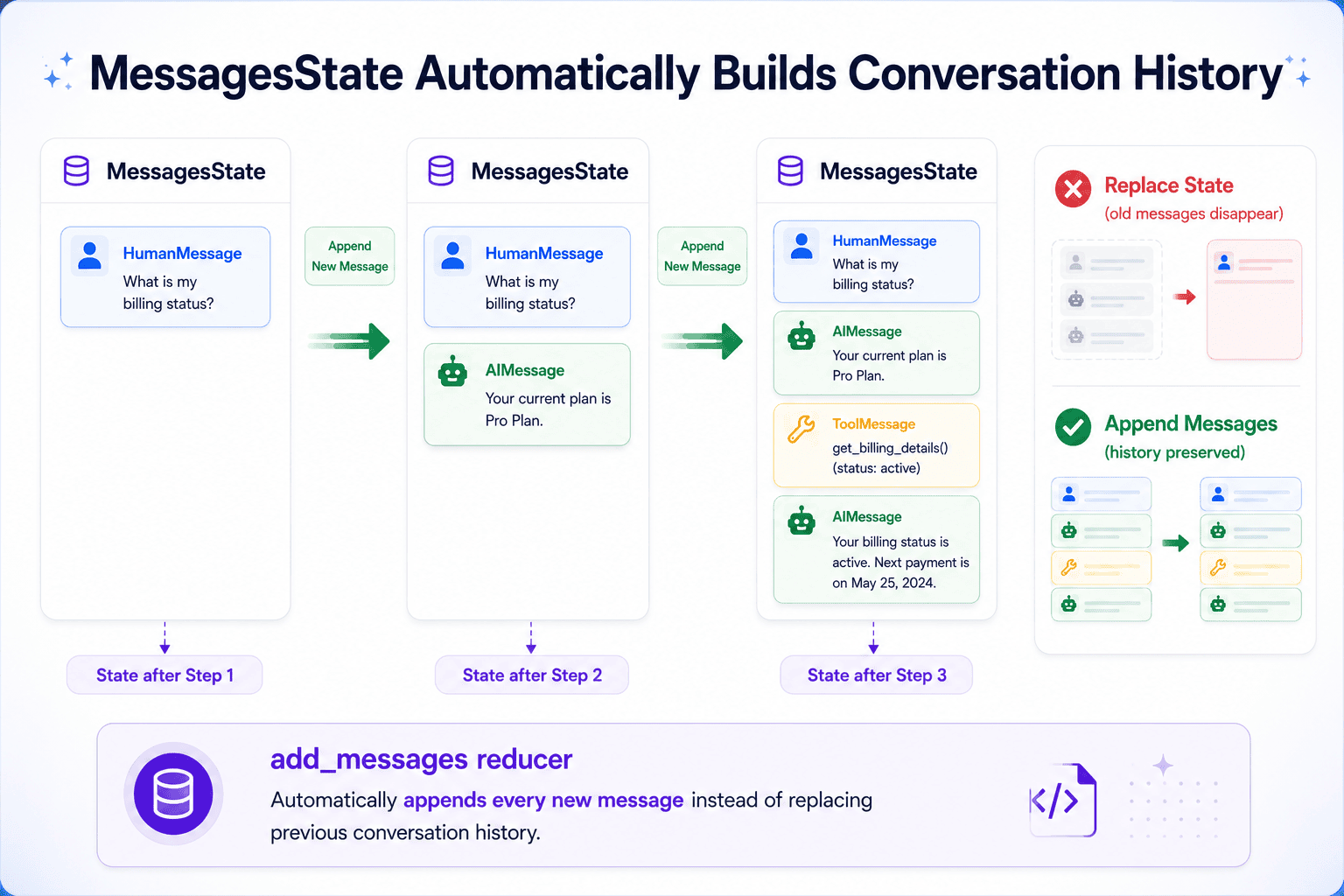
A critical advancement in LangGraph is the MessagesState object. In a conversational context, maintaining a list of messages is the most common requirement. MessagesState is a built-in type that includes a messages field equipped with a "reducer" function. In functional programming, a reducer defines how new data is merged with existing data. LangGraph’s add_messages reducer handles the complexities of appending new AI responses to the history while deduplicating messages based on unique IDs. This prevents the common pitfall of accidentally overwriting the entire conversation history during a state update.
When integrating a model like OpenAI’s GPT-4o-mini into a node, the function invokes the model using the current message list and returns the response. This response is then automatically appended to the state, ensuring that subsequent nodes have access to the full context of the interaction.
Tool Integration and the ReAct Pattern
For an AI agent to be truly useful, it must interact with the real world. This is achieved through tool calling, often implemented via the ReAct (Reasoning and Acting) pattern. By using the @tool decorator, developers can transform any Python function into a tool that the LLM can understand.
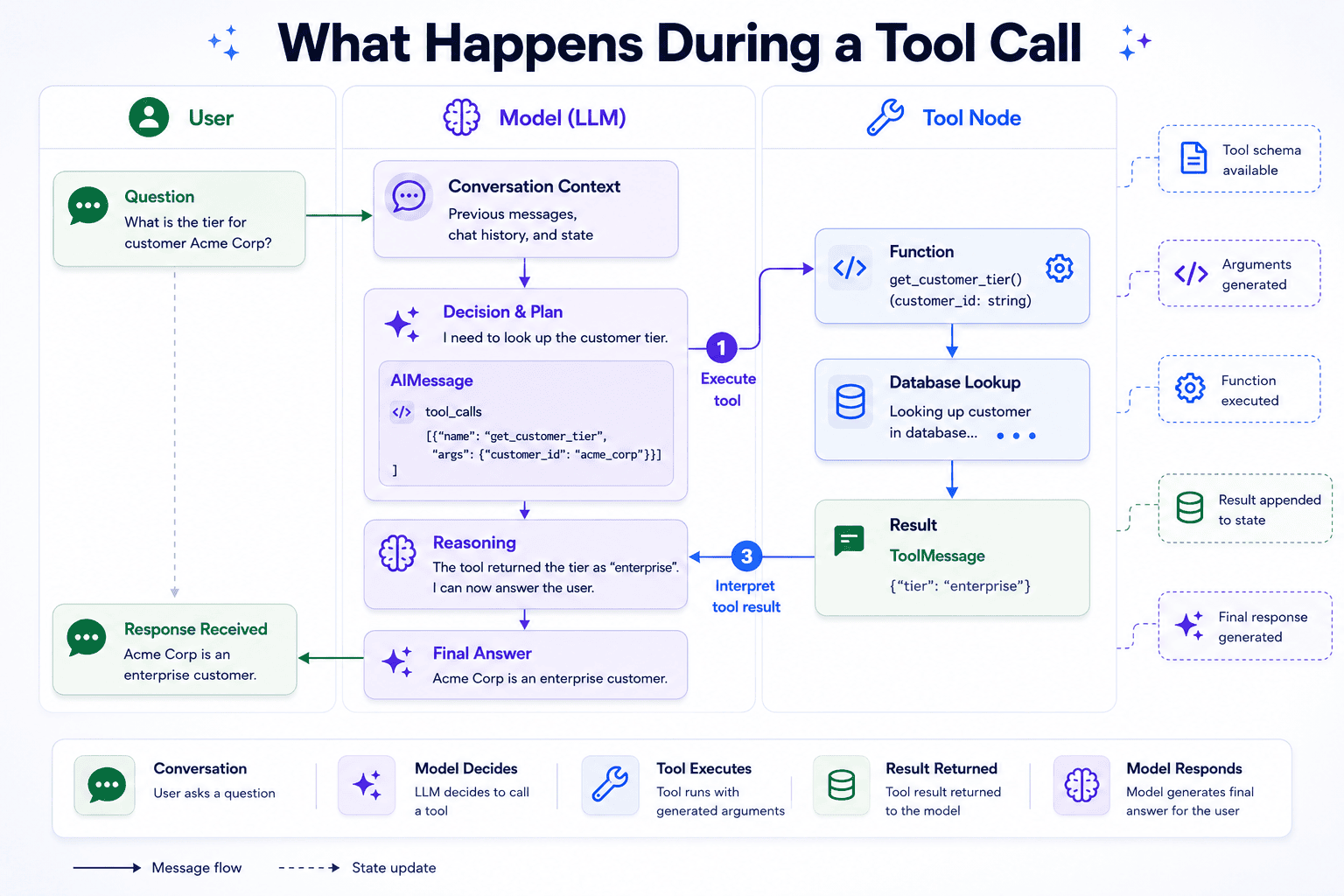
The integration process involves "binding" these tools to the language model. When a model is "tool-aware," it can choose to return a structured request to call a function instead of a plain text response. LangGraph utilizes a specialized ToolNode to execute these requests. The workflow follows a specific loop:
- The model node analyzes the user input and the current state.
- If the model requires more information (e.g., "What is the subscription tier for customer 1001?"), it generates a tool call.
- A conditional edge detects this tool call and routes the graph to the
ToolNode. - The
ToolNodeexecutes the Python function, retrieves the data, and appends aToolMessageto the state. - The graph loops back to the model node, which now has the tool’s output to formulate a final, informed answer.
This cycle ensures that the agent’s reasoning is grounded in factual data retrieved during the execution process, rather than relying solely on the model’s static training data.
Persistence and Memory Management
A recurring challenge in AI development is maintaining continuity across different user sessions. Without persistence, every call to an agent starts from a blank slate. LangGraph solves this through "Checkpointers."
A checkpointer is a mechanism that saves a snapshot of the graph’s state after every step. By associating these snapshots with a thread_id, developers can allow an agent to "remember" a conversation that took place days or weeks ago. While InMemorySaver is frequently used during the development phase for its simplicity, production environments typically leverage database-backed checkpointers, such as those using PostgreSQL or Redis.
Furthermore, LangGraph distinguishes between "short-term memory" (the current conversation thread) and "long-term memory" (information shared across all threads). While checkpointers handle the former, "Stores" are used for the latter. Stores allow an agent to save user preferences or global configurations that persist even if a new conversation thread is started.
Official Responses and Industry Impact
Industry experts have noted that the shift toward graph-based agentic workflows is a response to the "brittleness" of early AI implementations. Harrison Chase, CEO of LangChain, has frequently emphasized that "controllability" is the primary goal of LangGraph. By making the execution flow explicit, developers can implement "guardrails" that prevent agents from entering infinite loops or accessing unauthorized tools.
Data from recent developer surveys suggests that enterprise adoption of agentic workflows is accelerating. Approximately 60% of organizations currently working with LLMs are moving toward "Agentic RAG," where the retrieval process is managed by an autonomous agent rather than a static vector search. This trend is driven by the need for higher accuracy in complex domains like legal research, medical diagnostics, and technical support.
Broader Implications and Future Outlook
The rise of frameworks like LangGraph signifies a maturation of the AI field. We are moving away from the "magic box" era of LLMs and toward a disciplined engineering approach. The ability to visualize an agent’s reasoning process as a series of nodes and edges provides much-needed transparency, which is vital for regulatory compliance and user trust.
Looking ahead, the next frontier is multi-agent systems. In these configurations, a "supervisor" agent routes tasks to various "specialist" agents—each with its own graph, state, and tools. This modularity allows for the creation of incredibly sophisticated software systems that can handle end-to-end business processes, from software development to supply chain management.
By mastering the primitives of state, nodes, and edges, and by leveraging the power of persistent memory and tool integration, developers are no longer just "prompting" models; they are architecting autonomous intelligence. LangGraph stands at the center of this transition, providing the necessary scaffolding for the next generation of AI-driven applications.