In the contemporary landscape of machine learning engineering, practitioners frequently discover that designing model architectures accounts for only a fraction of project lifecycles. The vast majority of engineering hours are dedicated to data plumbing—the meticulous process of cleaning, preprocessing, transforming, and formatting information to ensure seamless ingestion by downstream systems. As machine learning models transition from experimental local scripts to complex, production-grade microservice architectures, the imperative to move structured datasets reliably across files, processes, and application programming interfaces (APIs) becomes paramount. This operational reality demands a robust architecture for serializing and deserializing data without compromising pipeline integrity.
Standard data interchange formats, particularly JavaScript Object Notation (JSON), serve as the universal glue for modern software systems due to their lightweight nature and language-agnostic readability. However, Python developers routinely encounter a persistent friction point: native JSON libraries natively support only basic primitives such as strings, numbers, lists, dictionaries, booleans, and null values. When a machine learning pipeline configuration incorporates standard Python types like datetime, set, pathlib.Path, or enum.Enum, standard serialization functions inevitably fail. This limitation can cause unexpected application crashes, data corruption during cross-service communication, and persistent bottlenecks in automated retraining loops.
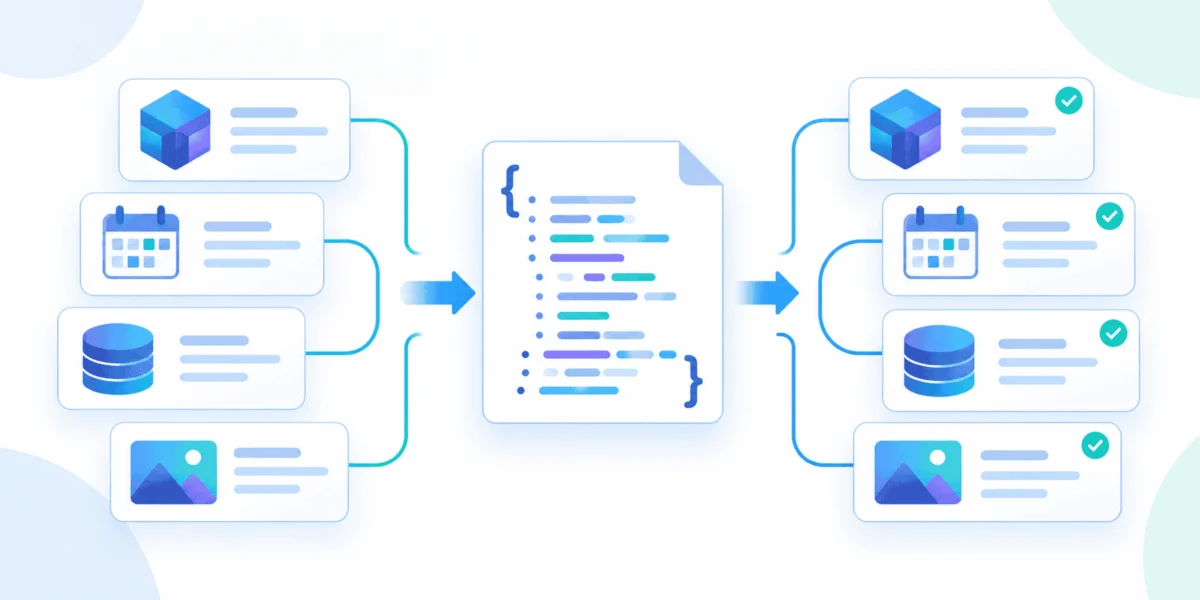
Addressing these serialization vulnerabilities requires a systematic, three-step engineering strategy that extends native JSON handling capabilities, implements resilient decoding protocols, and establishes fault-tolerant schema migration mechanisms.
The Root Problem: Navigating Python and JSON Type Discrepancies
To understand the necessity of an advanced serialization pipeline, one must examine how standard serialization breaks down under real-world conditions. Consider a typical machine learning experiment configuration script designed to track parameters, feature sets, storage directories, and execution timestamps:
from datetime import datetime
from enum import Enum
from pathlib import Path
import json

class ModelType(Enum):
    RANDOM_FOREST = "rf"
    NEURAL_NET = "nn"

experiment_config =
    "experiment_id": 1042,
    "model_type": ModelType.NEURAL_NET,
    "features": "age", "income", "location", # A Python set
    "data_path": Path("/data/v2/train.csv"),
    "timestamp": datetime.now(),
    "nested_meta":
        "retries": 3
Attempting to execute json.dumps(experiment_config) on this dictionary immediately triggers a TypeError: Object of type ModelType is not JSON serializable. In production environments operating at scale, such uncaught exceptions can halt automated hyperparameter tuning jobs, disrupt continuous integration pipelines, and result in lost experiment telemetry.
Industry benchmarks indicate that data pipeline failures related to serialization and schema mismatches account for nearly 18% of routine debugging overhead in mid-to-large-scale machine learning deployments. Resolving this systematically requires moving beyond basic dictionaries to implement custom encoding architectures.
Step 1: Engineering a Custom Encoder for Complex Data Types
The first pillar of a robust pipeline involves subclassing Python’s native json.JSONEncoder. By overriding the default() method, developers can intercept unsupported objects before the serialization engine throws an exception, translating them into JSON-compatible primitives while preserving type metadata.
class RobustEncoder(json.JSONEncoder):
    def default(self, obj):
        # Handling Datetimes via ISO format
        if isinstance(obj, datetime):
            return "__type__": "datetime", "value": obj.isoformat()
        # Handling Sets by converting them to lists
        if isinstance(obj, set):
            return "__type__": "set", "value": list(obj)
        # Handling Paths by converting them to strings
        if isinstance(obj, Path):
            return "__type__": "path", "value": str(obj)
        # Handling Enums by extracting their underlying scalar values
        if isinstance(obj, Enum):
            return obj.value
        # Fallback to base class implementation for native types
        return super().default(obj)
A critical design pattern within this custom encoder is the injection of the __type__ semantic marker. When structured data types—such as Python sets or pathlib.Path objects—are flattened into primitive lists or strings, their original type identity is inherently lost. Attaching an explicit type tag ensures that the deserialization layer can accurately reconstruct the original objects rather than returning generic primitives.
Executing the serialization with this custom class using json.dumps(experiment_config, cls=RobustEncoder, indent=2) produces a fully compliant JSON string:
  "experiment_id": 1042,
  "model_type": "nn",
  "features":
    "__type__": "set",
    "value": [
      "income",
      "location",
      "age"
    ]
  ,
  "data_path":
    "__type__": "path",
    "value": "/data/v2/train.csv"
  ,
  "timestamp":
    "__type__": "datetime",
    "value": "2026-09-28T14:26:10.328310"
  ,
  "nested_meta":
    "retries": 3
Step 2: Implementing a Resilient Decoder and Error Recovery
While encoding solves the outbound transmission challenge, the inbound parsing process—deserialization—introduces significant vulnerabilities, particularly when dealing with corrupted files, network packet truncation, or manually edited configuration files.
To reverse the encoding process safely, developers utilize json.loads() paired with the object_hook parameter. This approach evaluates nested dictionaries dynamically during parsing, allowing for type reconstruction and defensive error handling.
import logging

def robust_decoder(dct):
    if "__type__" in dct and "value" in dct:
        type_name = dct["__type__"]
        val = dct["__value__"] if "__value__" in dct else dct["value"]
        try:
            if type_name == "datetime":
                return datetime.fromisoformat(val)
            elif type_name == "set":
                return set(val)
            elif type_name == "path":
                return Path(val)
        except (ValueError, TypeError) as e:
            logging.warning(f"Malformed type_name data detected: e. Falling back to raw value.")
            return val
    return dct
By wrapping the reconstruction logic within a try-except block, the pipeline achieves graceful error recovery. If an upstream service transmits a corrupted timestamp string or an invalid file path, the decoder logs a warning rather than crashing the entire data ingestion service, substituting a safe fallback value or preserving the raw input for downstream auditing.
Step 3: Managing Schema Evolution and Pipeline Migrations
In fast-paced engineering environments, model metadata schemas evolve continuously. Hyperparameters are added, deprecated metrics are removed, and configuration structures shift between code releases. Loading legacy JSON configuration files into updated software versions frequently causes KeyError exceptions unless an explicit migration layer is enforced.
A production-grade validation and migration factory function bridges the gap between historical data and modern codebases:
def load_experiment_config(json_data: str) -> dict:
    # 1. Deserialize using the robust decoding hook
    raw_dict = json.loads(json_data, object_hook=robust_decoder)

    # 2. Apply schema migrations, default values, and structural validation
    validated_config =
        "experiment_id": raw_dict.get("experiment_id", "unknown"),
        "model_type": raw_dict.get("model_type", "rf"),
        "features": raw_dict.get("features", set()),
        "data_path": raw_dict.get("data_path", Path("./default_data.csv")),
        "timestamp": raw_dict.get("timestamp", datetime.now()),
        "learning_rate": raw_dict.get("learning_rate", 0.001), # Newly introduced hyperparameter
        "nested_meta": raw_dict.get("nested_meta", )


    # 3. Discard deprecated fields or log structural warnings if necessary
    return validated_config
This defaulting mechanism ensures that historical experiment logs—dating back months or years—remain fully compatible with newly deployed model architectures. If an older experiment configuration lacks the newly introduced "learning_rate" hyperparameter, the validation layer safely assigns an industry-standard default value of 0.001, allowing legacy analytical scripts to execute without interruption.
Implications for Enterprise Machine Learning Operations
The implementation of a comprehensive, type-aware JSON serialization pipeline carries profound implications for Enterprise Machine Learning Operations (MLOps). As regulatory frameworks increasingly demand absolute reproducibility in automated decision-making systems, the fidelity of experiment telemetry and configuration tracking becomes a compliance necessity.
Industry analysts emphasize that robust data plumbing directly correlates with reduced model deployment times and lower incidence rates of silent production failures. By standardizing how complex data types are encoded, decoded, and migrated across organizational boundaries, engineering teams eliminate a persistent source of technical debt.
Ultimately, mastering JSON serialization transcends basic syntax management; it establishes a resilient foundation for scalable, auditable, and fault-tolerant machine learning infrastructure.