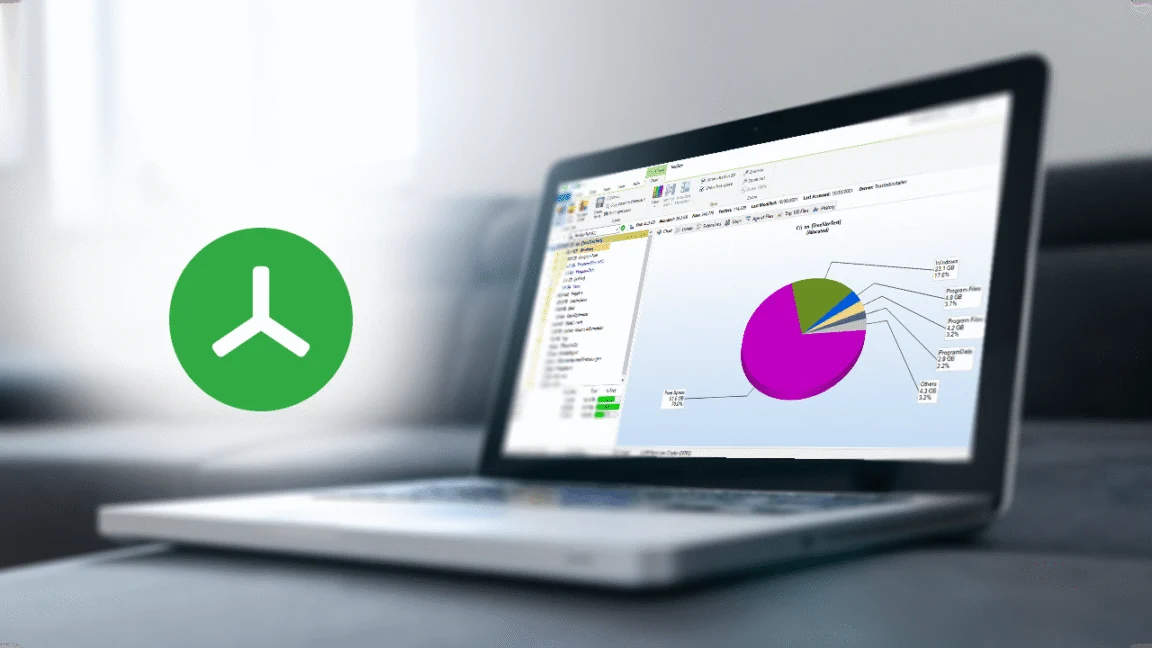
The recent policy clarification by JAM Software, creators of the popular disk space analyzer TreeSize, regarding the indefinite availability of past software versions for download, has ignited a significant debate among its customer base. The company’s decision to discontinue the perpetual provision of older installation files and license keys for download, citing security risks and substantial operational overhead, has brought into sharp focus the widening chasm between traditional perpetual license expectations and the realities of an increasingly subscription-driven software industry. This development, while framed by JAM Software as a long-standing policy, underscores a broader industry shift that continues to challenge consumer perceptions of software ownership and access.
JAM Software’s stance, articulated by a company spokesperson identified as Christ, highlights several critical concerns. "Making these available for download indefinitely and without restriction is something we consider a risk to our customers, particularly in business environments," Christ stated. This risk assessment likely pertains to unpatched vulnerabilities in older software versions that could be exploited if widely accessible, posing a significant threat to corporate IT infrastructure. Beyond security, the logistical burden of maintaining and supporting an ever-growing archive of legacy software versions and their corresponding activation keys presents a formidable challenge. "There’s also the technical and organizational overhead of maintaining and supporting old versions and their associated keys indefinitely," Christ added, pointing to the considerable resources required to ensure the integrity and accessibility of such an extensive repository.
The Perennial vs. Subscription Dilemma
The controversy surrounding TreeSize is a microcosm of a much larger trend sweeping through the software industry over the past decade: the migration from one-time perpetual licenses to recurring subscription models. Historically, purchasing a software license often implied indefinite ownership of a specific version, including the right to download and reinstall it as needed. This model provided users with a sense of permanence and control over their digital assets. However, as software development cycles accelerated and the demand for continuous updates, cloud integration, and ongoing support grew, vendors increasingly found the perpetual license model unsustainable for predictable revenue generation and long-term product viability.
The shift to subscriptions, often framed as Software-as-a-Service (SaaS), offers vendors a more stable and predictable revenue stream, enabling continuous investment in development, security patches, and customer support. For many customers, however, this transition represents a fundamental change in their relationship with software. The concept of "renting" software rather than "owning" it can lead to frustration, especially when perceived access to a previously purchased version is curtailed. The backlash against TreeSize’s policy, despite the company asserting it as a long-standing practice, illuminates this significant "disconnect between what many people expect when buying a perpetual license and what they get when a software vendor shifts its business model toward subscriptions."
JAM Software’s Communication and Customer Notifications
In response to concerns about customers being caught off guard, JAM Software emphasized its proactive communication strategy. "To make sure customers aren’t caught off guard, we proactively notify them by email, well before their maintenance ends, to back up their installation file and license key themselves," Christ explained. "This is meant to ensure no one loses access to software they’ve already purchased." This strategy places the onus on the customer to archive their software assets, a practice that, while technically sound, may not align with the expectations of users accustomed to on-demand downloads from vendor portals. Many users might reasonably expect that a company would maintain access to purchased versions, particularly given the common need to reinstall software after hardware failures, operating system upgrades, or migration to new machines.
The company’s position on refunds further illustrates this nuanced interpretation of "indefinite use." Despite online requests for refunds from disgruntled customers, Christ affirmed, "since our customers do receive what was agreed, namely indefinite use of the software version they purchased, we don’t consider a refund to be warranted." This statement underscores the legal and contractual distinction between perpetual use of a specific version and perpetual access to download that version from the vendor’s servers. While users retain the right to use their purchased software indefinitely, the terms of service, which are often overlooked or not fully understood, may not guarantee indefinite access to the installation media itself.
The Question of Value: Is a Disk Space Analyzer Worth a Subscription?
The evolving licensing model for TreeSize also prompts a fundamental question: does it make sense to subscribe to a utility like a disk space analyzer? This query gains particular relevance given the availability of free alternatives, such as WinDirStat, which offer basic disk analysis functionalities without cost. While TreeSize offers a more feature-rich experience, including the ability to search for duplicate files, deduplicate redundant files, and compare disk space usage over time—features absent in its free counterpart and crucial for business environments—the perceived value proposition for a recurring payment can be contentious. The existence of a free version of TreeSize, albeit with limited features and explicitly not for business use, further complicates this value assessment for consumers.
For individual users and small businesses, the decision to opt for a subscription model for a utility tool often hinges on the frequency of use, the criticality of advanced features, and the availability of comparable free or one-time purchase alternatives. Large enterprises, however, often prioritize robust features, dedicated support, and the peace of mind that comes with a professionally maintained and regularly updated tool, even if it entails a subscription cost.
Chronology of a Paradigm Shift: The Rise of the Subscription Economy
The current situation with TreeSize is not an isolated incident but rather a clear manifestation of a broader, decade-long transformation within the software industry. The shift towards subscription models gained significant momentum in the early 2010s, driven by several factors:
- 2000s-Early 2010s: The advent of high-speed internet and cloud computing laid the groundwork for remote delivery of software. Companies like Salesforce pioneered the Software-as-a-Service (SaaS) model for enterprise applications.
- Mid-2010s: Major players began transitioning. Adobe famously moved its Creative Suite to the Creative Cloud subscription model in 2013, sparking similar debates about "ownership." Microsoft gradually pushed its Office suite towards Office 365 subscriptions, alongside perpetual licenses.
- Late 2010s-Present: The trend accelerated, with an increasing number of independent software vendors (ISVs) and even hardware manufacturers adopting subscription models for various products and services. This period saw a significant emphasis on "recurring revenue" as a key metric for investor confidence and business stability. Companies across sectors, from entertainment (Netflix, Spotify) to productivity (Zoom, Slack), cemented the subscription model as a dominant economic force.
This evolution illustrates the "growing subscription economy, particularly the software industry’s fixation on recurring revenue." The allure of predictable income streams is undeniable for software vendors, allowing for more stable budgeting, continuous development cycles, and the ability to offer ongoing support and cloud services without the feast-or-famine cycle associated with one-time purchases.
Economic Pressures and Vendor Rationale
JAM Software’s rationale for embracing a model that emphasizes predictability aligns perfectly with these broader industry trends. Christ explicitly linked the change to the challenging economic environment. "The broader economic environment is more challenging today than it was a few years ago, and we feel that too as a software vendor," he stated. This candid admission points to the pressures faced by software companies to maintain profitability and ensure long-term viability.
In such an environment, the predictability offered by a subscription model becomes crucial. "To continue meeting our own standards and our responsibility to business customers who rely on high-quality software, we are placing greater emphasis on predictability in development and support," Christ explained. "A subscription model gives us that predictability in a way one-time purchases do not." This perspective highlights the vendor’s need to secure a stable financial foundation to deliver on promises of continuous improvement, robust security, and reliable customer service—all factors critical for retaining business clients. Without predictable revenue, companies risk cutting corners on development, delaying essential security updates, or reducing support staff, ultimately compromising product quality and customer satisfaction.
Implications for Consumers and Businesses
The TreeSize scenario carries significant implications for both individual consumers and corporate IT departments.
- For Consumers: The primary impact is the erosion of the traditional concept of software ownership. Users must now be acutely aware that purchasing a "perpetual license" often means perpetual use of a specific version, contingent on the user’s ability to retain the installation media and license key themselves. Reliance on vendor portals for re-downloads is becoming less guaranteed. This necessitates a more proactive approach to software management, including diligent archiving of purchased installers and keys.
- For Businesses: While businesses often operate under more formal licensing agreements, the principle remains. IT departments must update their policies regarding software procurement, asset management, and disaster recovery. They must ensure that mission-critical software, even if perpetually licensed, has a robust backup and recovery strategy for installation files and license information. The shift also means a move from capital expenditure (one-time purchases) to operational expenditure (recurring subscriptions), which can impact budgeting and financial planning. Furthermore, the security implications of running unpatched, older versions of software due to lack of access to updates or installation files are significant, potentially exposing corporate networks to vulnerabilities.
The Future of Software Ownership
The TreeSize controversy is a powerful reminder that the definition of "software ownership" is continually evolving in the digital age. As the subscription economy matures, the expectation of indefinite access to software downloads and updates will increasingly become tied to ongoing maintenance contracts or active subscriptions. While this model offers undeniable benefits to vendors in terms of stability and continuous improvement, it places a greater responsibility on users to understand the nuances of their licensing agreements and to adapt their personal and organizational practices accordingly.
The debate over TreeSize’s download policy is not merely about a single utility tool; it reflects the ongoing tension between consumer expectations rooted in a bygone era of software distribution and the economic realities driving the modern software industry. As more vendors inevitably follow this path, both consumers and businesses will need to adjust to a landscape where software is increasingly a service rather than a static product, redefining what it means to "own" digital tools in the 21st century.