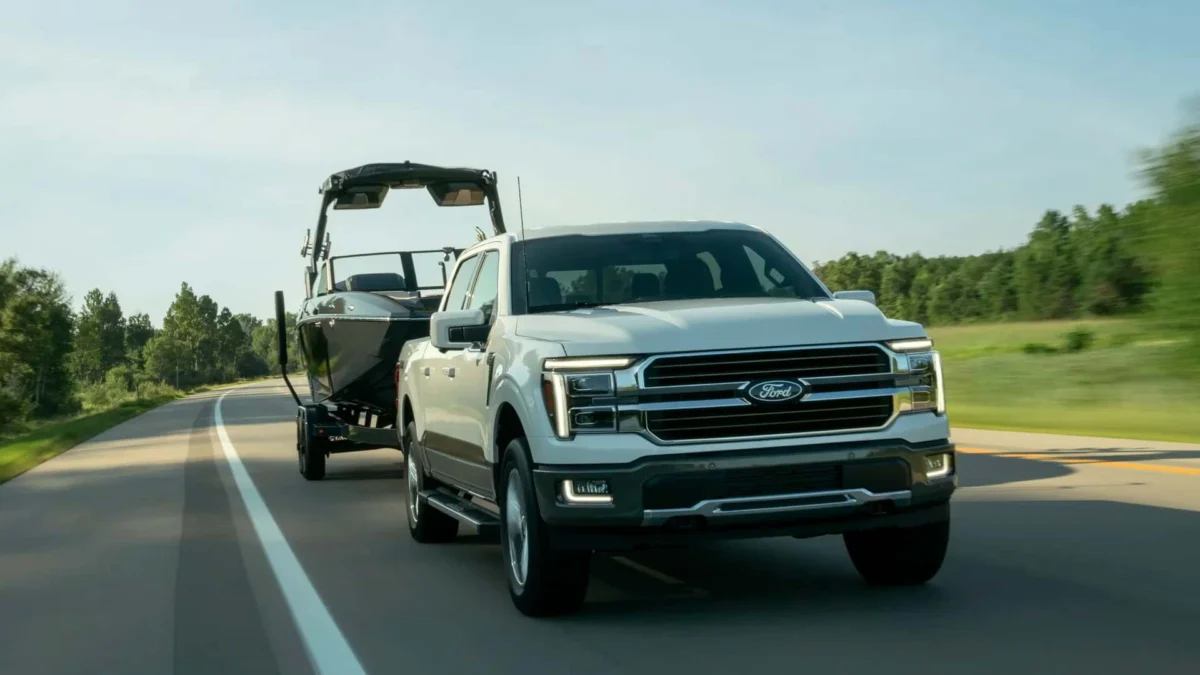
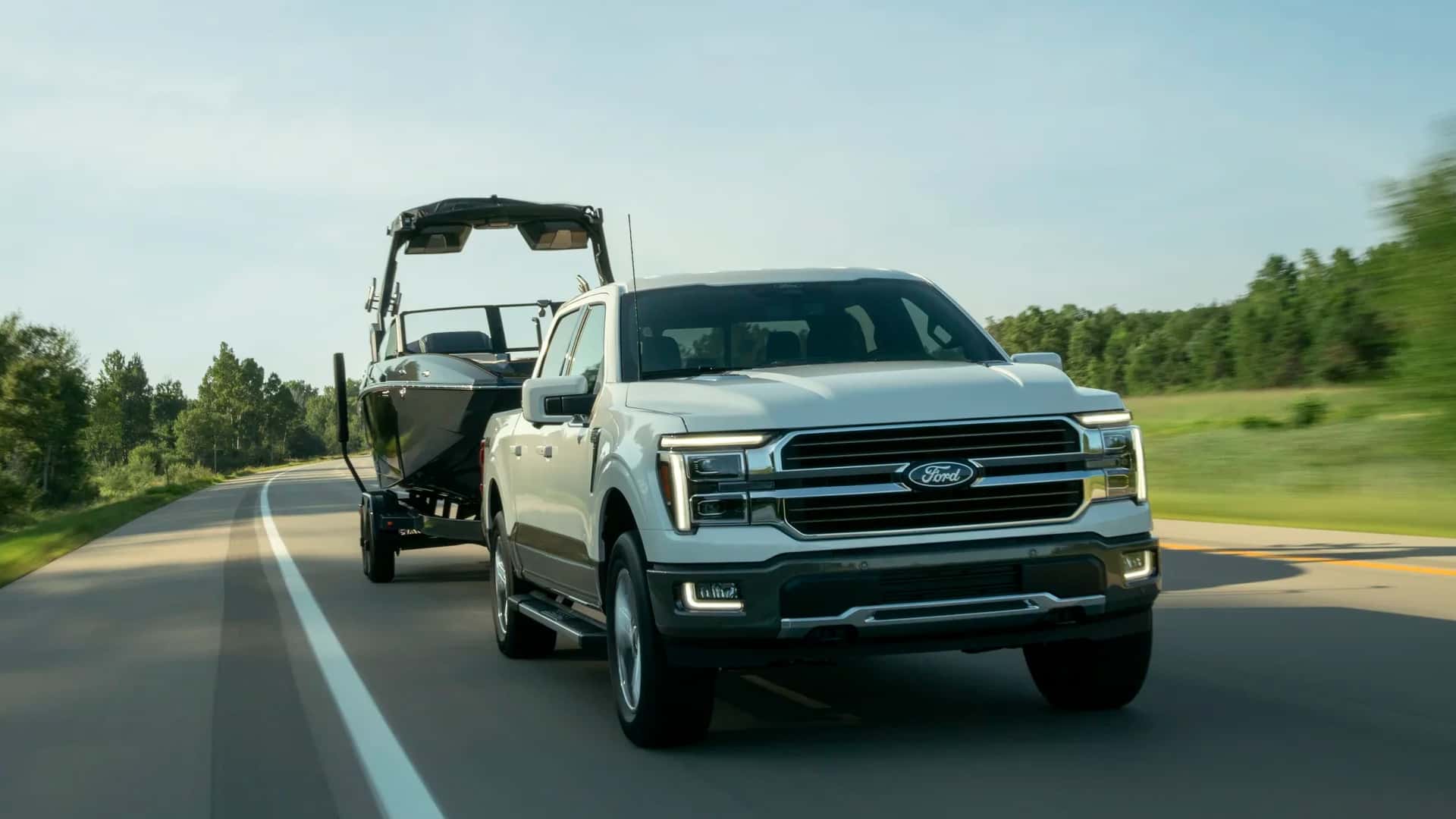
Ford Motor Company has officially announced a significant expansion of its advanced driver-assistance system, unveiling "BlueCruise with Towing," a specialized iteration of its hands-free highway driving technology. Designed specifically for the flagship F-150 pickup truck, this feature marks a milestone in automotive software engineering, allowing the vehicle to maintain lane positioning while hauling payloads of up to 10,000 pounds. The technology is scheduled to debut on the 2027 model year F-150, addressing a core demographic of Ford owners who rely on their trucks for heavy-duty utility.
The Evolution of BlueCruise and Hands-Free Driving
Since its inception, BlueCruise has served as Ford’s answer to the growing demand for semi-autonomous highway assistance. The system operates as a Level 2 driver-assist technology under the SAE International definitions, which requires the human operator to maintain constant vigilance and remain ready to take control of the vehicle at any moment. Despite the "hands-free" moniker, the system relies on an infrared driver-facing camera to ensure the human behind the wheel is paying attention to the road.
The transition to include towing capabilities represents a massive technical leap. Until now, the system would automatically disengage or restrict functionality when a trailer was detected, as the added weight, increased length, and complex dynamics of a towed load created too many variables for existing algorithms. Ford engineers have spent years refining the sensor fusion and control logic required to account for trailer sway, weight distribution, and the increased braking distance required when hauling significant mass.
Technical Challenges and Engineering Hurdles
Ford executives have described the development of BlueCruise with Towing as one of the most rigorous software projects in the company’s recent history. The primary difficulty lay in creating a system that could accurately model the "coupled" dynamics of a truck and trailer combination.
When a driver connects a trailer, the vehicle’s center of gravity and aerodynamic profile shift. The software must account for these changes in real-time. The system processes data regarding the trailer’s length, the weight of the cargo, and external factors like crosswinds. By integrating this data, the truck can modulate its steering, throttle, and braking inputs with the precision necessary to keep a multi-ton combination centered within a highway lane.
The software also employs advanced diagnostics to monitor for instability. If the onboard sensors detect that the trailer is beginning to sway beyond acceptable parameters, or if the system calculates that the truck is overloaded, the software is programmed to take corrective action—often by limiting speed or prompting the driver to resume manual control immediately.
Operational Requirements and Safety Protocols
While the convenience of hands-free towing is significant, Ford is maintaining a strict set of operational guardrails to ensure safety. The company is not offering a "set it and forget it" solution; rather, it is a tool designed to reduce driver fatigue during long, monotonous highway stretches.
To activate the feature, drivers must perform several prerequisite steps:
- Trailer Profiling: The operator must input accurate trailer dimensions and specifications into the vehicle’s infotainment system. This data is essential for the software to calibrate its driving logic.
- Environmental Restrictions: The system will not engage in construction zones, where lane markings are often erratic or missing.
- Speed Constraints: The feature is disabled if the vehicle exceeds 75 mph.
- Lane Changes: Unlike some standard BlueCruise configurations, the towing-specific mode prohibits automated lane changes. The driver must take manual control to maneuver around slower traffic or merge onto highway interchanges.
These limitations reflect a conservative approach to safety, acknowledging that the added inertia of a trailer makes rapid, automated maneuvers inherently riskier than those performed by a standard passenger vehicle.
Market Context and Industry Competition
The timing of this announcement places Ford in direct competition with General Motors, which introduced similar towing capabilities to its "Super Cruise" system as early as 2022. For years, GM held a functional advantage in the hands-free space by allowing users to tow while the system remained active on compatible highways. Ford’s decision to bridge this gap is a strategic move to maintain the F-150’s dominance in the segment.
According to internal Ford data, 76% of F-150 buyers utilize their trucks for towing at some point during ownership. Last year alone, Ford users logged 118 million miles using BlueCruise. By enabling this technology for the towing demographic, Ford is effectively unlocking a massive portion of its user base that was previously relegated to manual steering for the majority of their driving hours.
The rollout strategy for the 2027 model year is broad, covering most of the F-150 lineup. However, Ford has excluded the base-level XL work truck and the STX trims from this capability. This suggests that the hardware suite—comprised of high-definition cameras, radar, and the necessary processing power—will remain a feature reserved for mid-to-high-tier trims, likely as part of the standard or optional technology packages.
Broader Implications for the Automotive Industry
The introduction of BlueCruise with Towing underscores a broader shift in the automotive industry: the "software-defined vehicle." Automakers are increasingly moving away from mechanical-only improvements and toward feature-rich, updateable digital ecosystems.
From an industry perspective, the capability to handle complex physical tasks like towing via software suggests that the gap between human-driven and machine-assisted driving is closing. However, analysts note that the legal and ethical landscape remains complex. As systems like BlueCruise become more capable, the "responsibility gap"—the degree to which a human is expected to monitor a system that works almost perfectly—becomes a subject of intense debate among regulators and safety organizations.
For the end user, the primary benefit is the reduction of the physical and mental toll associated with towing heavy loads. Long-distance hauling, particularly for recreational vehicle owners or contractors, often involves hours of high-focus steering. By automating the lane-keeping aspect, Ford claims it can significantly reduce driver fatigue, potentially leading to safer driving outcomes on long highway journeys.
Looking Ahead
As the 2027 model year approaches, Ford’s focus will shift to real-world validation and the refinement of the user interface. The success of this feature will likely hinge on how intuitively the system handles the transition between hands-free driving and manual control. If the hand-off is seamless and the confidence of the system is high, it could set a new industry benchmark for what consumers expect from a work-oriented vehicle.
The integration of such sophisticated technology into a utility-focused truck signifies that the "luxury" of advanced driver assistance is no longer reserved for premium sedans or electric commuters. Instead, it is becoming a standard expectation for the American workhorse. Whether this will lead to a decrease in accidents related to long-haul towing remains to be seen, but the industry is clearly moving toward a future where the machine does the heavy lifting, both in terms of payload and the labor of driving.