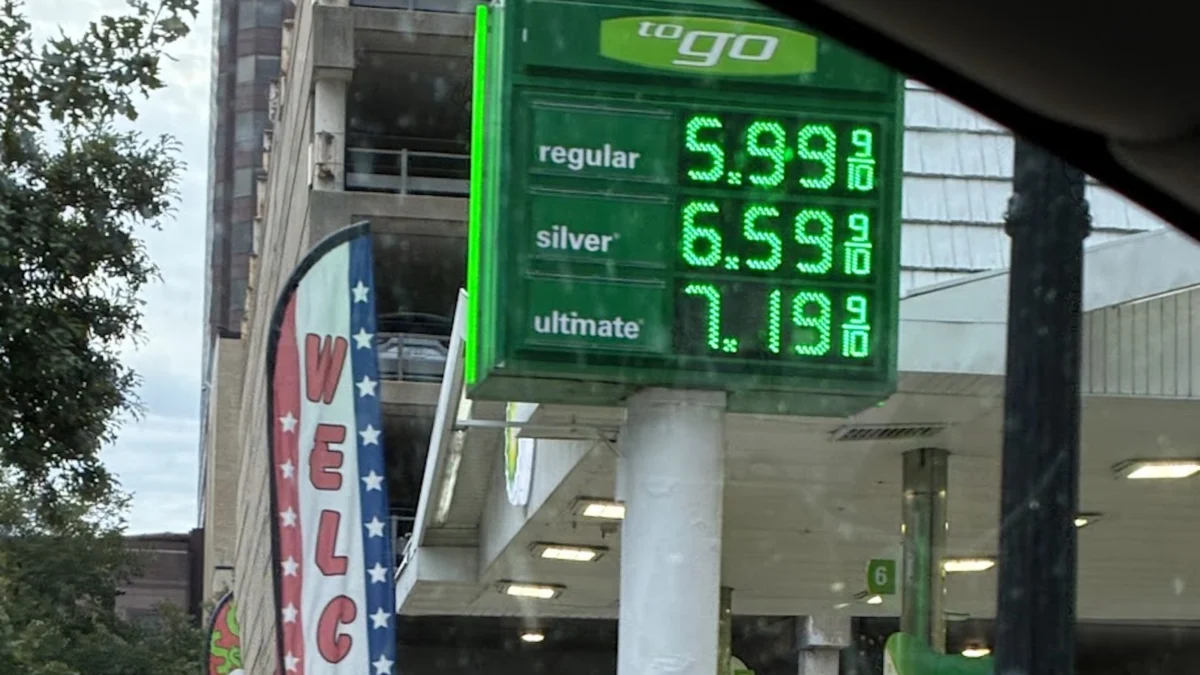
The landscape of American transportation is undergoing a profound stress test as fuel prices breach historic thresholds. In downtown Chicago, the cost of premium gasoline recently touched $7.19 per gallon, a staggering milestone that was once considered a worst-case scenario. This price surge brings sharp focus to a persistent question surrounding the transition to sustainable energy: Is there a specific financial tipping point that will finally compel the most resistant drivers of internal combustion engine (ICE) vehicles to transition to electric vehicles or hybrids?
To understand consumer sentiment surrounding this issue, a comprehensive reader survey conducted earlier this year by industry publication Electrek captured responses from over 2,800 participants. The findings reveal complex consumer psychology, deeply entrenched vehicle loyalty, and broader economic calculations that extend far beyond pain at the pump.
Background and Chronology of the Fuel Price Surge
![Survey rewind: how much pain at the pump will it take to switch to EV? [update]](https://electrek.co/wp-content/uploads/sites/3/2026/04/IMG_7201.jpg?quality=82&strip=all&w=1600)
The trajectory of fuel prices over recent years has been dictated by a volatile mix of geopolitical instability, shifting global supply chains, and fluctuating crude oil production caps. While temporary spikes in fuel costs are a historical norm, the persistent climb through the spring and summer of 2026 pushed fuel economics into uncharted territory for many American motorists.
Back in April 2026, when fuel averages hovered at lower levels, Electrek introduced a sidebar survey to gauge public perception regarding stubborn ICE loyalists—colloquially referred to by some observers as anti-EV traditionalists. The central premise of the survey asked participants to estimate how high gasoline or diesel prices would need to climb to force these dedicated traditionalists to abandon traditional internal combustion engines in favor of plug-in hybrids or battery-electric vehicles (BEVs).
At the time of the initial survey launch, a $7-per-gallon threshold was hypothesized as an extreme, almost theoretical boundary. Yet, by late September 2026, that hypothetical figure became reality at select metropolitan stations, such as a downtown Chicago BP pump displaying a rate of $7.19 for 93 octane fuel. This rapid shift from theoretical projection to urban reality has transformed an abstract consumer behavior question into an urgent economic debate.
Analysis of Survey Data and Reader Insights
![Survey rewind: how much pain at the pump will it take to switch to EV? [update]](https://electrek.co/wp-content/uploads/sites/3/2026/04/ev-numbers.png?w=1024)
The results of the spring survey painted a revealing picture of consumer skepticism. Nearly half of the 2,800 respondents expressed a belief that no price point exists—regardless of how exorbitant—that would convince the most ardent ICE supporters to switch. Rather than relying on pure speculation, several respondents pointed to international precedents, particularly in Western Europe, where fuel taxes and market dynamics have driven equivalent pump prices well past $10 per gallon for years.
A notable contribution to the survey came from a European reader residing in the Netherlands, where fuel costs frequently exceed local currency equivalents of $11 per gallon when translated into American units. The respondent noted that despite enduring these exceptionally high fuel costs for an extended period, a distinct segment of the driving population has steadfastly refused to adopt electric vehicles, suggesting that economic pressure alone may not alter deeply ingrained vehicle preferences without direct regulatory intervention.
Conversely, other survey participants emphasized that consumer hesitation is not merely a matter of ideological resistance, but rather a rational calculation of total cost of ownership. For many motorists driving paid-off, reliable legacy vehicles, the incremental increase in monthly fuel expenditures remains significantly lower than the upfront capital expense of acquiring a new or used electric vehicle. As one respondent detailed, even a substantial jump in monthly fuel spending can be economically preferable to taking on a new auto loan in a high-interest-rate environment. Until an existing vehicle reaches the end of its functional lifespan, the immediate math often favors retention over replacement.
The Variable of Electricity Pricing and Energy Independence
![Survey rewind: how much pain at the pump will it take to switch to EV? [update]](https://electrek.co/wp-content/uploads/sites/3/2025/03/DES-1038_Electrek-Banners_EVs_0797c2.png)
Another critical theme emerging from the data involves consumer anxiety regarding the parallel rise of electricity rates. Several respondents pointed out that utility costs are climbing in tandem with fossil fuel pressures, complicating the traditional narrative that driving electric guarantees perpetual savings. Furthermore, consumer sentiment is heavily influenced by the expectation of price volatility; because motorists are accustomed to cyclical fluctuations in oil markets, temporary price spikes are often viewed as transient events rather than permanent new baselines that would justify long-term capital investments like vehicle replacement.
Industry experts and proponents of electrification argue that this perspective overlooks a fundamental differentiator between liquid fuels and electricity: the capacity for decentralized energy generation. Unlike petroleum, which must be purchased entirely from third-party refiners and retailers, electricity can be generated on-site via residential solar installations and stored in home battery systems.
Advocates of home energy ecosystems point to the concept of localized energy dominance. Motorists who pair a residential solar array with a home battery backup and an electric vehicle effectively insulate themselves from both utility rate hikes and petroleum market shocks. By producing their own vehicular fuel at home, consumers shift from being passive price-takers in the global energy market to independent producers, effectively locking in flat-line energy costs for decades.
Broader Implications for the Automotive Market
![Survey rewind: how much pain at the pump will it take to switch to EV? [update]](https://electrek.co/wp-content/themes/ninetofive/dist/images/google-preferred-source-badge-dark.png)
The convergence of $7 gasoline and expanding EV infrastructure highlights a widening demographic divide in American mobility. While early adopters and financially flexible consumers continue to embrace electrification for its operational savings and environmental benefits, a significant portion of the driving public remains anchored to internal combustion engines by a combination of upfront cost barriers, skepticism regarding long-term utility pricing, and psychological attachment.
As automakers continue to adjust production targets and expand their portfolios of affordable electric and hybrid models, the pressure on traditional vehicle owners will likely intensify. However, the data from the 2026 survey suggests that overcoming the final barriers to total market saturation will require more than just painful spikes at the fuel pump. It will necessitate addressing broader economic hurdles, improving consumer confidence in electrical grid stability, and demonstrating clear, long-term financial predictability in home energy solutions.
Ultimately, the transition away from petroleum is proving to be less of a sudden overnight conversion and more of a gradual, friction-laden economic evolution. Whether the psychological barrier of the traditionalist driver can ever be fully breached remains one of the defining questions of the modern automotive era.