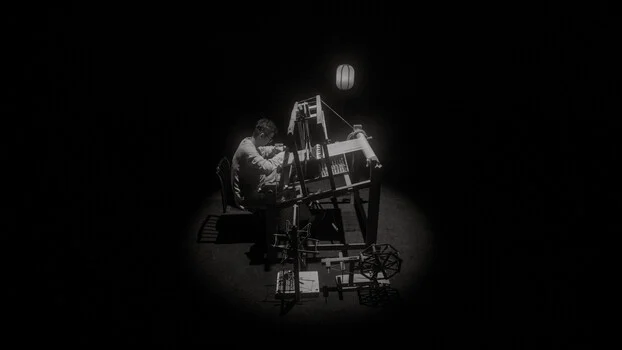
The cultural intersection of ancient craftsmanship and contemporary visual documentation has taken center stage at the Leica Gallery in Amsterdam, where a novel exhibition titled Threads of Time opened its doors to the public. The exhibition serves as a profound exploration of legacy, materiality, and the photographic lens, uniting the meticulous world of traditional Chinese kesi silk tapestry with modern fine-art photography. Presented through a strategic partnership involving high-end optics manufacturer Leica and memory solutions provider Lexar Europe, the exhibition showcases the collaborative efforts of contemporary kesi artist Jingwei and acclaimed photographer Jing Huang. Despite its modest spatial footprint within the gallery, the curation demands a deliberate, unhurried engagement from visitors, rewarding patience with a deeply textured dialogue between two vastly different artistic mediums.
At the core of the exhibition is a curated selection of intricate silk tapestry works created by Jingwei, a recognized representative inheritor of Suzhou kesi weaving based in Jiangsu Province, China. Kesi, which translates literally to "cut silk," is an extraordinarily labor-intensive tapestry weaving technique with roots tracing back over a thousand years to the Tang dynasty. Unlike standard weaving where weft threads run continuously from edge to edge, kesi utilizes a fixed warp structure while individual, colored silk wefts are worked in section by section. This localized weaving method creates a distinctive notched effect along color boundaries where the light passes through, historically earning the craft the poetic designation in China of "an inch of kesi, an inch of gold." Recognizing its immense cultural and historical value, UNESCO inscribed sericulture and silk craftsmanship in China onto the Representative List of the Intangible Cultural Heritage of Humanity in November 2009, cementing its status as a global treasure that requires active preservation and generational transmission.
Jingwei has dedicated more than a decade to mastering this demanding discipline, spending his formative years developing absolute control over thread tension, color gradation, and the complex structural mechanics between warp and weft. While traditional kesi production historically focused on reproducing classical paintings or standardized historical motifs for imperial courts, Jingwei’s contemporary practice pushes the boundaries of the medium. His works in the Amsterdam exhibition draw inspiration from diverse visual sources, ranging from the organic color palettes and atmospheric rhythms of traditional Suzhou classical gardens to the expressive, vibrant strokes of Western masters like Vincent van Gogh. Rather than treating kesi as a static, historic artifact frozen in time, Jingwei approaches the loom as a canvas for philosophical and artistic inquiry. "People often see kesi as a finished object, but for me it is a way of thinking through silk," Jingwei explains regarding his methodology. "The structure is traditional, but every work asks for new decisions about color, rhythm, and form."
Complementing the silk tapestries is a compelling photographic series captured by Jing Huang during an extended immersive period in Suzhou, the historical capital of Chinese silk culture. Huang is no stranger to critical acclaim; in 2011, he received the prestigious Leica Oskar Barnack Newcomer Award for his earlier photographic series, Pure of Sight. Known for an artistic philosophy that prioritizes emotional resonance, environmental atmosphere, and relational composition over literal documentation, Huang applied this exact sensibility to his residency in Suzhou. Rather than producing a straightforward, step-by-step documentary of the kesi weaving process, Huang focused on capturing tactile fragments, atmospheric subtleties, and the quiet spatial poetry of the artist’s studio environment.
Huang’s photographic approach relies heavily on selective framing, deep shadows, and thoughtful negative space. This methodology allows the images to transcend literal depiction, transforming the photographs into a visual counterpart and emotional response to Jingwei’s textile art rather than a mere record of its creation. Several photographs within the series exhibit an uncanny textile-like quality, where the grain of the image, the play of light, and the arrangement of ambient elements evoke the appearance of woven threads. This stylistic crossover bridges the gap between mechanical capture and manual creation, establishing a profound visual harmony between the two artists.
Curated by Linda Warmerdam, the spatial layout of Threads of Time deliberately avoids the traditional hierarchy often found in multidisciplinary exhibitions, where photography is relegated to a purely explanatory or documentary role in service of a primary craft. Instead, Warmerdam has constructed a balanced spatial dialogue where both mediums command equal physical and conceptual weight within the gallery. Visitors navigate an environment where Jingwei’s finished silk works and Huang’s photographic prints exist independently yet in direct conversation. Neither body of work acts as a caption or label for the other; rather, viewers are encouraged to allow visual connections to naturally emerge across surface textures, chromatic ranges, and compositional structures.
The realization of this high-profile international exhibition has been made possible through the behind-the-scenes support of Leica Camera and Lexar Europe. Representatives from Lexar noted that the partnership underscores a shared institutional commitment to preserving cultural memory and artistic expression across generations. In an era dominated by transient digital content, the collaboration between Leica and Lexar highlights the complementary nature of their respective technologies: Leica provides the optical precision required to capture a fleeting, singular moment in time, while Lexar’s advanced memory storage solutions ensure the enduring preservation of those visual records for the future. By extending their corporate support to cultural initiatives like Threads of Time, both brands reinforce their dedication to the broader arts ecosystem, proving that commercial industry and traditional heritage crafts can successfully unite to elevate global artistic visibility.
Art market analysts and cultural historians monitoring the exhibition have pointed out broader implications for the contemporary positioning of intangible heritage crafts. For decades, traditional artisanal practices such as kesi faced the existential threat of modernization, often viewed strictly as museum-bound antiquities rather than living, evolving art forms. By placing kesi in direct dialogue with contemporary fine-art photography inside a globally recognized cultural hub like Amsterdam, exhibitions of this caliber help reframe ancient techniques for international contemporary art collectors and younger demographics. This cross-pollination of disciplines not only broadens audience engagement but also validates the works of master artisans within the high-end contemporary art market.
As Threads of Time continues its run at the Leica Gallery Amsterdam, it stands as a testament to the power of thoughtful curation and interdisciplinary collaboration. By pairing the glacial, highly deliberate pace of silk tapestry weaving with the instantaneous, optical precision of the photographic lens, the exhibition successfully demonstrates that time is not merely something that passes, but a material that can be actively shaped, captured, and woven anew.