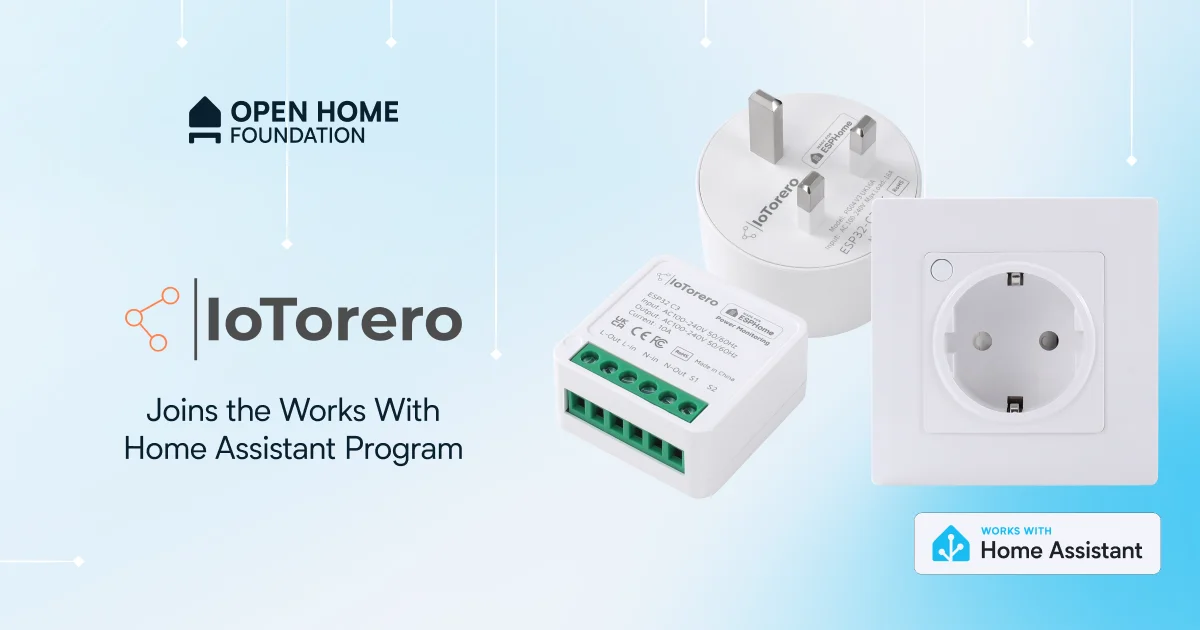
The Home Assistant ecosystem has reached a significant milestone in its ongoing effort to standardize local-first smart home technology with the formal induction of IoTorero into the "Works with Home Assistant" program. This partnership marks a pivotal moment for the community, as IoTorero, formerly known as Athom Technology, becomes the first manufacturer to bring certified, pre-flashed ESPHome smart plugs and relays to the program. The collaboration underscores a growing industry shift toward open-source firmware and local control, providing consumers with hardware that prioritizes privacy, longevity, and interoperability without the traditional reliance on proprietary cloud servers.
The Evolution of IoTorero and the Open-Source Hardware Movement
Founded in 2020 under the name Athom Technology, the company quickly established a reputation among smart home enthusiasts for its specialized focus on open-source firmware. In its early years, the company gained traction by offering hardware that was compatible with community-driven platforms like Tasmota and ESPHome, catering to a niche but vocal demographic of users who sought to "uncloud" their homes.
The rebranding to IoTorero serves as a strategic nod to the Internet of Things (IoT) while distancing the brand from the common pitfalls of the industry. The "Torero" suffix evokes a sense of mastery over the complexities of the IoT landscape. Unlike standard consumer electronics that often become "bricks"—useless pieces of hardware—if a manufacturer ceases operations or experiences a server outage, IoTorero’s devices are built on the principle of permanent local functionality. By utilizing ESPHome, a system that compiles configuration files into binary code for ESP8266 and ESP32 microcontrollers, IoTorero ensures that the logic of the device resides entirely within the home network.
This commitment to openness was further demonstrated during the most recent Home Assistant Community Day, where the company provided hardware samples to developers and enthusiasts. This gesture reinforced their standing as a community-centric entity, a rarity in a market often dominated by closed ecosystems and subscription-based models.
Technical Integration: The Power of Pre-Flashed ESPHome Firmware
The primary challenge for many users entering the world of advanced home automation is the technical barrier to entry associated with flashing custom firmware. Traditionally, achieving local control via ESPHome required users to manually connect devices to a computer, navigate terminal commands, or use web-based flashing tools—a process that often voided warranties and carried the risk of "bricking" the device.
IoTorero eliminates this friction by delivering devices pre-flashed with ESPHome. This means that upon unboxing, the hardware is immediately discoverable by a Home Assistant instance. The integration is seamless: once powered on, the device announces itself on the network, and Home Assistant prompts the user to add the new integration.
Furthermore, IoTorero maintains a public GitHub repository containing the configuration files (YAML) for all their devices. This transparency allows seasoned users to audit the code, customize the behavior of the onboard LEDs, or adjust sensor polling rates. For the average consumer, however, the "Works with Home Assistant" certification guarantees that the device will function optimally out of the box with no coding required. This dual-track accessibility—simplicity for beginners and deep customization for experts—is a cornerstone of the new partnership.
Certified Hardware Lineup and Regional Specifications
The certification covers seven distinct devices, primarily focusing on energy management and localized switching. The flagship products include a series of smart plugs tailored for various international markets, including the United States, Europe, the United Kingdom, and Australia.
A critical technical detail of these plugs is the use of the ESP32-C3 chipset. The ESP32-C3 is a RISC-V-based microcontroller that offers improved power efficiency and robust Wi-Fi connectivity compared to older generations. These plugs are not merely remote-controlled switches; they are sophisticated energy monitors capable of tracking voltage, current, active power, and total consumption. In an era of rising energy costs and increased environmental awareness, providing users with real-time data on appliance power draw is a vital tool for reducing household carbon footprints.
In addition to the smart plugs, the certification includes the Power Monitoring Mini Relay. Measuring approximately the size of a matchbox, this device is designed for "invisible" installation. It can be tucked behind existing wall switches or inside appliance enclosures, effectively turning traditional "dumb" fixtures into smart, energy-reporting nodes. This hardware is particularly significant for renters or homeowners who wish to maintain the aesthetic of their original switchgear while gaining the benefits of modern automation.
Expanding Network Capabilities through Bluetooth Proxying
One of the most innovative features of the IoTorero hardware suite is the inclusion of Bluetooth proxy capabilities. Modern smart homes often struggle with the limited range of Bluetooth Low Energy (BLE) devices, such as temperature sensors, toothbrushes, or plant moisture meters. Because these devices typically communicate directly with a central hub, they often lose connectivity when placed in distant rooms.
By acting as a Bluetooth proxy, every IoTorero smart plug and relay effectively becomes a bridge. These devices capture BLE signals from nearby peripherals and relay the data to Home Assistant over the local Wi-Fi network. This "Proxy All the Things" philosophy, championed by the Open Home Foundation, significantly enhances the reliability of a smart home’s sensor network. It also contributes to sustainability by reducing the need for dedicated Bluetooth range extenders, thereby decreasing the total number of electronic devices a consumer needs to purchase and maintain.
Official Responses and Strategic Vision
The leadership at IoTorero has expressed a long-term commitment to this open-source trajectory. Aiden Tang, CTO and Co-Founder of IoTorero, emphasized that joining the "Works with Home Assistant" program is a validation of the company’s research and development efforts since 2020. Tang noted that the certification provides customers with the "complete confidence" that their hardware will remain supported and functional within the Home Assistant ecosystem for years to come.
From the perspective of the Home Assistant team and the Open Home Foundation, the partnership represents a successful implementation of their rigorous testing standards. Every certified device must pass in-house evaluations to ensure it meets strict criteria for local control, data privacy, and long-term support. The IoTorero devices also carry the "Made for ESPHome" badge, a prerequisite that ensures the hardware is optimized for the specific nuances of the ESPHome platform.
Broader Implications for the IoT Industry
The formal integration of IoTorero into the "Works with Home Assistant" program serves as a case study for the future of the IoT industry. As consumers become more tech-savvy and privacy-conscious, the demand for "Local-First" hardware is moving from a niche hobbyist requirement to a mainstream expectation.
The reliance on cloud-based APIs has historically been a point of failure for the smart home. When a cloud service experiences latency, a simple task like turning on a light can take several seconds. When a service is discontinued, thousands of devices can become e-waste overnight. The IoTorero model provides an alternative: a sustainable, hardware-centric approach where the consumer truly owns the device and the data it generates.
Moreover, the synergy between IoTorero and the recent updates to the ESPHome platform—including a new visual Device Builder and improved user interface—suggests a future where complex home automation is accessible to a much broader audience. By removing the need for manual flashing while retaining the power of open-source configuration, IoTorero and Home Assistant are lowering the barrier to entry for a truly private and resilient smart home.
As the program continues to grow, both parties have indicated that this is only the beginning of their collaboration. Future hardware releases from IoTorero are expected to undergo the same certification process, ensuring that the "Works with Home Assistant" badge remains a trusted indicator of quality, transparency, and local-first reliability in an increasingly crowded marketplace.