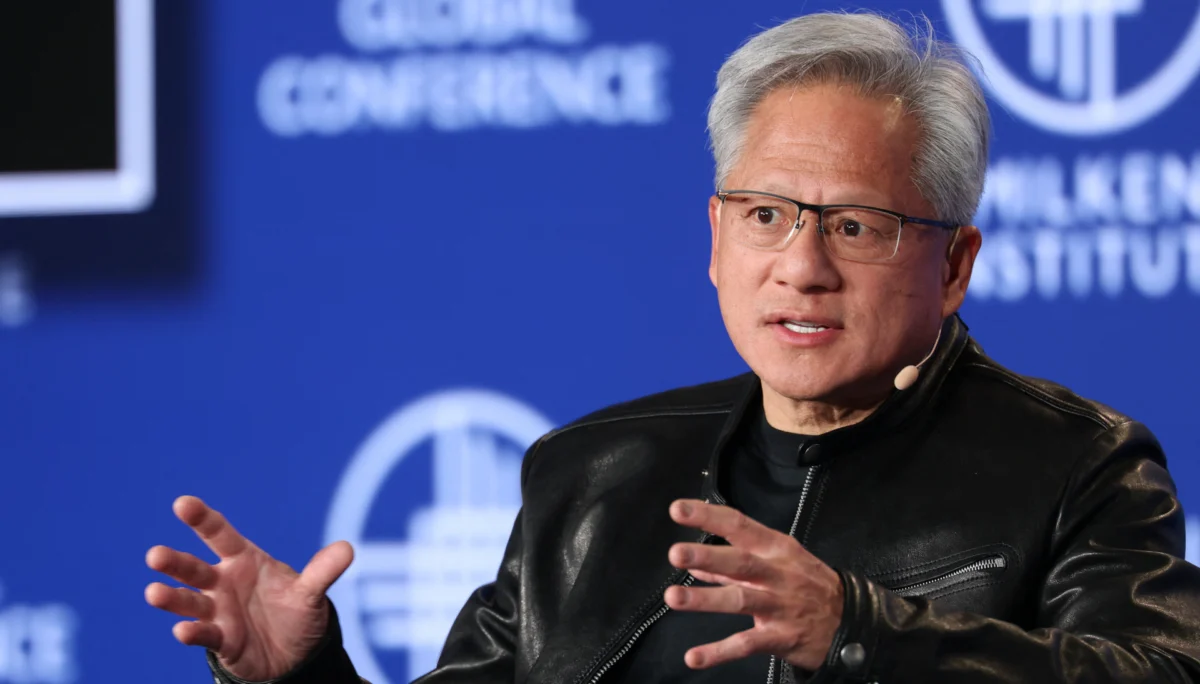
A black Tom Ford leather jacket, worn and personally signed by Nvidia CEO Jensen Huang, has sold for an astonishing $960,000 at a recent New York auction held by Sotheby’s. This remarkable sale significantly exceeded all expert estimations, initially projected to fetch between $40,000 and $60,000, underscoring the profound cultural and financial impact of Huang and his company, Nvidia, in the current technological landscape. The auction result highlights not only the burgeoning interest in tech memorabilia but also the perceived value associated with figures at the forefront of the artificial intelligence revolution.
The Unexpected Auction Triumph
The auction, which concluded with a final hammer price nearly 20 times the high-end estimate, saw intense bidding for the distinctive garment. Brahm Wachter, Sotheby’s head of modern collectibles, expressed his astonishment, stating, "The response to this sale surpassed even our highest expectations." The substantial deviation from the pre-sale appraisal suggests a deeper resonance with potential buyers than simply the intrinsic value of a designer jacket. It speaks to the phenomenon of collecting items linked to influential figures, particularly those whose companies are shaping global industries. The jacket in question, from Tom Ford’s Spring-Summer 2023 collection, was verified for authenticity, as was Huang’s signature, with independent verifiers confirming it was worn by the CEO at the 2023 Foxconn Tech Day, a significant event in the global technology calendar.
The Genesis of an Icon: Jensen Huang’s Signature Style
Jensen Huang’s choice of attire, particularly his consistent preference for black leather jackets, has become an indelible part of his public persona and, by extension, Nvidia’s brand identity. Unlike many corporate executives who favor traditional suits or business casual wear, Huang has cultivated a distinctive look that projects an image of innovation, understated power, and a touch of rebellious entrepreneurship. This sartorial uniformity places him in the company of other tech luminaries whose wardrobes became synonymous with their brands: Steve Jobs’ iconic black turtleneck and blue jeans, or Mark Zuckerberg’s simple grey T-shirt and jeans. These choices are often interpreted as a deliberate effort to minimize decision fatigue, project authenticity, and focus entirely on their work rather than external appearances. For Huang, the leather jacket has evolved from a personal preference into a recognizable symbol of the AI era, a visual shorthand for the visionary leadership driving Nvidia’s exponential growth. His almost unwavering commitment to this style ensures that any appearance, whether at a keynote address, an investor call, or a casual interview, is immediately identifiable and consistent with the powerful image of Nvidia.
Nvidia’s Ascendancy: The AI Powerhouse

The extraordinary price paid for Huang’s jacket cannot be separated from the meteoric rise of Nvidia itself. Founded in 1993, Nvidia initially made its mark in the graphics processing unit (GPU) market, revolutionizing computer gaming and professional visualization. However, its true breakthrough came with the realization that GPUs, designed for parallel processing, were exceptionally well-suited for the intensive computational demands of artificial intelligence and machine learning. This strategic pivot transformed Nvidia from a leading graphics chip maker into the undisputed titan of AI hardware.
Over the past few years, Nvidia’s valuation has surged at an unprecedented rate. In 2020, the company was valued at approximately $300 billion. By the time of this auction, its market capitalization had soared to an astounding $4.9 trillion, momentarily eclipsing even Apple to become the world’s most valuable company. This staggering growth is directly attributable to the insatiable demand for its high-performance GPUs, such as the H100 and upcoming Blackwell series, which are indispensable for training and deploying large language models and other advanced AI applications. Every major AI research lab, cloud provider, and tech giant relies heavily on Nvidia’s technology, making the company a foundational pillar of the AI revolution. The company’s financial performance reflects this dominance, consistently reporting record revenues and profits driven by its Data Center segment, which caters specifically to AI workloads. Investing in Nvidia at current market prices would mean that the $960,000 paid for the jacket could purchase approximately 4,653 shares, a testament to the company’s significant per-share value. This financial backdrop provides crucial context for understanding the immense premium placed on an item directly associated with its CEO.
The Intersection of Tech, Luxury, and Philanthropy
The sale of Huang’s jacket also underscores a fascinating intersection of technology, luxury goods, and charitable giving. Sotheby’s, a venerable institution synonymous with art and collectibles, venturing into the realm of tech memorabilia highlights a growing trend. As technology executives gain celebrity status and their companies achieve unprecedented valuations, items associated with them acquire a new form of cultural and financial cachet. This is not merely about fashion; it’s about owning a piece of history from a pivotal moment in technological evolution.
Crucially, the proceeds from this high-profile sale are earmarked for a noble cause: funding the Edge Institute. This non-profit organization is dedicated to supporting fellowships, grants, and residencies across the technology sector. By investing in future talent and research, the Edge Institute aims to foster innovation and drive progress in critical areas of technology, potentially nurturing the next generation of pioneers in AI, quantum computing, or sustainable tech. This philanthropic dimension adds another layer of significance to the auction, transforming a luxury purchase into a contribution to the advancement of the broader tech ecosystem. It aligns with a growing trend among tech billionaires to leverage their wealth and influence for societal benefit, often channeling funds into education, scientific research, and entrepreneurial initiatives.
Broader Implications and Market Sentiment
The sale of Jensen Huang’s leather jacket is more than just an anecdote; it’s a potent symbol with several broader implications. Firstly, it reflects the intense market sentiment and speculative enthusiasm surrounding artificial intelligence. Investors and the public alike are keenly aware of AI’s transformative potential, and Nvidia stands as the most prominent pure-play beneficiary of this paradigm shift. The jacket’s value, therefore, becomes a proxy for the perceived value and future prospects of the entire AI industry.

Secondly, it reinforces the power of personal branding in the modern corporate world. In an era where CEOs are increasingly public figures, their personal style, philosophies, and even their daily habits can profoundly influence how their companies are perceived. Huang’s consistent and recognizable image contributes to a narrative of stability, focus, and pioneering spirit that resonates deeply with investors and customers. His jacket, therefore, is not just a piece of clothing; it’s an artifact of a meticulously crafted and highly effective brand identity.
Thirdly, the event highlights the growing convergence of different cultural spheres—technology, fashion, and fine art/collectibles. As technology continues to permeate every aspect of life, its influence extends into traditional luxury markets, creating new categories of high-value assets. This trend suggests that we may see more such auctions in the future, as items associated with other leading tech innovators and groundbreaking technologies gain historical significance and collector interest. The auction serves as a cultural barometer, measuring the extent to which tech leaders and their personal effects have ascended into the pantheon of collectible items, previously reserved for sports legends, historical figures, or celebrated artists.
Finally, the philanthropic aspect of the sale underscores the increasing responsibility and influence of the tech sector in addressing global challenges. By directing the substantial proceeds to the Edge Institute, Huang and Sotheby’s have demonstrated a commitment to fostering future innovation and talent, ensuring that the wealth generated by technological advancement is reinvested into the ecosystem that enables it. This act of giving also enhances the narrative surrounding the sale, transforming it from a mere transaction into a meaningful contribution to societal progress.
Looking Ahead
As Nvidia continues to push the boundaries of AI, Jensen Huang’s leather jacket will remain a fascinating footnote in the company’s history and the broader story of technological innovation. Its sale at nearly $1 million is a testament to the CEO’s iconic status, Nvidia’s unparalleled success in the AI domain, and the burgeoning market for artifacts from the digital age. The extraordinary sum paid for this seemingly simple garment reflects a complex interplay of market dynamics, personal branding, and the profound cultural significance of a company at the very heart of the world’s most transformative technological revolution. It serves as a stark reminder that in an era dominated by intangible digital assets, physical objects tied to the architects of this future can command a value that transcends their material worth, embodying the aspirations and achievements of an entire industry.