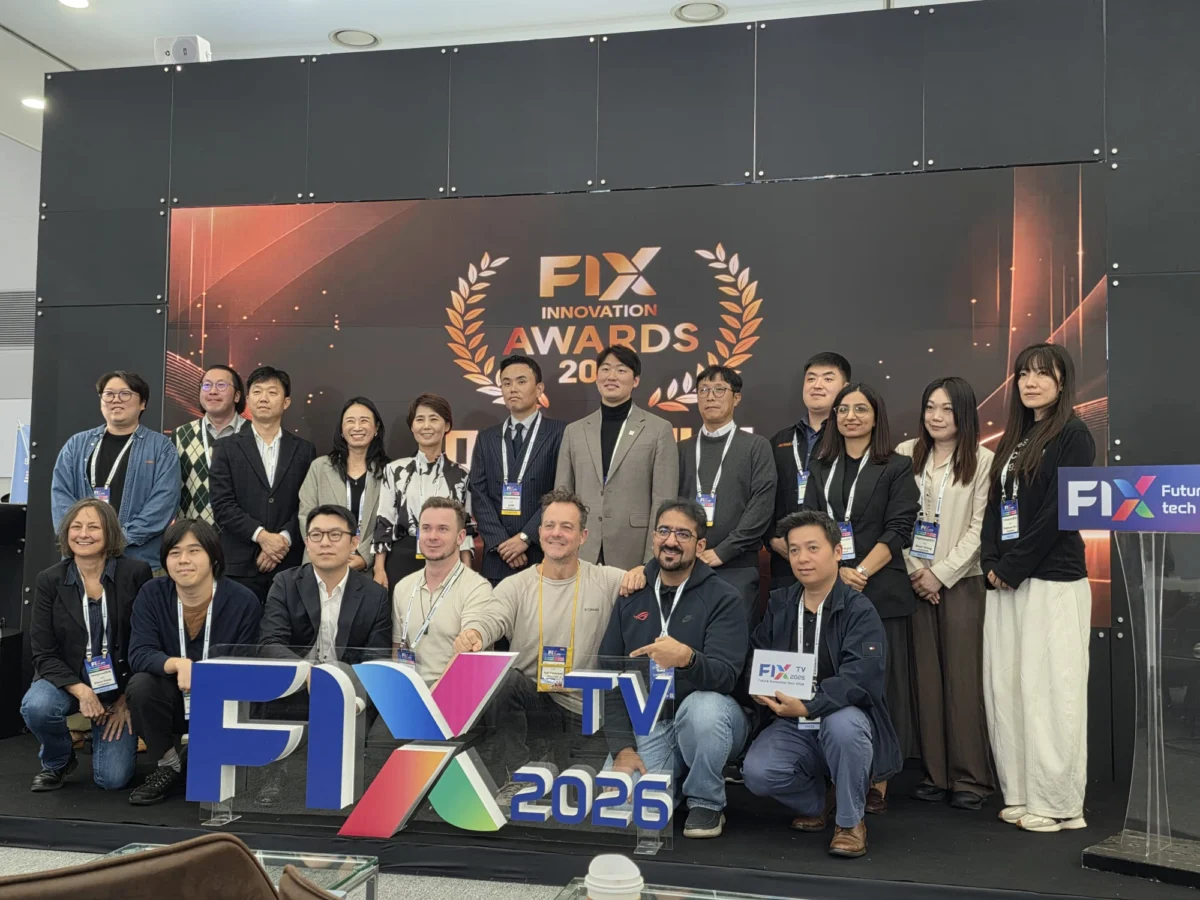
The Future Innovation X (FIX) 2026 exhibition in Daegu, South Korea, concluded its recent session by unveiling the recipients of the Best Innovation Technology Awards, the event’s most prestigious commendation. Amidst a competitive field of 209 applicants, a rigorous vetting process conducted by a panel of 26 expert judges identified nine companies whose technological contributions are set to redefine the trajectories of their respective industries. The awards, which spanned three critical sectors—future mobility, advanced robotics, and AI/ICT—were bolstered by the recognition of an additional 22 companies with general Innovation Awards, bringing the total number of recognized innovators to 31. This assembly of firms, including six representing the regional industrial ecosystem of Daegu-Gyeongbuk, underscores the rapid acceleration of South Korea’s high-tech manufacturing sector.
The selection process for the 2026 awards was characterized by an emphasis on practical utility and technical scalability. As global supply chains face mounting pressure to automate, the jury prioritized solutions that bridge the gap between laboratory-grade innovation and real-world industrial deployment. This year’s focus reflects a shift from purely conceptual research toward the integration of AI-driven decision-making, sophisticated tactile hardware, and high-performance automotive infrastructure.
Evolution of Robotics: From Dexterity to Autonomous Bipedalism
The robotics category at FIX 2026 highlighted two distinct approaches to solving the "humanoid challenge": the refinement of intricate motor control and the development of robust, versatile physical platforms.
Tesollo, a company already recognized for its contributions to robotic tactile feedback, received the Best Innovation Technology Award for its DG-5F-M robotic hand. The device utilizes a sophisticated 20-degree-of-freedom system, allowing for manipulation capabilities that closely mirror human dexterity. The introduction of the DG-5F-S, a lighter 880-gram iteration, signals a transition toward modularity, enabling these hands to be mounted on various existing robotic platforms without significant power constraints. The primary technical hurdle—achieving the delicate balance between grip strength and fine motor control—remains a central focus for Tesollo. By utilizing proprietary actuator technology, the company aims to reduce the mechanical complexity typically required to emulate the human hand, potentially lowering the cost of adoption for logistics and medical industries.
Complementing this, AeiROBOT presented the Alice 5, a bipedal humanoid platform that marks a departure from the company’s previous wheeled architectures. Standing at 170 cm and weighing 50 kg, the Alice 5 utilizes the NVIDIA Jetson Thor computing platform to manage its 43 degrees of freedom. The robot’s hybrid actuation system—a combination of quasi-direct-drive actuators for the upper body and high-torque linear actuators for the legs—provides the stability necessary for navigating complex environments like shipyards and manufacturing plants. Industrial partners, including HD Hyundai and Hanwha Ocean, are currently conducting field tests, with the Alice 5 specifically being evaluated for hazardous tasks such as fire response and chemical cleaning. The transition from controlled lab environments to these volatile industrial zones indicates a high level of confidence in the platform’s durability and decision-making autonomy.

Transforming Mobility: Software-Defined Vehicles and Radar Precision
The future mobility sector at FIX 2026 reflected the industry-wide transition toward software-defined vehicles (SDVs). Perseus stood out for its PEGASUS hypervisor technology, which addresses the critical need for consolidation in automotive electronic architecture. By achieving ISO 26262 ASIL-D certification, the company has enabled multiple operating systems to run in isolation on a single hardware unit. This capability is vital for modern vehicles, where infotainment, driver assistance, and vehicle control systems must coexist without compromising the integrity of safety-critical functions.
Parallel to software advancements, the hardware layer of autonomous driving saw significant progress through HJWave’s 3D waveguide antennas. Conventional PCB-based antennas often struggle with signal loss and limited resolution in adverse weather, which remains a primary obstacle for Level 4 and 5 autonomous systems. HJWave’s patented waveguide structure improves detection coverage and angular resolution, providing a clearer "view" for autonomous vehicles navigating urban environments. With a recent European patent grant and a supply agreement with a major global firm, HJWave is positioning itself as a cornerstone supplier in the autonomous sensor ecosystem.
SWM also contributed to the mobility narrative by advancing urban robotaxi services. Unlike shuttle systems restricted to fixed, pre-mapped routes, SWM’s SVMW.ai platform focuses on the dynamic, on-demand nature of taxi services. While the industry acknowledges that widespread, full-scale driverless deployment remains a significant hurdle due to regulatory and safety requirements, SWM’s successful paid commercial operations in Seoul’s Gangnam district serve as a critical proof-of-concept for localized, high-density autonomous transit.
AI and ICT: The Infrastructure of Tomorrow’s Factories
The AI/ICT sector at FIX 2026 focused on the infrastructure required to sustain the computational load of modern industry. CENS introduced a precision spray cooling system for AI servers, the CENS-D130. As data centers grapple with the extreme thermal outputs of advanced GPUs and AI accelerators, CENS provides an alternative to full-immersion cooling, which is often logistically cumbersome and maintenance-heavy. By spraying nonconductive fluid directly onto heat-generating components, the system offers a scalable solution that optimizes thermal management without requiring the heavy plumbing associated with traditional cooling methods.
Operational intelligence was further addressed by WACE and Onepredict. WACE’s VEXPLOR operating system represents a shift from "passive" AI—which merely generates insights—to "active" AI that directly controls Programmable Logic Controllers (PLCs). By establishing a safety-verified bridge between digital instructions and physical machinery, VEXPLOR allows for the automation of complex assembly lines that previously required manual oversight. Onepredict, meanwhile, is scaling its predictive maintenance technology into an "AI Native Factory" solution. By integrating equipment health diagnostics with broader production-cycle data, the company is enabling manufacturers to optimize maintenance schedules based on real-time operational demand rather than static, time-based intervals.
In the realm of cybersecurity, PotatoNet addressed the rising threat of hidden web-based attacks. Its OLPEMI platform uses AI to map malicious infrastructure across the deep web, identifying threats before they manifest as phishing campaigns or server compromises. In an era where manufacturing plants are increasingly connected to the public internet, the proactive identification of malicious URLs is no longer a luxury but a fundamental requirement for operational security.

Broader Implications and Industry Outlook
The innovations presented at FIX 2026 indicate a maturing industrial ecosystem that is increasingly focused on cross-disciplinary integration. The trend of linking AI decision-making (WACE) with physical robotics (AeiROBOT) and optimized hardware (Tesollo) suggests that the next phase of industrial advancement will be characterized by the "closed-loop" factory. In this model, the factory environment is not only automated but self-correcting, self-cooling, and self-securing.
The emphasis on local regional winners from the Daegu-Gyeongbuk area also points to a strategic strengthening of South Korea’s regional tech hubs. By fostering a dense network of suppliers and developers, these initiatives are creating a sustainable pipeline for talent and commercialization. As these technologies move from the exhibition floor to the assembly line, the 2026 winners will likely serve as a benchmark for the global industry.
Looking ahead, the timeline for these technologies is aggressive. Most winners are targeting commercial-scale deployment between 2027 and 2028. For humanoid robotics, the next 24 months will be critical in proving that platforms like Alice 5 can maintain uptime in hazardous industrial conditions. For automotive technology, the focus will shift toward standardizing safety architectures like those developed by Perseus.
The success of the FIX 2026 exhibition highlights a pivotal moment in the digital transformation of manufacturing. By bridging the gap between high-level AI algorithms and the physical constraints of industrial hardware, these 31 award-winning companies are providing the essential components of the next industrial revolution. As the global economy continues to navigate the complexities of labor shortages, energy efficiency, and cybersecurity, the innovations recognized in Daegu offer a roadmap for a more resilient and autonomous industrial future.