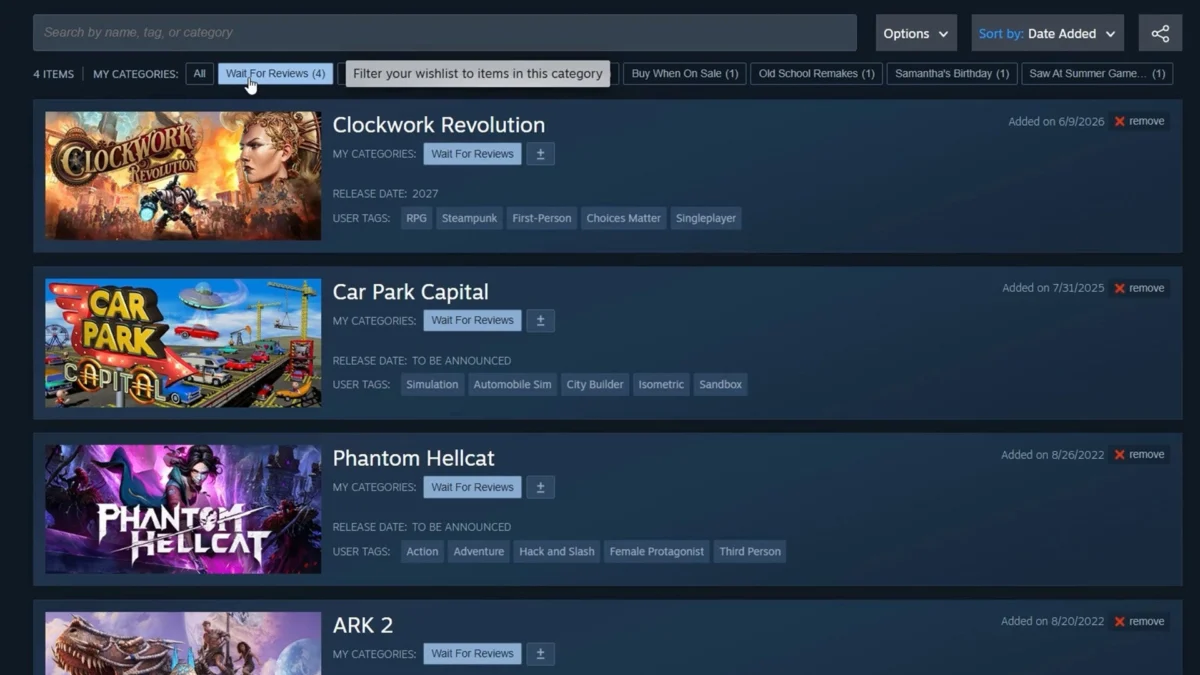
Valve, the proprietor of the immensely popular digital distribution platform Steam, has rolled out significant updates aimed at refining the user experience for game discovery and gifting. These enhancements, detailed in recent announcements, introduce comprehensive categorization capabilities for user wishlists and expand the previously limited guest checkout system to include all games, alongside the introduction of cross-region gifting. The move signifies Valve’s ongoing commitment to evolving its platform, addressing long-standing user requests, and fortifying its dominant position in the PC gaming market.
A Deeper Dive into Wishlist Evolution: Beyond Simple Listing
The Steam wishlist has long been a fundamental feature for millions of gamers, serving as a personal repository for prospective purchases. Users routinely populate these lists with hundreds, if not thousands, of titles they aspire to own, often leveraging them to track price drops during Steam’s renowned seasonal sales. However, as the Steam library has burgeoned to encompass tens of thousands of games, the sheer volume has rendered simple chronological or alphabetical lists increasingly unwieldy. Recognizing this, Valve’s new categorization system offers a robust solution to this organizational challenge.
User-Defined Categories and Enhanced Filtering:
The core of the wishlist overhaul is the introduction of user-defined categories. This empowers players to group games according to their own criteria, moving beyond the platform’s existing filtering options which primarily focused on genres, tags, or release dates. For instance, a user might create categories such as "RPG Epics," "Indie Gems to Explore," "Co-op with Friends," "Upcoming Releases," or even "Games for Next Major Sale." This flexibility is crucial for personalizing the discovery process. Once categories are established, users can filter their entire wishlist to display only games within specific groupings, significantly streamlining the process of reviewing and selecting titles.
Integrated Categorization and Notification Management:
Adding a new layer of convenience, the update allows users to assign games to specific categories directly at the point of wishlisting. This proactive organization saves time and ensures that new additions are immediately placed within a relevant context. Furthermore, Valve has enhanced notification controls related to wishlisted games. Users can now tailor the types of alerts they receive, potentially opting for notifications only when a game in a specific category goes on sale, or when a highly anticipated title in a "Must Buy" category becomes available. This granular control over notifications is a welcome change, helping users cut through the noise and focus on truly relevant updates for their most desired games.
The Strategic Importance of an Organized Wishlist:
For the average Steam user, an organized wishlist transforms from a mere ‘someday’ list into a powerful personal game management tool. It aids in navigating the platform’s vast catalog, making purchase decisions more informed, especially during periods of high promotional activity like the Steam Summer Sale or Winter Sale. For game developers, a more engaged and organized user base on the wishlist system translates directly into enhanced visibility. When a user can easily find and prioritize games, the likelihood of a purchase increases. Developers can also infer player interest more accurately, potentially influencing future marketing strategies or even game development decisions based on category trends. The wishlist effectively acts as a direct line of communication between player interest and potential sales, and an organized one amplifies this signal.
Revolutionizing Game Gifting: Simplicity, Accessibility, and Global Reach
Complementing the wishlist enhancements, Valve has dramatically simplified the process of gifting games on Steam, addressing several friction points that have historically complicated the act of buying games for others. These improvements are designed to make gifting more intuitive, accessible, and globally inclusive.
Expansion of Guest Checkout to All Games:
One of the most significant changes is the expansion of Steam’s guest checkout system to include all games available on the platform. Introduced in 2024, the guest checkout feature initially allowed non-Steam account holders to purchase digital gift cards and hardware directly from the Steam store. This functionality has now been extended to cover the entire game catalog. This means that individuals who do not possess a Steam account, or simply prefer not to log in, can now purchase a game for a friend or family member with unprecedented ease. This move lowers the barrier to entry for gift-givers, potentially tapping into a broader demographic of casual shoppers who might otherwise be deterred by the requirement to create an account or navigate a logged-in interface.
Effortless Email Gifting:
Further streamlining the process, Valve has introduced the ability to gift games directly to an email address. This eliminates the previous requirement of knowing the recipient’s exact Steam username or being Steam friends with them. The gift-giver simply provides the recipient’s email, and an email containing a link to redeem the game is sent. Valve has thoughtfully engineered this system to be robust, noting that even if the recipient’s email address is the same one associated with their Steam account, the link will allow them to sign in and accept the gift seamlessly. This feature is particularly useful for casual acquaintances, distant relatives, or last-minute gifting scenarios where obtaining a Steam ID might be impractical.
Unlocking Cross-Region Gifting:
Perhaps one of the most impactful changes is the introduction of cross-region gifting. Historically, gifting games across different geographical regions on Steam has been fraught with restrictions, primarily due to varying pricing structures, regional content licenses, and currency exchange rates. These restrictions often prevented users from sending games to friends or family residing in different countries, leading to frustration and circumvention attempts. The new update removes these geographical barriers, allowing users to purchase and gift games to anyone, anywhere in the world. This global approach not only fosters stronger international connections within the gaming community but also significantly broadens the market for game sales, particularly during holiday seasons when gifting is prevalent. It reflects a growing trend towards globalized digital marketplaces and a recognition of Steam’s vast international user base.
Valve’s Strategic Vision and Official Stance
Valve’s official communication regarding these updates, primarily through their Steamworks blog, underscores their commitment to improving user experience and fostering community engagement. As stated in their announcement, "With so many amazing games on Steam, players are wishlisting more and more titles. Existing options like ranking and filtering are great, but players have asked for even more ways to manage their Steam wishlists. Today we’re adding categorization as well as improved search and sharing to the wishlist." This statement directly acknowledges the user-driven demand for more sophisticated organizational tools.
Regarding gifting, Valve’s emphasis on accessibility is clear. The expansion of guest checkout and the introduction of email gifting directly address common pain points. While not explicitly stated, the underlying strategy is multi-faceted:
- Enhance User Satisfaction: By providing highly requested features, Valve reinforces its reputation as a user-centric platform.
- Drive Sales: Easier game discovery and simplified gifting inevitably lead to increased purchase opportunities, especially during peak sales periods and holidays.
- Strengthen Ecosystem: A more user-friendly and connected platform encourages greater engagement, retention, and loyalty.
- Maintain Market Leadership: Continuous innovation and feature enrichment help Steam stay ahead of competitors in a fiercely competitive digital distribution landscape.
The chronological rollout of these features also indicates a deliberate strategy. The initial introduction of guest checkout for gift cards and hardware in early 2024 served as a pilot, allowing Valve to refine the system before expanding it to the entire game catalog. This phased approach demonstrates a methodical development process, ensuring stability and user acceptance before a broader implementation.
Industry Implications and Developer Perspectives
The implications of these updates extend far beyond individual user convenience, resonating across the entire PC gaming ecosystem, particularly for game developers and the broader digital distribution industry.
Impact on Game Discovery and Visibility:
For the vast majority of developers, especially independent studios, visibility on Steam is a constant challenge. With tens of thousands of games vying for attention, being discovered can be akin to finding a needle in a haystack. The enhanced wishlist categorization, while controlled by the user, indirectly benefits developers by making it easier for players to manage their interests. If a user can efficiently organize their wishlist into categories like "Upcoming Indies" or "Hidden Gems," it increases the likelihood that a developer’s game, once wishlisted, will actually be revisited and potentially purchased. This refinement of the discovery pipeline means that games aren’t merely added to a forgotten list but are actively managed and considered.
Influence on Sales Cycles and Marketing Strategies:
Steam’s seasonal sales events are legendary for their ability to drive massive sales volumes. Wishlists are critical during these periods, as users often receive notifications when a wishlisted game goes on discount. With categorized wishlists, users can now prioritize games more effectively, perhaps focusing on "High Priority Sale Items" during a major event. This refined focus could lead to more targeted purchases and potentially higher conversion rates during sales. Developers, in turn, might adapt their marketing strategies to encourage wishlisting and highlight how their games fit into common user-defined categories. The easier gifting system is also a boon for sales, particularly around holidays. The removal of regional restrictions means that a game bought in one country can be gifted to a friend in another, potentially unlocking new markets for gifting revenue that were previously inaccessible.
Developer Benefits and Data Insights:
While Valve has not detailed new developer-facing tools directly tied to wishlist categories, the enhanced user organization could provide more nuanced data points indirectly. For instance, if Valve were to aggregate anonymized data on category creation, it could offer insights into how players group and perceive games, potentially informing tagging systems or market segment analysis. More broadly, an improved gifting system means less customer support overhead related to gifting issues and more seamless transactions, allowing developers to focus on game creation rather than administrative hurdles.
User Experience and Community Reception
The Steam community has historically been vocal about desired features, and both wishlist organization and improved gifting have been recurring themes. The initial reception to these updates is anticipated to be overwhelmingly positive.
- Enhanced Personalization: Users appreciate having more control over their digital environment, and user-defined categories offer a high degree of personalization.
- Reduced Friction: The simplification of gifting directly addresses long-standing frustrations, particularly the complexities of cross-region gifting and the need for Steam friend connections. This will likely lead to a more positive overall impression of the platform’s social features.
- Improved Efficiency: For power users with extensive wishlists, the new categorization system will save considerable time and mental effort, making the process of finding and acting on desired games much more efficient.
These updates reinforce Steam’s position not just as a storefront but as a comprehensive platform designed to cater to the diverse needs of its vast global user base.
Competitive Landscape and Future Outlook
In an increasingly competitive digital distribution landscape, with platforms like Epic Games Store, GOG, and various console storefronts vying for market share, continuous innovation is crucial for maintaining leadership. Steam, with its established user base and extensive catalog, already holds a dominant position. However, these updates demonstrate Valve’s proactive approach to refining its platform and addressing evolving user expectations.
By enhancing core features like wishlists and gifting, Valve is not just playing catch-up but actively setting new standards for user experience in digital game distribution. The focus on accessibility (guest checkout, email gifting) and global reach (cross-region gifting) positions Steam as an even more inclusive and user-friendly platform. This strategic move could further solidify its market share, attract new users who might have previously found the platform intimidating, and provide existing users with even more reasons to remain loyal. As the digital gaming market continues to expand, Valve’s commitment to incremental yet impactful improvements ensures that Steam remains at the forefront of innovation and user satisfaction.
In conclusion, Valve’s recent updates to the Steam wishlist and gifting systems represent a significant step forward in enhancing the platform’s utility and user experience. By empowering users with greater organizational control over their game discovery process and streamlining the act of sharing games, Valve is not only addressing key community requests but also strategically positioning Steam for continued growth and dominance in the global PC gaming market. These changes promise a more organized, accessible, and globally connected experience for millions of gamers worldwide, benefiting players, developers, and the entire Steam ecosystem.