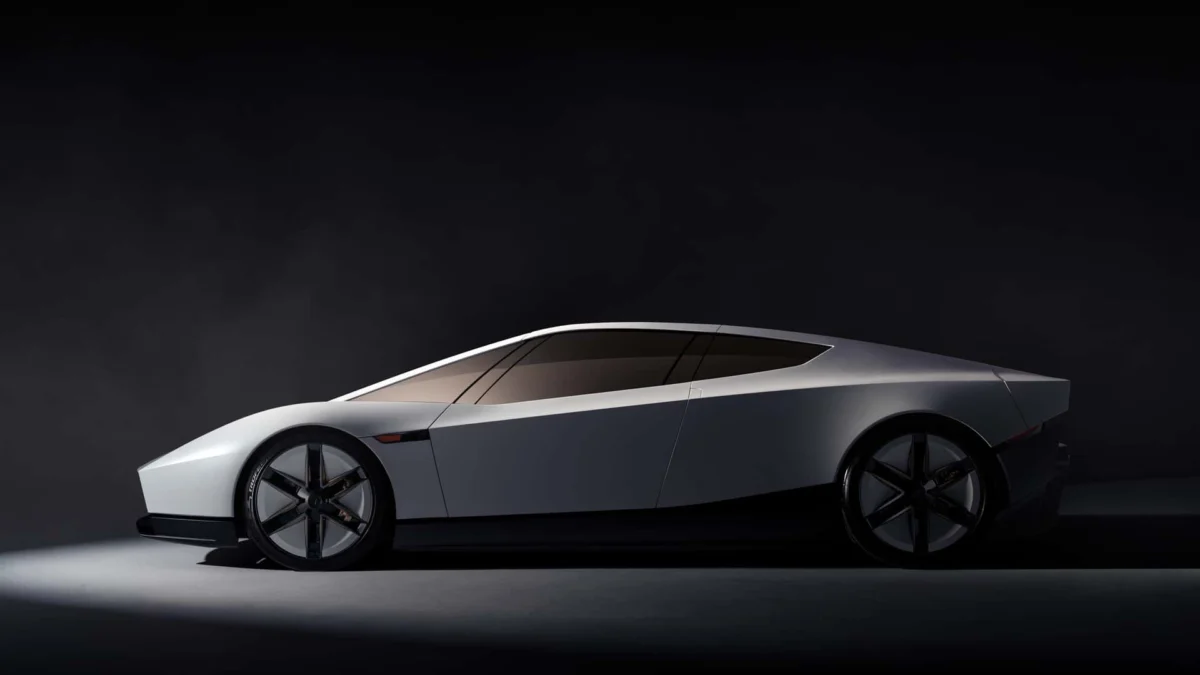
The automotive industry is currently navigating a period of unprecedented transformation, characterized by the shift toward electrification and the integration of advanced autonomous systems. Within this landscape, the recent demonstration of the redesigned Tesla Roadster at a SpaceX rocket test facility in McGregor, Texas, has served as a focal point for discussion among global automotive leaders. Among the most notable reactions came from Ferrari CEO Benedetto Vigna, who, in a rare public endorsement of a competitor’s product, awarded the vehicle a perfect 10 out of 10 for both its technological execution and its presentation.
The Texas Demonstration and Engineering Spectacle
The event in Texas, held just days before Vigna’s remarks at a Quattroruote automotive conference, was designed to highlight the intersection of aerospace engineering and automotive performance. Tesla’s presentation featured the next-generation Roadster in a series of demonstrations that pushed the boundaries of traditional vehicle testing.
Engineers showcased the car’s unique capabilities by driving it up a vertical ramp, where it remained affixed through the use of a sophisticated suction fan system. The display culminated in a mid-air maneuver facilitated by compressed-gas thrusters—technology directly derived from SpaceX’s rocket hardware. This integration of thruster technology suggests a departure from conventional automotive propulsion, aiming to improve handling and acceleration through non-traditional means. While the current target for market entry is set for 2028, the demonstration served as a proof-of-concept for the hardware, emphasizing Tesla’s focus on high-performance, unconventional engineering.
A Departure from Industry Norms
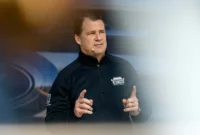
Vigna’s assessment of the Roadster extends beyond the aesthetic appeal of the vehicle. His comments, reported by Reuters, reflected a broader appreciation for the willingness to challenge established industry norms. "As a European, thank you for showing us how that, even in an old world, you can still innovate and dare," Vigna stated. By framing the Roadster as a symbol of persistent creativity, Vigna highlighted a critical concern within the traditional automotive sector: the risk of stagnation during the transition to electric powertrains.
This perspective is particularly relevant given the history of the Roadster project. Originally announced years ago, the vehicle has faced numerous delays, shifting timelines, and skepticism regarding its production feasibility. However, Vigna’s critique ignored the financial and timeline-related "noise" surrounding Tesla, focusing instead on the engineering philosophy that allowed such a vehicle to be built. His remarks suggest that the industry’s capacity for risk-taking is as vital as its technical capability.
Strategic Collaborations and Design Philosophy
A significant portion of Vigna’s commentary focused on the merits of external collaboration. Tesla’s decision to utilize outside design studios to push the aesthetic and functional boundaries of the Roadster is a strategy that Vigna himself has championed at Ferrari. The Ferrari CEO noted that internal teams can sometimes be constrained by existing legacy and institutional inertia, whereas outside perspectives can force a company to confront questions that might otherwise remain unasked.
This mirrors Ferrari’s own development process for its upcoming fully electric model, the Luce. Ferrari partnered with LoveFrom—the design studio founded by former Apple design chief Jony Ive—to conceptualize the vehicle. The move was a strategic pivot intended to redefine what a luxury electric vehicle should look and feel like, moving away from the traditional design constraints of internal combustion engines. Despite a lukewarm market reaction following the Luce’s reveal in May 2026, which saw a temporary decline in Ferrari’s stock, Vigna has remained steadfast in his defense of the vehicle’s design language, arguing that innovation requires an initial period of discomfort and adaptation for the consumer base.
The Broader Landscape of Electrification
The automotive industry is currently experiencing a divergence in strategies for achieving decarbonization. While Ferrari is heavily invested in battery-electric vehicles (BEVs), it is also pursuing a diversified approach that includes the development of high-performance biofuels. This dual strategy acknowledges that while electrification is the primary trajectory, the preservation of high-performance internal combustion engines through cleaner fuel sources remains a point of interest for luxury manufacturers.
Tesla, by contrast, continues to refine its ecosystem of proprietary technology, which includes not only vehicle hardware but also autonomous driving software and energy storage systems. The Roadster represents the pinnacle of Tesla’s performance-focused engineering, effectively serving as a flagship for the brand’s broader technological ambitions. For traditional manufacturers, the success or failure of such projects provides a barometer for consumer appetite for radical new technologies.
Chronology of Development and Public Reception
The journey of the second-generation Tesla Roadster has been marked by a long gestation period, reflective of the challenges inherent in bringing cutting-edge technology to mass production:
- Initial Announcement (2017): Tesla first unveiled the Roadster prototype, promising performance figures that were, at the time, unprecedented for a production vehicle.
- Engineering Iterations (2018–2025): Throughout this period, Tesla underwent multiple design revisions, incorporating advancements in battery energy density and structural integrity.
- Strategic Pivot (2026): The emergence of new competition and the shift in market demand toward more integrated, "sentient" vehicle experiences prompted a re-evaluation of the Roadster’s feature set.
- Texas Demonstration (2027): The public unveiling of the current prototype featuring SpaceX thruster integration, setting the stage for the 2028 production target.
This timeline illustrates the difficulty of sustaining momentum in the electric vehicle market, where technological obsolescence occurs rapidly. Tesla’s strategy of using high-profile, stunt-heavy reveals serves to maintain public interest and investor confidence despite the extended development cycle.
Industry Implications: Risk vs. Tradition
Vigna’s endorsement of the Roadster is not merely an expression of personal opinion; it is a reflection of the shifting competitive dynamics between legacy manufacturers and disruptive tech-forward companies. For Ferrari, the challenge is to maintain its status as an aspirational luxury brand while adapting to the silence and torque characteristics of electric powertrains. For Tesla, the challenge is to transition from a manufacturer of high-volume electric cars to a creator of ultra-high-performance vehicles that can compete with the heritage and craftsmanship of European manufacturers.
The "perfect score" from the Ferrari CEO highlights an emerging consensus among industry leaders: the future of the automotive sector will not be decided by incremental improvements to existing platforms, but by the courage to undertake radical engineering projects that define new categories of motion.
Economic and Market Considerations
The financial markets have reacted with volatility to the electrification plans of legacy automakers. Ferrari’s experience with the Luce launch underscores the difficulty of introducing change to a brand with a deeply entrenched heritage. Investors often view radical departures with skepticism, fearing the dilution of brand identity or the erosion of profit margins during the transition to new manufacturing processes.
However, the willingness of executives like Vigna to publicly validate the efforts of competitors suggests that the industry is entering a more collaborative, albeit highly competitive, phase. As the infrastructure for electric vehicles continues to expand and the costs of high-density battery packs decrease, the focus is shifting toward the user experience and the "soul" of the vehicle. By acknowledging the technical brilliance of the Tesla Roadster, Ferrari is signaling that it understands the changing expectations of its own customer base, who are beginning to demand the same level of performance and innovation in electric vehicles that they have historically expected from gasoline-powered engines.
Conclusion: The Future of Automotive Innovation
The collaboration between engineers and designers, the willingness to integrate cross-industry technology, and the courage to publicly commit to ambitious, high-risk projects are the defining characteristics of the current automotive era. Benedetto Vigna’s assessment of the Tesla Roadster serves as a reminder that even for a company as storied as Ferrari, the path forward requires an objective, and occasionally appreciative, view of the competition.
As the industry moves toward the 2028 production target for the Roadster, the focus will likely remain on the feasibility of scaling the technology demonstrated in Texas. Whether or not the vehicle meets its performance claims or its delivery timeline, its impact on the industry’s discourse is already evident. By fostering a dialogue that prioritizes innovation over tradition, leaders like Vigna are helping to ensure that the automotive sector continues to "keep dreaming," even as it navigates the complex realities of the transition to a cleaner, more automated, and technologically integrated future.