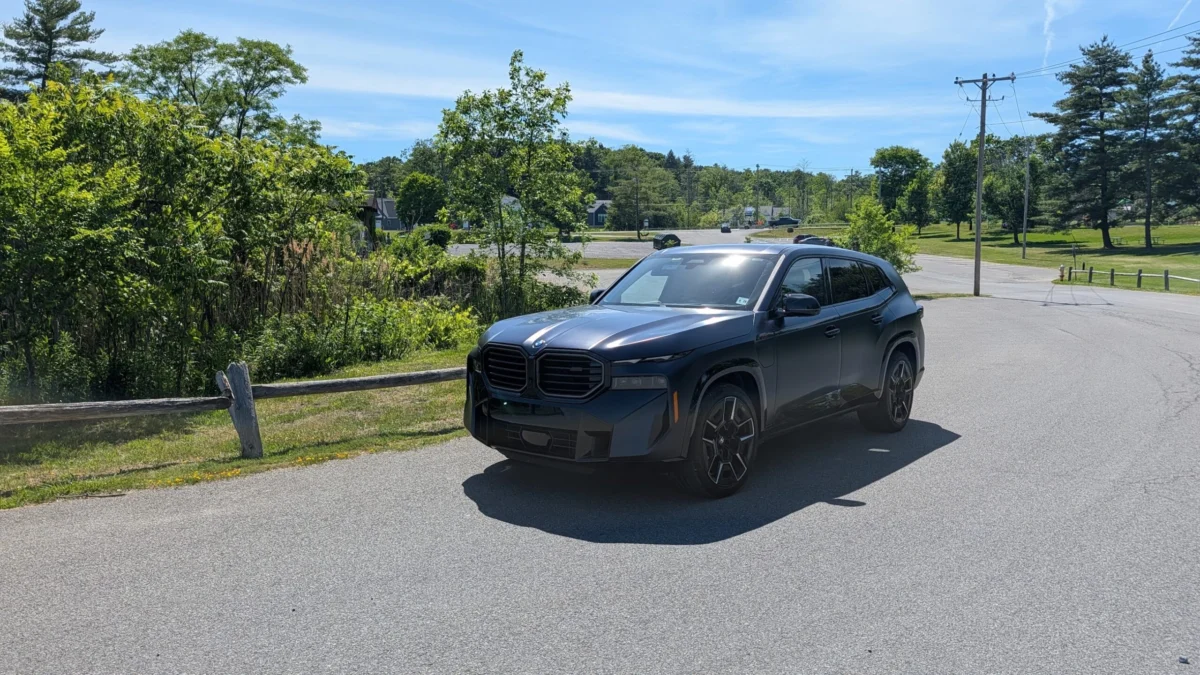
The BMW XM, a vehicle that has undeniably sparked vigorous debate since its inception, represents a bold and perhaps polarizing evolution in BMW’s performance division. Positioned as a high-octane SUV, it aims to carve a unique niche by offering a blend of practicality and extreme performance, a philosophy that echoes the esteemed BMW M5 sedan. However, the XM’s departure from traditional sedan dynamics and its unconventional styling have led to a spectrum of reactions, prompting a closer examination of its merits and drawbacks, particularly when juxtaposed against BMW’s established performance benchmarks. A recent assessment of the XM, specifically the top-tier XM Label variant, suggests that while it may not dethrone the M5 in every performance metric, it presents a compelling alternative for a specific breed of discerning driver.
The Allure of Unconventional Design and Electrified Power
The design language of the BMW XM has been a primary catalyst for its divisive reception. Characterized by its aggressive lines, imposing grille, and a silhouette that departs significantly from BMW’s more understated aesthetic, the XM is engineered to make a statement. This deliberate choice for a provocative visual identity was, according to reports from earlier in its development, a conscious decision by BMW M’s leadership. Frank van Meel, CEO of BMW M GmbH, has publicly stated that he wanted the XM’s styling to be controversial, aiming to elicit strong emotions and differentiate it from the rest of the BMW lineup. This strategy, while potentially alienating some traditionalists, is clearly designed to capture the attention of a new demographic seeking a vehicle that stands out and expresses a distinct personality.
Beneath its striking exterior lies a potent plug-in hybrid powertrain. The XM Label, the pinnacle of the XM range, boasts a formidable 4.4-liter BMW M TwinPower Turbo V-8 engine, augmented by an integrated electric motor. This sophisticated system generates an astonishing 738 horsepower and 738 lb-ft of torque. This sheer output propels the XM from a standstill to highway speeds with breathtaking alacrity, a characteristic that aligns with the M division’s ethos of exhilarating acceleration. The experience of such immediate and overwhelming power is, for many, the defining feature of a true performance vehicle, and the XM delivers this in spades.
Performance Dynamics: Straight-Line Prowess vs. Nimble Handling
When it comes to sheer straight-line acceleration, the BMW XM is an undeniable force. The combined power of its V-8 engine and electric motor allows for sprints that rival many dedicated sports cars. Anecdotal evidence from drivers and reviewers consistently highlights the sensation of being effortlessly pushed back into their seats as the vehicle rockets forward. This capability is not merely theoretical; the XM’s ability to achieve such velocity in a relatively large and luxurious SUV package is a testament to its engineering prowess.
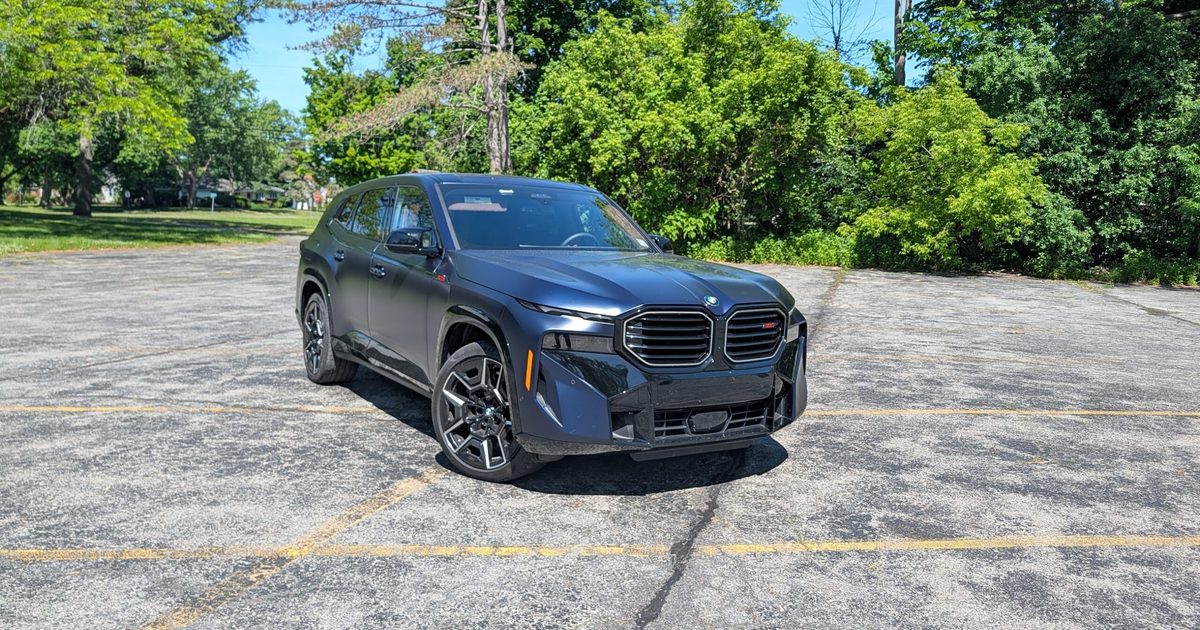
However, the narrative of performance is not solely about acceleration. The inherent physics of a large, heavy SUV present distinct challenges when navigating corners and dynamic driving scenarios. Compared to the lithe and agile M5 sedan, the XM’s increased dimensions and weight are palpable. The author’s experience suggests that while the XM’s handling is commendable for an SUV of its stature, it cannot entirely escape the physical limitations imposed by its size and higher center of gravity. The absence of air suspension in the tested model may have exacerbated the noticeable body roll during spirited driving, a factor that can detract from the precise feel and confidence-inspiring dynamics expected from a top-tier M product.
Despite these observations, it’s crucial to acknowledge that the XM is not designed to replicate the M5’s track-day prowess. While it can certainly be driven enthusiastically, as evidenced by enjoyable excursions through challenging terrains like the Catskills, its overall size remains a consideration. Drivers are implicitly encouraged to maintain a degree of restraint, particularly in more demanding driving situations, where the M5’s lower stance and more focused chassis would undoubtedly offer superior agility and feedback. The XM, therefore, occupies a different performance spectrum, prioritizing raw power and a commanding presence over the razor’s edge handling of its sedan counterpart.
Redefining Long-Distance Comfort and Practicality
Where the BMW XM truly begins to distinguish itself, and arguably surpasses the M5 in a specific context, is in its capability as a long-distance cruiser. Recalling a previous road trip in a 2025 BMW M5, the author noted the sedan’s firm ride and less forgiving nature over extended journeys. The M5, while an exceptional performance machine, prioritizes a visceral connection to the road, which can translate to fatigue on longer drives.
In stark contrast, the XM offers a ride quality that aligns with the broader comfort standards of BMW’s SUV lineup. Its smooth operation at highway speeds, coupled with a remarkably plush interior, transforms the driving experience into one of serene indulgence. Features such as ventilated and heated massage seats actively work to alleviate driver and passenger fatigue, making extended periods behind the wheel significantly more pleasant. The elevated driving position also contributes to a more comfortable and commanding view of the road, further enhancing the long-distance touring experience.
While the fuel economy of such a high-performance hybrid is a consideration, as with any vehicle in this segment, the trade-off for its performance and comfort is often accepted by its target demographic. The XM’s ability to deliver this level of comfort on long hauls, without compromising its potent performance capabilities, presents a compelling argument for its utility as a grand tourer.
Practicality Redefined: An SUV with Enhanced Utility
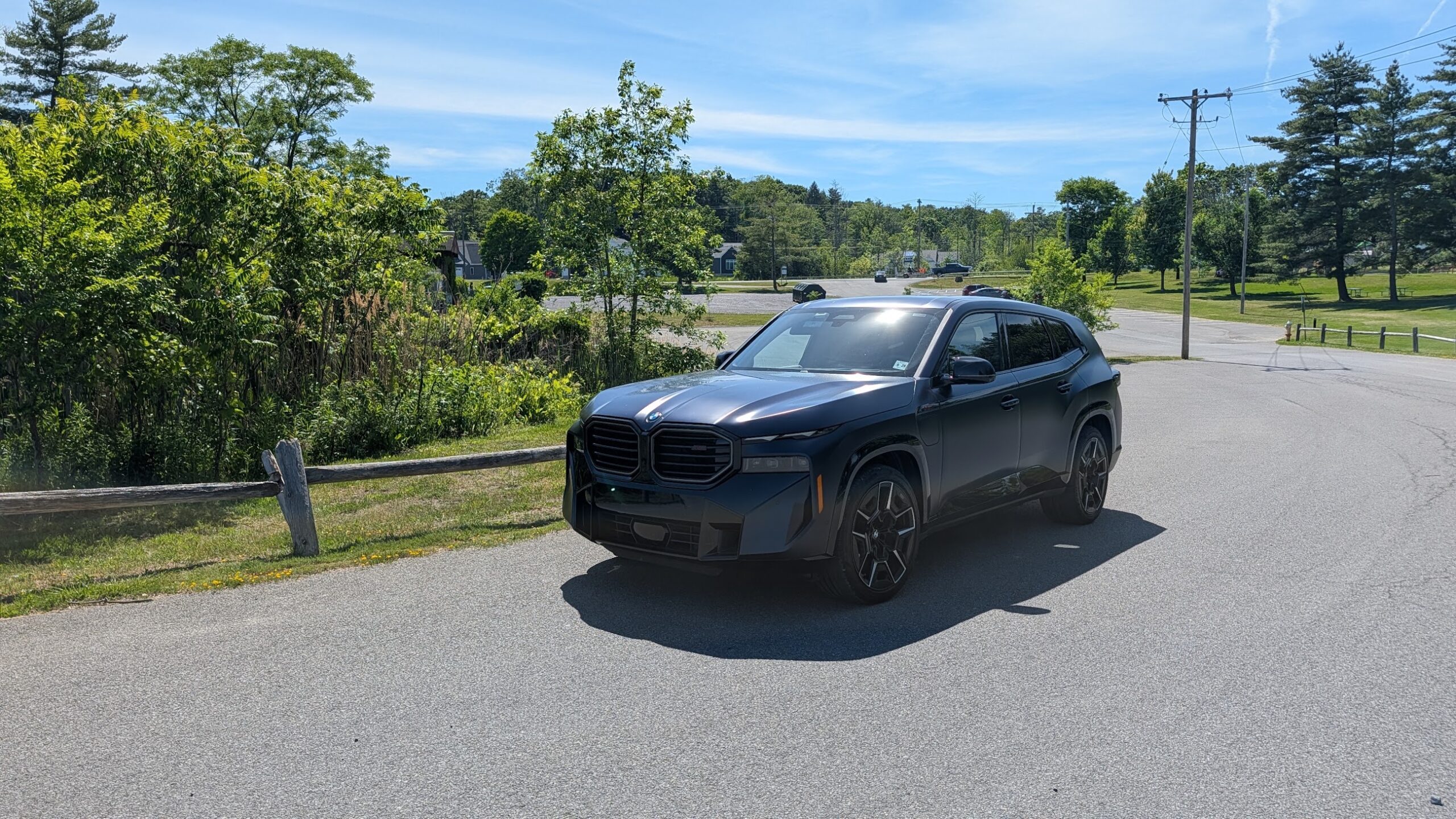
The BMW XM is classified as a two-row, full-sized SUV, and its dimensions translate into tangible benefits in terms of cargo and passenger space. Offering 18.6 cubic feet of storage with the rear seats in their upright position and expanding to a generous 64.3 cubic feet when the rear seats are folded down, the XM provides a substantial amount of utility. While it may not boast the cavernous capacity of some larger, three-row SUVs on the market, this volume is significantly greater than what is offered by a traditional sedan like the M5, making it a more practical choice for hauling luggage, groceries, or recreational equipment.
Furthermore, the XM’s ground clearance of 8.7 inches, combined with its M xDrive All-Wheel-Drive System and M Sport Differential, imbues it with a degree of off-road capability that is entirely absent in the M5. The sedan’s ground clearance, often less than five inches, necessitates careful attention when approaching curbs or navigating uneven terrain, a constant concern that the XM largely alleviates. This increased ride height, coupled with its robust drivetrain, allows the XM to handle light off-road excursions with confidence, expanding its versatility beyond paved roads. This added capability further solidifies its position as a more practical, all-encompassing vehicle compared to its sedan counterpart.
The Challenge of BMW’s Own Stellar Lineup
Despite its impressive attributes, the BMW XM faces its most significant challenge not from external competitors, but from within BMW’s own expansive and highly competitive range of vehicles. The brand has cultivated a reputation for delivering exceptional performance and luxury across various segments, and the XM, in its unique positioning, finds itself in a crowded field of highly competent alternatives.
For buyers seeking a well-rounded luxury SUV, the BMW X5 often emerges as a more conventional and perhaps more universally appealing option. Its balance of luxury, performance, and practicality has made it a perennial favorite. Similarly, for those desiring a sportier full-sized SUV experience, the BMW X7, particularly in its M60i configuration, offers a compelling package that is often more affordable than the XM while delivering exceptional performance and significantly more interior space. The X7 M60i’s ability to blend the commanding presence of a large SUV with dynamic driving characteristics makes it a formidable contender.
For the purist seeking the pinnacle of BMW M performance, the focus inevitably shifts to the M3 and M5 sedans, or their M-tuned SUV counterparts like the X3 M or X4 M, which offer a more direct and unadulterated M driving experience. These vehicles, honed over decades of motorsport heritage, represent the established benchmarks for performance driving within the BMW M portfolio.
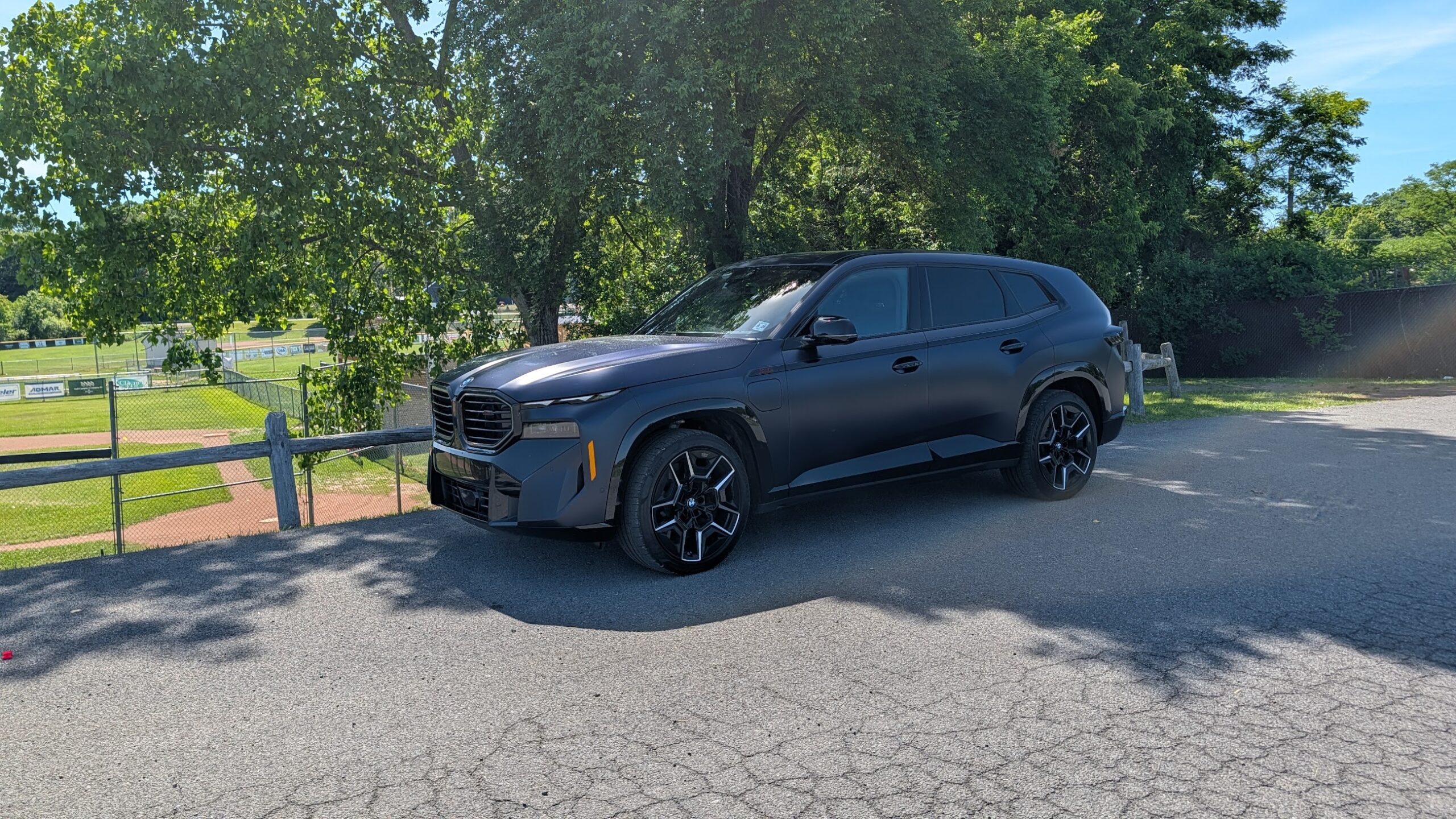
The existence of the XM is understandable, catering to a specific niche that values its distinctive styling and potent plug-in hybrid technology. Those who opt for the XM are unlikely to be profoundly disappointed with its capabilities. However, its position in the market is somewhat anomalous. It occupies an expensive and somewhat isolated niche within a lineup that offers arguably more refined or more specialized solutions for various driving priorities. The XM’s success, therefore, hinges on its ability to capture the imagination of buyers who are drawn to its bold statement and unique blend of attributes, even as other BMW models offer more conventional pathways to performance and practicality.
Specifications of the Reviewed BMW XM Label
Pricing & Packages:
- Base MSRP: $159,600.00
- Total Suggested Retail Price: $163,275.00 (includes $1,175.00 destination charge)
- Added Options: M Driver’s Package ($2,500.00)
Performance & Drivetrain:
- Engine: 4.4-Liter BMW M TwinPower Turbo V-8 (32-valve) with cross-bank exhaust manifold and integrated electric motor (Plug-In Hybrid)
- Transmission: 8-Speed M Steptronic automatic transmission with Drivelogic and Launch Control
- Drivetrain: M xDrive All-Wheel-Drive System with M Sport Differential
- Chassis & Handling: Adaptive M Suspension Professional, Active Roll Stabilization, and Integral Active Steering
- Brakes: M Compound 4-wheel ventilated anti-lock disc brakes (ABS) with cross-drilled rotors and black calipers
Fuel Economy & Range:
- Combined Fuel Economy: 47 MPGe (Electricity + Gasoline) / 14 MPG (Gasoline only)
- All-Electric Range: Up to 29 miles
- Charging: Complete charge in approximately 2 hours at 240V (Flexible Fast Charger and NEMA 5-15/14-50 adapter bundle included)
Exterior & Interior Styling:
- Exterior Color: Frozen Tanzanite Blue Metallic
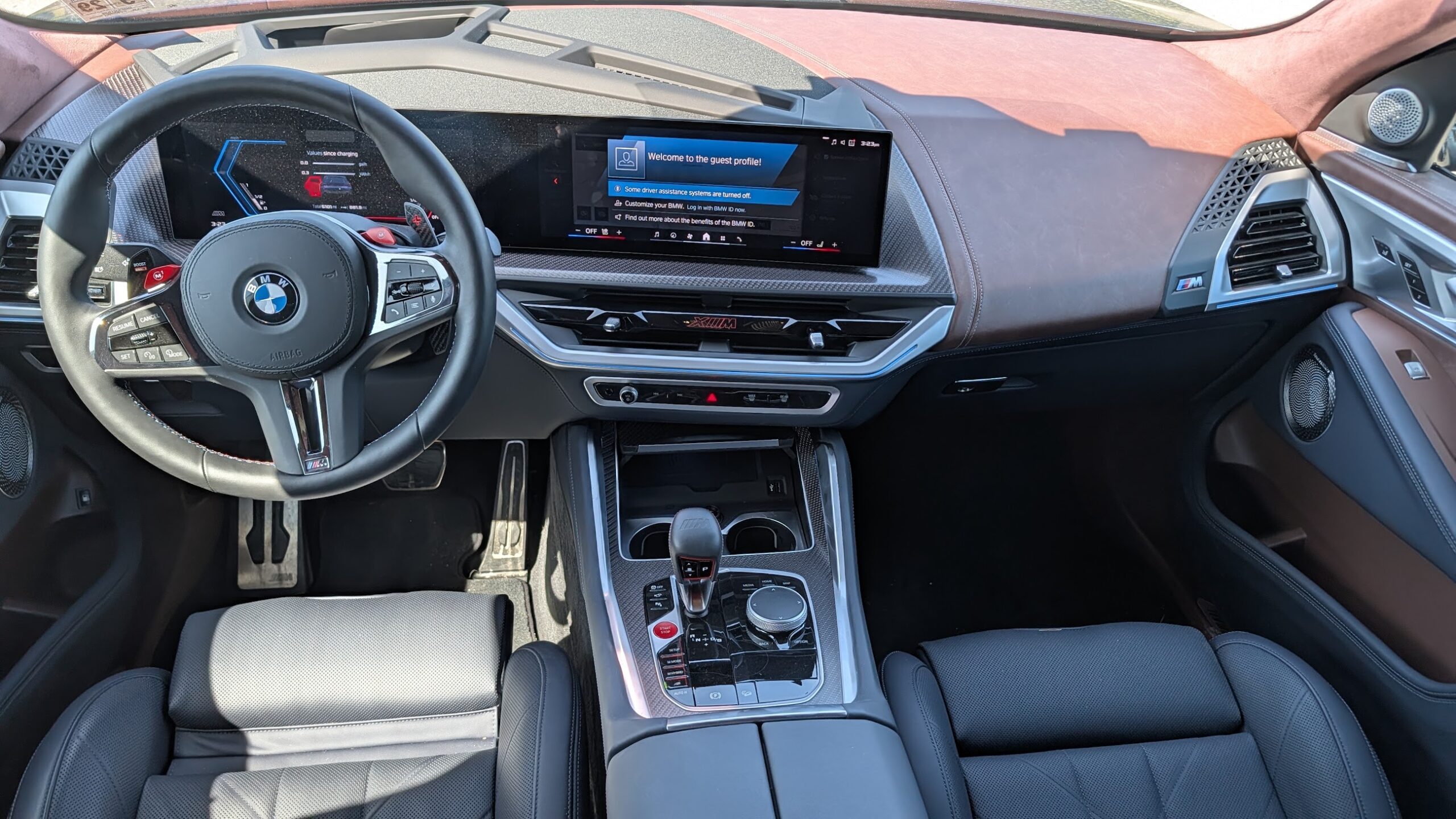
- Interior Upholstery: Night Blue with Vintage Coffee leather upholstery
- Trim & Accents: Carbon Fiber M Signature interior trim, leather dashboard, extended Shadowline trim, and an illuminated kidney grille
- Wheels: 22-inch M Dual-Spoke Bicolor 922M wheels
- Exhaust: Vertical quad exhaust system
Comfort & Convenience:
- Seating: Multi-function front seats with lumbar support, massage, ventilation, and heating; heated rear seats; exclusive M Lounge configuration in the rear
- Climate Details: Heated front armrests and steering wheel, alongside heated and cooled cup holders
- Doors: Soft-close automatic doors and Comfort Access keyless entry
Audio & Connectivity:
- Sound System: Bowers & Wilkins Diamond Surround Sound System
- Interface: BMW Curved Display running iDrive 8.5, featuring Live Cockpit Pro with navigation
- Smart Tech: Apple CarPlay and Android Auto compatibility, Digital Key Plus, and Personal eSIM 5G connectivity
Safety & Driver Assistance:
- Driving Assistant Professional: Includes Highway Assistant (limited term), Traffic Jam Assistant, and Active Cruise Control with Stop & Go
- Parking Assistance: Parking Assistant Plus with Surround View 3D cameras and Park Distance Control
- Security & Recording: Drive Recorder and BMW Assist eCall