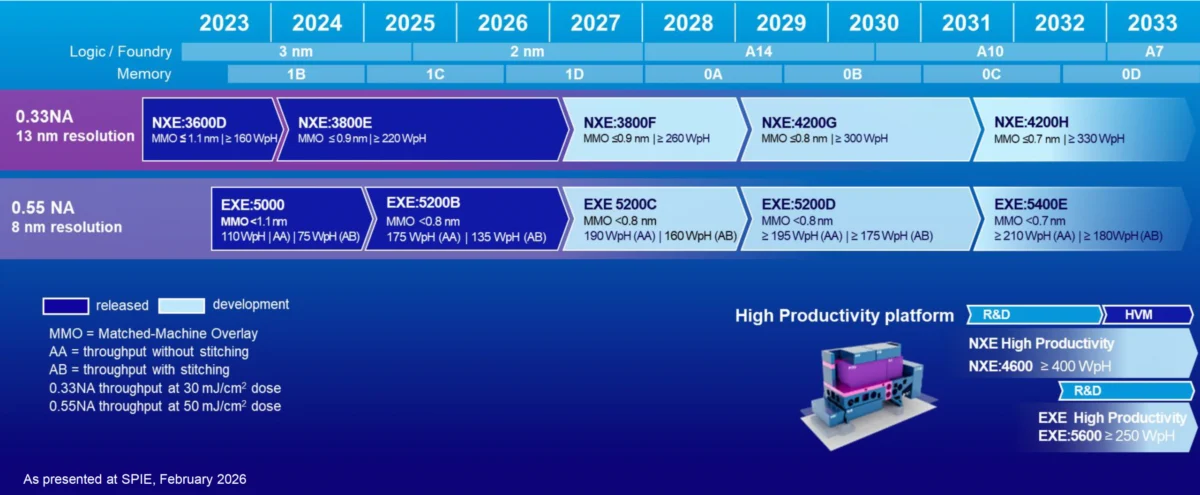
ASML, the sole manufacturer of extreme ultraviolet (EUV) lithography equipment critical for producing the most advanced semiconductors, is reportedly considering substantial price increases for its existing Low-NA EUV tools. This potential move has already drawn considerable discontent from its largest client, Taiwan Semiconductor Manufacturing Company (TSMC), as reported by The Information. The implications of such price adjustments are far-reaching, poised to ripple across the entire semiconductor industry, affecting everything from chip production costs to the final price of consumer electronics. While ASML’s Chief Financial Officer, Roger Dassen, acknowledged during a recent quarterly earnings call that price adjustments would not manifest "tomorrow" due to existing long order lead times, he also underscored the company’s rationale, citing continuous improvements in the productivity of its Low-NA tools as a strong basis for future price enhancements.
The discussions surrounding these price hikes highlight the unique and indispensable position ASML occupies within the global technology landscape. Based in Veldhoven, Netherlands, ASML holds a de facto monopoly on EUV lithography, a technology so complex and capital-intensive that no other company has successfully replicated it. These machines are the cornerstone of modern chip manufacturing, enabling chipmakers to etch increasingly smaller and more intricate patterns onto silicon wafers, a process vital for advancing Moore’s Law and producing the high-performance, energy-efficient processors found in everything from smartphones and artificial intelligence servers to autonomous vehicles.
The Unassailable Position of ASML: A Technological Monopoly
ASML’s dominance stems from decades of unparalleled research and development, culminating in a technological masterpiece. Each EUV system is an engineering marvel, comprising over 100,000 components, requiring ultra-precise optics manufactured by ZEISS, and utilizing a highly complex tin-plasma light source to generate extreme ultraviolet light. The cost of a single Low-NA EUV system currently ranges between $150 million and $200 million, a figure that pales in comparison to the anticipated price tag of the next-generation High-NA EUV tools, expected to exceed $300 million.
The strategic importance of ASML’s equipment cannot be overstated. Without EUV lithography, chip foundries like TSMC, Samsung Foundry, and Intel would be unable to produce chips at the 7-nanometer (nm), 5nm, 3nm, and upcoming 2nm nodes, which are essential for the most advanced computing applications. This technological bottleneck effectively grants ASML immense pricing power, as its customers have no viable alternative. The semiconductor industry’s relentless pursuit of greater performance and efficiency ensures a constant, high demand for ASML’s cutting-edge machines, creating a seller’s market where ASML dictates terms, within reason.
Chronology of Emerging Price Discussions
Discussions around ASML’s potential price increases have been brewing amidst a complex global economic environment characterized by persistent inflation, supply chain pressures, and an insatiable demand for advanced semiconductors. While the specific timeline for The Information‘s report details isn’t publicly available, ASML’s executives have, in various quarterly earnings calls over the past year, subtly hinted at the increasing value proposition of their tools.
Roger Dassen’s remarks during a recent earnings call provide the most direct public confirmation of ASML’s strategic thinking. He explicitly stated, "When it comes to Low-NA [EUV tools] pricing, of course, you know that we keep on increasing the productivity of the Low-NA tool, [which] gives us a pretty strong runway for potential price improvements going forward." This statement indicates a calculated strategy by ASML to leverage the enhanced capabilities and efficiency of its existing machines. Over time, ASML has consistently improved the throughput (wafers per hour) and reliability of its EUV systems, effectively delivering more value to its customers. The company views these productivity gains as a legitimate basis for adjusting prices upwards.
However, Dassen also tempered expectations regarding immediate price hikes, noting, "Given the long order lead times that we have, that does not translate into pricing effects tomorrow." This implies that existing orders and long-term contracts would likely remain unaffected, with new pricing structures primarily applying to future orders placed after the implementation of the revised strategy. Given that lead times for EUV tools can extend well over a year, any significant price impact would likely materialize in the medium to long term, affecting procurement cycles commencing in late 2024 or 2025 and beyond.
Supporting Data: The Economics of Advanced Chip Manufacturing
To understand the full scope of ASML’s potential price hikes, it is crucial to consider the broader economic context of the semiconductor industry:
- ASML’s Market Dominance: ASML holds over 90% of the market share for advanced lithography equipment, making it an irreplaceable partner for any foundry aiming to produce cutting-edge chips. In 2023, ASML reported net sales of €27.6 billion, shipping a significant number of EUV systems, underscoring its pivotal role.
- EUV Tool Costs: The initial investment for a single Low-NA EUV tool is already a substantial capital expenditure for chipmakers, ranging from $150M to $200M. If these prices increase by a reported 10-20%, it could add tens of millions of dollars to the cost of each machine, directly impacting the capital expenditure budgets of companies like TSMC, which routinely invests tens of billions of dollars annually in new fabs and equipment.
- TSMC’s Scale and Reliance: TSMC, the world’s largest contract chip manufacturer, is ASML’s primary customer for EUV tools. In 2023, TSMC’s capital expenditure reached approximately $30.4 billion, a significant portion of which is allocated to procuring ASML’s advanced lithography systems. Their reported displeasure underscores the direct financial strain such price increases would impose on their operational costs and competitive pricing strategies.
- Global Semiconductor Market Growth: The global semiconductor market is projected to reach approximately $600 billion in 2024 and is on track to become a trillion-dollar industry by 2030. The continuous demand for advanced chips, fueled by AI, IoT, and high-performance computing, ensures a robust market for ASML’s tools.
- Cost per Transistor Challenge: While Moore’s Law traditionally dictated a decrease in the cost per transistor with each new node, the immense complexity and expense of EUV technology have begun to reverse this trend. Each new node, while offering better performance and efficiency, often comes with a higher cost per transistor at the wafer level. ASML’s price hikes would further exacerbate this challenge, potentially slowing the pace of cost reduction for advanced chips.
- Productivity Gains: ASML’s argument about increased productivity is valid. Improvements in machine uptime, wafer throughput (e.g., from 125 wafers per hour to 175 wafers per hour for Low-NA EUV over several generations), and overlay accuracy allow chipmakers to produce more chips per machine, potentially offsetting some of the initial cost increase over the lifetime of the tool. However, the upfront capital outlay remains a significant hurdle.
Official Responses and Industry Reactions
ASML’s official stance, articulated by CFO Roger Dassen, is that any price adjustments would be justified by the enhanced value and productivity delivered by their Low-NA EUV tools. This strategy aims to capture a greater share of the economic value created by their indispensable technology, while also funding ASML’s colossal ongoing R&D efforts, particularly for the development and commercialization of High-NA EUV.
TSMC’s reported resistance is entirely predictable. As a foundry operating on often tight margins, managing colossal capital expenditures, and facing intense global competition, any increase in the cost of its primary manufacturing equipment directly impacts its profitability and ability to offer competitive pricing to its diverse client base, which includes tech giants like Apple, Nvidia, and Qualcomm. While TSMC has not issued a public statement directly addressing The Information‘s report, its purported "upset" suggests vigorous internal negotiations and a strong pushback against the proposed increases.
Industry analysts suggest that other major chip manufacturers, such as Samsung Electronics and Intel, would likely share similar concerns. Both companies are heavily invested in advanced process technologies and rely on ASML’s EUV tools to compete with TSMC. Samsung Foundry is TSMC’s closest competitor, and Intel is aggressively expanding its foundry services. Any increased costs would similarly affect their capital expenditure plans, potentially slowing their expansion efforts or forcing them to absorb higher costs, impacting their financial performance. These companies often engage in long-term supply agreements with ASML, and renegotiating terms or facing higher prices for future orders would undoubtedly be a point of contention.
Broader Impact and Implications for the Semiconductor Ecosystem
The potential price increases for ASML’s EUV tools carry significant implications for the entire semiconductor ecosystem:
- Higher Chip Production Costs: The most direct impact will be on the cost of manufacturing advanced chips. Foundries will face higher capital expenditure for purchasing and maintaining EUV machines. While some of these costs might be absorbed by the foundries, a significant portion is likely to be passed on to fabless semiconductor companies (e.g., Apple, Nvidia, AMD), who design chips but rely on foundries for manufacturing.
- Impact on Consumer Electronics: If chip production costs rise, it could translate into higher prices for consumer electronics. Smartphones, laptops, gaming consoles, and other devices relying on cutting-edge processors could see incremental price increases, affecting consumers globally.
- Competitive Landscape Shift: Increased equipment costs could further entrench the dominance of the largest foundries (TSMC, Samsung, Intel) that have the financial might to absorb or manage these higher expenses. Smaller players or emerging foundries might find it even more challenging to enter or scale up advanced manufacturing, potentially leading to greater consolidation in the industry.
- Moore’s Law and Innovation: The rising cost of achieving each new technology node is a growing concern. If the foundational equipment becomes significantly more expensive, it could slow the pace of innovation or make it economically unfeasible to pursue the absolute bleeding edge for certain applications, thus challenging the traditional trajectory of Moore’s Law.
- Geopolitical and Supply Chain Resilience: Governments worldwide are investing billions in fostering domestic semiconductor manufacturing capabilities to enhance supply chain resilience and national security. Higher equipment costs could inflate the budgets required for these initiatives, potentially making new fab projects more expensive and harder to justify, particularly in regions like Europe and the United States.
- R&D Investment Cycles: While ASML justifies its price hikes by its own R&D investments, the increased costs for chipmakers could strain their R&D budgets for chip design and other critical areas, potentially creating a feedback loop where overall industry innovation is affected.
- ASML’s Future Profitability and Investment: For ASML, these price adjustments are crucial for sustaining its massive R&D spending, especially on High-NA EUV, which promises even greater precision for future nodes (2nm and beyond). Increased revenue from existing tools allows ASML to reinvest in developing the next generation of indispensable technology, ensuring its continued leadership and the industry’s progression.
The Road Ahead: Navigating a Critical Supply Chain
The situation underscores the delicate balance within the semiconductor industry. ASML, as the gatekeeper of advanced chip manufacturing, holds immense leverage. Its need to fund continuous innovation and maintain profitability must be weighed against its customers’ imperative to control costs, maintain competitive pricing, and ensure the economic viability of their own multi-billion-dollar investments in new fabs.
The reported dissatisfaction from TSMC signals that these will not be easy negotiations. Long-term contracts, existing relationships, and the mutual dependence within the ecosystem mean that any price adjustments will likely be phased in and subject to intense discussions. However, given ASML’s unique technological position, its customers ultimately have limited options. The semiconductor industry, therefore, finds itself at a critical juncture, where the cost of pushing the boundaries of technology continues to rise, potentially reshaping the economic landscape for chip producers and, ultimately, for consumers worldwide. The outcome of ASML’s pricing strategy will be a key determinant of future trends in chip manufacturing, innovation, and global technology supply chains.