Scheduled for a September release, The Blood of Dawnwalker emerges as a highly anticipated dark fantasy role-playing game that promises to immerse players in a grim, medieval world teeming with supernatural threats and moral quandaries. Developed by Draw Distance, a studio known for its narrative-driven experiences, and helmed by creative director Mateusz Tomaszkiewicz, a veteran designer with a notable pedigree from CD Projekt Red, the title is drawing attention not only for its innovative gameplay mechanics but also for its engagement with contemporary industry debates, particularly regarding the use of generative artificial intelligence in development. The game casts players into the role of a fledgling vampire, recently turned and thrust into a desperate quest against a ticking clock, all while grappling with the burgeoning urges of their new, cursed existence.
A Desperate Race Against Time: The Core Narrative and Gameplay Loop
At its heart, The Blood of Dawnwalker presents a compelling and urgent narrative: the protagonist’s vampire family has been abducted by a more powerful, ancient vampire, initiating a perilous rescue mission. Players are granted a strict 30-day and 30-night cycle to locate and save their loved ones, a deadline that injects a pervasive sense of tension and urgency into every decision. This overarching time limit is not merely a passive countdown; it is intricately woven into the game’s core mechanics, influencing character development, quest progression, and the very fabric of the game world.
Despite the seemingly relentless ticking clock, creative director Mateusz Tomaszkiewicz has clarified that the game’s modeling of time is designed to be surprisingly forgiving, offering a nuanced approach to temporal progression. Instead of a real-time clock that constantly advances, The Blood of Dawnwalker employs a system of "chrono-locked segments." Time only progresses when players make significant choices or engage in specific actions, such as advancing dialogue, completing quests, or initiating travel between locations. This design choice aims to mitigate the overwhelming stress often associated with strict in-game timers, allowing players to deliberate their actions without feeling rushed, while still maintaining the narrative’s inherent pressure. Each day is segmented into distinct periods—morning, noon, evening, night—and transitions between these segments are often triggered by player input, providing a strategic layer to time management. This system ensures that players are in control of the pace, enabling them to explore, strategize, and absorb the game’s rich lore without the constant anxiety of time slipping away passively. This approach is a deliberate departure from more rigid time-limit systems seen in other RPGs, such as the Majora’s Mask cycle or the original Dead Rising, where time often advances irrespective of player input, creating a distinct gameplay rhythm focused on player agency and strategic pauses.
Simultaneously, players must navigate the escalating challenges of their vampiric curse. The game promises a deep exploration of vampiric morality, where succumbing to bloodlust offers immediate power but risks alienating allies and pushing the protagonist further into monstrous depravity. Choices made throughout the 30-day period—how the player feeds, whom they trust, and what sacrifices they are willing to make—will directly impact the protagonist’s alignment and the ultimate outcome of their quest. This internal struggle, juxtaposed against the external pressure of the time limit, forms the dual pillars of The Blood of Dawnwalker‘s narrative and gameplay, echoing the moral complexities found in titles like Vampyr or Dishonored.
The Sanzhana and the Grotesque Temporal Economy
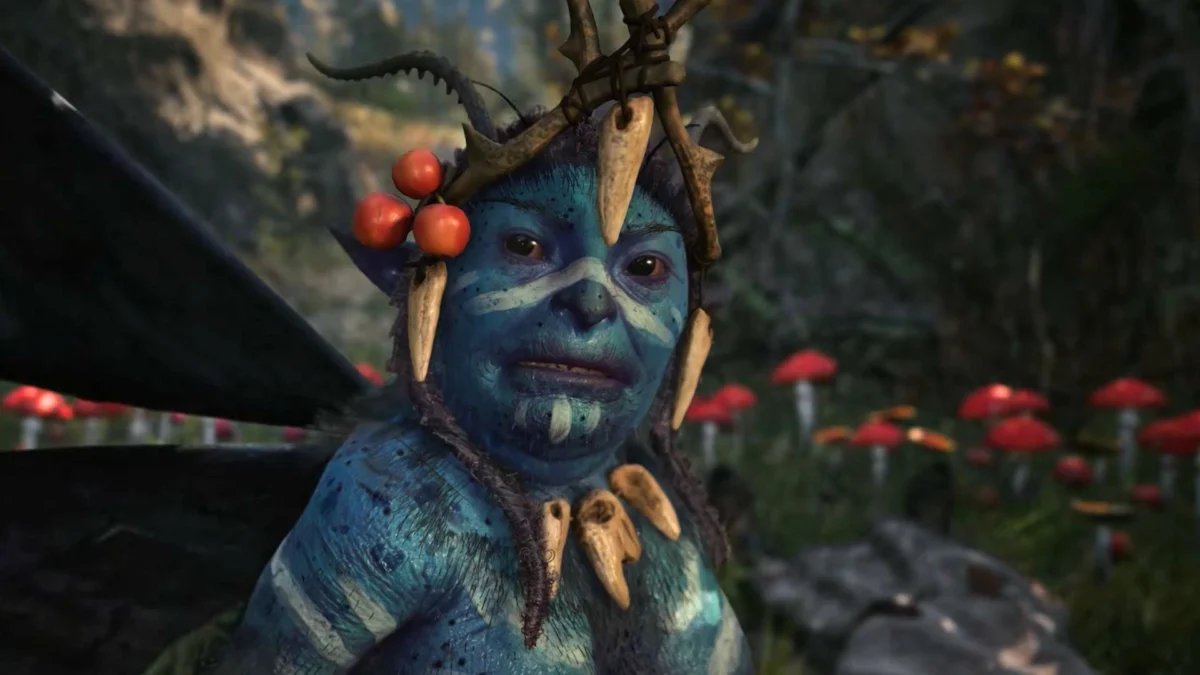
One of the most distinctive and intriguing mechanics introduced in The Blood of Dawnwalker is the ability to "bend" time through a unique form of macabre bartering. Players can influence the game’s temporal flow by offering human teeth to mysterious entities known as the Sanzhana. These creatures, depicted as chubby, blue-skinned, half-human moths with whispering wings, embody a dark twist on the traditional "Tooth Fairy" archetype. Far from benevolent figures, the Sanzhana are otherworldly beings deeply embedded in the grim economy of the game’s world, trading in the most personal of human remnants: teeth. Their aesthetic, reminiscent of grotesque folklore creatures, perfectly complements the game’s "grotty dark fantasy" description.
As revealed in an exclusive video showcased by IGN, the Sanzhana actively harvest enamel from cadavers, often found in eerie rings of red mushrooms, hinting at their ritualistic practices. They are known to engage in transactions with bandits and other unsavory characters, acquiring both pristine and decaying teeth. Players themselves can delve into this unsettling trade, collecting teeth from fallen foes or unfortunate non-player characters (NPCs) and presenting them to the Sanzhana. The currency exchanged by the Sanzhana is not gold or silver, but rather the ability to manipulate the flow of time in unspecified, yet profoundly impactful, ways. This mechanic promises to add an unprecedented layer of strategic depth, allowing players to earn precious extra hours or even days, potentially altering the course of their desperate quest.
Tomaszkiewicz elaborated on this mechanic, stating, "They allow you to play with the time limit, because there are a lot of myths around pixies where they get to do some time-bending stuff. And for us, since our game is so heavily revolving around the time system, this was something cool to play around with." This inspiration from folklore, reinterpreted through a dark fantasy lens, underscores the game’s commitment to creating a unique and immersive world. The Sanzhana are not just a quirky lore element; they are a critical interactive component that directly interfaces with the game’s central time-based challenge. This innovative use of a macabre resource for temporal manipulation distinguishes The Blood of Dawnwalker from conventional RPGs, where time extensions are typically tied to quest completion or specific magical items.
Implications of a Dental Temporal Economy: Strategic Depth and Moral Quandaries
The introduction of the Sanzhana and the concept of a "dental temporal economy" raises a multitude of strategic and ethical questions for players. The core inquiry revolves around the nature of the teeth themselves. Will different types of teeth—a vampire’s fang, a peasant’s molar, a knight’s incisor—yield varying degrees or specific forms of time manipulation? For instance, could a powerful creature’s tooth grant a significant time extension, while a commoner’s tooth might only offer a minor delay? This differentiation would introduce an additional layer of resource management, compelling players to prioritize certain targets or scavenge specific locations. The rarity and difficulty of obtaining certain teeth could directly correlate with the temporal reward, creating a risk-versus-reward scenario for players deciding how far to push their predatory instincts.
Furthermore, the mechanic begs the question of player self-sacrifice: could the protagonist offer their own teeth to the Sanzhana, perhaps at a significant personal cost, to gain critical time? And conversely, if time can be "bought" with teeth, could players "buy back" their own teeth or other lost resources if a quest shortcut or an unforeseen advantage is discovered? These possibilities suggest a dynamic and fluid interaction with the time system, where players might constantly weigh the tangible benefits of temporal extension against the moral and physical costs of acquiring the necessary "currency." Such a system could introduce mechanics similar to those found in games like Pathologic, where the player’s own body is a resource, blurring the lines between health, currency, and survival.
The most profound implication, however, lies in the potential for mass-killing NPCs to harvest their teeth. The original article playfully questioned if players could "kill literally everybody in The Blood of Dawnwalker and lob their choppers into a mushroom circle, as when stacking corpses in just the one closet in Hitman?" While likely exaggerated for effect, this highlights a genuine gameplay dilemma. If teeth are a renewable resource tied to living beings, then the Sanzhana mechanic could actively incentivize player characters to succumb to their vampiric urges, not just for sustenance, but for temporal advantage. This would directly feed into the game’s central theme of managing the vampiric curse, pushing players towards increasingly dark actions to achieve their objectives. The moral weight of such decisions could be substantial, transforming a desperate rescue mission into a descent into monstrosity, where the protagonist sacrifices their humanity, tooth by tooth, for the sake of their family. The game’s potential to explore the full spectrum of vampiric morality, from reluctant predator to unrepentant monster, is significantly amplified by this mechanic.
Mateusz Tomaszkiewicz also highlighted the broader design philosophy behind such mechanics: "I think it’s very cool when you do systemic stuff to have exceptions from it and some ways that impact it in ways you didn’t anticipate. It creates this feeling that something unexpected might happen at every turn and there are still secrets to be found." This statement suggests that the Sanzhana mechanic is not merely a simple time-extension button but a gateway to emergent gameplay. Players might discover unexpected synergies, hidden methods of acquiring teeth, or unforeseen consequences of their transactions, fostering a sense of discovery and replayability. This approach aligns with the design principles often seen in immersive simulation games, where systems interact in complex ways to create unique player experiences, and player actions have ripple effects across the game world.
Mateusz Tomaszkiewicz: A Pedigree in RPG Design
The involvement of Mateusz Tomaszkiewicz as Creative Director lends significant weight to The Blood of Dawnwalker. With a distinguished career at CD Projekt Red, Tomaszkiewicz played pivotal roles in the development of some of the most critically acclaimed RPGs of the last decade, including The Witcher 3: Wild Hunt and Cyberpunk 2077. His expertise in crafting expansive narratives, intricate quest lines, and compelling character development is a strong indicator of the ambitious vision for The Blood of Dawnwalker.
At CD Projekt Red, Tomaszkiewicz was instrumental in shaping the open-world design, character interactions, and branching narratives that defined The Witcher 3‘s success. His experience with complex moral choices and player agency in high-stakes fantasy settings directly informs the thematic core of The Blood of Dawnwalker. The game’s emphasis on player choices impacting the vampiric curse and the consequences of those decisions resonates strongly with the ethical dilemmas and grey areas explored in his previous works. His leadership suggests a commitment to deep lore, meaningful player interaction, and a rich, atmospheric world—hallmarks that players have come to expect from titles bearing his creative imprint. His previous projects are celebrated for their ability to blend vast open worlds with intimate, personal stories, a balance that The Blood of Dawnwalker appears poised to replicate within its unique time-constrained framework.
Navigating the AI Frontier: The Generative AI Controversy
While The Blood of Dawnwalker promises innovative gameplay, its development journey has not been without its challenges, particularly concerning the use of generative artificial intelligence (genAI). The game has faced scrutiny regarding its "genAI flirtations," specifically concerning the use of AI voice placeholders during development. This issue, initially reported by Rock Paper Shotgun, highlighted comments from the game’s CEO (identified in external reports as Mateusz Glowacki, not Tomaszkiewicz, who is the creative director) defending the use of AI-generated voices as a temporary measure to save time and resources during the prototyping phase.
The use of generative AI in game development has become a highly contentious issue across the industry. Proponents argue that AI tools can significantly streamline development processes, reduce costs, and accelerate prototyping, particularly for smaller studios or projects with limited budgets. AI can quickly generate placeholder assets, voices, textures, and even code snippets, allowing developers to iterate faster and visualize concepts more efficiently before investing in human talent for final production. This efficiency can be particularly appealing for complex games like RPGs, which often require vast amounts of content and numerous dialogue lines for NPCs. According to a 2023 survey by the Game Developers Conference (GDC), approximately 40% of developers were already experimenting with AI tools, citing efficiency as a primary driver.
However, the rapid adoption of genAI has also sparked considerable backlash, primarily from creative professionals, including voice actors, artists, writers, and musicians. Concerns center on several key areas:
- Job Displacement: Fears that AI could automate roles traditionally held by human creatives, leading to widespread job losses. Organizations like the Screen Actors Guild‐American Federation of Television and Radio Artists (SAG-AFTRA) have been particularly vocal, seeking stronger protections against AI replication of performances.
- Ethical Sourcing: Questions about how AI models are trained, often using vast datasets of existing human-created work without explicit consent or compensation to the original creators. This raises intellectual property and ethical sourcing issues, leading to several high-profile lawsuits against AI companies.
- Quality and Authenticity: Debates over whether AI-generated content can ever truly match the nuanced quality, emotional depth, and unique artistic vision of human creators. In voice acting, for example, the subtle inflections, emotional range, and unique performances of human actors are often seen as irreplaceable for conveying complex character emotions and narratives.
- Artistic Integrity: Concerns that reliance on AI could lead to a homogenization of artistic styles or a reduction in originality, as AI often generates content based on existing patterns, potentially stifling emergent creativity.
For The Blood of Dawnwalker, the defense of using AI voice placeholders as a "time-saving" measure touches directly on these debates. While placeholders are a common part of game development, the use of AI for this purpose, even temporarily, signals a willingness to engage with AI technologies. The statement from the CEO implies a pragmatic approach, prioritizing efficiency in early development stages. The implication is that these placeholders would eventually be replaced by human voice acting for the final product, addressing some concerns about job displacement in the final release. However, the initial engagement with AI for such a visible component like voice work can still draw criticism from a community increasingly wary of AI’s encroachment into creative fields, particularly within the narrative-heavy RPG genre where voice performance is paramount.
This situation positions The Blood of Dawnwalker at the forefront of an ongoing industry discussion. The game’s eventual reception may, in part, be influenced by how transparently and ethically it navigates these AI integration issues. Should the final product feature human voice acting of high quality, it might assuage initial concerns. Conversely, any lingering perception of AI-generated content in the final release could impact its critical and commercial reception among players and industry advocates who prioritize human artistry. This reflects a broader trend where consumer awareness and ethical considerations are increasingly influencing purchasing decisions in the entertainment sector.
Anticipation and Broader Impact
The blend of an urgent narrative, unique time-bending mechanics, and the dark, atmospheric world positions The Blood of Dawnwalker as a compelling entry in the dark fantasy RPG genre. Mateusz Tomaszkiewicz’s vision for systemic gameplay that allows for "unexpected" events and "secrets to be found" suggests a game designed for depth and player discovery. The dental temporal economy, while morbid, is a refreshingly original take on resource management and player agency, promising to push players into morally ambiguous territory. This innovative design could set a new benchmark for how time limits are integrated into RPG narratives, moving beyond simple countdowns to dynamic, player-influenced systems.
The game’s September launch will be a significant moment, not only for Draw Distance and its creative team but also for the broader discussion surrounding innovation in game mechanics and the responsible integration of artificial intelligence. Its success will likely be measured not just by its critical acclaim and commercial performance, but also by its ability to deliver on its ambitious promises while navigating the complex ethical landscape of modern game development. As players prepare to step into the shoes of a fledgling vampire, they will face not only the external threat of a powerful adversary and the internal struggle against their own burgeoning curse but also the strategic conundrums presented by a world where time itself can be bought, one tooth at a time. The answers to the myriad questions posed by its unique mechanics—from the specific efficacy of different teeth to the ultimate moral cost of temporal manipulation—await players in September.