The lead developer behind the highly anticipated immersive sim shooter Fortune’s Run, known as Dizzie, has been granted parole and released from prison after approximately one year of incarceration. Her release comes significantly earlier than the three-year sentence she was expected to serve following a conviction for an unspecified violent crime several years prior. The unexpected turn of events has reignited hopes for the game’s community, as Dizzie has promptly announced her intention to resume development on the early access title.
Background on Fortune’s Run and its Developer
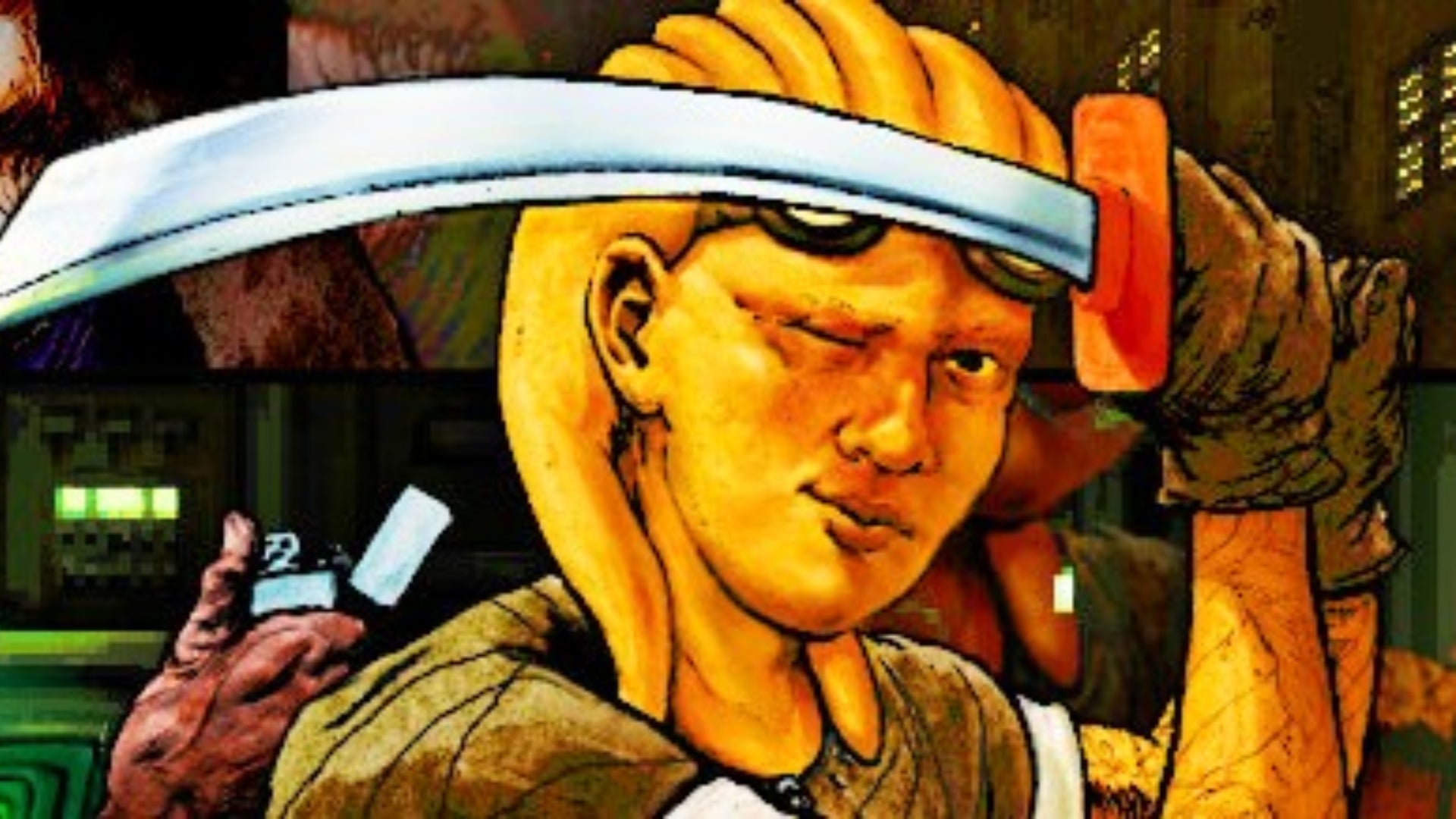
Fortune’s Run carved a niche for itself in the indie gaming landscape as a retro-inspired first-person shooter with deep immersive sim elements, drawing comparisons to genre classics like Deus Ex and System Shock. Praised for its intricate level design, responsive combat, and distinct art style, the game quickly garnered a dedicated following during its early access phase. Its development has been a passion project, largely spearheaded by Dizzie, whose unique vision shaped its distinctive atmosphere and gameplay mechanics. The game’s narrative often explores complex themes, mirroring the depth and introspection that characterize many immersive sims. Its early reception highlighted its potential to be a standout title in a genre beloved by many for its player agency and intricate world-building.
The gaming community was met with a significant update last January when Dizzie publicly disclosed her impending imprisonment. She revealed she had been convicted of a violent crime that occurred several years prior, leading to a three-year sentence. At the time, she acknowledged her past actions, stating, "I was a very violent person and I hurt a lot of people in my life," without delving into the specifics of the conviction. This revelation naturally put the future of Fortune’s Run‘s development on an indefinite hold, casting a shadow of uncertainty over the project. The announcement sparked a wide range of reactions across social media and gaming forums, from expressions of support for the developer’s journey towards rehabilitation to critical discussions about accountability and the impact of a developer’s personal history on their creative work.
The Path to Early Release
Dizzie’s release, announced via a candid Steam post, occurred roughly a week prior to the public announcement, following a review by a parole board. Her statement, penned from a halfway house, offered a raw and unfiltered account of her experience and the circumstances surrounding her expedited release. She recounted facing "gaslit by transphobic morons who convinced themselves that I, I quote, real words from my real file, ‘have failed to acquire a single competency aiming to attain sobriety’." This quote suggests that there were significant challenges and perhaps biased evaluations within the carceral system regarding her progress and identity.
Despite these alleged obstacles, Dizzie asserted that "the parole board reviewed my case and instantly kicked my ass out of jail," indicating a swift and decisive decision in her favor. Her statement, while acknowledging the official outcome, also carried a sardonic tone, proclaiming "The system works!" This was immediately followed by a more critical reflection on her time inside: "This experience has been strictly negative and pretty much convinced me that nobody in this country is serious about anything, but let us not linger on that. That was so last year, and it’s time to make the GAAAAAME." This sentiment reflects a profound disillusionment with the penal system while simultaneously expressing an eager, almost defiant, return to her creative work. Her ability to navigate a system she found deeply flawed and still secure an early release underscores the complexities often inherent in parole decisions, which typically weigh factors such as rehabilitation progress, risk assessment, and institutional conduct. The transition to a halfway house is a standard procedure designed to facilitate reintegration into society, providing a structured environment while individuals secure employment, housing, and further support.
Resumption of Fortune’s Run Development
With her release, Dizzie’s immediate focus has shifted back to the development of Fortune’s Run. The Steam update outlined an ambitious roadmap for the game’s progression towards a 1.0 release. Her primary goals include completing the drafts for the remaining story-critical levels, re-releasing the demo club level with new features to align it with the current storyline, and then moving to the final level to cap off the 1.0 version. This structured approach suggests a clear vision for the game’s completion, prioritizing narrative progression and core gameplay experience.
The developer also mentioned the possibility of integrating "two planned side-missions that I am soft-cutting so that I’m giving myself a reasonable workload." This pragmatic decision reflects an understanding of resource management and the importance of avoiding burnout, especially given the personal challenges she has faced. Furthermore, the game’s work-in-progress netcode is slated for polish if the 1.0 version performs well commercially, indicating a potential future for multiplayer or cooperative elements. While Fortune’s Run VR challenges were also mentioned as a possibility, Dizzie remains cautious, stating, "I don’t want to promise anything at this stage, I’m still evaluating." This measured approach demonstrates a commitment to realistic goals rather than overpromising.
In terms of a timeline, Dizzie expressed optimism, aiming to have "something by 6 months, ideally!" and confidently stating, "I am very certain that the next release will be 12 months from now." These targets provide the community with concrete expectations, signaling a renewed, focused push towards the game’s full launch. The return to development not only offers renewed hope for fans of Fortune’s Run but also serves as a testament to Dizzie’s resilience and dedication to her craft.
Team Dynamics and Collaborative Support
The journey of Fortune’s Run is not solely Dizzie’s, as she openly acknowledged the crucial contributions and challenges faced by her collaborators. One key figure, Arachne, previously involved in the game’s development, departed the project after recovering from a mishandled surgical procedure in 2024. Dizzie, while expressing sympathy, maintained a practical outlook on the impact of this departure: "To be totally frank, she was not doing anything production critical, so it’ll be fine." However, this still necessitates a reorganization of content and a revised schedule. Dizzie explained, "I need to re-organize the dates and figure out how to cut the content she was responsible for so that I can turn this into a release that I can both QA and make at the same time." This adjustment highlights the agile nature of indie development and the need for developers to adapt to unforeseen circumstances, often taking on multiple roles. Her commitment to being "a responsible adult and not spend months developing soldering mini-games so that you all actually get to see a 1.0" further emphasizes her dedication to delivering the core game efficiently.
Perhaps even more critical to the project’s continuity is the support of another developer, Kim. Dizzie credits Kim with providing essential financial stability, stating, "Please go tell Kim she is awesome and that I love her, she may be the only reason why you’re getting another update to this stupid game." Kim is "working a day job to make sure that we can actually get to 1.0 without me becoming homeless." This candid revelation underscores the often precarious financial situation of indie developers and the immense personal sacrifices involved in bringing a game to fruition. Kim’s commitment not only provides a financial lifeline but also involves an ongoing desire to contribute creatively, as the post adds, "She still wants to make content and we’re looking at that." This collaborative spirit, where team members support each other through personal and financial hardships, is a hallmark of many successful independent game projects, demonstrating that game development is often a community effort beyond the primary visionary.
Creative Pursuits During Incarceration
Despite the restrictive environment of imprisonment, Dizzie’s creative drive remained undimmed. Beyond her renewed focus on Fortune’s Run, she revealed two significant personal projects undertaken during her time incarcerated. One is a comic, which she plans to release as a reward for her Patreon supporters. This venture suggests a diversification of her creative output and an alternative avenue for engaging with her audience, possibly exploring themes or narratives distinct from her game development work.
More remarkably, Dizzie disclosed that she conceptualized and "wrote a whole roguelike in C++ on paper" while in prison. This extraordinary feat of mental design and technical planning, executed without access to computers or development tools, speaks volumes about her dedication to game design. She elaborated on the concept: "The concept for the game is that you are a parasitic mushroom that can infest corpses and you can dismember defeated enemies and graft their pieces onto yourself as an equipment mechanic." This imaginative premise suggests a unique take on the roguelike genre, focusing on organic augmentation and strategic combat.
The technical ambition of this paper project is equally astonishing. Dizzie noted, "It simulates the fluid density of eyeballs. I had a lot of spare time. Did I mention that it has a distance-field based sliced voxel openGL renderer that I also wrote on paper at 3 AM in a prison cell?" This detail showcases an intricate understanding of game engine architecture and a profound ability to visualize complex programming logic without physical implementation. While there’s no guarantee this paper roguelike will ever see digital release, its existence highlights a powerful testament to human creativity and resilience in the face of extreme adversity. It offers a glimpse into the developer’s thought process, revealing a mind constantly engaged in problem-solving and world-building, even under the most challenging circumstances.
Broader Implications and Industry Context
Dizzie’s journey—from conviction and incarceration to early release and the immediate resumption of her creative work—offers a multifaceted case study within the independent game development sphere. It underscores the profound personal challenges that can impact a project, reminding the community that games are often the product of individuals navigating complex lives. The narrative also touches upon the broader societal discussion surrounding rehabilitation, second chances, and the role of creative pursuits in personal recovery. While the details of her past conviction remain private, Dizzie’s open acknowledgment of her past violence and her stated hope for recovery for both herself and those she hurt suggests a path of personal growth.
The incident also highlights the often-stark realities of online discourse. Dizzie’s reference to being "gaslit by transphobic morons who celebrated her incarceration" points to the hostile environments that developers, particularly those from marginalized communities, can encounter online. This phenomenon, where personal struggles become fodder for public derision and targeted harassment, can have significant psychological impacts on creators and affect their ability to work.
From an industry perspective, the continuation of Fortune’s Run development is a positive signal for the game’s fans and for the resilience of indie studios. Many early access titles face uncertain futures due to funding issues, team disbandment, or developer burnout. Dizzie’s return, coupled with the steadfast support of collaborators like Kim, demonstrates a powerful commitment to seeing the project through. The financial sacrifices made by Kim, working a day job to prevent Dizzie’s homelessness, vividly illustrate the often-unseen struggles behind the scenes of independent game creation. It serves as a reminder that community support, both emotional and financial, can be vital for the survival of unique and ambitious indie projects.
Ultimately, Dizzie’s story is one of extraordinary resilience. Her ability to conceptualize complex game mechanics on paper while incarcerated, to secure an early parole, and to immediately pivot back to leading a demanding development project speaks to an unwavering dedication to her craft. The gaming community now looks forward to seeing the fruits of this renewed effort, as Fortune’s Run embarks on its final stages of development under circumstances that are as unique as the game itself.