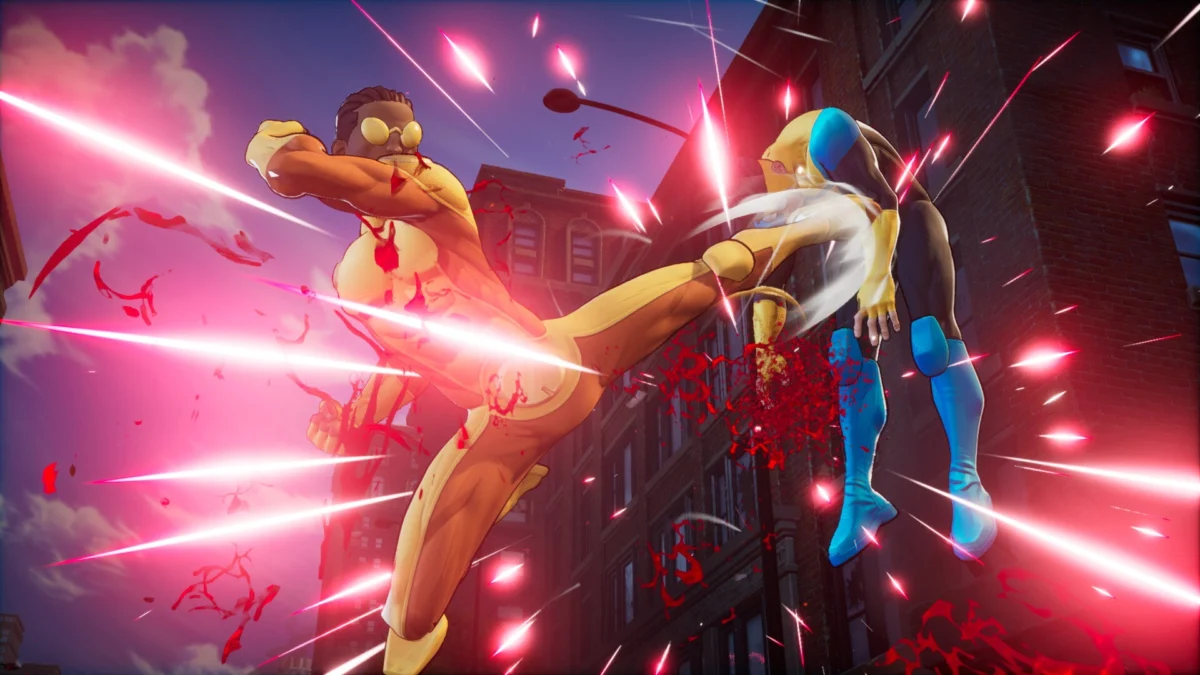
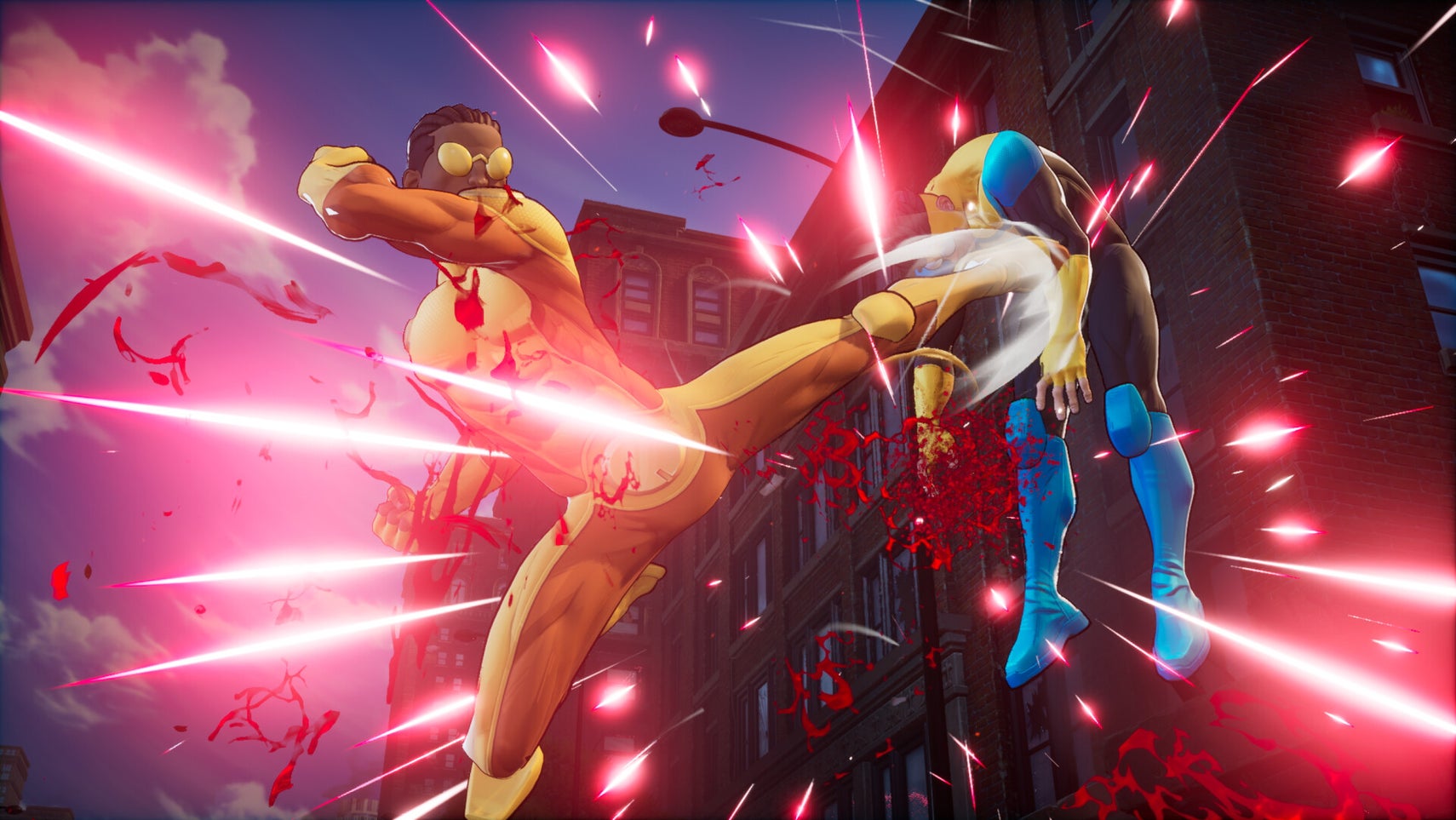
Following a highly anticipated and widely participated open beta for the upcoming gory fighting game Invincible Vs, the development team at Quarter Up has publicly acknowledged and addressed a significant issue that plagued its recent public presence: widespread rage quitting. The developers have outlined a series of comprehensive fixes and future deterrents designed to cultivate a healthier competitive environment ahead of the game’s full release. This transparent communication comes via a detailed blog post, which not only dissects the learnings from the ranked-mode beta but also commits to concrete changes in response to critical player feedback, dedicating an entire section to the prevalent problem of mid-match disconnections.
The Genesis of Invincible Vs and Its Universe
The journey of Invincible Vs begins long before its recent beta, rooted in the critically acclaimed comic book series Invincible, created by writer Robert Kirkman and artists Cory Walker and Ryan Ottley. Launched in 2003 by Image Comics, Invincible quickly garnered a reputation for its unique blend of traditional superhero tropes with gritty realism, complex character development, and often brutal, visceral action. The narrative centers on Mark Grayson, a seemingly ordinary teenager who discovers his father, Nolan Grayson, is Omni-Man, the most powerful superhero on Earth, hailing from the alien Viltrumite race. The series masterfully explores themes of family, duty, betrayal, and the moral ambiguities inherent in wielding immense power, all while delivering a consistent stream of breathtaking and often gory battles.
The comic’s success led to its adaptation into an animated series for Amazon Prime Video, which premiered in March 2021. The animated show, also executive produced by Kirkman, faithfully brought the comic’s distinctive art style and mature themes to a global audience, further solidifying the Invincible brand as a major player in contemporary superhero fiction. The animated series’ popularity undoubtedly amplified the anticipation for a video game adaptation, particularly one that could accurately translate the property’s intense combat and diverse roster of super-powered individuals into an interactive experience.
For a fighting game, the Invincible universe offers a rich tapestry of characters with distinct powers, fighting styles, and visual designs. From the super-strength and flight of Viltrumites like Mark and Nolan to the advanced technology of Atom Eve, the unique physiology of Monster Girl, or the sheer alien might of Allen the Alien, the potential for a varied and engaging roster is immense. Skybound Games, known for its commitment to the Invincible IP, partnered with Quarter Up to bring this vision to life. Quarter Up, a studio with experience in competitive online gaming, took on the challenge of crafting a fighting game that would not only satisfy long-time fans of the series but also appeal to the demanding fighting game community (FGC). The cel-shaded art style, designed to evoke the comic book aesthetic, combined with the promise of brutal, over-the-top action, positioned Invincible Vs as a potentially significant new entry in the genre.
The Open Beta Experience: Unearthing Critical Issues
The open beta phase, a crucial stage in the development cycle of any online competitive game, commenced with considerable excitement among fans and prospective players. The primary objectives of such a beta are multifaceted: to stress-test server infrastructure, gather real-world data on network performance, fine-tune character balance, identify bugs, and, critically, collect player feedback on core gameplay mechanics and systems. For a fighting game, the online ranked mode is often the crucible where these elements are most rigorously tested, as it simulates the high-stakes environment of competitive play.
However, as the beta progressed, a growing concern emerged within the community: the pervasive issue of rage quitting. Players reported frequent instances of opponents disconnecting mid-match, particularly when facing defeat. This behavior significantly detracted from the competitive experience, leaving winners feeling robbed of their rightful victory and exacerbating frustration for those attempting to climb the ranked ladder. While rage quitting is a perennial challenge in online competitive gaming, its reported frequency in the Invincible Vs beta suggested underlying systemic issues rather than merely isolated incidents of poor sportsmanship.
Quarter Up’s subsequent blog post, titled "Invincible Vs Open Beta Recap," provided an unprecedented level of transparency, directly confronting the problem and explaining why rage quitting appeared to be such a widespread plague. The developers candidly stated that most of the reasons for this phenomenon were "on us," acknowledging their responsibility for the structural shortcomings that inadvertently encouraged or failed to deter such behavior.
Developer’s Candid Assessment: "On Us"
The blog post meticulously detailed four key areas identified by Quarter Up as contributing factors to the rage-quitting problem, demonstrating a deep self-analysis and a commitment to addressing the root causes:
-
Rank Point Bottleneck: This was identified as a critical technical glitch wherein the shift in rank points after a win or loss was not updating immediately following a game. From a player’s perspective, this created a misleading impression that leaving a game mid-match did not result in a decrease in ranked points. In a competitive environment where progress and consequences are paramount, this delay effectively removed a primary disincentive for disconnecting. Players, seeing no immediate negative feedback, might have erroneously concluded that there were no repercussions for bailing on a losing match, thus making rage quitting a seemingly viable strategy to preserve their rank. This lack of immediate feedback loop undermined the integrity of the ranked system.
-
Ranked Data Bottleneck (Skill-Based Matchmaking Flaws): Another significant technical hurdle was a bottleneck in the ranked data processing, which prevented players from consistently being matched up against others of a similar skill level. Skill-Based Matchmaking (SBMM) is the cornerstone of fair competitive play, aiming to create balanced matches that are challenging yet winnable for both participants. When SBMM fails, players can find themselves in highly asymmetrical matches – either facing vastly superior opponents or being matched with significantly weaker ones. This discrepancy often leads to frustration, particularly for the worse player in a mismatched pairing. Constantly being outmatched without a fair chance can quickly erode motivation and lead to players disconnecting out of sheer exasperation, believing the match to be unwinnable or simply unfair. The developers recognized that this technical flaw was inadvertently fueling player frustration and, consequently, rage quits.
-
Lack of Immediate Penalties: Beyond the technical bottlenecks, the beta notably lacked robust, immediate penalties for disconnecting from games. In many established fighting games and competitive titles, disconnecting results in an immediate loss, a reduction in rank points, and sometimes even a temporary matchmaking cooldown. The absence of such clear and swift repercussions in the Invincible Vs beta meant that players could disconnect without fear of immediate negative consequences, further incentivizing the behavior. This oversight, while perhaps an artifact of the beta’s focus on stress testing core mechanics, proved detrimental to the competitive spirit and fair play.
-
Absence of Casual Modes: The beta’s primary focus was on the ranked mode, leaving players who wanted to explore the game at their own pace or who were new to fighting games entirely without a suitable alternative. Fighting games often have a steep learning curve, requiring significant practice to master characters, combos, and match-ups. For new or less experienced players, jumping directly into a ranked environment can be incredibly daunting and stressful. Without casual modes where they could experiment, learn, and practice without the pressure of rank points, many players likely felt overwhelmed and frustrated. This lack of a low-stakes environment could have pushed these players to disconnect from competitive matches they felt unprepared for, simply seeking an escape from the intensity.
Immediate Solutions and Future Roadmaps
In a testament to their responsiveness and commitment to player experience, Quarter Up has swiftly moved to implement solutions for these identified problems ahead of the game’s official launch.
For the 1.0 launch, scheduled for April 30, 2026, the following critical fixes will be in place:
- Bottleneck Resolution: Both the rank point bottleneck and the ranked data bottleneck have been fixed. This means players can expect immediate and accurate updates to their rank points after each match, and the matchmaking system will be significantly more effective at pairing players of similar skill levels. This transparency and fairness are crucial for a healthy competitive ladder.
- Immediate Disconnection Penalties: Disconnecting from a game will now unequivocally result in a loss of ranked points and will be formally marked as a loss on the player’s record. This immediate and tangible consequence is expected to act as a strong deterrent against impulsive rage quitting, reinforcing the importance of playing matches to completion.
Looking further into the future, Quarter Up has also outlined plans for post-launch enhancements, specifically targeting habitual offenders:
- Matchmaking Cooldowns: The first major patch post-launch will introduce matchmaking cooldowns for players identified as habitual rage quitters or disconnecters. This tiered penalty system will prevent players who repeatedly abandon games from queuing up for new matches for a specified period, progressively increasing with repeated offenses. This measure is designed to protect the integrity of the online environment, ensuring that players who consistently disrupt matches face significant consequences that impact their ability to play. It aims to foster a community where sportsmanship and commitment to matches are valued.
Broader Implications for the Gaming Community and Developers
Quarter Up’s transparent and proactive approach to addressing the rage-quitting problem carries significant implications for both the gaming community and the broader landscape of game development. In an industry often criticized for a lack of communication or slow responses to critical issues, Quarter Up’s candid admission of responsibility and swift action builds crucial player trust. This transparency can be a powerful tool for community engagement, signaling that player feedback is not only heard but actively acted upon.
Rage quitting itself is a persistent challenge in virtually all online competitive games, from fighting games to MOBAs and FPS titles. Its impact extends beyond individual player frustration, potentially damaging a game’s reputation, discouraging new players, and ultimately shrinking its competitive scene. Established titles like Street Fighter V, Tekken 8, and Mortal Kombat 1 have all grappled with similar issues, implementing varying degrees of penalties, from rank point deductions and temporary bans to more severe account suspensions for egregious repeat offenders. The Invincible Vs team is clearly learning from these precedents, aiming to establish a robust system from the outset.
The Invincible Vs beta served its purpose by stress-testing not just the game’s technical infrastructure but also its social dynamics. The prevalence of rage quitting highlighted the critical importance of a well-designed penalty system and a fair matchmaking algorithm in fostering a positive online experience. Developer agility, as demonstrated by Quarter Up’s swift response, is increasingly valued in the live-service era, where games evolve continually post-launch based on player interaction and feedback.
Reactions and Anticipation
While specific player reactions were not quoted in the original article, the developer’s blog post directly addresses the community, implicitly acknowledging their frustrations. The concluding paragraphs of Quarter Up’s statement are particularly insightful, reflecting an understanding of player psychology and a commitment to inclusivity: "If you’re reading this and were guilty of a rage quit or two during the beta…we get it. Ranked was the system we most needed to stress test, but we also know that means players who wanted to explore at their own pace (or who are new to fighting games entirely) didn’t have a good way to do that."
This empathetic stance, combined with the promise of diverse gameplay modes at launch, aims to reassure players that Invincible Vs is indeed "for everyone." By highlighting the availability of all single-player and multiplayer modes – Story, Arcade, local versus, Casual, Lobbies, and Progression – at launch, Quarter Up is providing avenues for players of all skill levels to engage with the game without the immediate pressure of ranked play. This strategy is crucial for nurturing a broad player base, allowing newcomers to "develop your skills and progress towards competing against players at your level in Ranked play." The message of resilience and improvement, "The next time you get caught in a match-ending move, you’ll feel confident enough to run the set or go back to the lab and come back better," resonates deeply with the fighting game community’s ethos of continuous learning and growth.
Looking Ahead: The Full Release
With the release date of April 30, 2026, rapidly approaching, the fixes and future plans outlined by Quarter Up are critical for ensuring a smooth and successful launch for Invincible Vs. The comprehensive suite of game modes available from day one—including a Story mode to immerse players in the Invincible narrative, an Arcade mode for traditional fighting game progression, local versus for couch co-op, and dedicated Casual and Lobbies for less intense online play—directly addresses the beta’s shortcomings for non-ranked players. This multifaceted approach is essential for attracting and retaining a diverse audience, from casual fans of the Invincible series to hardcore fighting game enthusiasts.
Early impressions of the game, such as the preview from Eurogamer last year, suggested a strong foundation. Alex Donaldson’s assessment, "In a limited build with only a handful of characters and stages available, it’s already clear that there’s a foundation for something special here," indicates that the core gameplay mechanics and artistic direction are sound. The success of Invincible Vs hinges not only on these strong foundations but also on the robustness of its online infrastructure and the fairness of its competitive environment.
The transparent handling of the rage-quitting issue by Quarter Up demonstrates a developer acutely aware of the challenges and expectations surrounding a new fighting game in today’s market. By proactively addressing critical feedback and implementing tangible solutions, Invincible Vs is positioning itself for a launch that aims to deliver on its promise of brutal, comic-book-inspired action within a fair and enjoyable competitive framework. The game’s performance post-launch will be closely watched, not just by fans of the Invincible universe, but by the wider fighting game community, as it seeks to carve out its niche in a highly competitive genre.