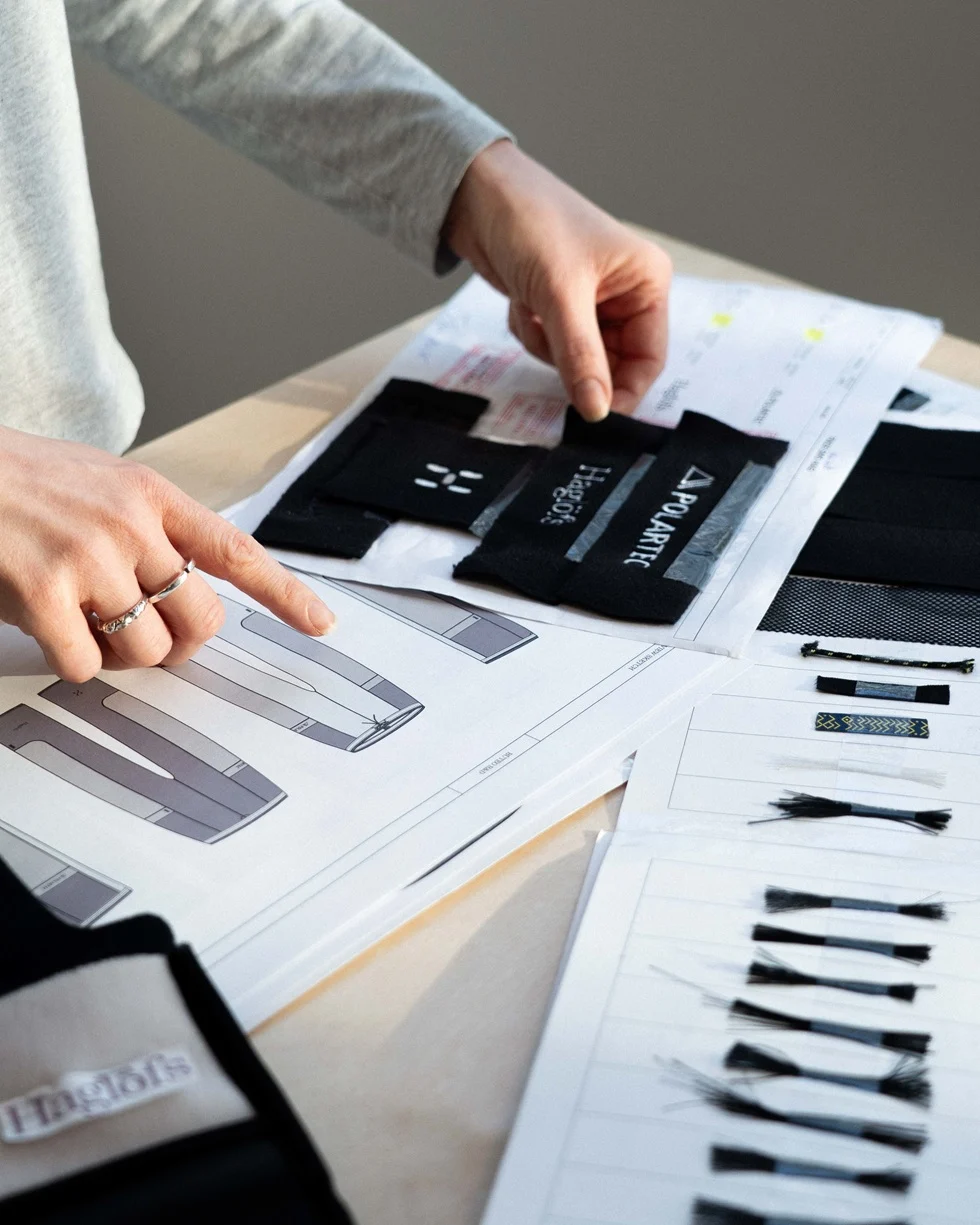
The outdoor gear industry has long promoted a clean, eco-conscious image centered around protecting natural landscapes, yet a significant environmental blind spot has remained hidden in plain sight across retail shelves globally. Walk down the fleece aisle of any prominent outdoor outfitter, and the vast majority of merchandise shares a single, ubiquitous color: black. At first glance, a rack of black fleece jackets appears uniform. However, a closer examination reveals that dozens of subtle variations of black hang side by side, manufactured by competing brands during the same production seasons. These shades often differ only when held together under direct, high-intensity light.
This minor visual discrepancy points to a massive systemic inefficiency. Every subtly different shade of black represents a separate dye run, a unique chemical formula, distinct minimum order quantities, and an independent environmental footprint. To expose this hidden excess, outdoor apparel brand Haglöfs partnered with fabric manufacturer Polartec to launch a provocative initiative: the Black Capsule Project and the subsequent development of Standard Issue Black. By challenging the industry-wide practice of custom-dyeing indistinguishable shades of black, these companies aim to correct a multi-billion-dollar textile supply chain flaw that has gone largely unaddressed for decades.
The Mechanics and Scale of Synthetic Textile Dyeing
To grasp the magnitude of the problem, one must examine the industrial chemistry behind synthetic outdoor apparel. Unlike natural fibers such as cotton and wool, which readily absorb water-based dyes at relatively low temperatures, synthetic fibers like polyester are inherently hydrophobic. Because polyester repels water, introducing color requires a specialized chemical class known as disperse dyes. These colorants must be applied at elevated temperatures—typically exceeding 130°C—within pressurized industrial vats that force dye molecules deep into the core polymer structure of the synthetic thread.
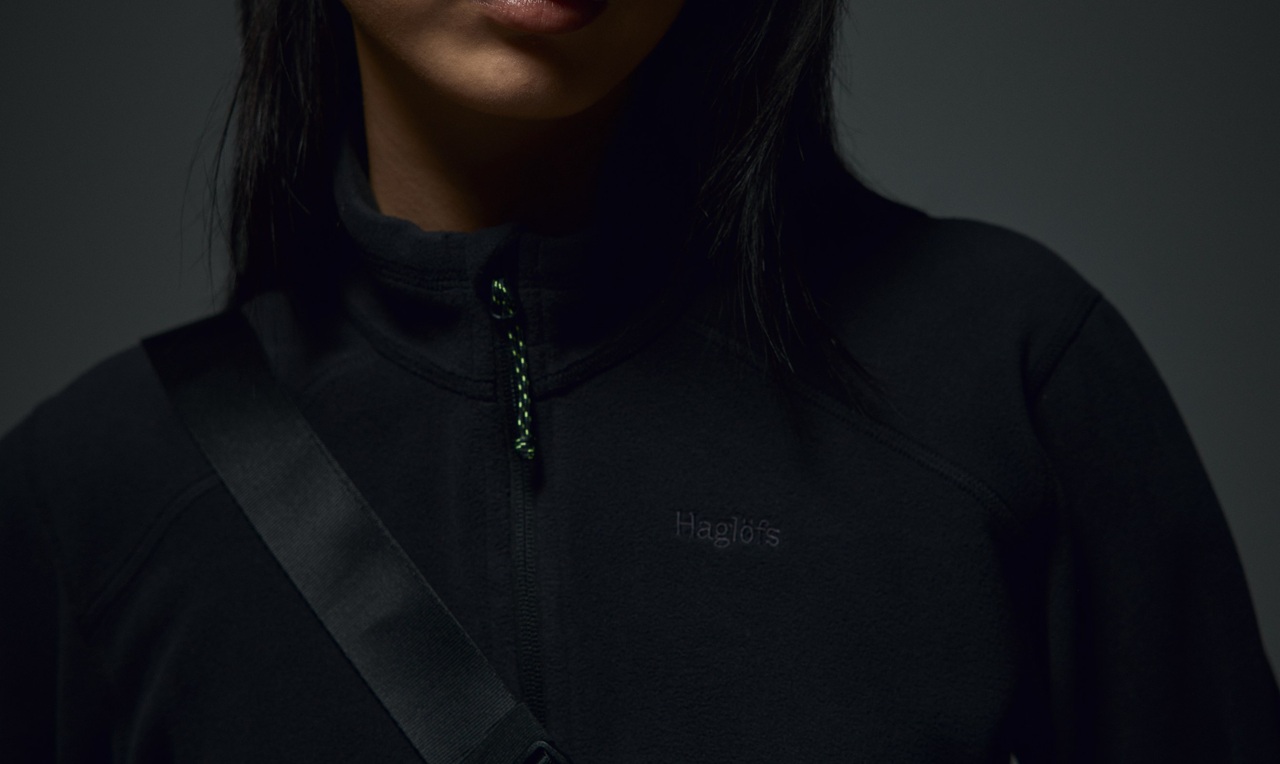
This high-temperature, high-pressure process is resource-intensive. Heating thousands of liters of water and maintaining pressure over extended periods consumes substantial electrical or thermal energy. Among all available colors, black is by far the most demanding. Achieving a deep, permanent, and neutral black requires layering multiple disperse dye compounds simultaneously. Each additional chemical agent demands precise fixation cycles, extra water rinses, and prolonged heat application.
According to environmental assessments by global textile coalitions, the fashion and textile sectors account for approximately 20% of worldwide industrial water pollution, with dyeing and finishing operations responsible for the largest share. Processing a single kilogram of dyed polyester fabric requires anywhere from 30 to 150 liters of water, heavily influenced by the depth of the target shade. Black sits squarely at the absolute peak of this resource-consumption scale. When dozens of independent outdoor brands contract separate dye houses to produce proprietary shades of black, the collective expenditure of water, energy, and chemical agents multiplies exponentially.
The Operational Trap of Minimum Order Quantities
Beyond environmental concerns, the proliferation of custom black shades is driven by structural limitations within global supply chains, specifically minimum order quantities (MOQs). Industrial dye houses operate on commercial scale. To maintain cost-effective operations, a facility generally requires a minimum batch volume of fabric—often hundreds of kilograms per run—before initiating a dye cycle.
When a brand commissions a specific, proprietary shade of black to align with its brand guidelines, it must pay for a dedicated dye recipe, laboratory color-matching, testing approvals, and a full production batch. Smaller brands or smaller product lines often struggle to meet these thresholds economically, leading to financial premiums or excess unused fabric inventory. Meanwhile, a competing brand utilizing the same dye house might commission a marginally darker or cooler shade of black for its own catalog, requiring an entirely separate batch run.
The resulting systemic waste stems from thousands of individually rational corporate decisions that culminate in an irrational macro-level outcome. Dozens of companies independently engineer, test, and process nearly identical black fabrics, duplicating chemical pollution, water usage, and carbon emissions for zero tangible consumer benefit.
The Evolution of the Black Capsule Project
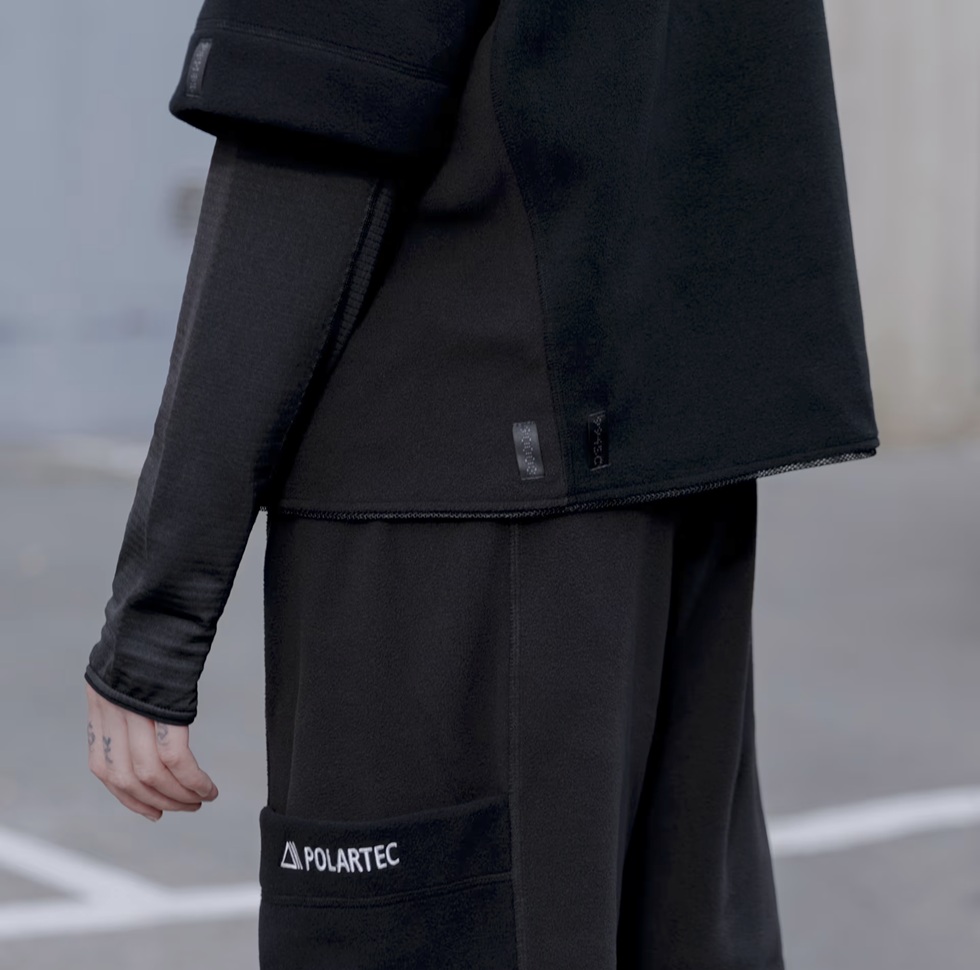
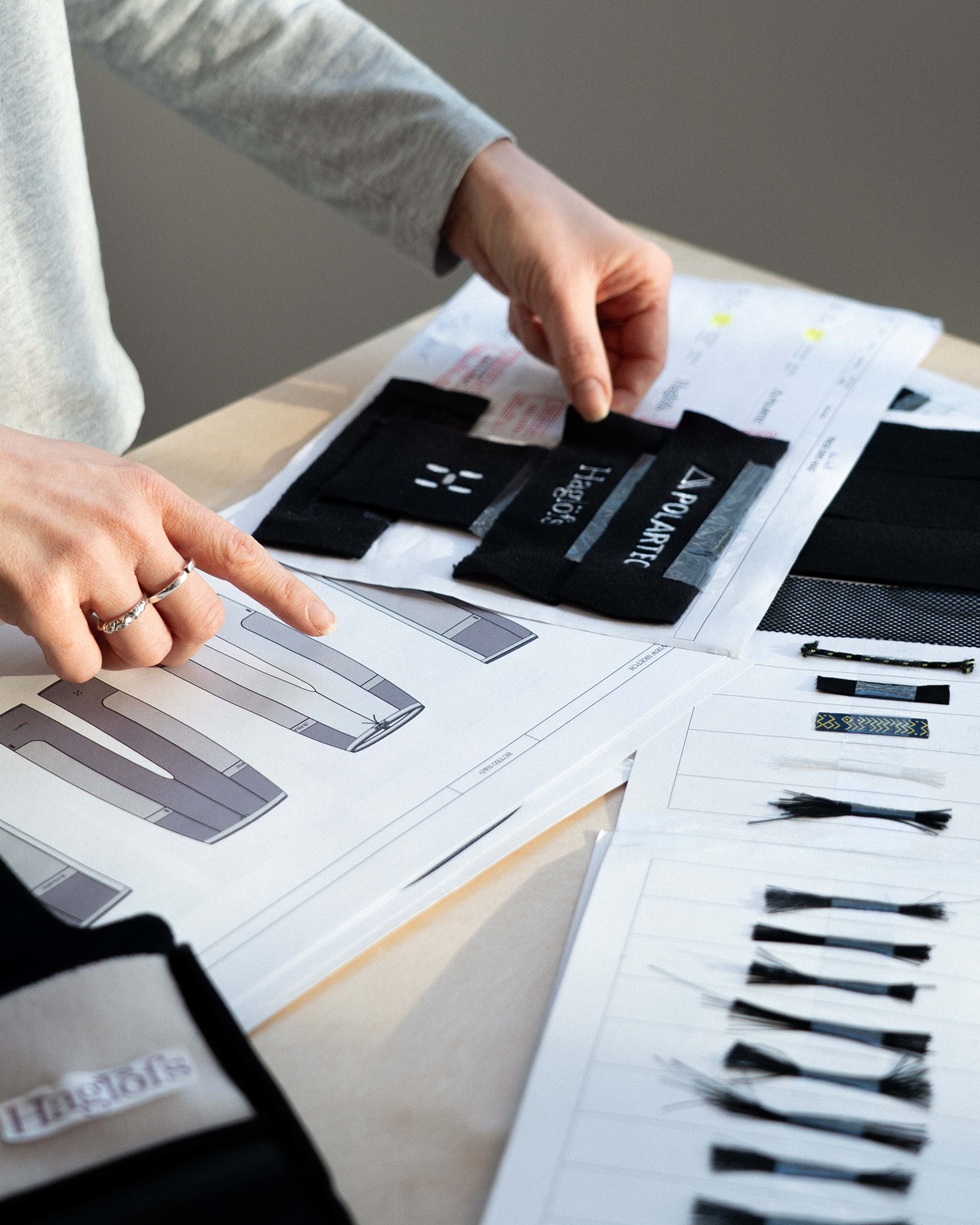
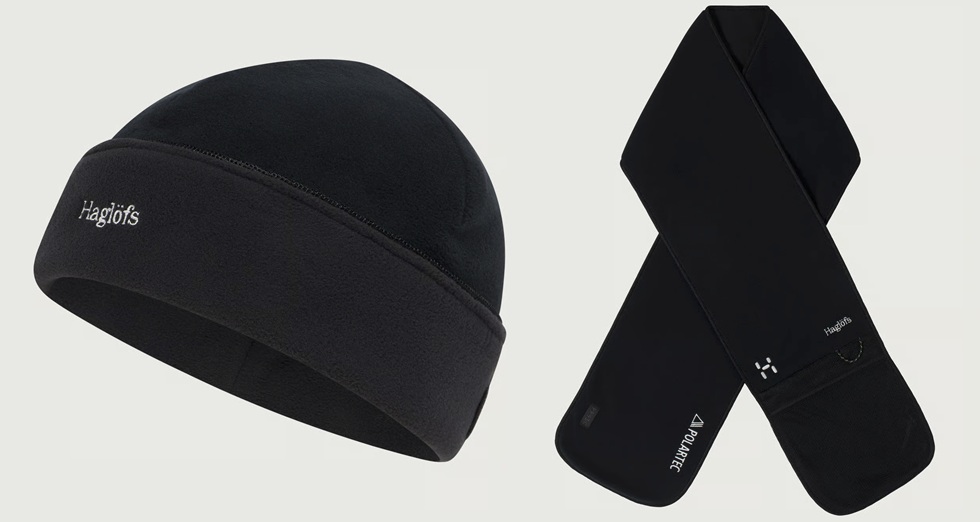
The effort to reform this hidden supply chain inefficiency began as a conceptual art and design demonstration before translating into commercial reality. Haglöfs introduced the Black Capsule collection as a direct form of public advocacy. The limited-run capsule featured essential mid-layers, including a Project Tee, a beanie, a scarf, and trousers, all constructed intentionally from leftover scraps of black Polartec fleece sourced from multiple different legacy production runs.
To emphasize the absurdity of the traditional manufacturing model, Haglöfs integrated physical transparency directly into the garments. Every pattern piece on each Black Capsule item featured a prominent woven label stamped with its precise original color batch number. This visual tagging demonstrated to consumers that a single garment was cobbled together from distinct dye lots that varied only slightly under microscopic inspection. The collection served as a tangible proof-of-concept, illustrating that the variance between proprietary blacks is imperceptible to the end user yet resource-intensive to produce.
Building upon the conversation started by the Black Capsule, Haglöfs and Polartec engineered a practical remedy: a unified, standardized shade of black designated for open-source industry adoption. Rather than locking down a proprietary tone for competitive advantage, the two companies agreed upon a single, optimized black formulation, produced it at scale through Polartec’s standard manufacturing pipeline, and made the specification freely available to any outdoor apparel brand wishing to utilize it.
Commercial Implementation and Environmental Impact
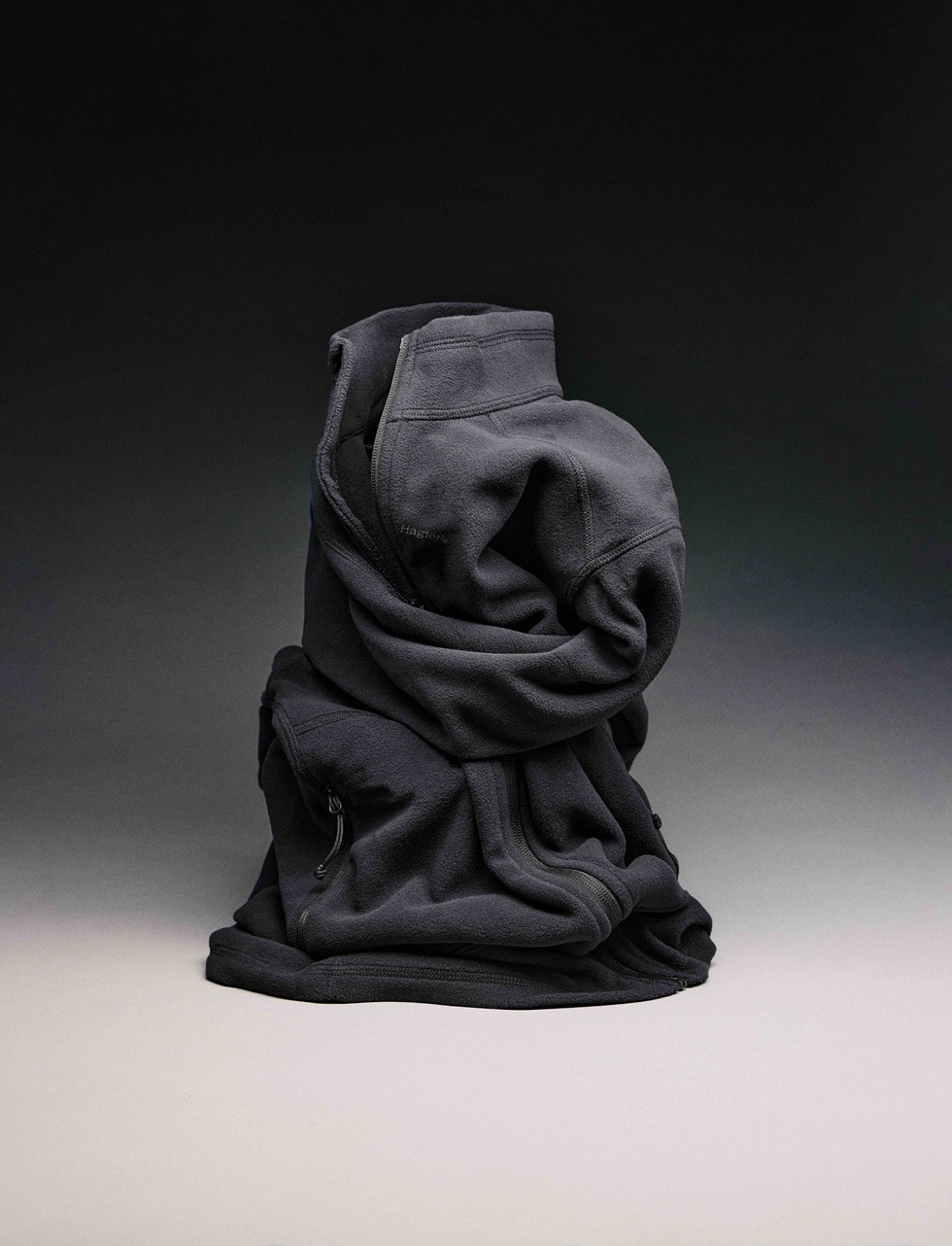
The transition from theoretical advocacy to scaled manufacturing materializes in Haglöfs’ Fall/Winter 2026 production cycle. Rather than limiting the standardized black initiative to niche capsule collections or low-volume specialty items, the brand integrated the material directly into one of its core, high-volume commercial products: the Buteo Mid II Jacket.
According to Eva Weiss, Head of Design and Research & Development at Haglöfs, choosing a best-selling volume style was a deliberate strategy. Sustainability initiatives restricted to limited-edition runs remain symbolic gestures, whereas integrating standardized materials into high-volume staples alters commercial supply chains.
Internal corporate sustainability assessments conducted by Haglöfs indicate that consolidating numerous small-scale dye runs into a single standardized mass-production process yields significant efficiency gains. The brand’s preliminary metrics estimate a reduction of over 50% in water usage and at least a 20% decrease in overall energy consumption compared to traditional piece-dyed black synthetic fabrics. While these figures represent manufacturer-reported data rather than independent third-party audits, the underlying chemical engineering principles of batch consolidation are well-established within industrial manufacturing.
Addressing the Creativity Objection in Apparel Design
A common critique raised by apparel designers when confronting standardization proposals is the fear of aesthetic homogenization. Industry professionals often argue that limiting color specifications restricts creative freedom, ultimately forcing brands to produce interchangeable products.
Haglöfs’ design leadership argues that this concern misunderstands the role of black within outdoor apparel collections. Black has historically served as a neutral canvas and a reliable baseline within technical gear catalogs, rather than a primary vehicle for brand differentiation. Distinctiveness in technical outerwear is traditionally achieved through garment architecture, cut, seam placement, hardware selection, pocket configurations, functional trims, and seasonal accent colorways.
Drawing a historical parallel, the modern outdoor industry standardized functional components decades ago. Fastener systems like YKK zippers now dominate the global market so completely that their presence on technical shells is taken for granted. The ubiquity of standardized hardware has not stifled creative jacket design; rather, it has freed engineering and design teams to focus on structural performance and material innovation. Proponents of Standard Issue Black argue that color standardization can achieve a similar operational evolution.
Industry Outlook and Future Adoption Challenges
Despite the clear environmental and economic logic supporting standardized fabric dyeing, widespread adoption across the broader outdoor industry remains an open question. The apparel sector has a long history of introducing voluntary sustainability initiatives that garner initial praise before being overlooked by competing firms prioritizing distinct supply chain controls or marketing exclusivity.
Furthermore, the persistent gap between consumer stated values and purchasing behavior—frequently referred to as the "green premium" dilemma—has challenged numerous eco-friendly textile innovations. However, Standard Issue Black bypasses this economic hurdle by maintaining cost neutrality. Because consolidated mass production reduces manufacturing overhead, the standardized fabric does not carry an inflated retail price tag.
Instead, the primary barrier to widespread implementation is institutional inertia. Transitioning established supply chain networks, renegotiating supplier contracts, and altering decades of product development habits requires a willingness to disrupt comfortable manufacturing routines. Initiatives by other material innovators—such as Unspun’s automated weaving systems, VAUDE and BASF’s work on zero-carbon footprints, and Gore’s transition to expanded polyethylene (ePE) membranes—face similar institutional resistance.
Whether Standard Issue Black transcends its origins as a Haglöfs and Polartec initiative to become a broader industry standard will depend on the willingness of competing brands to abandon redundant manufacturing processes. By proving that efficiency and commercial viability can align without sacrificing aesthetic diversity, the introduction of the Buteo Mid II Jacket marks the beginning of an industry-wide test to see whether outdoor brands are ready to do less in order to achieve more.