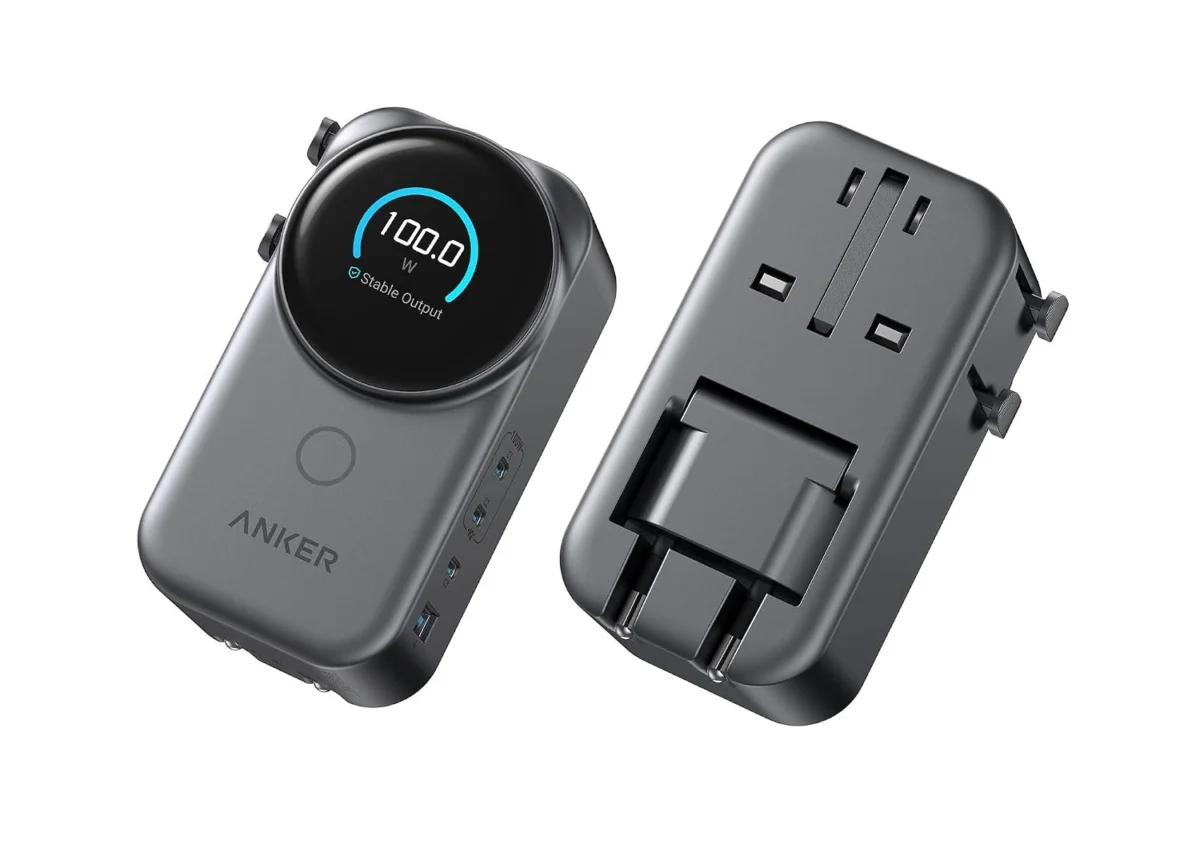
The modern landscape of international travel has created an unprecedented demand for reliable, portable, and powerful mobile energy solutions. As professionals and leisure travelers alike cross international borders carrying an increasingly dense ecosystem of power-hungry electronics—ranging from high-performance laptop computers and professional tablets to smartphones, cameras, and noise-canceling headphones—the logistical challenge of managing divergent electrical grids has become a significant friction point. Traditional travel adapters have long suffered from being bulky, underpowered, or devoid of critical safety safeguards, frequently leaving equipment vulnerable to erratic foreign electrical currents. Addressing this persistent industry shortcoming, consumer electronics giant Anker has officially introduced its latest flagship power accessory: the Anker Universal Charger, a high-capacity, multi-port power delivery device engineered from the ground up to streamline global connectivity while offering advanced diagnostic safety features previously unseen in standard travel hardware.
Available immediately through major retail channels, including Amazon, at a retail price of $79, the new charger represents a comprehensive rethinking of what consumers should expect from international power accessories. Boasting a robust 100-watt power output, the device is capable of rapidly energizing the most demanding professional hardware, including high-end MacBook Pro units and Windows workstations. Beyond sheer raw power, the defining innovation of the Anker Universal Charger lies in its integrated intelligent display system. This built-in screen provides travelers with real-time diagnostics, actively detecting local electrical grid conditions, monitoring voltage zones, displaying precise power output metrics, and tracking internal device temperatures. Crucially, the accessory features an advanced 320V overvoltage protection mechanism designed to automatically sever the power supply when hazardous electrical fluctuations are detected, safeguarding expensive connected hardware against irreversible damage caused by unstable foreign grids. Engineered for compatibility across more than 200 countries and territories worldwide—with the notable exceptions of Australia and New Zealand—the charger integrates three high-speed USB-C ports and a single traditional USB-A port, allowing users to charge up to four devices simultaneously from a single wall outlet.
The Evolution of Mobile Power and the Rise of Universal Standards
To fully understand the significance of Anker’s latest release, it is necessary to examine the broader historical trajectory of portable charging technology over the past decade. Historically, international travel required a frustrating collection of modular plug adapters, heavy step-down transformers, and multiple proprietary power bricks for every individual electronic device carried in a suitcase. The standardization of the USB-C protocol and the widespread adoption of Power Delivery (PD) technology dramatically simplified this landscape, allowing manufacturers to consolidate multiple charging circuits into single, high-efficiency blocks of silicon and circuitry.
However, despite these advances in power density, the fundamental hazard of international electrical infrastructure remained unaddressed. Global electrical grids vary wildly in voltage, frequency, and stability. While North America and parts of South America predominantly operate on 110V to 120V standards, much of Europe, Asia, Africa, and the Middle East run on 220V to 240V systems. Furthermore, developing regions or older infrastructure networks frequently experience severe voltage spikes, sags, and surges that can easily fry sensitive microprocessors, lithium-ion batteries, and onboard power management integrated circuits.
For years, travelers relied entirely on the internal rectification capabilities of their devices’ power bricks, trusting that third-party wall adapters would merely bridge the physical gap between foreign wall sockets and appliance prongs. These basic mechanical adapters offered zero insight into the quality of the electricity flowing into the equipment. Anker’s engineering approach shifts the paradigm from passive physical adaptation to active electrical monitoring and management, placing diagnostic intelligence directly into the hands of the consumer before they plug in a thousand-dollar laptop.
Technical Specifications and Comprehensive Architectural Overview
A detailed examination of the hardware architecture of the Anker Universal Charger reveals a device engineered to meet the rigorous demands of modern digital nomads, corporate executives, and technical content creators. Measuring compactly to minimize footprint within a travel bag, the housing is constructed from flame-retardant industrial-grade polymers capable of enduring the physical wear and tear of frequent transit while dissipating thermal energy efficiently during high-load charging sessions.
The power delivery system is anchored by gallium nitride (GaN) semiconductor technology, which has become a cornerstone of Anker’s product strategy. GaN components allow power adapters to operate at significantly higher frequencies and thermal thresholds than traditional silicon-based alternatives, yielding a smaller physical size without sacrificing wattage or efficiency. The charger’s maximum output ceiling of 100W is dynamically allocated across its array of ports using intelligent power distribution algorithms. When a single device is connected to the primary USB-C port, it can draw the full 100W necessary for rapid charging of heavy-duty laptops. When multiple ports are populated simultaneously, the internal power management chip dynamically throttles and distributes the wattage to ensure safe, balanced charging for smartphones, tablets, and accessories without overheating the circuit board.
The physical interface features a slider-and-lock mechanism for deploying the appropriate regional prongs—supporting major global configurations including US/North American (Type A/B), European (Type C), UK (Type G), and various Asian standards—while deliberately omitting Australia and New Zealand due to distinct physical pin configurations in those specific regional wall outlets. On the front face of the unit, the integrated LED/LCD screen serves as the operational nerve center. Upon insertion into a live wall socket, the display instantly illuminates to provide a numerical reading of the detected local voltage. This visual confirmation removes the historical guesswork associated with international travel, where plugging an appliance into an improperly configured outlet could result in smoke, sparks, or catastrophic equipment failure.

Real-Time Diagnostics and Advanced Safety Protocols
The inclusion of active diagnostic circuitry marks a major milestone in consumer-grade power accessories. In traditional travel adapters, safety has typically been passive—restricted to replaceable fuses designed to blow after a fault has already occurred, or basic thermal cutoffs triggered only when the internal temperature of the unit reaches dangerous extremes.
The Anker Universal Charger redefines this safety paradigm by implementing a continuous, real-time monitoring loop. The onboard microcontroller samples the incoming AC current hundreds of times per second, cross-referencing voltage parameters against predefined safety thresholds. If the local grid experiences a sudden surge—such as those frequently triggered by lightning strikes, localized power grid switching, or failing infrastructure—the charger’s 320V overvoltage protection system engages in fractions of a millisecond. By instantly severing the connection to the downstream USB ports, the unit acts as a sacrificial barrier, absorbing or blocking the dangerous energy spike before it can reach the delicate circuitry of connected smartphones, tablets, or laptops.
Furthermore, the real-time reporting of internal temperature and power output allows users to maintain situational awareness of their equipment’s operational status. If a connected laptop is drawing heavy wattage while operating in a poorly ventilated hotel room, the visible temperature readout alerts the user to potential thermal accumulation, enabling proactive mitigation before thermal throttling or battery degradation occurs. This level of transparency is unprecedented in compact travel adapters, bridging the gap between industrial power management equipment and consumer electronics.
Market Implications and Industry Context
The launch of the Anker Universal Charger arrives at a time of significant maturation within the global mobile accessories market. As remote work and digital nomadism transition from niche lifestyle choices to permanent pillars of the modern workforce, the hardware requirements of travelers have evolved accordingly. Consumers are no longer willing to compromise on charging speed or device safety in exchange for portability.
Competitors in the mobile power space have increasingly experimented with high-wattage travel adapters, but few have integrated comprehensive diagnostic displays of this caliber into a sub-$100 consumer offering. By pricing the device at $79, Anker has positioned the charger competitively against premium multi-port desktop blocks that lack international plug mechanisms, while undercutting specialty industrial suppliers who market similar diagnostic gear exclusively to enterprise IT departments.
Industry analysts suggest that this product launch establishes a new baseline expectation for travel-oriented power accessories. As consumer awareness regarding electrical safety and device longevity increases, manufacturers will likely find it difficult to market basic, unmonitored adapters to frequent international flyers. The ability to verify grid safety visually before committing expensive hardware to an unknown electrical outlet addresses a universal anxiety shared by global travelers, transforming a mundane utility item into a sophisticated piece of protective gear.
Future Outlook and Consumer Guidance
For prospective buyers considering the Anker Universal Charger, the device represents a sound, long-term investment in mobile infrastructure, provided their travel itineraries do not heavily feature the excluded regions of Australia and New Zealand. For travelers navigating North America, Europe, Asia, the UK, and parts of South America and Africa, the adapter eliminates the need to pack multiple dedicated bricks, streamlining carry-on luggage and reducing weight.
As global electrical grids continue to face modernization challenges and fluctuating demands driven by renewable energy integration and shifting climate patterns, localized voltage instability is expected to remain a persistent reality for international travelers. Devices equipped with proactive safety measures, such as the 320V overvoltage protection and real-time monitoring built into Anker’s latest offering, will play an increasingly vital role in protecting personal technology investments. With immediate availability through major e-commerce platforms and a robust feature set tailored precisely to the pain points of modern mobility, the Anker Universal Charger sets a definitive benchmark for the future of international power accessories.