The metallurgical landscape of the cutlery industry is undergoing a significant shift with the formal introduction of MagnaMax, a high-wear-resistance stainless steel designed to bridge the gap between extreme edge retention and high corrosion resistance. Developed by Dr. Larrin Thomas, the metallurgist behind the industry-altering MagnaCut, MagnaMax represents the culmination of a seven-year development cycle aimed at creating a "stainless version" of legendary tool steels such as CPM-10V and K390. This new alloy is engineered to provide the aggressive slicing performance and longevity of high-vanadium tool steels while maintaining the "impervious" nature of modern stainless PM (powder metallurgy) steels.

The introduction of MagnaMax follows the massive commercial success of MagnaCut, which debuted in 2021 and quickly became the standard for balanced performance in both custom and production knives. While MagnaCut was celebrated for its "jack-of-all-trades" profile—offering high toughness, ease of sharpening, and excellent corrosion resistance—MagnaMax is a specialized evolution. It targets a specific segment of the market: users and manufacturers who prioritize edge retention above all else but refuse to manage the maintenance requirements of non-stainless alloys.
The Genesis of a Specialized Alloy
The development of MagnaMax began in June 2019, concurrent with the initial proposal for MagnaCut. At the time, Dr. Thomas presented a dual-track strategy to Crucible Industries and Niagara Specialty Metals. The first track was a balanced stainless steel (MagnaCut), while the second was a high-wear-resistance variant colloquially referred to during development as "stainless 10V."

The primary objective was to replicate the performance metrics of K390, Vanadis 8, and CPM-10V. These steels are renowned in the knife community for their extreme wear resistance, which allows a blade to remain sharp through thousands of abrasive cuts. However, these steels are "non-stainless," meaning they are prone to oxidation and patina if not meticulously maintained. By applying the same metallurgical logic that made MagnaCut successful—specifically the elimination of large chromium carbides—Thomas aimed to create a steel that possessed the edge-holding capabilities of 10V with the rust-proof nature of a dedicated stainless steel.
Metallurgical Engineering and Microstructure
The performance of MagnaMax is rooted in its sophisticated powder metallurgy (PM) composition. Traditional stainless steels achieve corrosion resistance by adding high amounts of chromium. However, much of that chromium often binds with carbon to form large, brittle chromium carbides. These carbides reduce toughness and can actually hinder corrosion resistance by pulling chromium out of the "free" solution in the steel’s matrix.

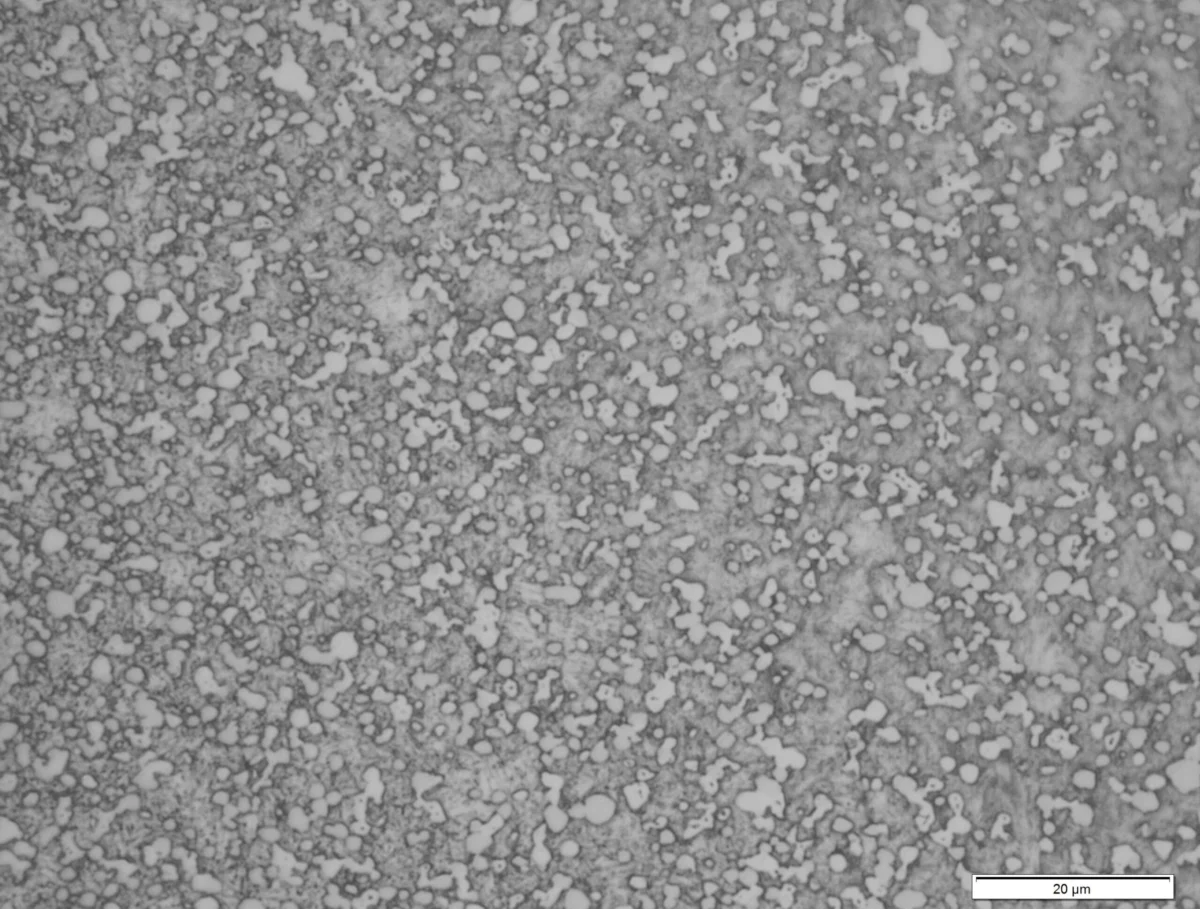
MagnaMax utilizes a refined approach by increasing the levels of carbon, vanadium, and niobium while carefully managing the chromium content to ensure it remains in solution rather than forming carbides. The resulting microstructure features a 16% carbide volume—roughly double that of MagnaCut. These carbides are predominantly vanadium and niobium carbides, which are significantly harder and smaller than the chromium carbides found in older stainless steels like M390 or S110V.
A microscopic comparison reveals that while MagnaMax has a similar carbide volume to K390, the carbide size in MagnaMax is noticeably finer. This fine-grained structure is critical for maintaining toughness. In steels like M390 or S90V, the presence of larger, coarser carbides acts as a failure point where cracks can initiate. By substituting these with a dense population of microscopic, ultra-hard carbides, MagnaMax achieves a superior balance of wear resistance and structural integrity.

Performance Metrics and Comparative Data
Independent testing conducted via CATRA (Cutlery and Allied Trades Research Association) machines and Charpy C-notch impact tests provides a clear picture of where MagnaMax sits in the current market hierarchy.
Edge Retention
In CATRA testing, which measures the total amount of silica-infused cardstock a blade can cut before dulling, MagnaMax matched the performance of K390 and Vanadis 8. This places it in the elite "high wear" category, surpassing industry staples such as S30V, M390, and CPM-M4. It offers a sizeable increase in slicing longevity over MagnaCut, making it an ideal candidate for hunting knives, cardboard processing, and heavy-duty utility tasks.

Toughness
One of the most surprising results of the MagnaMax testing is its toughness rating. Typically, as wear resistance increases, toughness (the ability to resist chipping or breaking) drops precipitously. However, MagnaMax maintains a toughness level comparable to S35VN, Vanax, and CPM-154. While it is not as tough as the original MagnaCut, it is significantly tougher than other high-wear stainless steels like S110V or S90V. For users who have found K390 folders to be sufficiently durable for daily carry, MagnaMax offers an identical level of toughness with the added benefit of stainless properties.
Corrosion Resistance
Using a standard 1% saltwater immersion test, MagnaMax demonstrated superior corrosion resistance to many established stainless steels. In direct comparisons, S90V showed significant rusting, while M390 and S110V developed small pit marks. MagnaMax, however, remained entirely free of rust spots. This performance confirms that the alloy has successfully kept its chromium in solution, providing a level of protection that rivals or exceeds the most popular "super steels" currently on the market.

Chronology of Development and Commercial Hurdles
The path from the 2019 proposal to the 2026 release was marked by industrial challenges, most notably the 2025 bankruptcy of Crucible Industries, the original manufacturing partner.
- June 2019: Initial proposal of the "stainless 10V" concept alongside MagnaCut.
- 2021-2022: MagnaCut achieves global dominance in the knife industry, creating a market demand for a higher-wear variant.
- 2023: The first experimental "heat" of the steel is produced by Crucible Steel. Small batches are distributed to select knife companies for internal testing under various code names, including "MagnaX" and "ProjectX."
- Late 2024: A second heat is produced by Crucible. However, this batch overshot the intended carbon target, resulting in a prototype that had slightly lower corrosion resistance than the final intended specification. This batch was famously utilized by Spyderco for their "Mule Team" project, allowing enthusiasts to test the steel’s geometry and edge retention.
- January 2025: Crucible Industries enters bankruptcy proceedings, temporarily throwing the future of the alloy into question.
- Late 2025: Production is secured through a dual-supplier arrangement with Erasteel and Carpenter Technology, ensuring a stable supply chain for the global market.
- Q2 2026: The projected window for the official wide release of MagnaMax to the general public and custom knifemakers.
Industry Implications and Market Impact
The arrival of MagnaMax is expected to spark a new wave of competition among high-end knife manufacturers. For years, the "stainless vs. tool steel" debate forced users to choose between the extreme edge retention of a steel like 10V (which requires oiling to prevent rust) and the convenience of a stainless steel like S35VN (which dulls faster). MagnaMax effectively eliminates this trade-off for a large portion of the market.

Industry analysts suggest that Spyderco, a long-time proponent of high-vanadium steels, will likely be among the first to integrate MagnaMax into their flagship "Salt" series or premium folder lines. By offering a steel that matches K390 performance but is salt-water ready, manufacturers can target professionals in maritime, hunting, and culinary environments who demand the highest possible performance without the risk of food contamination or equipment failure due to corrosion.
Furthermore, the "Erasteel" and "Carpenter" partnership marks a significant moment in the supply chain. By utilizing these high-end powder metallurgy facilities, the production of MagnaMax will likely see more consistent quality control and availability than previous experimental steels.

Expert Analysis: The "Sweet Spot" of Performance
The success of MagnaMax will likely be defined by what metallurgists call the "toughness-edge retention balance." In the past, if a user wanted higher edge retention than MagnaCut, they had to accept a "steep drop-off" in toughness. MagnaMax flattens this curve. By providing S35VN-level toughness with 10V-level edge retention, it creates a new "sweet spot" for performance.
While MagnaCut remains the superior choice for thin-edged kitchen knives or hard-use choppers where maximum toughness is required, MagnaMax is poised to take over the "slicing" category. From everyday carry (EDC) knives used for opening packages to specialized skinning knives for hunters, the ability to maintain a razor edge through heavy use while remaining rust-free is a paradigm shift.

As the industry moves toward the Q2 2026 release, the focus will shift to optimizing heat treatment protocols. Dr. Thomas has indicated that further work is being done to ensure that various quenching and tempering cycles yield consistent results across the allowable range of elements. This scientific rigor ensures that when MagnaMax hits the shelves, it will not just be another "flavor of the month" steel, but a permanent fixture in the evolution of modern metallurgy.