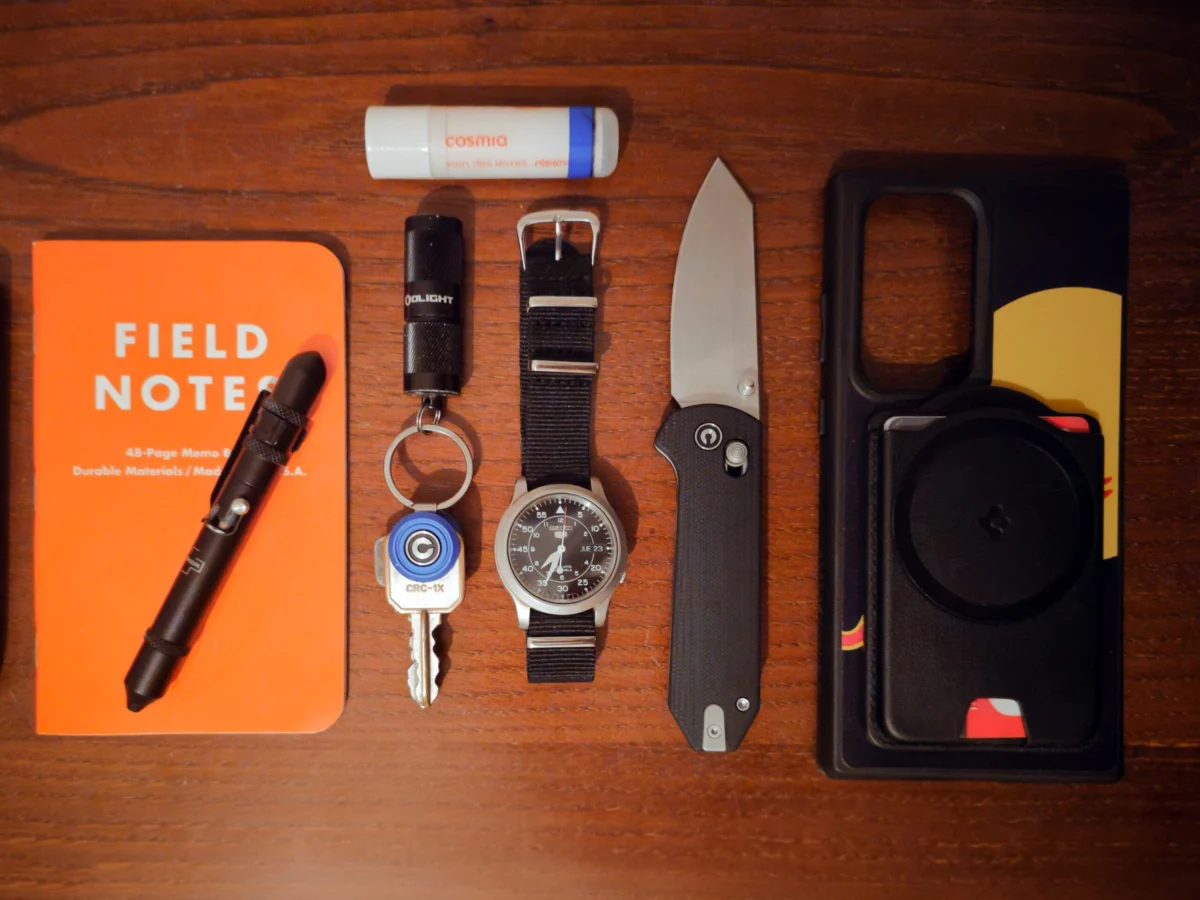
In the specialized field of aeronautical automation, where precision, efficiency, and reliability are the primary metrics of success, the tools professionals keep on their person—their Everyday Carry (EDC)—often mirror these high standards. Ruben, an aeronautical automation operator based in Portugal, has recently highlighted a shift in how modern professionals curate their pocket gear. By balancing industrial-grade functionality with a minimalist aesthetic, his current selection offers a window into the evolving philosophy of functional design. Central to this transition is the adoption of the CIVIVI Yonder, a crossbar-locked knife that has gained significant industry recognition, alongside a curated selection of compact, high-utility items designed to maximize efficiency without clutter.
The Anatomy of a Modern Professional Carry
For an aeronautical automation operator, the daily workflow involves managing complex systems, monitoring data streams, and ensuring the seamless operation of critical infrastructure. Consequently, the items selected for daily use are not merely accessories; they are extensions of a professional’s operational capacity.
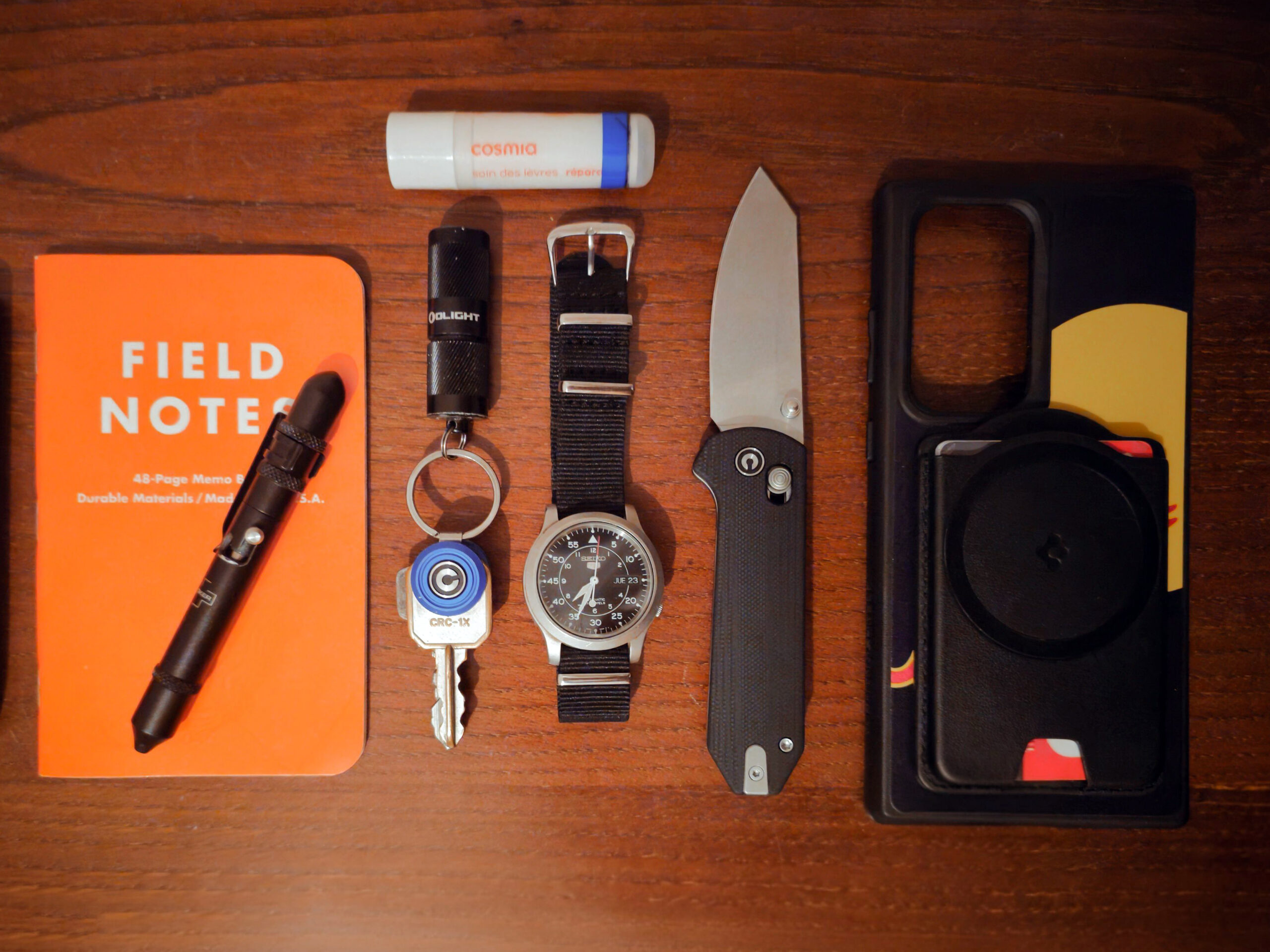
Ruben’s current kit includes several staples that prioritize space management: a magnetic wallet integrated into his smartphone, an ultra-compact key organizer, a precision mini-bolt action pen, and a high-lumen keychain flashlight. This consolidation allows for the inclusion of tactile productivity tools, such as the Field Notes notebook, which serves as a traditional analog backup in a highly digitized environment. The introduction of the CIVIVI Yonder marks a departure from heavier, less ergonomic tools, signaling a broader industry trend toward lightweight, high-performance materials.
The CIVIVI Yonder: A Case Study in Design Excellence
The CIVIVI Yonder, designed by Zac Whitmore, has become a focal point for knife enthusiasts and EDC practitioners alike. Following its recognition as "Best Buy of the Year" at the 2024 Blade Show, the knife has been analyzed for its impact on the market. Its design philosophy centers on the "crossbar lock" mechanism, which offers both ambidextrous functionality and a robust locking mechanism that rivals much more expensive alternatives.
Industry experts note that the success of the Yonder is indicative of a market shift. Historically, high-quality, reliable locking knives were often cost-prohibitive. However, the rise of manufacturers utilizing advanced materials and streamlined production processes has democratized access to professional-grade tools. The Yonder’s popularity stems from its ability to bridge the gap between a "budget" offering and a "premium" tool, providing an EDC solution that does not sacrifice structural integrity for affordability.
Chronology of EDC Evolution
The concept of "Everyday Carry" has evolved significantly over the past two decades. In the early 2000s, EDC was largely associated with survivalist communities and preppers. By the 2010s, it transitioned into a hobbyist pursuit driven by social media platforms where enthusiasts showcased highly curated, aesthetic-focused pocket dumps.
As of 2025, the focus has shifted toward "rational minimalism." Professionals like Ruben are no longer carrying gear simply for the sake of completion; they are auditing their gear to ensure every item serves a specific purpose within their daily routine. The timeline of this shift can be observed through the following milestones:
- 2015-2018: The rise of the "pocket dump" social media phenomenon, prioritizing color coordination and brand prestige.
- 2019-2022: A market pivot toward multi-functionality, with an emphasis on miniaturization—specifically the rise of titanium key organizers and slim, magnetic smartphone-wallet hybrids.
- 2023-2025: The current era of high-value, ergonomic engineering, exemplified by tools like the CIVIVI Yonder and the integration of analog documentation (Field Notes) into high-tech workflows.
Supporting Data and Market Trends
The global EDC market, encompassing tactical gear, pocket knives, and multi-tools, has seen a steady annual growth rate of approximately 5.8% since 2022. Market analysts attribute this to an increased consumer desire for "buy-it-for-life" (BIFL) products. In a world of disposable technology, there is a measurable psychological and economic preference for items that are modular, repairable, and durable.
Data from recent retail trends suggests that users are moving away from oversized tactical gear and toward "office-friendly" or "discreet" designs. The preference for items like the Casio Edifice with a Tiffany dial—a watch that offers sophisticated aesthetics without the high-end luxury price point—complements this minimalist trend. It allows the professional to maintain a formal, reliable appearance while adhering to the core tenets of EDC functionality.
Implications for Workplace Productivity
The psychological impact of a curated EDC kit on workplace performance is an emerging area of interest. According to organizational psychologists, the "cognitive load" of managing personal items can affect focus. By simplifying one’s carry to essential, high-quality tools, professionals may reduce the friction associated with daily tasks.
For an automation operator, where a split-second decision can be the difference between a minor system hiccup and a significant delay, having a reliable tool ready at hand is not just a convenience—it is a risk-mitigation strategy. The integration of analog tools like the Field Notes notebook serves as a cognitive anchor, allowing for quick, distraction-free note-taking during meetings or system inspections, away from the constant notifications of a mobile device.
Official Perspectives and User Feedback
While the EDC community is largely driven by individual enthusiasts, the manufacturers have taken note of the changing demands. In statements following the 2024 Blade Show, designers like Zac Whitmore have emphasized that the goal of modern knife design is "invisibility." A good tool should be so lightweight and ergonomic that the user forgets it is there until it is needed.
Feedback from users like Ruben underscores this philosophy. When asked about potential future adjustments—such as swapping his EDC knife for a Kizer Feist or changing his watch to a more formal Casio Edifice—the reasoning is rarely about necessity, but rather about "contextual suitability." This suggests that the modern EDC practitioner views their kit as a dynamic system that can be adapted to the specific requirements of the day, whether that be in an aeronautical control room or a professional social setting.
Broader Impact: The Future of Personal Tooling
The trend toward high-value, minimalist EDC gear is likely to continue as urbanization increases and personal space becomes more valuable. As consumers become more discerning about the environmental and economic impact of their purchases, the focus will likely remain on items that offer the highest utility-to-size ratio.
The implications for the industry are significant. Manufacturers who fail to innovate in terms of weight reduction, material durability, and ergonomic design risk losing market share to agile companies that can produce high-quality tools at a mid-tier price point. Furthermore, the convergence of analog and digital tools—as seen in the combination of smartphone-integrated wallets and paper notebooks—suggests that the future of EDC is not purely digital, nor entirely traditional. It is a hybrid approach that favors tools that offer the best of both worlds.
Conclusion
The carry of an aeronautical automation operator in Portugal serves as a prime example of how modern professionals are optimizing their daily toolkits. By selecting items like the CIVIVI Yonder, which provides professional-grade utility without the excessive bulk or cost of traditional tactical gear, individuals are crafting a more efficient, focused lifestyle. As the EDC landscape continues to evolve, the emphasis on high-value, functional minimalism will likely remain the gold standard, proving that the most effective tool is often the one that is both reliable and perfectly suited to the task at hand. Through the careful curation of such items, professionals can maintain a level of readiness that is essential in an increasingly complex and automated world.