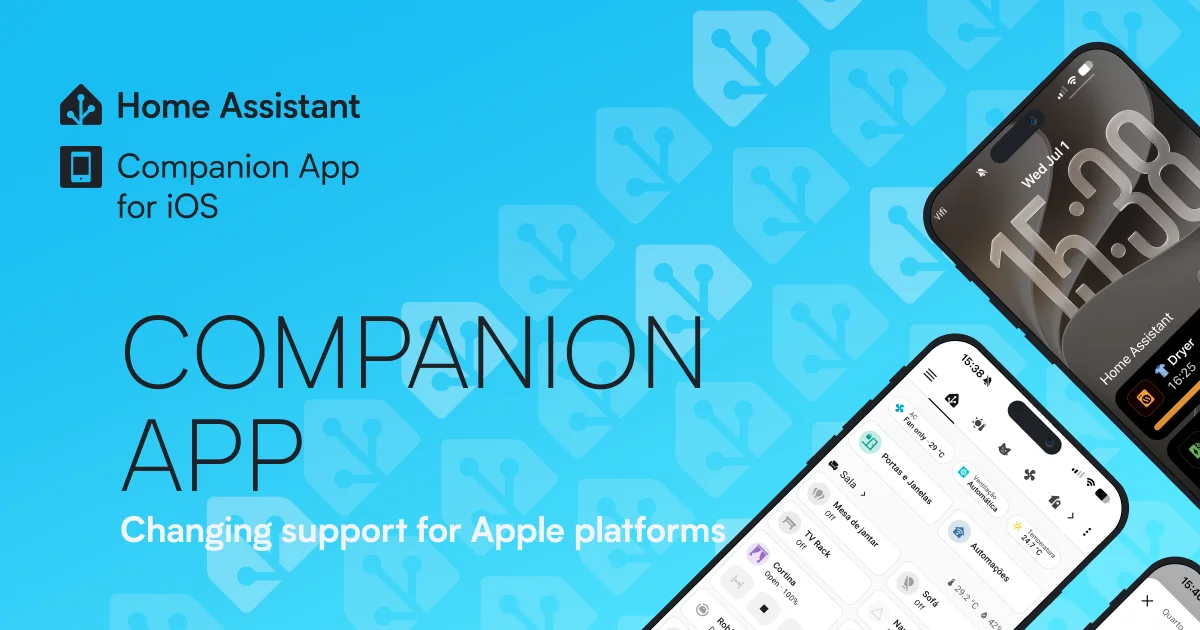
Home Assistant has officially announced a strategic shift in its development roadmap regarding the Home Assistant Companion app for Apple ecosystems, signaling a planned deprecation of support for several legacy operating systems starting in the second half of 2026. According to an official communication from the development team, the transition will begin with the release of version 2026.8.0, at which point the application will no longer receive updates or maintenance for iOS 15, watchOS 8, or macOS 11. This decision reflects a broader industry trend toward balancing the longevity of hardware with the escalating technical requirements of modern software development. By providing this information nearly two years in advance, the Home Assistant team aims to maintain its core value of transparency while ensuring that the vast majority of its user base benefits from a more streamlined and high-performance application.
The final version of the Companion app to support these legacy systems will be version 2026.7.1. Following this release, users on older hardware that cannot be updated beyond iOS 15, watchOS 8, or macOS 11 will be frozen on this specific iteration of the software. While the app will continue to function in its last-supported state, it will no longer receive security patches, bug fixes, or access to new features integrated into the Home Assistant ecosystem after August 2026. This move is necessitated by evolving constraints within Apple’s development environment and the diminishing returns of maintaining compatibility for a statistically small segment of the active user community.
Technical Justification and the Xcode Lifecycle
The primary driver behind this change is the lifecycle of Apple’s developer tools, specifically Xcode. Apple historically mandates that developers use the latest versions of Xcode to submit applications to the App Store. As Apple updates its software development kits (SDKs), it eventually drops support for older operating systems within the build tools themselves. Starting in September 2024, Apple’s developer tools will officially cease support for watchOS 8 and macOS 11, creating a significant technical hurdle for cross-platform developers.
Maintaining support for an "unsupported" OS requires developers to maintain legacy code paths, often referred to as "technical debt." This debt manifests as conditional checks within the code that prevent new APIs from crashing older devices. For the Home Assistant team, these constraints have begun to hinder the implementation of modern user experience (UX) enhancements. By removing the requirement to support iOS 15 and its contemporaries, developers can fully leverage newer frameworks like SwiftUI and advanced widget architectures that were introduced in subsequent OS iterations. This shift is expected to lead to significant improvements in app stability and performance, as the codebase can be modernized without the "lowest common denominator" limitations imposed by five-year-old software.
Statistical Analysis of User Adoption
Internal data from the Home Assistant project indicates that the impact of this change will be minimal for the broader community. Currently, less than 1% of the active user base is running the Companion app on iOS 15, watchOS 8, or macOS 11. In the context of software engineering, maintaining a separate build pipeline and testing infrastructure for less than 1% of users is often seen as an inefficient use of resources, especially for an open-source project that relies on community contributions and a focused core team.
In contrast, the adoption rates for iOS 16 and iOS 17 have been rapid. According to broader market data, Apple users tend to update their devices at a much higher frequency than users in the Android ecosystem. By the time August 2026 arrives, iOS 15 will be five generations behind the current flagship release (assuming Apple maintains its annual release cycle). This five-year window is generally considered the "sweet spot" for mobile app support, balancing the need to support older devices with the necessity of adopting new technology.
Chronology of Support and Development Milestones
To understand the context of this decision, it is helpful to look at the timeline of the affected operating systems and the Home Assistant Companion app’s evolution:
- September 2021: Apple releases iOS 15, watchOS 8, and macOS 11 (Big Sur). These updates introduced significant changes to how widgets and notifications were handled.
- 2021–2024: Home Assistant expands the Companion app’s capabilities, adding support for Apple Watch complications, Action Buttons, and advanced location tracking.
- September 2024: Apple’s Xcode 16 and subsequent tools begin to phase out the ability to target watchOS 8 and macOS 11 effectively.
- July 2024: Home Assistant issues its transparency report and roadmap, alerting users to the 2026 cutoff.
- August 2026: Version 2026.7.1 marks the final update for legacy platforms.
- Late August 2026: Version 2026.8.0 launches, officially requiring iOS 16, watchOS 9, and macOS 12 or newer.
This proactive communication strategy is a hallmark of the Home Assistant project, which prides itself on being "user-first." By announcing the change years in advance, the project allows users who rely on older hardware as dedicated wall-mounted tablets or legacy control centers to plan for hardware upgrades or alternative interface methods.
Implications for Legacy Hardware and Alternative Access
A critical point emphasized by the Home Assistant team is that the end of Companion app support does not equate to the end of device utility. One of the greatest strengths of Home Assistant is its platform-agnostic frontend. Even after the Companion app ceases to update on an iPad running iOS 15, the device can still access the Home Assistant dashboard via a standard web browser like Safari or Chrome.
The web-based frontend is developed independently of the mobile app and remains compatible with a wider range of older browsers. This ensures that users who use older tablets as "permanent" smart home controllers can continue to do so without interruption. Furthermore, because Home Assistant is open-source, the source code for the iOS app will remain available on GitHub. This allows advanced users or community members to potentially maintain their own "forks" or compile older versions of the app for personal use, although this is not a path recommended for the average consumer.
Enhancing the User Experience for the 99%
The decision to move forward is not merely about cutting ties with the past; it is about unlocking the future. The Home Assistant team has noted that supporting older OS versions has specifically limited their ability to improve Apple Watch complications and create more advanced widgets.
With the retirement of legacy support, developers can implement:
- Dynamic Island Integration: Better real-time updates for home events on newer iPhone models.
- Advanced Lock Screen Widgets: Utilizing the expanded widget capabilities introduced in iOS 16 and 17.
- Improved Background Processing: Newer iOS versions offer more efficient ways for apps to communicate with servers in the background, which is vital for a smart home app that relies on accurate location data and sensor updates.
- SwiftUI Optimization: Moving away from older UI frameworks allows for a more responsive and visually consistent interface that matches the modern Apple aesthetic.
Industry Comparison and Broader Impact
Home Assistant’s move aligns with the policies of other major tech entities. For instance, Google and Meta typically support the last three major versions of an operating system. By supporting iOS 15 until 2026, Home Assistant is actually offering a longer support window than many commercial "Smart Home" competitors.
This transition also highlights the ongoing challenge of "e-waste" in the tech industry. While software developers must move forward to ensure security and performance, it leaves older, functional hardware in a state of diminishing returns. Home Assistant’s commitment to keeping the web-based interface compatible is a significant countermeasure to this trend, allowing hardware to remain useful even when the "native" app experience is no longer available.
Final Summary of the Transition
As the smart home landscape becomes increasingly complex with the introduction of standards like Matter and Thread, the software that controls these environments must be robust and modern. Home Assistant’s update to its Apple platform support is a calculated move to ensure that the Companion app remains a premier tool for home automation.
Users currently utilizing iOS 15, watchOS 8, or macOS 11 are encouraged to check if their devices are eligible for software updates. For those on hardware that has reached its maximum OS version, the transition to browser-based control or the planning of a hardware refresh over the next 24 months is recommended. The Home Assistant community remains a central part of this evolution, and the project’s leadership continues to emphasize that these changes are made with the long-term health of the ecosystem in mind. By shedding the constraints of the past, the Home Assistant Companion app is poised to deliver a more powerful, stable, and feature-rich experience for the next generation of smart home enthusiasts.