Zwift, the global leader in indoor cycling and running platforms, has officially announced its extensive development slate for the spring and summer of 2026, a programming block the company has branded "This Season on Zwift." The announcement, delivered during the second annual Zwift Community Live event in Mallorca, Spain, outlines a series of technical updates, virtual world expansions, and ecosystem integrations designed to sustain user engagement through the traditionally quieter northern hemisphere summer months. The roadmap covers a five-month window, bridging the gap between current operations and the platform’s major annual refresh typically scheduled for September.
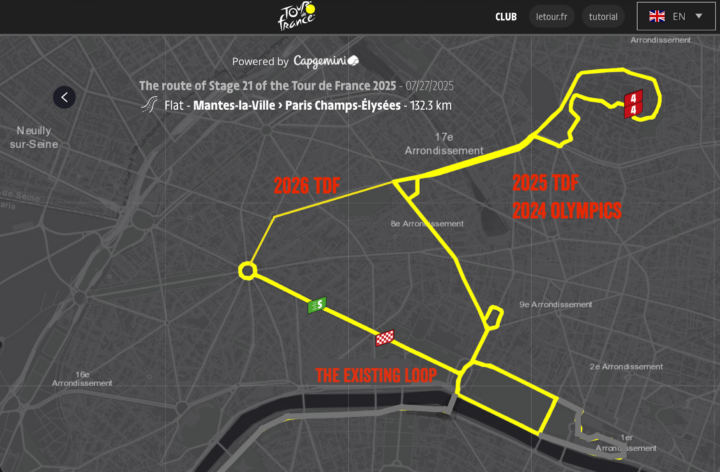
The Mallorca event has matured into a pivotal fixture for the company, serving as a hybrid physical-digital gathering where product developers and engineers interact directly with the user base. By aligning these major software announcements with an outdoor cycling festival, Zwift aims to reinforce its position not merely as a winter alternative to outdoor riding, but as a year-round training tool that complements real-world cycling activities.
Expansion of the Paris Map: The Sacré-Cœur Integration
The most significant visual and geographical update to the platform is scheduled for June 26, when Zwift will introduce a major expansion to its Paris map. This update focuses on the Montmartre district, specifically incorporating the iconic Sacré-Cœur route. This specific stretch of road gained international prominence during the 2024 Paris Olympics and was subsequently featured in the 2025 Tour de France.
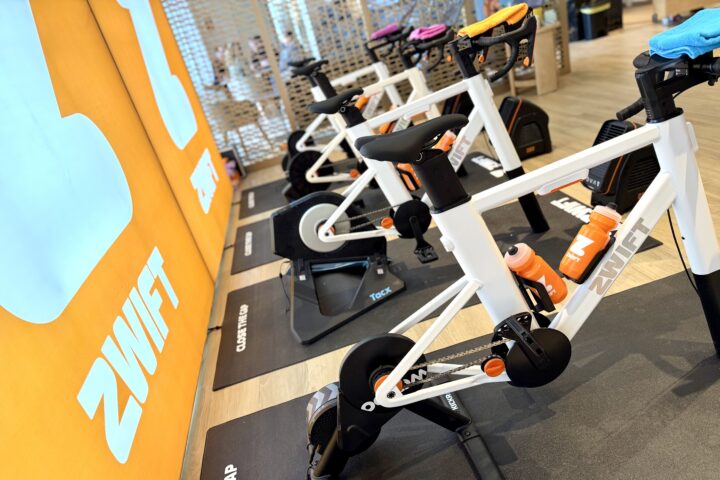
The expansion will introduce 13 kilometers of new virtual pavement and cobblestones. To replicate the challenge of the real-world location, Zwift has developed a new King of the Mountains (KOM) finish at the Basilica of the Sacré-Cœur. Technical specifications for the update include:
- New Routes: Over 10 new curated routes utilizing the expanded map.
- Sprint Segments: Three additional sprint sections designed for competitive event play.
- Architectural Fidelity: High-resolution rendering of the 17th Arrondissement and the approach to the Arc de Triomphe.
This update represents a strategic shift for the Paris map, which was previously limited to a repetitive circuit around the Champs-Élysées. By blending the historical Olympic route with the upcoming 2026 Tour de France approach, Zwift is creating a more versatile environment capable of supporting both short-form criterium racing and longer endurance efforts.

The Introduction of Gravel Mountain in Makuri Islands
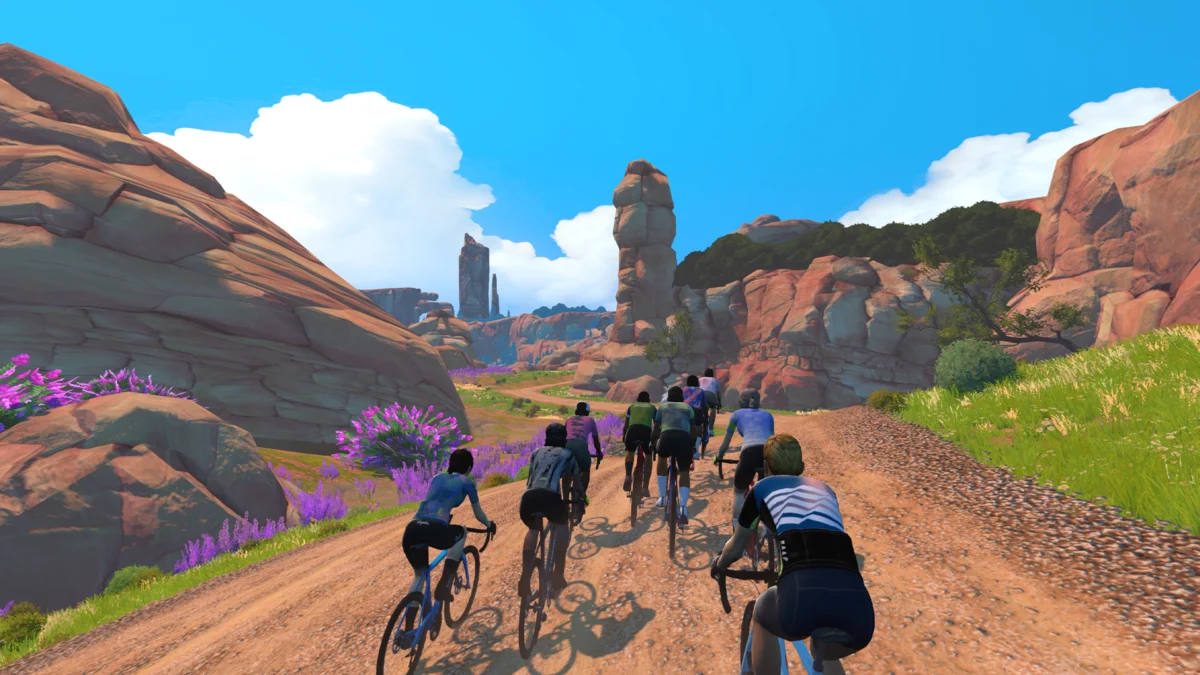
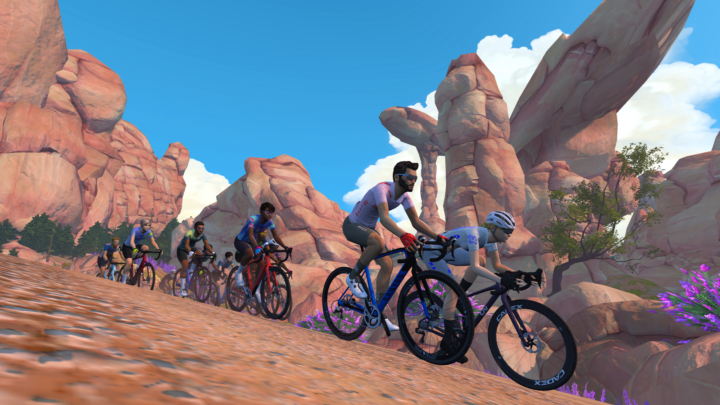
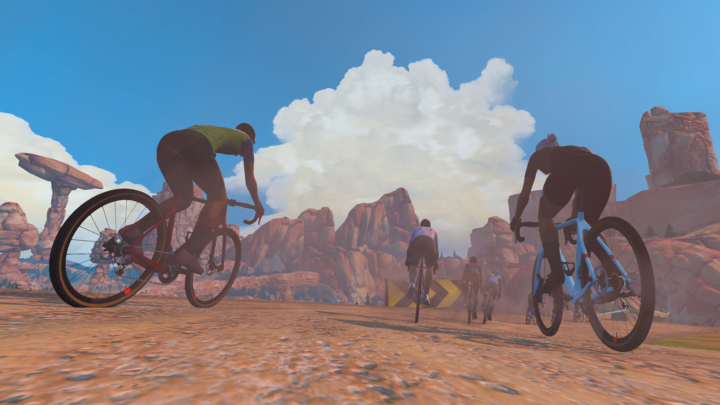
Recognizing the sustained growth of gravel cycling in the global market, Zwift will launch "Gravel Mountain" on April 6. Located within the Makuri Islands world, this new environment is characterized by a "red-rock" aesthetic reminiscent of the American Southwest. Unlike standard road routes, Gravel Mountain is engineered as an event-only circuit designed for multi-lap racing.
The technical design of Gravel Mountain incorporates ultra-wide roads, corner berms, and varying surface textures that interact with the game’s rolling resistance algorithms. To coincide with this launch, Zwift is introducing 13 new bicycle frames and 13 new wheelsets, specifically optimized for gravel, road, and time-trial disciplines.
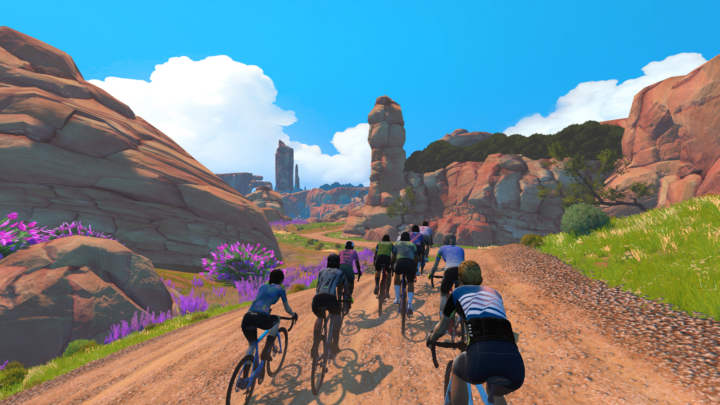
The initial rollout of this environment will be tied to the Pas Normal Studios Racing Series, running from April 6 to May 3. While the roads are restricted to organized events during the launch phase, the company indicated that this environment serves as a testbed for future off-road physics updates.
Advancements in the Personalized Recommendation Engine
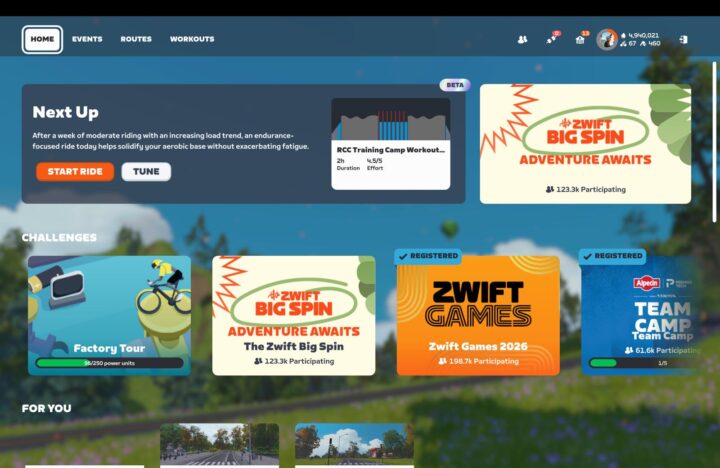
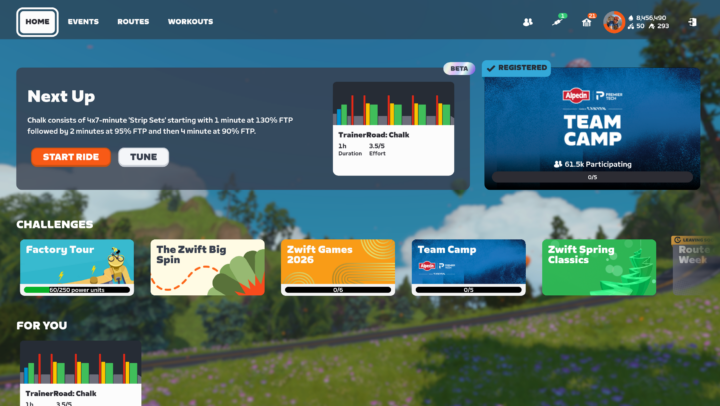
A core component of Zwift’s 2026 strategy is the "Next Up" feature, a personalized recommendation engine that has completed its English-language rollout. This system utilizes a complex array of biometrics and historical data to suggest specific workouts to users upon login. The engine’s logic is powered by several key data inputs:
- Chronic Training Load (CTL): A measure of long-term fitness based on the last six weeks of activity.
- Fitness Score: A proprietary Zwift metric that tracks performance improvements.
- External Activity Integration: The engine now factors in outdoor rides and runs imported from third-party devices.
- Behavioral Patterns: Analysis of typical riding habits, such as identifying a user’s preference for long-duration rides on weekends.
- FTP Profile: Real-time adjustments based on the user’s Functional Threshold Power.
Furthermore, Zwift has integrated direct support for third-party training platforms. For users with active plans from services like TrainerRoad or Xert, Zwift will prioritize those scheduled workouts within the "Next Up" interface. This prevents overtraining by respecting the rest days and intensity distributions established by external coaching software.
Chronology of Scheduled Updates: April through Fall 2026
The 2026 roadmap follows a strict chronological release schedule to ensure a steady stream of content:
- April 2026: Launch of Gravel Mountain in Makuri Islands; implementation of the Level 100+ cycling cap and Level 50 running cap; expansion of the "Next Up" engine.
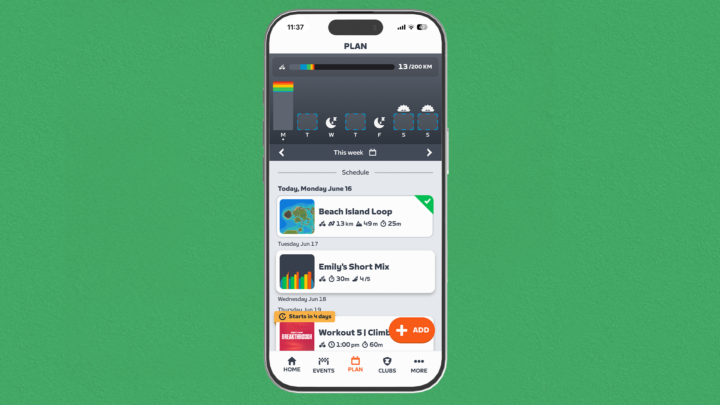
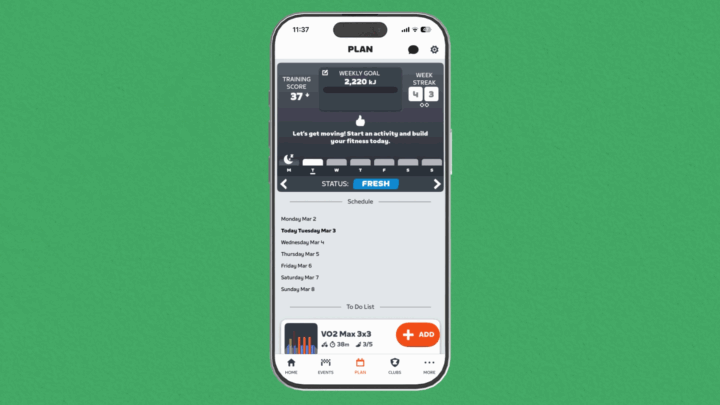
- Late April 2026: Release of the "Week Ahead" planning tool within the Zwift Companion App.
- May 2026: Deployment of the expanded Heads-Up Display (HUD) customization for workout modes.
- June 26, 2026: Release of the Paris/Sacré-Cœur map expansion and associated routes.
- Fall 2026: Official integration of Garmin Index Scale weight synchronization.
The Transition Beyond Level 100
For the platform’s most dedicated users, the April update introduces a fundamental change to the leveling system. Previously capped at level 100 for cyclists and level 30 for runners, the new system allows for essentially infinite progression. Running levels will be extended to 50, while cycling levels will move into the "multiple hundreds."
To maintain the prestige of the original cap, users who reach Level 100 will receive a distinct orange stripe on their profile and in-game name tag. Zwift management confirmed that all functional in-game unlocks (such as high-performance bikes and wheels) will remain tied to the first 100 levels. This ensures that the core gameplay remains accessible to the majority of the user base while providing a "prestige" system for elite users who may accumulate enough experience points to reach Level 200 within a calendar year.
Enhanced HUD Customization and Biometric Tracking
In May, Zwift will provide users with greater control over their data display during workouts. The new configurable HUD will allow users to select four data slots from a pool of 13 specific biometrics. This is particularly relevant for high-performance athletes who require specific data points not found in the standard interface. The available metrics include:
- Advanced Power Metrics: Average Power, Weighted Power (WP), and Power-to-Weight (W/KG).
- Physiological Data: Heart Rate (BPM), Core Temperature, and Heat Strain Index (HSI).
- Efficiency Metrics: Cadence (RPM) and Left/Right Power Balance.
- Workload Indicators: Kilojoules (KJ), Energy Burned (Calories), and Stress Points (SP).
This update is separate from the standard "always-on" fields like current power and distance, allowing for a highly tailored training environment.
Ecosystem Integration: Garmin and Withings Weight Sync
A critical factor in the accuracy of Zwift’s physics engine is the user’s weight, which determines the watts-per-kilogram calculation. To streamline this, Zwift has committed to a formal integration with Garmin’s ecosystem. By Fall 2026, users of the Garmin Index Scale series will be able to sync their weight data directly to their Zwift profile.
Additionally, the company addressed recent technical failures regarding Withings WiFi scale synchronization. Zwift officials confirmed that a fix is currently being deployed to backfill missing data and restore functional synchronization for Withings users by the end of March 2026. These integrations are viewed as essential for maintaining the integrity of virtual racing and ensuring that fitness tracking remains accurate without the need for manual data entry.
Broader Impact and Industry Implications
The 2026 roadmap signals Zwift’s intent to evolve from a "game-first" platform into a comprehensive "training-first" ecosystem. By emphasizing features like the "Week Ahead" planner and the personalized recommendation engine, Zwift is directly competing with specialized coaching apps.
The focus on outdoor ride integration is also a response to market trends. Industry data suggests that indoor cycling users are increasingly seeking a unified view of their fitness that spans both virtual and real-world environments. By encouraging users to ride outdoors while still providing "credit" within the Zwift ecosystem, the company is attempting to reduce the seasonal churn that typically affects the indoor fitness industry during the summer months.
Furthermore, the expansion of the Paris map and the introduction of Gravel Mountain demonstrate a commitment to "event-driven" content. By mirroring real-world professional cycling milestones like the Tour de France and the Olympics, Zwift leverages the cultural momentum of the sport to drive user engagement.
In conclusion, "This Season on Zwift" represents a multifaceted approach to platform growth. Through a combination of geographical expansion, deeper biometric integration, and a fundamental overhaul of the user progression system, Zwift is positioning itself as an indispensable tool for the modern cyclist. As the lines between virtual and physical training continue to blur, these updates provide the technical infrastructure necessary to support a global community of athletes across all disciplines.