
The Genesis of Consumer Computing: The Apple II
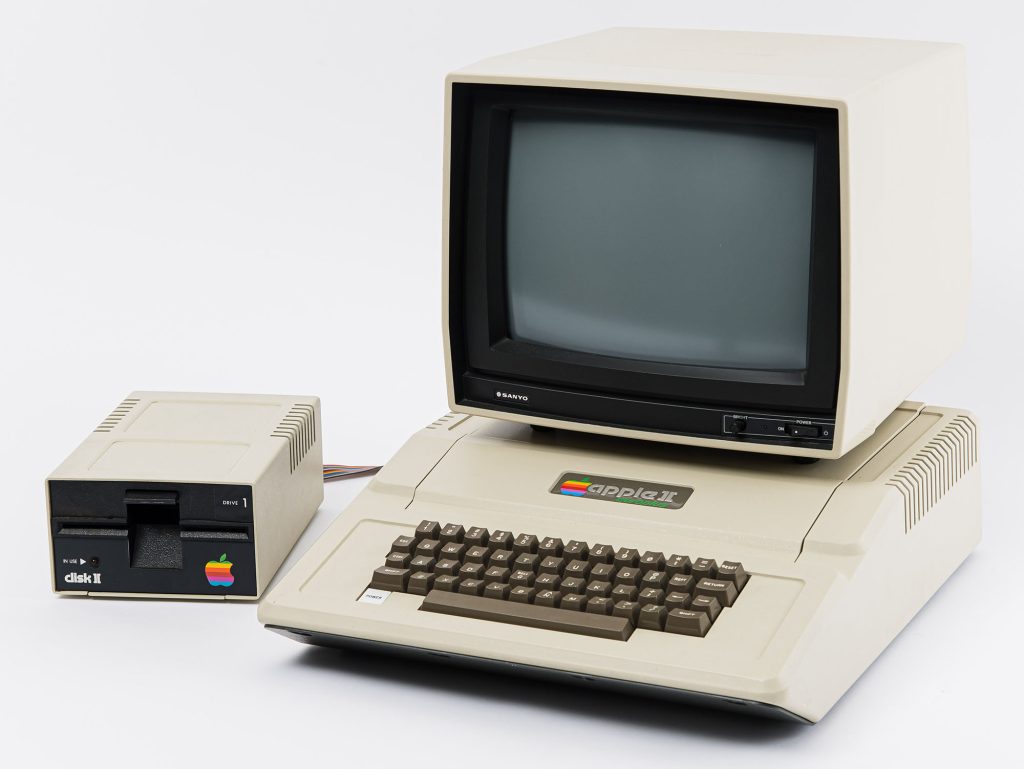
The Apple II, released in 1977, remains one of the most significant products in the history of personal computing. While the Apple I was a hobbyist’s circuit board, the Apple II was a fully realized consumer product, featuring a built-in keyboard, color graphics capabilities, and an expandable architecture. It was the device that brought Apple into the American classroom, establishing a foothold in education that the company maintains to this day.

By 1983, six years after its launch, the Apple II remained a staple of computer labs and small businesses. Its success was driven by its relative affordability and the "killer app" of the era, VisiCalc, the first spreadsheet program. Industry analysts note that the Apple II’s expansion slots allowed for a degree of customization that was rare for the time, enabling users to add memory, disk drives, and even CP/M compatibility. This versatility ensured that an entire generation of programmers and students received their first introduction to computing via the Apple II, cementing Apple’s reputation for user-centric design long before the term became an industry standard.
The Graphical Revolution: LISA and the 1984 Macintosh
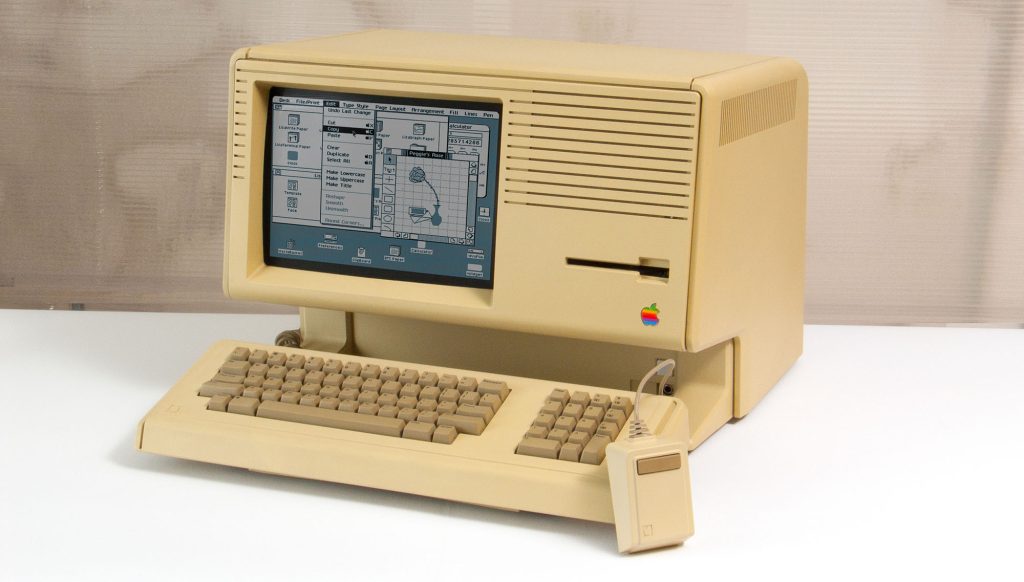
The early 1980s marked a pivotal transition for Apple as it sought to move beyond text-based operating systems. The Apple LISA, launched in 1983, was a technological marvel that introduced the Graphical User Interface (GUI), a mouse, and multitasking to the commercial market. However, its prohibitive price tag—nearly $10,000 at launch, or approximately $30,000 in today’s currency—rendered it a commercial failure. Despite this, the LISA served as a vital proof of concept for the device that would change the world a year later: the original Macintosh.

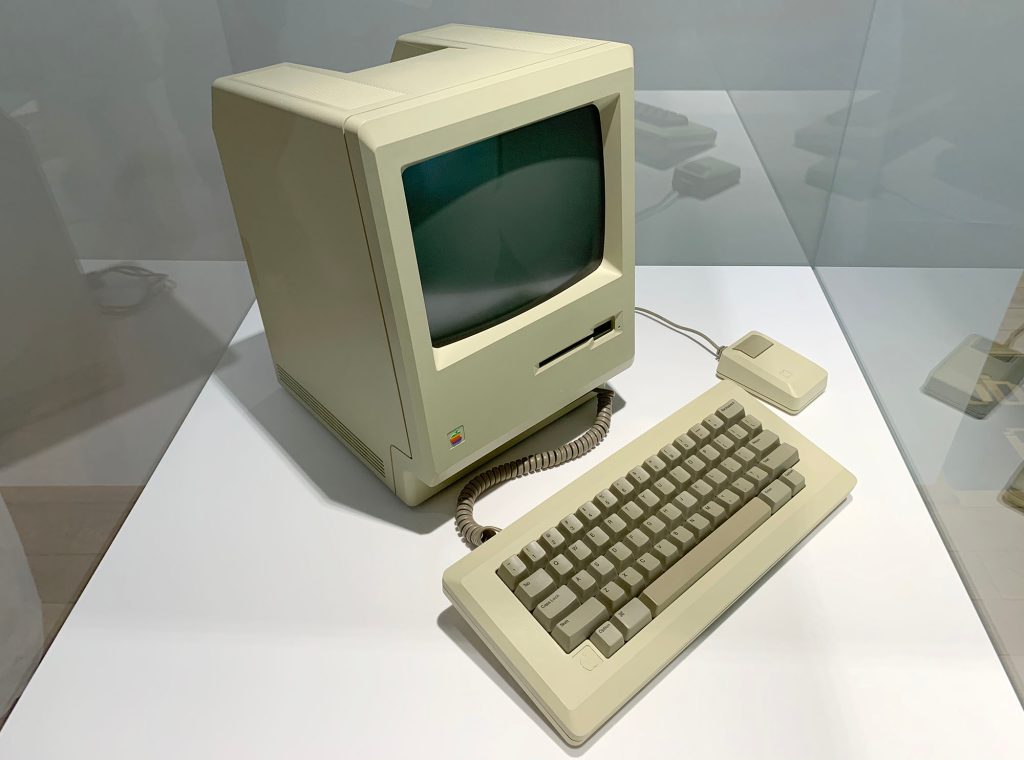
Released in January 1984, the Macintosh 128K brought GUI technology to a more portable and affordable form factor. Before the Macintosh, computer interaction required memorizing complex command-line syntax. The Macintosh introduced folders, icons, and a "desktop" metaphor that made computing accessible to non-specialists. It featured a 9-inch monochrome display and a 3.5-inch floppy disk drive, housed in a distinctive "all-in-one" chassis.
The impact of the Macintosh was immediate and profound. It pioneered the "What You See Is What You Get" (WYSIWYG) approach to word processing and design. For the first time, users could see bold text or varied typefaces on their screens before printing. This capability gave birth to the desktop publishing industry. Even with its limited memory, the 1984 Macintosh set the blueprint for every modern operating system, including Microsoft Windows, which would later adopt similar GUI principles.
The Pursuit of Mobility: From "Luggables" to the PowerBook
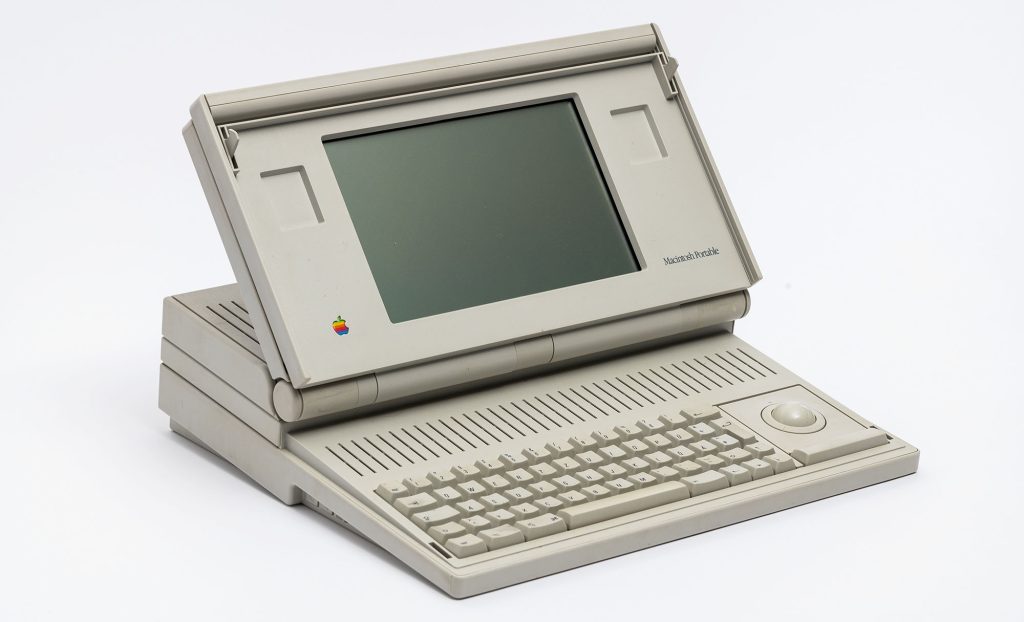
As the 1980s drew to a close, the industry shifted its focus toward mobility. Apple’s first attempt, the Macintosh Portable (1989), was a "luggable" machine. Weighing nearly 16 pounds and powered by a lead-acid battery, it was technically portable but physically demanding. However, it featured an active-matrix LCD screen that was remarkably sharp for the era, signaling Apple’s commitment to high-quality display technology.
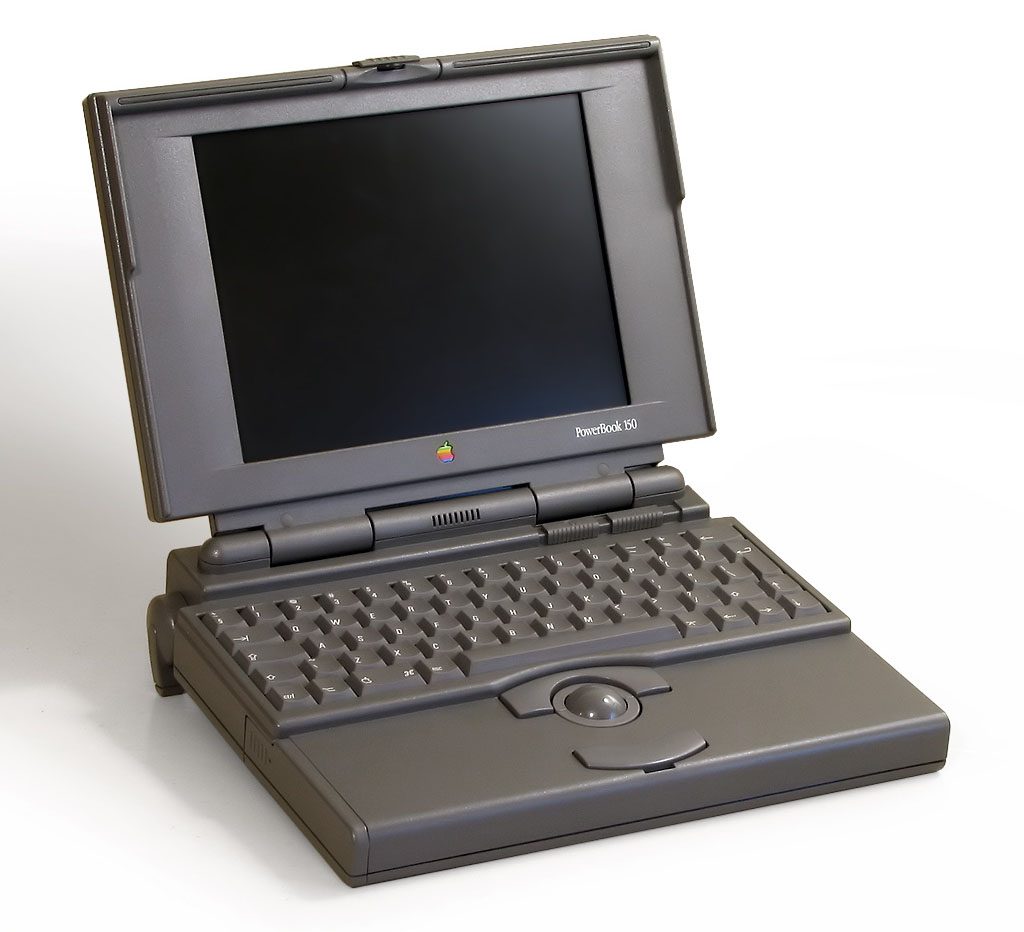
The true breakthrough in mobile computing came in 1991 with the PowerBook 100 series. Designed in collaboration with Sony, the PowerBook 100 introduced a revolutionary layout: the keyboard was pushed back toward the screen, leaving room for palm rests and a centered trackball. This ergonomic design was eventually adopted by the entire laptop industry. The PowerBook 100 transformed the Mac from a stationary tool into a mobile workstation, allowing professionals to carry the full Macintosh experience in a briefcase. This shift marked the beginning of Apple’s long-standing dominance in the premium laptop market, eventually leading to the discontinuation of desktop-only workflows for many creative professionals.
The Digital Hub Era: The iPod and the 17-inch MacBook Pro
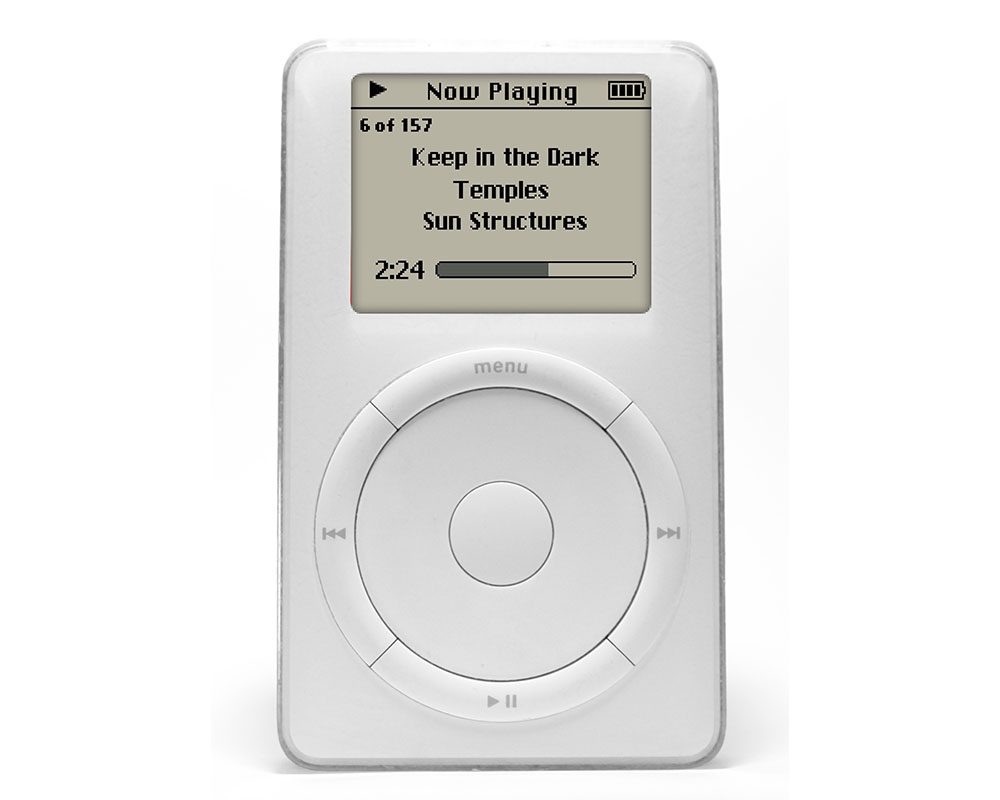
The turn of the millennium saw Apple reinvent itself under the "Digital Hub" strategy. The centerpiece of this era was the iPod, released in October 2001. While MP3 players already existed, the iPod’s combination of a 5GB hard drive—capable of holding "1,000 songs in your pocket"—and a simple scroll-wheel interface revolutionized the music industry.
The iPod’s success was not merely about hardware; it was the integration with the iTunes Store that disrupted the traditional record label model. By 2007, Apple had sold over 100 million iPods, making it the fastest-selling music player in history. This success provided the financial and technological foundation for the iPhone.
Simultaneously, Apple continued to push the boundaries of professional hardware. The 17-inch MacBook Pro, introduced in the mid-2000s, became a cult favorite among power users. Its massive screen real estate allowed for complex video editing and photo manipulation without the need for external monitors. Although Apple eventually shifted toward thinner and lighter designs, the 17-inch MacBook Pro remains a symbol of a time when Apple catered directly to the "pro" in "MacBook Pro" with highly expandable and large-format hardware.
The Post-PC Vision: iPad and the Ecosystem Effect
In 2010, Steve Jobs introduced the iPad, a device he claimed would define the "post-PC" era. While skeptics initially dismissed it as a "large iPhone," the iPad quickly carved out a new market category. By 2011, Apple was selling more iPads than any single manufacturer was selling PCs. The iPad demonstrated that for many users, a simplified, touch-first interface was more efficient than a traditional mouse-and-keyboard setup.
The iPad also solidified the "Apple Ecosystem." By leveraging the App Store, iCloud, and seamless handoff between devices, Apple created a walled garden that incentivized brand loyalty. This ecosystem effect was further bolstered by the iPhone 4 and 4S. The iPhone 4, with its "Retina Display" and glass-and-steel industrial design, raised the bar for smartphone aesthetics and screen quality. The introduction of Siri in the 4S marked Apple’s early entry into artificial intelligence, signaling a move toward more conversational and intuitive interfaces.
The Modern Renaissance: Apple Silicon and High-Fidelity Audio
In recent years, Apple’s most significant technological achievement has been the transition from Intel processors to its own custom-designed Apple Silicon. Starting with the M1 chip in 2020, Apple redefined the performance-per-watt ratio for personal computers. The move allowed for laptops with 20-hour battery lives and high-performance capabilities that previously required desktop-class power and cooling.
This era also saw Apple experiment with high-end audio through the original HomePod. Despite being discontinued and later resurrected, the original HomePod was praised by audiophiles for its computational audio capabilities. By using spatial awareness to tune its output to the room’s acoustics, Apple brought high-fidelity sound to a mainstream smart speaker, once again proving its ability to disrupt established categories through superior hardware engineering.
Chronology of Innovation: 50 Years of Milestones
- 1976: Apple Computer Inc. is founded.
- 1977: The Apple II is released, sparking the home computing boom.
- 1983: The LISA introduces the first commercial GUI.
- 1984: The Macintosh is launched with the iconic "1984" Super Bowl ad.
- 1991: The PowerBook 100 sets the standard for laptop design.
- 1998: The iMac G3 marks the return of Steve Jobs and a focus on design.
- 2001: The iPod and iTunes revolutionize digital music.
- 2007: The iPhone is released, redefining the smartphone.
- 2010: The iPad creates the modern tablet market.
- 2015: The Apple Watch establishes Apple’s lead in wearables and health.
- 2020: The M1 chip begins the Apple Silicon era.
- 2024: Apple enters the spatial computing era with Vision Pro.
Broader Impact and Implications
As Apple enters its sixth decade, its influence extends far beyond consumer electronics. The company’s focus on privacy, environmental sustainability (such as the goal of being carbon neutral by 2030), and health monitoring has forced the broader tech industry to pivot. The Apple Watch, for instance, has transitioned from a fashion accessory to a vital medical tool, capable of detecting atrial fibrillation and low blood oxygen levels, potentially saving thousands of lives.
The transition to Apple Silicon has not only benefitted Apple’s bottom line by reducing reliance on third-party vendors like Intel but has also forced competitors like Qualcomm and Microsoft to accelerate their own ARM-based computing efforts. Apple’s 50-year history is a testament to the power of vertical integration—the idea that by controlling both the hardware and the software, a company can create a user experience that is greater than the sum of its parts.
Looking forward, the company’s foray into spatial computing with the Vision Pro and continued investment in AI suggest that while the devices may change, the underlying philosophy of making complex technology "just work" remains the core of the Apple identity. For the "Apple guys" who have been there since the beginning, the journey from the Apple II to the M3 Max is more than a series of upgrades; it is the story of how a small company in Cupertino taught the world to think different.