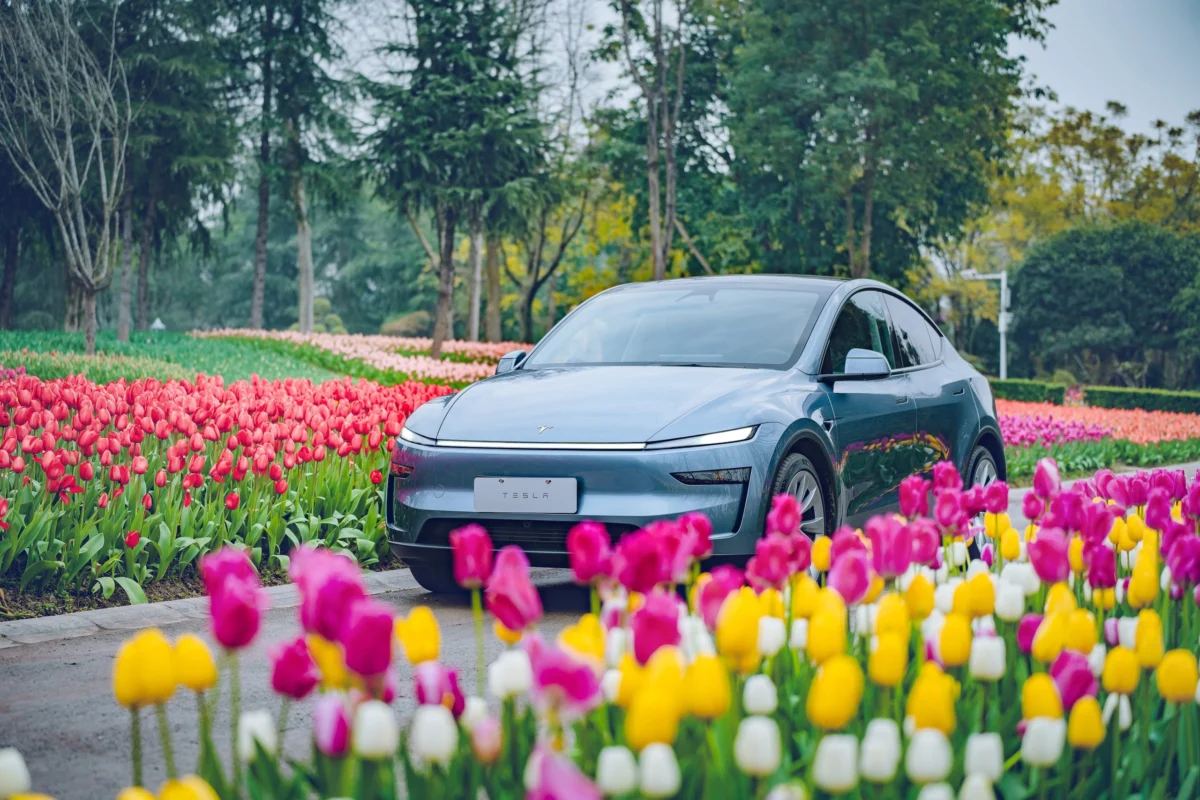
Tesla is aggressively scaling up its strategic foothold in Southeast Asia, officially filing to establish a dedicated corporate entity in Vietnam named Tesla Motors Vietnam Limited Liability Company. This corporate maneuver positions the American electric vehicle pioneer directly inside one of the fastest-growing and most aggressively electrifying mobility markets in the broader Asian region. According to official corporate registration documents highlighted by Reuters, the move underscores Chief Executive Officer Elon Musk’s long-term vision to capture expanding EV market share across developing economies, even as mature domestic markets experience shifting consumer demands and fluctuating sales volumes.
The decision to target Vietnam is underpinned by staggering macroeconomic indicators pointing to rapid consumer adoption of battery-electric vehicles (BEVs). Throughout the first half of the year, Vietnam outpaced its regional neighbors, commanding the highest volume of battery-electric passenger car sales in Southeast Asia with approximately 116,000 units registered. This figure represents an extraordinary year-over-year surge of roughly 71 percent, highlighting a population increasingly receptive to sustainable transportation alternatives. Analysts note that this rapid pivot toward electrification makes Vietnam an indispensable theater for automakers seeking to diversify away from slowing growth curves in North America and parts of Europe.
Despite the booming market, Tesla’s entry into Vietnam will not be without infrastructural hurdles. The nation’s current EV landscape is heavily dominated by domestic champion VinFast, which has built an extensive charging ecosystem known as the V-Green network. Comprising approximately 150,000 charging ports nationwide, the V-Green infrastructure is largely restricted to VinFast vehicles, leaving independent third-party charging options fragmented, unreliable, and scarce for drivers of foreign brands. For Tesla to succeed, establishing a robust, proprietary Supercharger network will likely serve as an operational prerequisite to alleviate range anxiety and build consumer confidence among prospective Vietnamese buyers.
Regional Market Dynamics and Production Realities
Tesla’s broader Asian strategy remains heavily anchored by Gigafactory Shanghai, which continues to function as an indispensable export hub and manufacturing powerhouse. While domestic retail deliveries in China experienced a downward adjustment—falling roughly 12 percent year-over-year through the first eight months of the year—Giga Shanghai’s wholesale export volumes have more than doubled, eclipsing domestic retail sales. The facility routinely ships vehicles to consumer bases across Europe, Japan, South Korea, and Australia. South Korea, in particular, has emerged as an unprecedented bright spot for the brand, with vehicle registrations doubling year-to-date and establishing Tesla as a dominant imported automotive nameplate.

At the product level, the Tesla Model Y maintains its uncontested status as a global sales juggernaut, frequently topping charts as one of the best-selling vehicles worldwide regardless of powertrain. However, the Model 3 sedan has faced softer demand compared to previous years, prompting the company to seek new geographic markets to absorb production capacity. By planting a flag in Vietnam, Tesla aims to replicate its South Korean success, mitigating localized retail slumps by tapping into untapped, high-growth demographic sectors across developing Southeast Asian nations.
Broader Corporate Developments: Antitrust Lawsuits and SpaceX Ventures
Parallel to its automotive expansion in Asia, Tesla’s executive leadership continues to navigate high-stakes corporate and legal maneuvers across its broader ecosystem of companies. In the legal sphere, X Corp and SpaceXAI—two corporate ventures tied to Elon Musk—recently filed motions in the U.S. District Court for the Northern District of Texas to officially dismiss Apple from a high-profile antitrust lawsuit initially filed in August of the previous year. The original complaint targeted both Apple and OpenAI, alleging that Apple’s integration of ChatGPT as the exclusive generative AI chatbot built into iOS bestowed an unfair structural advantage, effectively stifling market competition for alternative models like xAI’s Grok.

While the legal action against Apple has been dropped without public disclosure of a settlement or explicit reasoning, the core litigation remains active against OpenAI as the sole remaining defendant. Legal analysts note that the dismissal follows shifting dynamics in Musk’s relationship with Apple, punctuated by public statements indicating an openness to integrate xAI technology into future iterations of Apple’s ecosystem. This legal pivot coincides with structural consolidation within Musk’s enterprise portfolio, including the integration of xAI under the unified SpaceXAI banner, housing social media, aerospace, and artificial intelligence operations under a single corporate umbrella.
Aerospace Milestones: Completing the O3b mPower Constellation
While terrestrial automotive and legal battles capture headlines, SpaceX continues to execute a relentless launch cadence, recently completing a lesser-known satellite internet network distinct from its flagship Starlink constellation. A Falcon 9 rocket successfully lifted off from Cape Canaveral during an 87-minute operational window, carrying the final three satellites—designated F11, F12, and F13—for SES’s O3b mPower communications network. This mission marks the culmination of a decade-long collaborative effort between SES and Boeing to establish a medium Earth orbit (MEO) broadband architecture.

Unlike Starlink satellites, which orbit in low Earth orbit (LEO) at approximately 340 miles altitude to maximize consumer volume, the O3b mPower constellation operates at roughly 5,000 miles up. This middle tier allows SES to achieve global coverage with a fraction of the spacecraft required by LEO networks—utilizing just 13 total satellites to deliver high-capacity, enterprise-grade connectivity. The system bypasses retail consumers entirely, catering instead to airlines, cruise lines, offshore energy operations, and telecommunications backhaul providers. Notably, maritime partnerships established in recent years allow cruise operators to dynamically combine Starlink’s high-speed throughput with O3b mPower’s steady circuit capacity, a hybrid model solidified by the successful deployment of the final MEO satellites.
The Road Ahead: Roadster Launch Preparations and Future Outlook
Anticipation is simultaneously reaching a fever pitch within the automotive community as Tesla prepares for a long-awaited technological showcase. The company officially teased an upcoming October 1 event date for the next-generation Tesla Roadster, utilizing social media channels to broadcast a launch-pad aesthetic captioned "Go for launch." Formal invitations sent to reservation holders confirmed that the private reveal event will take place in Waco, Texas—situated approximately 90 minutes north of the company’s Austin headquarters and in close proximity to SpaceX’s McGregor rocket test facility.
The upcoming presentation marks a critical milestone in a nine-year saga defined by unprecedented performance metrics and repeated production delays. Originally unveiled as a surprise concept in November 2017, the second-generation Roadster was initially slated for production by 2020 with a baseline price of $200,000, alongside a limited $250,000 Founders Series tier. Over the ensuing years, Musk repeatedly teased an optional "SpaceX Package" incorporating cold-gas thrusters derived from aerospace engineering, a system internally designated code-name A71. Industry analysts anticipate that the October 1 demonstration will finally showcase the track-focused, non-street-legal variant utilizing composite overwrapped pressure vessels to achieve a blistering zero-to-sixty-mph acceleration time of roughly 1.1 seconds under intense gravitational forces.
While executives, including Vice President of Vehicle Engineering Lars Moravy, have confirmed that eventual commercial production will take place at Gigafactory Texas, volume manufacturing is projected to commence in 2027 or 2028. As Tesla simultaneously lays groundwork for international expansion in markets like Vietnam, defends its technological ecosystem through complex litigation, and pushes aerospace boundaries with SpaceX, the company remains firmly focused on diversifying its revenue streams and reinforcing its global technological dominance across multiple industries.