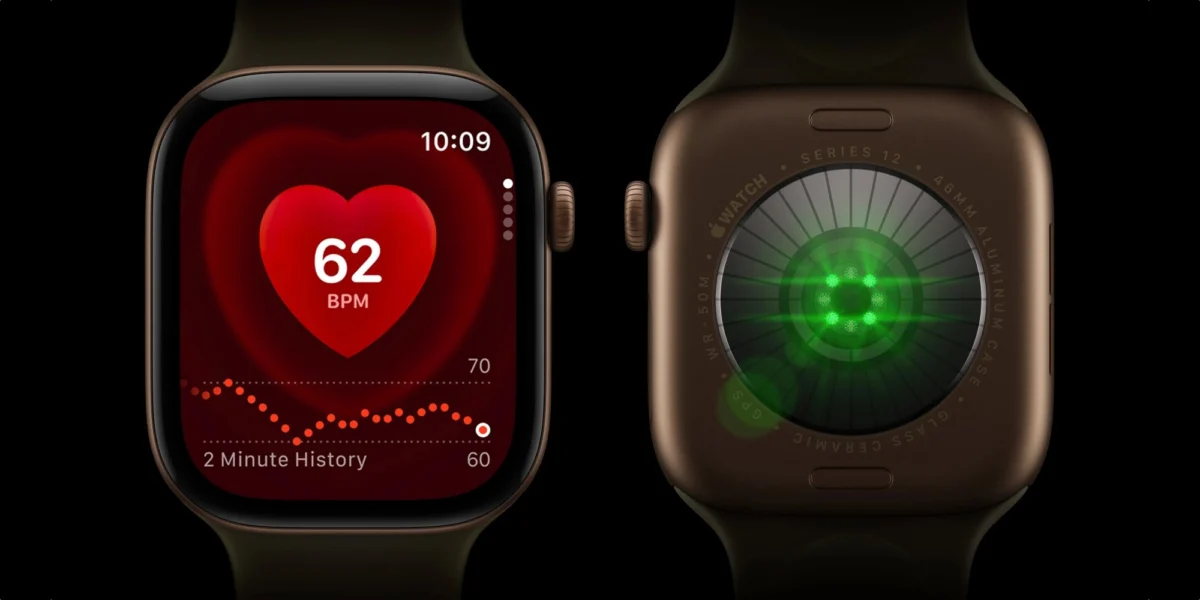
The release of the Apple Watch Series 12 and the ruggedized Apple Watch Ultra 4 marks a significant technological inflection point for Apple’s wearable division. By integrating a sophisticated Health Sensing System, the company aims to move beyond simple activity tracking, positioning its hardware as a clinical-grade tool for daily wellness and recovery analysis. This leap in hardware capability is supported by a comprehensive nine-page research white paper, which claims that the new sensors—comprised of advanced electrical and optical photoplethysmography (PPG) components—outperform the current industry standard for wrist-worn devices.
A Technological Leap in Health Sensing
The core of this upgrade lies in the refined signal processing algorithms that work in tandem with the improved sensor array. For years, optical heart rate monitors have struggled with "cadence lock," a common phenomenon where the sensor inadvertently tracks the rhythmic motion of a runner’s stride rather than the actual pulse. By refining both the hardware and the internal signal-processing logic, Apple asserts it has successfully minimized these errors.
The introduction of the new Health Sensing System also powers two major software additions: the Recovery HRV (Heart Rate Variability) metric and the Readiness app. These features are designed to synthesize data over time, providing users with a holistic view of their physiological state. By analyzing HRV in conjunction with sleep quality and activity intensity, the Apple Watch now offers actionable insights into when a user should push their limits and when they should prioritize rest.
Rigorous Testing Methodology
To substantiate its claims of superiority, Apple conducted an extensive clinical study during the summer of 2026. Testing took place across five specialized sites in the United States and Malaysia, involving 1,460 adult participants. The scale of the study is noteworthy, as it moves away from internal, closed-box testing toward a comparative analysis against established rivals in the market.

The methodology utilized a Polar H10 ECG chest strap as the "gold standard" reference point, a common practice in sports science due to the strap’s high accuracy compared to wrist-based alternatives. Participants wore the Apple Watch Series 12 on one wrist while simultaneously wearing a competitor’s device on the other. The study included a broad spectrum of hardware, ranging from the Garmin Forerunner 970 and Google Pixel Watch 4 to the Huawei Watch 5, Samsung Galaxy Watch 8, and the WHOOP 5. Additionally, the Oura Ring 5 was included to account for finger-based sensing technology.
The testing protocols were designed to mimic high-stress scenarios that typically cause optical sensors to fail. These included:
- High-Intensity Interval Training (HIIT): Rapid heart rate fluctuations.
- Outdoor Running and Treadmill Sprints: Testing for cadence lock.
- Cycling: Monitoring for consistent signal integrity during static wrist positioning.
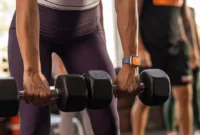
- Strength Training: Accounting for muscle tension and wrist movement.
- Daily Living: Monitoring sedentary activity, meal preparation, and walking to ensure baseline accuracy in non-workout states.
Statistical Findings and Comparative Performance
The results, as reported by Apple, indicate that the Series 12 outperformed competing devices in a clear majority of tests. Across 159 individual activity and measurement comparisons, the Apple Watch achieved statistically superior accuracy in 139 instances.
This is a critical finding for the fitness industry. Historically, wearables have been categorized as "general wellness" devices rather than medical instruments. However, as Apple continues to narrow the gap between the accuracy of the Apple Watch and clinical chest straps, the distinction becomes increasingly blurred. The data suggests that for most users—including high-performance athletes—the need for a secondary chest-worn monitor may be declining, provided the wearable device is fitted correctly.
The Evolution of the Apple Watch Timeline
The journey to this level of sensing began nearly a decade ago.

- 2015: The original Apple Watch introduced basic heart rate monitoring.
- 2018: The Series 4 launched the ECG app, moving the device into the realm of medical-grade heart health.
- 2022-2024: Apple focused heavily on temperature sensing and blood oxygen monitoring.
- 2026: The Series 12 and Ultra 4 focus on the "Readiness" ecosystem, prioritizing data interpretation over raw data collection.
This chronology illustrates a shift in strategy: Apple is no longer just counting steps or tracking heart rate; it is providing a narrative regarding the user’s overall physiological health.
Industry Implications and Market Impact
The release of this study serves as both a marketing catalyst and a challenge to competitors. By explicitly naming Garmin, Google, Samsung, and Oura in its comparative white paper, Apple is signaling a high level of confidence in its latest hardware.
Industry analysts suggest that this "transparency offensive" is designed to solidify the Apple Watch’s dominance in the premium wearable sector. With the Apple Watch Series 12 priced at $399 and the Ultra 4 at $799, Apple is competing in a crowded segment where consumers are increasingly wary of "spec-sheet" marketing. By providing verifiable, peer-reviewed-style data, Apple is attempting to create a moat around its ecosystem, convincing users that the accuracy of their health data is worth the premium price tag.
Conversely, competitors are likely to scrutinize the study’s parameters. In the world of biometric sensing, "accuracy" can be defined in many ways—latency, signal-to-noise ratio, and battery efficiency during continuous monitoring. While Apple’s data is compelling, independent third-party labs will likely conduct their own trials in the coming months to determine if these findings hold up under non-controlled conditions.
The Shift Toward Predictive Health
The ultimate implication of this hardware upgrade is the move toward predictive health. If a device can consistently and accurately measure HRV and resting heart rate, it becomes capable of detecting early signs of illness, overtraining, or chronic stress before the user consciously feels the symptoms.

The Readiness app is the manifestation of this vision. By aggregating the high-fidelity data from the Health Sensing System, Apple is effectively training its users to listen to their bodies through the lens of their devices. For many, this will mean a fundamental change in how they manage their fitness routines, moving from rigid schedules to fluid, data-driven activity plans.
As the Apple Watch Series 12 and Ultra 4 reach consumers on September 18, the industry will be watching to see if the user experience matches the clinical data. If the performance in the real world mirrors the results of the 2026 study, Apple will have successfully set a new benchmark that will require the entire wearable sector to recalibrate their sensor and algorithm development cycles.
For now, the message from Cupertino is clear: the most important metric is not just the heart rate itself, but the reliability and integrity of the data that informs the user’s daily life. Whether this translates to better long-term health outcomes for the average consumer remains to be seen, but the technological foundation for that possibility is now firmly in place.