Traditional retrieval-augmented generation (RAG) frameworks have long served as the backbone for enterprises seeking to harness large language models (LLMs) for internal knowledge management. However, standard text-centric ingestion pipelines face severe limitations when confronted with modern business documents. PDFs laden with embedded data visualizations, scanned engineering blueprints, intricate financial tables, and schematic diagrams systematically break down under conventional text-chunking paradigms. Standard character-based splitting routinely destroys vital table architectures, while completely ignoring non-textual assets. Consequently, downstream language models are forced to formulate responses based on an incomplete, prose-only representation of the source material.
To bridge this architectural gap, developers and data engineers are increasingly turning to multi-modal RAG systems. These advanced pipelines elevate images to first-class retrievable objects, allowing visual artifacts to sit alongside textual content within a unified vector-search framework. Utilizing an API-driven architecture powered by Python, LangChain, the Unstructured library, and OpenAI’s GPT-4o, developers can now parse complex documents, generate rich natural-language summaries for embedded graphics, index these assets within a multi-vector storage system, and query them with advanced visual-language models. This comprehensive guide details the foundational concepts, technical prerequisites, and step-by-step implementation required to build a production-grade multi-modal RAG pipeline.
The Evolution of RAG: Moving Beyond Plain Text
The limitations of text-only RAG systems stem from their fundamental data ingestion strategy. When a standard parser ingests a document, it extracts character strings sequentially, stripping away structural layout cues, spatial relationships, and non-textual elements. In environments heavily reliant on data-dense collateral—such as quarterly financial disclosures, technical patent filings, academic research papers, and medical journals—this approach results in critical data loss. Important figures, such as a revenue trajectory chart in Q3 or a structural diagram in an engineering specification, are omitted entirely from the retrieval index.
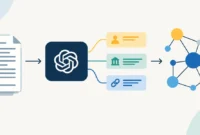
Multi-modal RAG resolves this systemic deficiency by adopting a dual-track processing model. Text elements are tokenized and embedded as standard prose, while embedded images are isolated, analyzed by a vision-language model, and mapped to searchable textual proxies. During retrieval, both modalities are evaluated simultaneously against user queries. If the relevance score points to a visual asset, the system fetches the raw image file and injects it directly into the context window of a vision-capable LLM, such as GPT-4o. This capability enables modern AI agents to synthesize answers derived from both the narrative text and the visual evidence simultaneously.
Technical Prerequisites and Environment Configuration
Implementing an API-driven multi-modal RAG pipeline requires a properly configured Python environment equipped with specific document-processing dependencies. Unlike local PyTorch-heavy architectures optimized for specialized hardware accelerators, the approach detailed here utilizes cloud APIs, making it highly adaptable for standard business computing infrastructure.
Before running any code, developers must ensure that necessary Python packages and system-level utilities are installed. Specifically, the unstructured library relies on poppler-utils to handle PDF rendering and image extraction.
pip install langchain langchain-openai unstructured[pdf] chromadb pillow
apt-get install -y poppler-utils
With the required libraries installed, the OpenAI API key must be securely configured within the runtime environment:
import os

os.environ["OPENAI_API_KEY"] = "your-api-key-here"
The execution architecture of the pipeline is divided into four distinct phases: document parsing, image summarization, multi-vector storage, and multi-modal retrieval. Each stage plays a critical role in ensuring that visual and textual data are accurately aligned, indexed, and queried.
Step 1: Parsing Complex Documents into Text and Image Elements
The initial phase involves deconstructing a complex PDF into its constituent elements. Rather than treating the document as a flat stream of text, the unstructured library classifies each region of the document layout, cleanly separating narrative paragraphs, analytical tables, and embedded raster images.
from unstructured.partition.pdf import partition_pdf

raw_elements = partition_pdf(
    filename="report.pdf",
    extract_image_block_types=["Image"],
    extract_image_block_output_dir="./extracted_images",
    infer_table_structure=True,
    chunking_strategy="by_title",
    max_characters=4000,
)
In this configuration, extract_image_block_output_dir designates the local filesystem directory where extracted images are saved, while extract_image_block_types specifies which visual element types should be isolated. Simultaneously, enabling infer_table_structure=True ensures that tabular data retains its logical layout integrity rather than degrading into unformatted strings.
Once the partitioning process concludes, the raw elements must be categorized and segregated into distinct text and image lists for downstream processing:
text_elements = []
image_paths = []

for el in raw_elements:
    if "CompositeElement" in str(type(el)):
        text_elements.append(str(el))
    elif "Image" in str(type(el)):
        image_paths.append(el.metadata.image_path)

print(f"Extracted len(text_elements) text chunks, len(image_paths) images")
This sorting loop isolates composite text blocks while preserving the exact filesystem paths of the extracted images, preparing them for the summarization phase.
Step 2: Generating Searchable Summaries for Visual Assets
Standard vector databases cannot index raw image files directly via text-embedding models. Consequently, every extracted image must be paired with a robust textual representation that captures its semantic content in a manner optimized for natural-language vector search. This is achieved by passing each extracted image to GPT-4o alongside a targeted prompt designed to extract dense descriptive metadata.
import base64
from openai import OpenAI

client = OpenAI()

def summarize_image(image_path):
    with open(image_path, "rb") as f:
        image_data = base64.b64encode(f.read()).decode("utf-8")

    response = client.chat.completions.create(
        model="gpt-4o",
        messages=[

                "role": "user",
                "content": [

                        "type": "image_url",
                        "image_url":
                            "url": f"data:image/png;base64,image_data"
                        ,
                    ,

                        "type": "text",
                        "text": "Describe this image in detail for use in a search system.",
                    ,
                ],

        ],
    )
    return response.choices[0].message.content

image_summaries = [summarize_image(p) for p in image_paths]
Each generated summary functions as a searchable proxy for its corresponding source image. While the raw image file remains stored on disk, its text-based description is embedded into the vector space. It is worth noting operational considerations regarding API costs: processing large volumes of documents containing numerous decorative logos or minor graphic icons can significantly increase API expenditures. Production implementations should incorporate filtering logic to exclude images below specific dimension or file-size thresholds prior to invoking the summarization routine.
Step 3: Constructing a Multi-Vector Storage Architecture
Standard RAG architectures maintain a one-to-one relationship between chunks of text and their vector embeddings. Multi-modal RAG, however, requires a more sophisticated storage topology. A MultiVectorRetriever manages two distinct repositories simultaneously: a vector store containing the embedded text chunks and image summaries for similarity matching, and an underlying document store holding the raw source content—whether prose or high-resolution images—linked via unique identifiers.
import uuid
from langchain_chroma import Chroma
from langchain_core.documents import Document
from langchain.retrievers.multi_vector import MultiVectorRetriever
from langchain_openai import OpenAIEmbeddings
from langchain.storage import InMemoryStore

embeddings = OpenAIEmbeddings(model="text-embedding-3-small")
vectorstore = Chroma(embedding_function=embeddings)
docstore = InMemoryStore()
retriever = MultiVectorRetriever(
    vectorstore=vectorstore, docstore=docstore, id_key="doc_id"
)

text_ids = [str(uuid.uuid4()) for _ in text_elements]
image_ids = [str(uuid.uuid4()) for _ in image_summaries]
With the storage engines initialized and unique UUIDs generated for each element, both the vector index and the document store can be populated:
retriever.vectorstore.add_documents(
    [
        Document(page_content=t, metadata="doc_id": i)
        for t, i in zip(text_elements + image_summaries, text_ids + image_ids)
    ]
)

raw_docs = [
    Document(page_content=t, metadata="type": "text") for t in text_elements
] + [
    Document(page_content=p, metadata="type": "image") for p in image_paths
]

retriever.docstore.mset(list(zip(text_ids + image_ids, raw_docs)))
By wrapping the raw content in LangChain Document objects equipped with explicit type metadata, the subsequent retrieval and routing logic remains clean and deterministic. Each vector entry points directly to its source asset via shared identification keys.
Step 4: Executing Queries with Multi-Modal Retrieval
When a user submits a natural-language query to the pipeline, the system embeds the question and searches for semantic proximity across the combined index of text chunks and image summaries. If a retrieved match corresponds to an image asset, the raw file is loaded from disk, encoded in Base64, and transmitted to GPT-4o alongside any relevant textual context.
def query_pipeline(question):
    docs = retriever.invoke(question)
    text_content, image_content = [], []

    for doc in docs:
        if doc.metadata.get("type") == "image":
            with open(doc.page_content, "rb") as f:
                img_b64 = base64.b64encode(f.read()).decode("utf-8")
            image_content.append(

                    "type": "image_url",
                    "image_url": "url": f"data:image/png;base64,img_b64",

            )
        else:
            text_content.append("type": "text", "text": doc.page_content)

    response = client.chat.completions.create(
        model="gpt-4o",
        messages=[

                "role": "user",
                "content": text_content
                + image_content
                + ["type": "text", "text": question],

        ],
    )
    return response.choices[0].message.content

answer = query_pipeline("What does the revenue chart show for Q3?")
print(answer)
This routing mechanism ensures that visual elements are dynamically reinstated into the prompt context only when deemed relevant by the retrieval engine. GPT-4o then performs multi-modal reasoning across both data modalities, delivering comprehensive, grounded responses to complex user inquiries.
Broader Industry Implications and Future Enhancements
The implementation of multi-modal RAG pipelines marks a significant milestone in enterprise document intelligence. By overcoming the historical dichotomy between text processing and computer vision, organizations can finally automate the analysis of complex, highly visual documentation without manual human intervention. Sectors such as financial services, legal compliance, engineering, and academic research stand to benefit immensely from systems capable of cross-referencing narrative statements with embedded graphical evidence.
Despite its robust capabilities, the architecture can be further optimized for production deployments. Future iterations of this workflow often incorporate advanced document re-ranking mechanisms—such as cross-encoder models—to refine retrieval precision and minimize hallucinations. Furthermore, persisting vector stores like Chroma to disk ensures operational continuity across server restarts, while emerging end-to-end vision-language indexing strategies, such as ColPali, point toward a future where intermediate parsing steps may be bypassed entirely in favor of native visual document embedding.