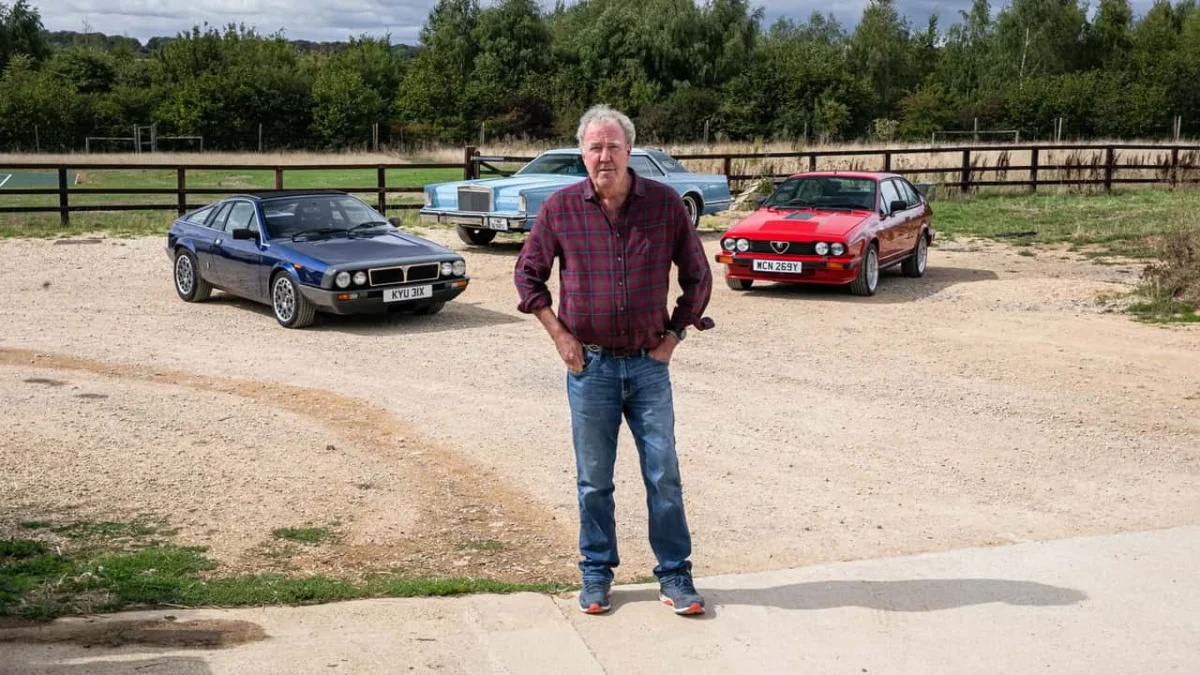
Automotive enthusiast and television personality Jeremy Clarkson has announced that he will be auctioning three significant vehicles from his tenure on The Grand Tour. The collection, which features prominently in the history of the popular Amazon Prime series, will be offered through Iconic Auctioneers during the prestigious The Iconic Sale at the NEC Classic Motor Show in Birmingham, England. The auction is scheduled to take place on November 14 and 15, offering collectors and fans of the show a rare opportunity to acquire pieces of automotive broadcast history.
The sale is noteworthy not only for the celebrity provenance of the vehicles but also for the nature of the transaction: all three lots are being offered without a reserve. This approach ensures that the vehicles will be sold to the highest bidder, regardless of the final price, effectively bypassing traditional price floors and allowing market demand to dictate the ultimate valuation of these television-worn machines.
The Significance of the Trio
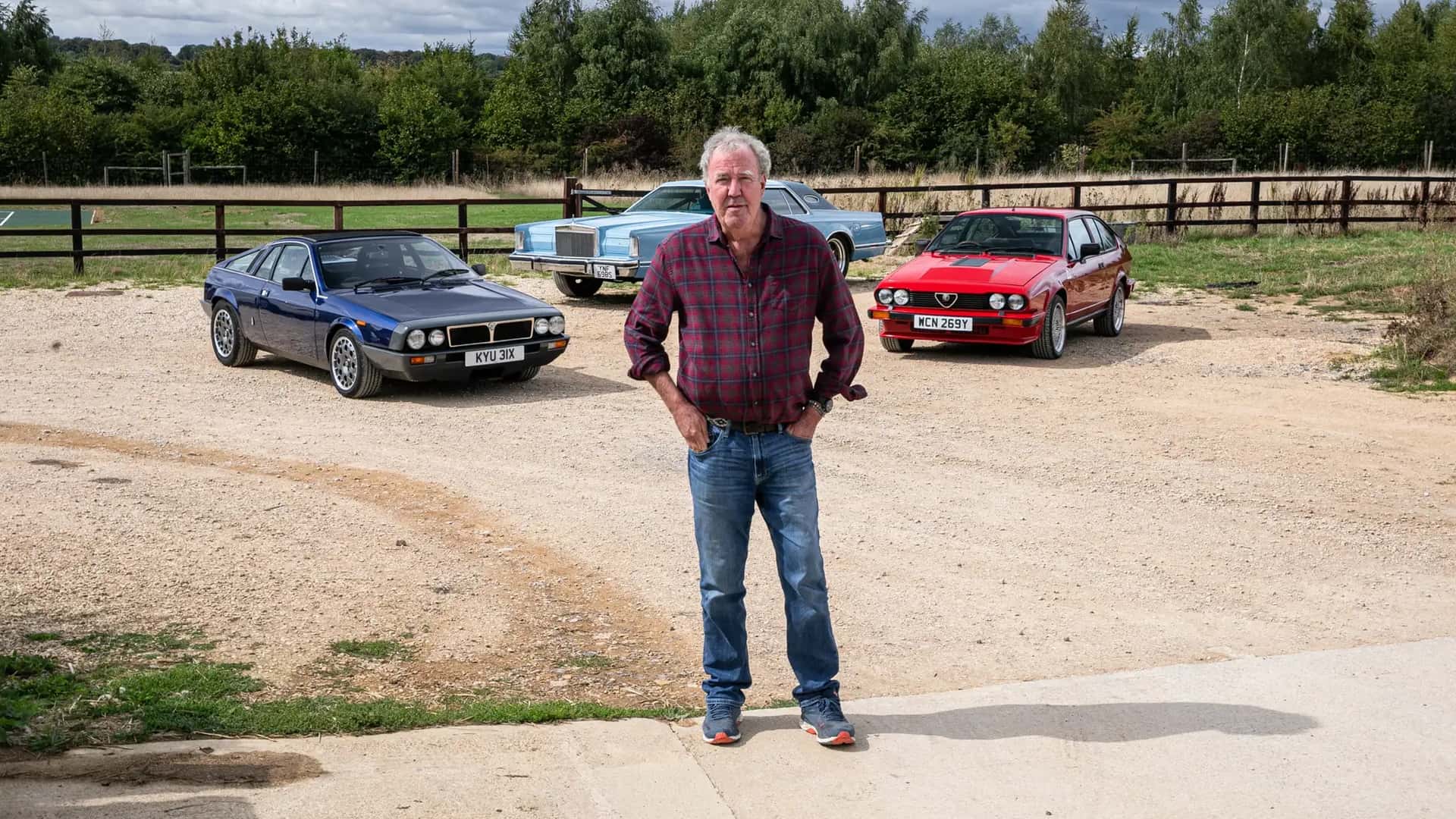
The three vehicles—a 1982 Lancia Montecarlo Spider, a 1983 Alfa Romeo GTV6, and a 1978 Lincoln Continental Mark V—each represent a distinct chapter in the high-stakes, often chaotic production history of The Grand Tour. While Clarkson has noted in recent statements that his busy schedule on Diddly Squat Farm and his various professional commitments leave him little time to properly maintain or enjoy these specialized cars, industry observers suggest the liquidation is also tied to the evolving narrative of his television career. Teasers for the upcoming season of the hit series Clarkson’s Farm have hinted that the rationale behind this automotive downsizing will be addressed directly on camera, adding a layer of meta-narrative to the auction process.
The Lancia Montecarlo Spider: A Farewell to an Era
The centerpiece of the auction is undoubtedly the 1982 Lancia Montecarlo Spider. This vehicle holds a profound emotional weight for fans of the trio—Clarkson, Richard Hammond, and James May—as it was the car utilized by Clarkson in The Grand Tour Presents: One for the Road. This special, filmed across the landscapes of Zimbabwe and Botswana, served as the final collaborative project for the presenters, effectively closing a chapter of automotive television that spanned over two decades.
The Lancia was not merely a backdrop; it was a character in the final journey. To ensure it could withstand the rigors of filming in harsh African environments, the car underwent significant modifications. These included the integration of Ferrari 308 rear light clusters, a quad-exhaust system, and a robust set of Lancia Delta Integrale wheels. The front end was reconfigured with a custom grille and lighting setup to improve durability. Inside, the original leather interior was stripped in favor of more practical cloth seating, and the steering wheel was swapped for a simplified Alcantara-wrapped unit, removing complex buttons that could fail in the extreme heat. Following the conclusion of filming, Clarkson opted to retain the vehicle, adding it to his private collection rather than returning it to the production company. The car has since undergone a comprehensive refurbishment to return it to reliable running order.
The Alfa Romeo GTV6: A Return to Form
The second vehicle, a 1983 Alfa Romeo GTV6, represents a more sentimental acquisition for Clarkson. Featured in the 2019 episode titled "Well Aged Scotch," the car was driven by the host across the iconic North Coast 500 route in Scotland. The vehicle, which has approximately 28,315 miles on the odometer, is powered by Alfa Romeo’s legendary 2.5-liter Busso V6 engine—a power plant frequently cited by Clarkson as one of his personal favorites for its acoustic character and linear power delivery.
The history of this specific GTV6 is particularly interesting: Clarkson had originally owned the car years prior but sold it, only to experience "seller’s remorse." He eventually tracked down and reacquired the vehicle, adding it to his collection before it was featured in the Scottish special. Its presence in the auction signals a second departure for a car that has already come full circle in the presenter’s life.
The Lincoln Continental: A Study in Excess
Rounding out the collection is the 1978 Lincoln Continental Mark V, a vehicle of immense scale that became the focal point of the Lochdown special. In this episode, the presenters explored Scotland in a fleet of massive American luxury cruisers. The Lincoln is powered by a 6.6-liter V8 engine and remains famous for the experimental, if ultimately ineffective, nitrous-injection system installed for the production.
According to auction documentation, the nitrous hardware remains installed in the engine bay, serving as a testament to the show’s penchant for "big idea" modifications that often prioritize entertainment value over mechanical efficiency. The car retains its original period-accurate features, including the Cartier clock that was highlighted during the filming, and notably, a set of Scottish bagpipes still stowed in the trunk, preserving a piece of the show’s quirky, unscripted humor.
Auction Dynamics and Market Implications
The decision to list these vehicles at the NEC Classic Motor Show is a strategic one. The event is one of the premier gatherings for classic car enthusiasts in the United Kingdom, attracting thousands of collectors, historians, and casual fans. By utilizing an auction house like Iconic Auctioneers, Clarkson benefits from a professional, transparent process that validates the provenance of the vehicles.
The absence of a reserve price is a bold move that is expected to generate significant buzz. In the world of celebrity memorabilia, provenance is often the primary driver of value. While a standard 1982 Lancia Montecarlo or a 1978 Lincoln Continental might have a predictable market range, the "celebrity premium" associated with their appearance in a global television phenomenon is difficult to quantify.
Economically, these cars represent "investments in experience." For a collector, the value lies not just in the mechanical condition of the vehicle, but in the ability to own a physical piece of the cultural zeitgeist that The Grand Tour defined. With no reserve, the auction creates a competitive environment that could lead to bidding wars, particularly for the Lancia, given its status as the "final car" of the original trio’s era.
Broader Context of the Television Landscape
The retirement of these cars is symbolic of the broader shift in the automotive media landscape. The end of the Clarkson, Hammond, and May era marks the conclusion of a format that emphasized grand, cinematic storytelling, large-budget travelogues, and a distinctly irreverent tone. As new hosts prepare to take the mantle, the disposal of these vehicles feels like a final administrative step in winding down a legendary production company.
Industry analysts suggest that the sale will be closely watched by auction houses worldwide. Celebrity-owned cars, particularly those featured in high-profile media, have historically performed well at auction. However, this collection is distinct because it includes vehicles that were intentionally "messed with" for the sake of entertainment, rather than being preserved as factory-spec collector pieces. This adds a unique provenance that will likely appeal to a specific subset of fans who value the show’s spirit of mechanical improvisation.
Looking Ahead
The NEC Classic Motor Show, scheduled for mid-November, will serve as a final farewell for these machines. For Jeremy Clarkson, the sale represents a clearing of the garage—both literal and metaphorical. As he continues to pivot his career toward agricultural endeavors and other television projects, the cars that defined his mid-career success are moving on to new custodians.
Whether the Lincoln’s nitrous system is ever tested again, or the Lancia returns to the road for leisurely weekend drives, remains to be seen. What is certain is that the highest bidders will secure more than just transportation; they will own a tangible artifact from one of the most successful and influential automotive television programs in history. As the hammer falls in Birmingham this November, the legacy of these three cars will transition from the screen to the private collections of the public, marking the end of a very specific, and very loud, chapter in automotive history.