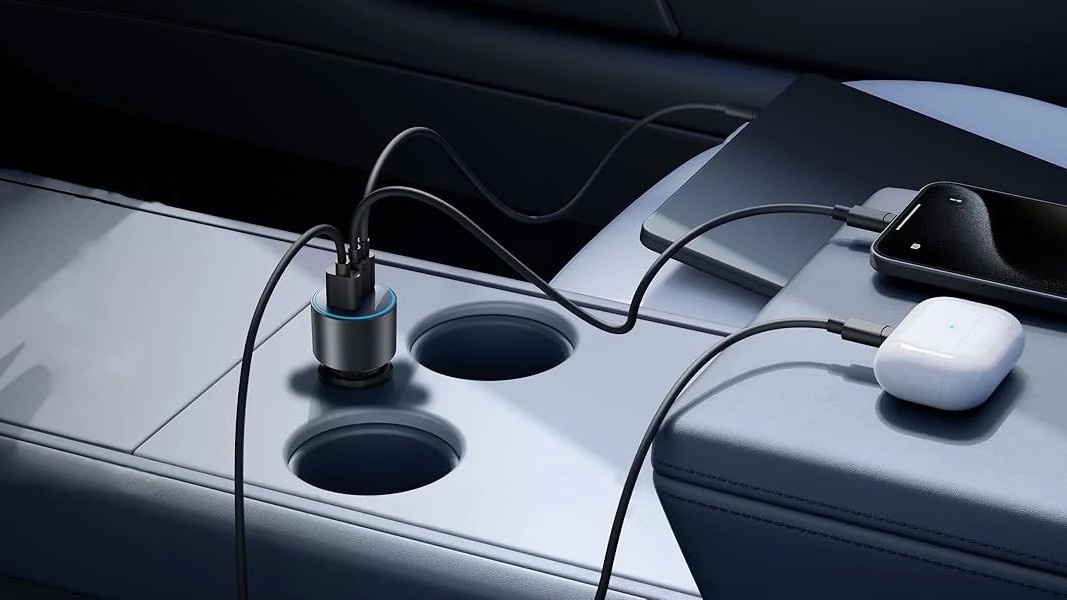
The evolution of automotive travel has fundamentally transformed how passengers interact with portable electronics. What was once a journey isolated from productivity or heavy multimedia consumption is now an extension of the modern office or entertainment hub. Commuters, road-trippers, and mobile professionals increasingly rely on laptops, tablets, high-end smartphones, and portable gaming consoles while in transit. This shift in consumer behavior has rendered legacy 12W and 18W auxiliary power outlets obsolete. Modern devices require robust, high-wattage power delivery systems capable of sustaining demanding electrical loads without thermal degradation or charging bottlenecks.
While wireless car chargers—particularly those featuring Qi2 magnetic alignment—dominate the market for daily urban commutes by eliminating the hassle of manual cable management, long-haul travel demands a vastly different engineering approach. Wired high-capacity chargers remain the gold standard for extended journeys, offering rapid charging speeds and the amperage necessary to simultaneously replenish multiple heavy-duty devices. For travelers transporting laptops, MacBooks, or high-performance Chromebooks, an in-car power source must output a minimum of 60W to 65W to even initiate charging under operational load. Consequently, the industry has pivoted toward multi-port chargers exceeding 100W, engineered by top-tier accessory manufacturers such as Anker, Baseus, and UGREEN.
The Technological Shift in Automotive Power Delivery
The transition toward ultra-high-wattage vehicular chargers stems from advancements in semiconductor technology, specifically the integration of Gallium Nitride (GaN) and advanced proprietary smart chips. Historically, stepping down the 12-volt direct current (DC) from a vehicle’s auxiliary power outlet to high-wattage USB Power Delivery (PD) profiles resulted in excessive heat generation and bulky hardware configurations. Modern engineering has successfully miniaturized these circuits, allowing manufacturers to pack upwards of 160W to 240W of total output into form factors barely larger than standard cigarette lighter adapters.
Industry analysts note that consumer expectations have shifted dramatically over the past three years. The proliferation of universal USB-C standards across laptops, tablets, and smartphones has standardized power requirements, encouraging accessory makers to design unified charging ecosystems. Rather than carrying individual dedicated adapters for every device, users now demand centralized hubs capable of intelligent power distribution. This capability is managed by internal microprocessors that dynamically allocate wattage based on the active power draw of each connected device, ensuring that a high-drain laptop receives priority while smaller accessories like smartphones scale their intake accordingly.
Anker Nano Car Charger (167.5W, 3 Ports): Engineering for Efficiency
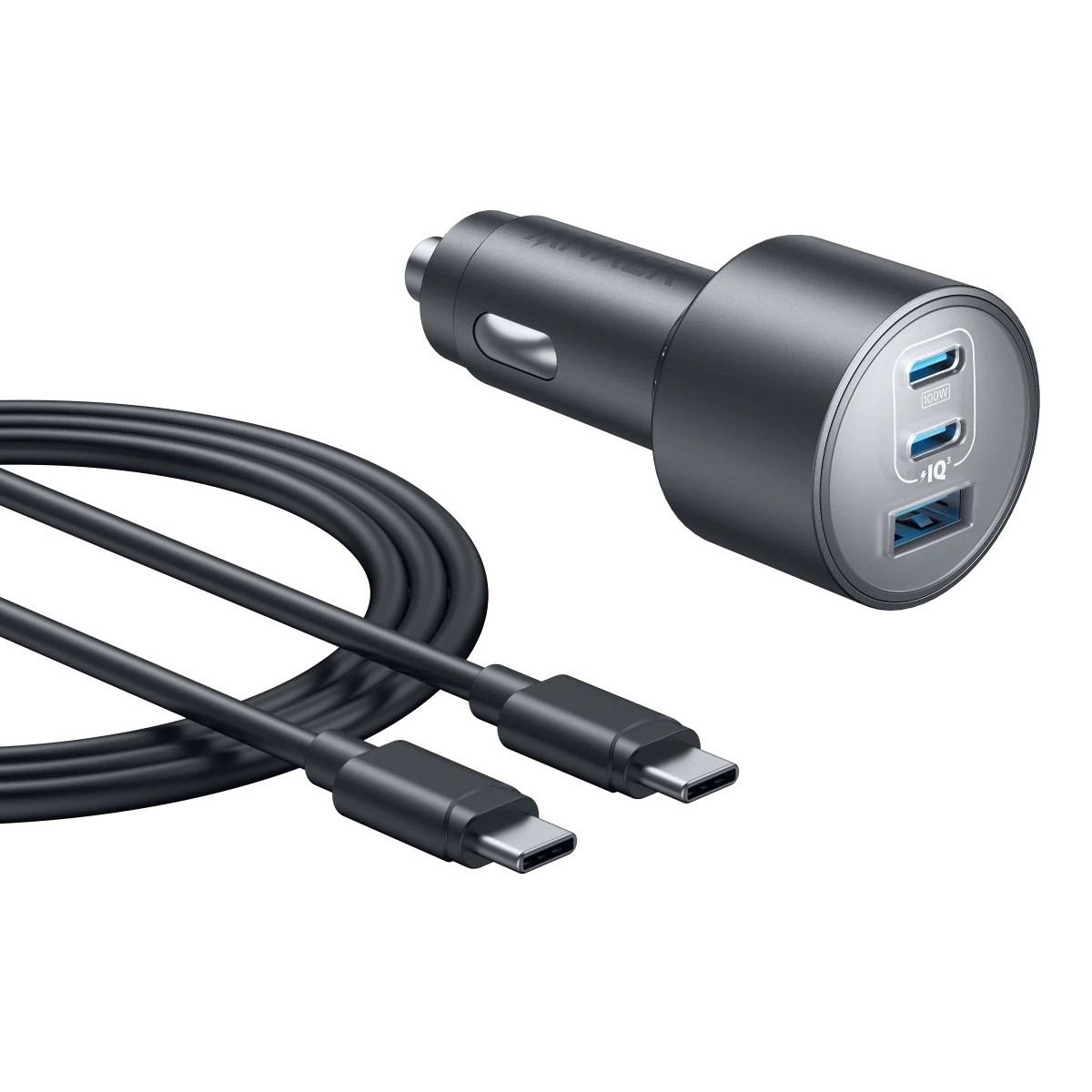
Anker remains a dominant force in the consumer charging market, consistently delivering robust hardware backed by rigorous safety protocols. The Anker Nano Car Charger (167.5W, 3 Ports) exemplifies the brand’s focus on high-density power delivery within a compact footprint. Priced competitively at an MSRP of $53.99—though frequently discounted closer to $37.79 through major online retailers—this tri-ported unit bridges the gap between portability and raw electrical output.
The device features a versatile port array consisting of a single USB-A port and two USB-C ports, combining for a total rated output of 167.5W. Power distribution is handled hierarchically: the primary USB-C port is capable of delivering a full 100W, sufficient to charge power-hungry mobile workstations like a 16-inch MacBook Pro at near-maximum speed. The secondary USB-C port outputs a respectable 45W, ideal for tablets or secondary devices, while the legacy USB-A port provides up to 22.5W for smaller accessories or older hardware.
To mitigate safety concerns inherent to high-wattage conversion inside a confined vehicular dashboard slot, Anker equips the unit with its proprietary ActiveShield thermal monitoring system. This smart chip actively regulates voltage fluctuations and monitors operating temperatures in real-time, throttling output if thermal thresholds are exceeded. Furthermore, the package includes a 3.3-foot USB-C to USB-C cable rated for high-speed data and power transfer, supported by an 18-month manufacturer warranty.
Baseus PrimeTrip VR2 Max 240W: Maximizing Output and Cable Management
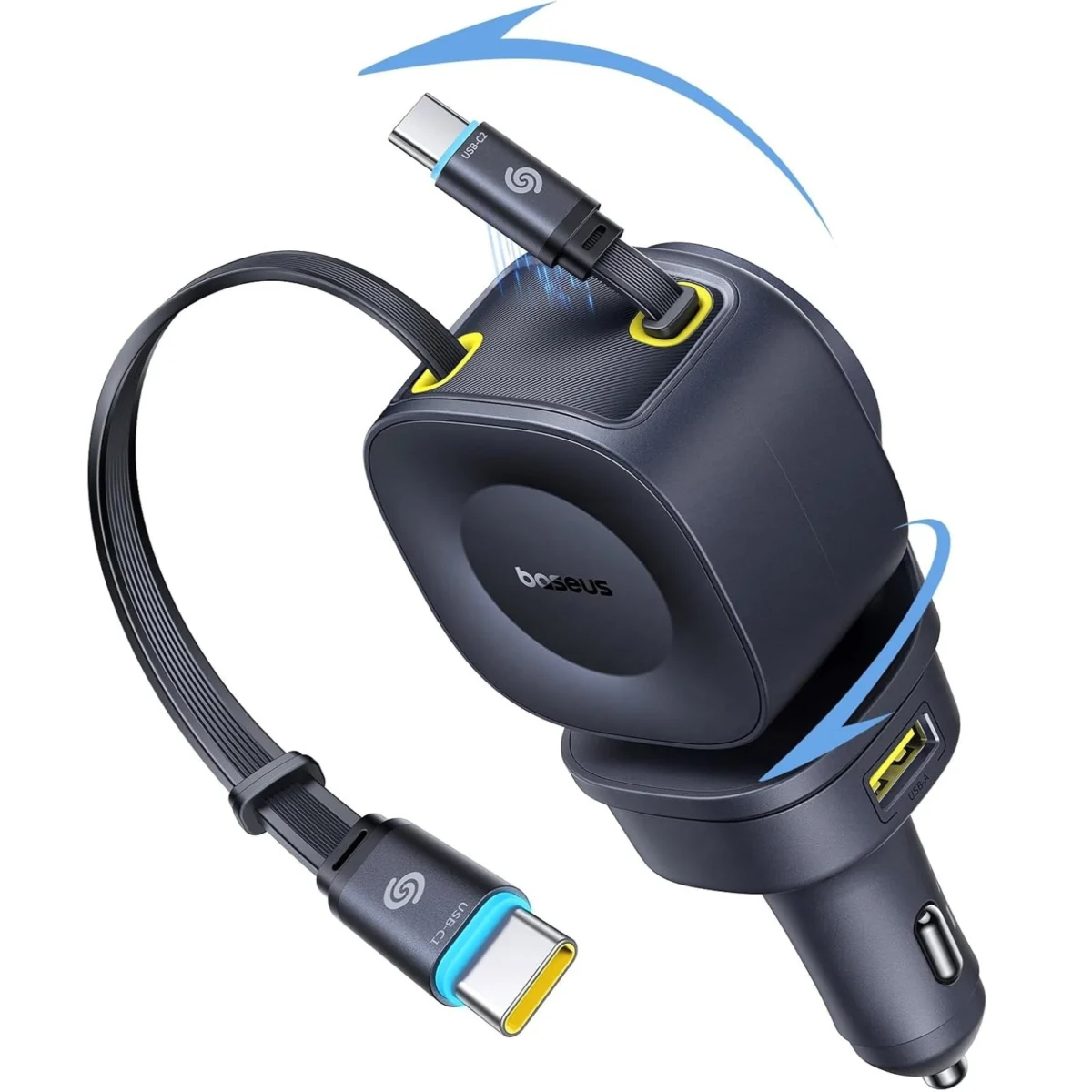
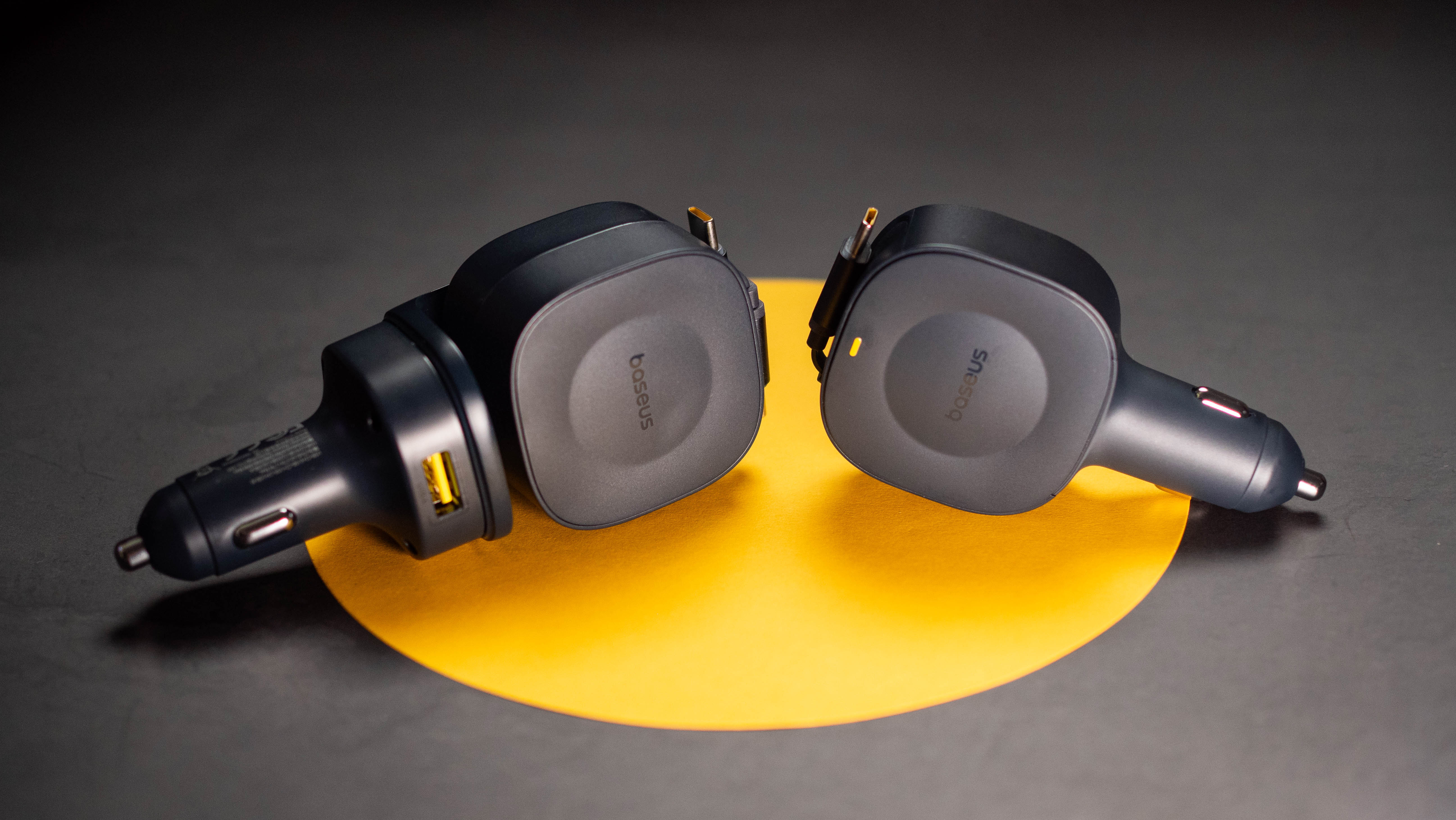
For consumers plagued by dashboard clutter and the logistical nightmare of loose cables tangling around gear shifters, Baseus has introduced a radical design philosophy with the PrimeTrip VR2 Max 240W. Jointly praised by hardware reviewers and industry experts for its innovative mechanical engineering, this charger commands an MSRP of $59.99 while offering frequent promotional discounts of up to 40%.
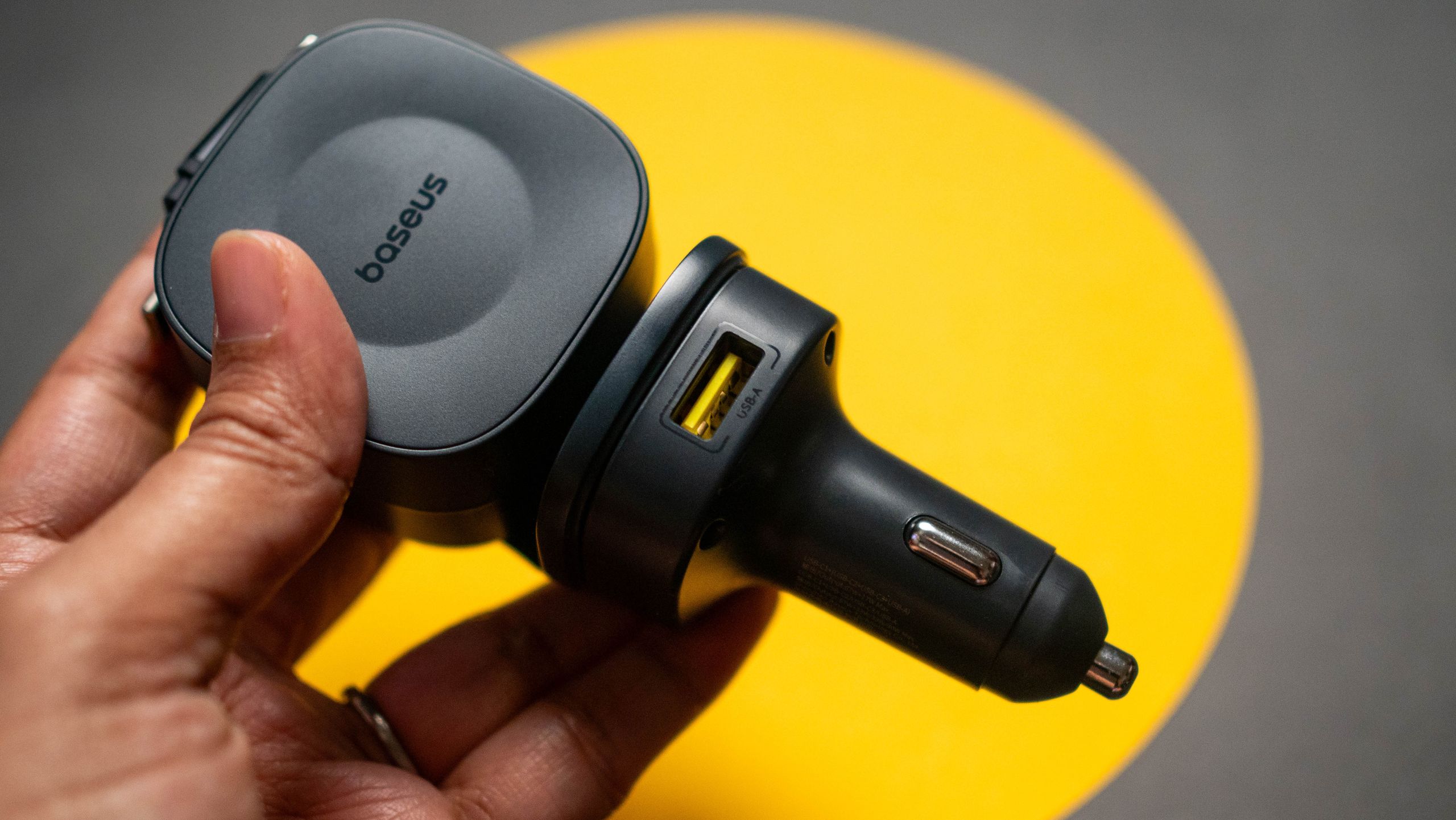
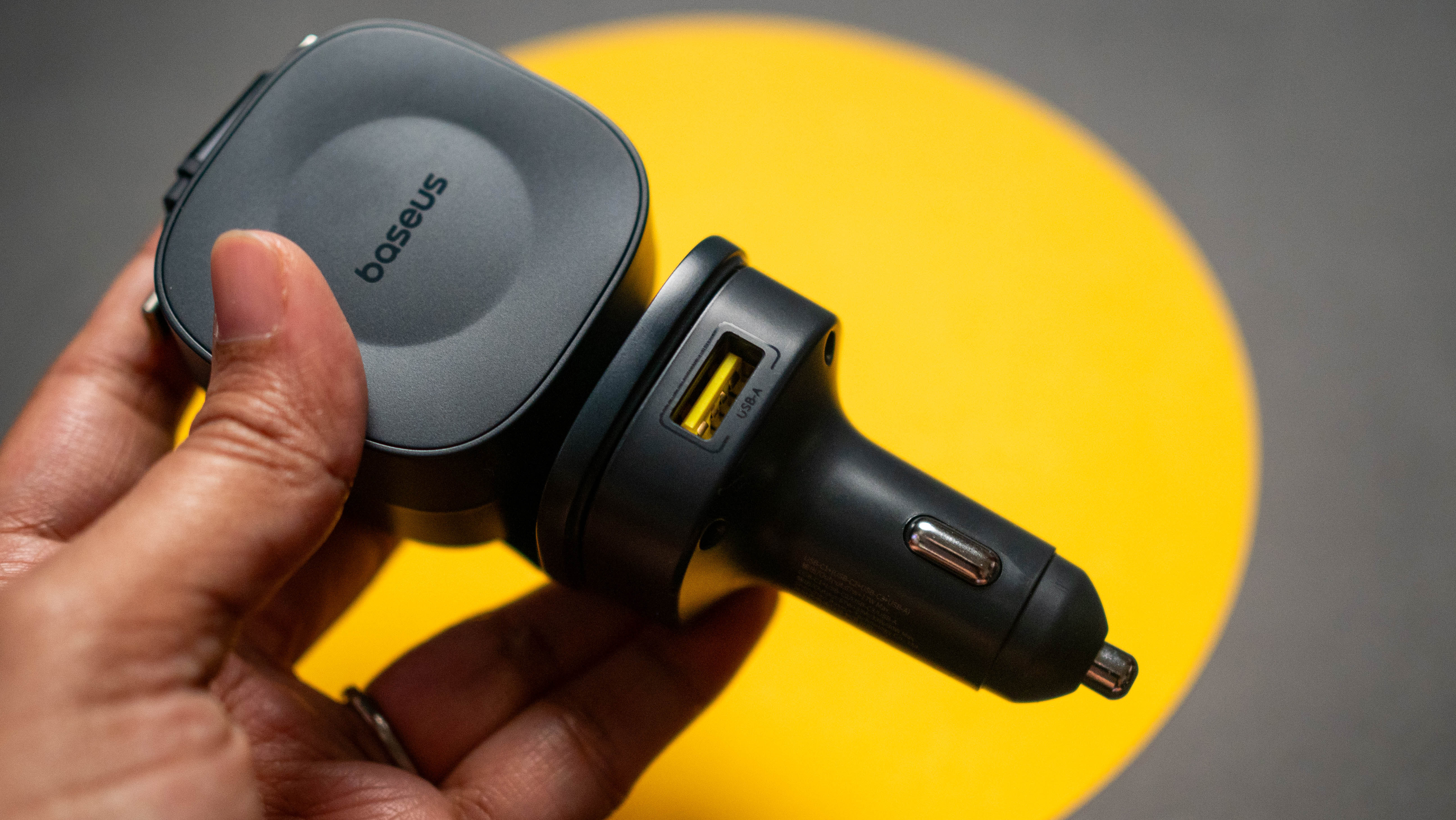
The defining characteristic of the PrimeTrip VR2 Max is its integration of physical infrastructure directly into the charging housing. The top assembly incorporates two built-in, 31.5-inch retractable USB-C cables, each capable of delivering up to 105W of power. This eliminates the need for users to supply their own loose cords for front-seat or rear-seat passengers. Complementing these retractable lines are an additional 33W USB-C port and a 30W USB-A port located in the base, allowing the unit to manage up to four devices simultaneously.
Usability and spatial ergonomics were primary considerations during its development. The upper section of the charger features a multi-directional adjustment mechanism supporting up to 450 degrees of rotation, accommodating awkward auxiliary socket placements common in various vehicle interiors. Safety is maintained via a comprehensive seven-layer protection suite, which includes flame-retardant outer shell construction, over-current protection, short-circuit prevention, and advanced dynamic temperature regulation managed by an onboard intelligent microprocessor.
UGREEN Nexode Car Charger 145W: Budget-Conscious Reliability
UGREEN has rapidly cemented its reputation within the mobile accessories sector by delivering premium build quality at accessible price points. While the brand’s Nexode GaN wall chargers have achieved widespread acclaim, its vehicular lineup—specifically the UGREEN Nexode Car Charger 145W—brings the same design rigor to the automotive space.
Retailing at $49.99 and frequently found on promotional sale for around $34.99, the Nexode 145W represents one of the most cost-effective entry points into high-capacity multi-port charging. The unit adopts a hybrid approach to cable management, featuring a single built-in retractable USB-C cable rated at 60W, paired with a stationary port layout consisting of a dedicated 100W USB-C port, a 30W USB-C port, and a 30W USB-A port.
This configuration allows users to power a high-performance laptop via the primary 100W port while simultaneously utilizing the retractable cord and secondary ports for passengers’ phones or handheld gaming consoles. UGREEN constructs the chassis using certified fireproof polymers and incorporates multi-stage surge protection alongside real-time temperature monitoring to ensure hardware longevity. The balance of aggressive pricing, high-wattage availability, and integrated physical cable solutions makes the Nexode 145W a compelling option for budget-conscious consumers who refuse to compromise on performance.
Industry Implications and Consumer Guidance
The proliferation of chargers exceeding the 100W threshold signals a permanent shift in how automotive accessories are evaluated. As mobile computing hardware transitions toward standardized USB-C Power Delivery protocols, the automobile is no longer viewed merely as a transit medium, but as an active node in a connected professional’s workflow.
When selecting a high-capacity vehicular charger, consumers must evaluate their specific usage patterns. For solo travelers prioritizing raw laptop-charging capability without integrated mechanical reels, compact bricks like the Anker Nano 167.5W offer maximum power density. Conversely, drivers frequently transporting multiple passengers or seeking to eradicate interior cable clutter will find superior utility in the retractable solutions provided by the Baseus PrimeTrip VR2 Max and the UGREEN Nexode 145W.
Regardless of the chosen brand, market analysts emphasize the importance of purchasing certified accessories equipped with active thermal management and multi-layer safety protections. As electrical loads in vehicles increase, utilizing sub-standard charging hardware introduces significant risks to both the mobile device batteries and the vehicle’s internal electrical fusing systems. By investing in reputable, high-tier hardware from established manufacturers, consumers can ensure reliable, high-speed power delivery across countless miles of travel.