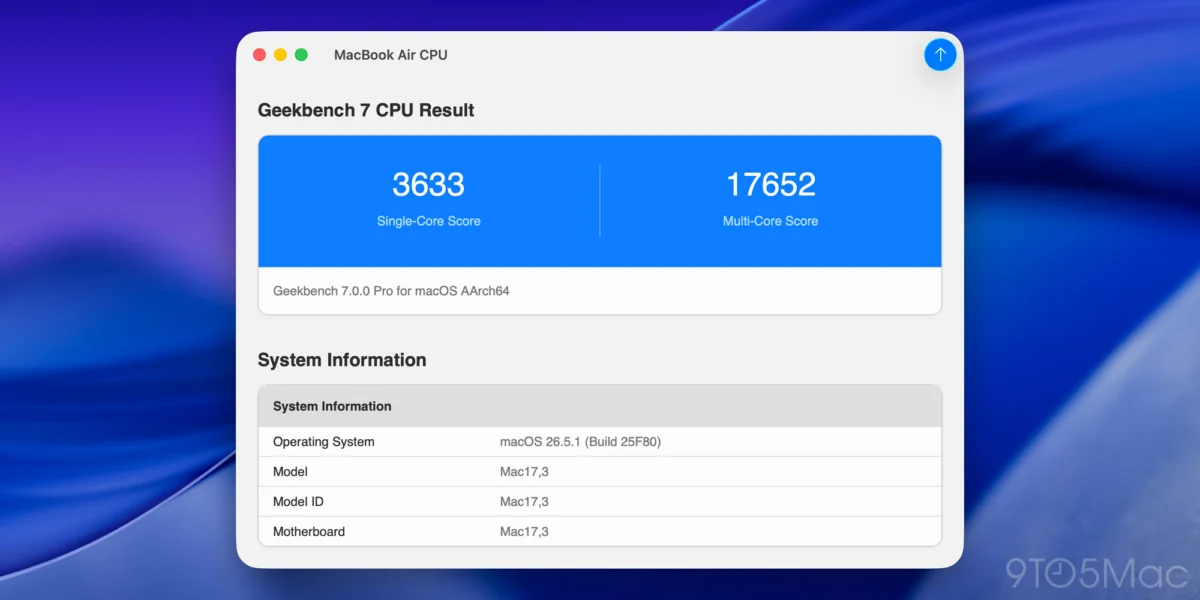
Primate Labs today announced the immediate availability of Geekbench 7, its latest iteration of the widely recognized cross-platform benchmarking tool. This release marks a significant evolution in how device performance is measured, promising benchmarks that more accurately reflect contemporary usage scenarios, particularly across everyday tasks, intensive gaming, and the burgeoning field of Artificial Intelligence (AI) workloads. The update comes three years after the introduction of Geekbench 6, a period characterized by unprecedented advancements in computational demands and the integration of sophisticated AI capabilities into consumer devices.
The Genesis of Geekbench 7: Adapting to a New Technological Paradigm
The landscape of personal computing has undergone a profound transformation in recent years, driven largely by the proliferation of AI and Machine Learning (ML) technologies. When Primate Labs released Geekbench 6 in early 2023, the company acknowledged that "a lot had changed in the tech world in the past three years," with AI and ML rapidly becoming "ubiquitous in general and mobile applications." This sentiment has only intensified in the intervening period. Today, on-device AI inference, advanced image processing, high-fidelity video editing, and increasingly demanding gaming experiences are no longer niche applications but core functionalities expected by users. Consequently, the performance of both Central Processing Units (CPUs) and Graphics Processing Units (GPUs) has become paramount across a significantly wider array of daily tasks.
Primate Labs, the developer behind the acclaimed Geekbench suite, has consistently positioned its benchmarks as a crucial tool for both consumers and professionals to assess the raw computational power of their devices. From smartphones and tablets to laptops and high-end desktops, Geekbench scores provide a standardized metric for comparison across different operating systems and hardware architectures. The challenge, however, has always been to ensure these synthetic benchmarks remain relevant to real-world performance. As hardware capabilities evolve and software paradigms shift, so too must the methodologies employed to evaluate them. Geekbench 7 represents a concerted effort to bridge this gap, introducing "both new and improved workloads to measure the performance of your CPUs and GPUs" that are specifically designed to mirror the complex computational patterns of modern applications.
Redefining GPU Benchmarking: Focus on AI and Content Creation
One of the most significant overhauls in Geekbench 7 is the comprehensive revamp of its GPU Benchmark. Recognizing the growing importance of graphics processing beyond traditional rendering, the new benchmark places a substantially greater emphasis on machine learning and content creation workloads. This shift is critical as GPUs have emerged as the primary accelerators for AI tasks, from training sophisticated models in data centers to performing rapid inference on edge devices.
For machine learning, the GPU benchmark now includes a diverse set of workloads designed to test a device’s capability in key AI operations. These include:
- Neural Network Inference: Simulating the process by which trained AI models make predictions or decisions based on new input data. This is crucial for features like real-time language translation, predictive text, object recognition in photos, and AI-powered image enhancement.
- Tensor Processing: Evaluating the efficiency of tensor operations, the fundamental mathematical computations underpinning deep learning algorithms. This directly assesses the performance of specialized AI hardware cores, such as Tensor Cores in NVIDIA GPUs or Neural Engines in Apple Silicon.
- Machine Learning Model Training (Lightweight): While full-scale AI model training is typically conducted on powerful servers, Geekbench 7 incorporates lightweight training scenarios to assess a device’s capacity for on-device learning or fine-tuning, an increasingly relevant feature for personalized AI experiences.
- Data Preprocessing for AI: Benchmarking the GPU’s ability to quickly prepare and transform data for AI consumption, a vital step in any machine learning pipeline.
Beyond AI, Geekbench 7 also introduces new GPU image editing and synthesis workloads that reflect the demands of professional and prosumer content creation. These include:

- RAW Image Processing: Evaluating the speed and efficiency with which a GPU can handle large, uncompressed RAW image files, a common task for photographers and graphic designers requiring significant computational power for color correction, noise reduction, and intricate adjustments.
- LUT-based Video Color Grading: Assessing the GPU’s performance in applying Look-Up Tables (LUTs) for real-time color grading of video footage. This is a staple in video production workflows, demanding high throughput and precision from the graphics subsystem.
- Path Tracing: Incorporating advanced rendering techniques like path tracing, which simulates light more accurately than traditional rasterization, providing a more realistic measure of a GPU’s capabilities in demanding 3D rendering and visualization tasks.
- Fluid Simulation: Benchmarking the GPU’s ability to simulate complex physical phenomena like fluids, a common requirement in visual effects, game development, and scientific research.
Furthermore, Geekbench 7 significantly expands its compatibility by adding NVIDIA’s CUDA to its list of supported GPU APIs. This is a crucial addition, as CUDA remains the dominant parallel computing platform and API model for NVIDIA GPUs, particularly in professional and AI contexts. Its inclusion alongside existing support for OpenCL (an open standard for parallel programming), Vulkan (a low-overhead, cross-platform 3D graphics and compute API), and Metal (Apple’s proprietary low-level API for graphics and compute) ensures a more comprehensive and accurate evaluation of GPU performance across the broadest possible range of hardware and software environments. This broad API support allows Geekbench 7 to tap into the native performance capabilities of different GPU architectures, providing a more relevant score regardless of the underlying hardware.
Precision in Multi-Core Measurement: Reflecting Real-World Usage
Another pivotal improvement in Geekbench 7 lies in its refined approach to measuring multi-core performance. Previous benchmarking methodologies often sought to maximize core utilization in abstract ways, which sometimes diverged from how applications actually leverage multiple CPU cores in real-world scenarios. Primate Labs has addressed this by ensuring that Geekbench 7 now runs workloads across multiple threads only when the actual task being tested typically does the same.
This philosophical shift is exemplified by the removal of the HTML5 Browser test from the multi-core suite. As Primate Labs explains, web browsers are typically single-threaded or only lightly threaded for most operations, meaning that forcing them into an artificial multi-core scenario yielded less representative results. By aligning the benchmark’s threading behavior with actual application design, Geekbench 7 provides a more accurate reflection of how a device’s CPU performs in everyday multitasking and complex application environments. For instance, tasks like video rendering or scientific simulations inherently benefit from multiple cores and will be tested accordingly, while tasks like text editing or light web browsing, which primarily rely on single-core speed, will not be artificially inflated by multi-core scores. This nuanced approach helps to eliminate misleading performance indicators and offers a clearer picture of a device’s practical capabilities.
Enhanced Media Performance: Acknowledging Modern Demands
The consumption and creation of multimedia content are central to modern device usage, and Geekbench 7 introduces new workloads specifically designed to measure how CPUs handle various audio and video encoding, decoding, and processing tasks. These new benchmarks are crucial given the proliferation of high-resolution video (4K, 8K), advanced audio formats, and the increasing demand for real-time media manipulation.
The specific workloads include:
- Audio Encoding/Decoding: Testing the CPU’s ability to efficiently compress and decompress audio streams, relevant for everything from music playback and streaming to podcast creation and voice communication.
- Video Encoding/Decoding: Evaluating performance in converting video files between different formats and codecs (e.g., H.264, H.265/HEVC, AV1). This is vital for video conferencing, streaming services, and video editing applications where rapid rendering and export are key.
- Image and Video Filtering: Assessing the CPU’s capability to apply various filters and effects to media in real-time or near real-time, reflecting common operations in photo editors, video editing suites, and social media apps.
These additions provide a much-needed specific focus on media performance, distinguishing it from general-purpose CPU calculations. As devices are increasingly marketed for their multimedia prowess, these benchmarks will offer clearer comparative data for consumers and manufacturers alike.
Richer Data Sets: The Quest for Unbiased Accuracy
A fundamental aspect of any robust benchmark is the quality and variety of its underlying data sets. Geekbench 7 significantly increases both the size and diversity of the data used throughout its tests. This enhancement is critical for several reasons: it prevents hardware manufacturers from optimizing their chips for specific, small, or predictable datasets, and it ensures the benchmarks are representative of the wide range of files and scenarios users encounter in the real world.
For example, the File Compression workload now includes a more extensive array of archives, spanning diverse content types such as source code, object code, and text documents. This broader spectrum challenges the CPU’s compression algorithms with different data patterns and entropies, leading to a more comprehensive performance assessment. Similarly, the PDF Viewer test now covers a wider range of files, including complex park maps with intricate graphics, dense technical documents, and academic papers with varied layouts and embedded elements. This ensures the benchmark accurately reflects the demands of rendering diverse PDF content, which can stress different aspects of the CPU and GPU.
Likewise, developer and image-processing workloads have been updated with more assets and additional image formats. This means tests are no longer limited to common formats like JPEG but might include WebP, HEIF, PNG, and other increasingly prevalent formats, each with its own decoding and processing challenges. By employing larger and more varied datasets, Geekbench 7 aims to deliver results that are more resilient to specific hardware optimizations and more indicative of genuine, everyday performance.
The Broader Context: AI’s Ascendance and the Evolving Tech Landscape
The release of Geekbench 7 is not merely an incremental update; it is a direct response to the seismic shifts occurring across the technology industry, primarily driven by the exponential growth of Artificial Intelligence. The "AI PC" and "AI Phone" are no longer futuristic concepts but rapidly becoming a market reality, with major chip manufacturers heavily investing in specialized Neural Processing Units (NPUs) and dedicated AI accelerators. Companies like Apple, Qualcomm, Intel, and AMD are integrating sophisticated AI hardware directly into their system-on-chips (SoCs) to enable faster, more private, and more efficient on-device AI inference.
This push for edge AI allows devices to perform complex AI tasks—such as real-time language translation, advanced computational photography, generative AI functions, and intelligent personal assistants—without relying solely on cloud servers. This brings benefits in terms of privacy, latency, and offline capability. However, it also creates a new dimension of performance that traditional CPU/GPU benchmarks struggled to capture adequately. Geekbench 7’s expanded GPU benchmarks, with their specific focus on neural network inference and tensor processing, directly address this need, providing a critical tool for evaluating the AI capabilities of modern hardware.
Moreover, the demands of high-fidelity gaming continue to escalate. Modern titles push the boundaries of graphical realism, requiring immense GPU power for rendering complex scenes, advanced lighting effects (like ray tracing), and high frame rates. Simultaneously, the content creation economy is booming, with millions of users engaging in video editing, 3D rendering, graphic design, and music production. These professional and prosumer applications are often multi-threaded and GPU-accelerated, making the accurate assessment of multi-core CPU and diverse GPU workloads more important than ever. Geekbench 7’s refined methodologies and expanded workloads are therefore perfectly timed to serve as the definitive benchmark for this new era of computation.
Industry Reception and Strategic Implications
While direct official statements from hardware manufacturers or industry analysts are not yet available, the implications of Geekbench 7’s launch are significant. For hardware manufacturers, the new benchmark will serve as a more rigorous and relevant testbed for their latest processors and graphics solutions. Chips that excel in traditional integer and floating-point operations but falter in AI or modern content creation tasks might see their overall scores diminish, forcing a re-evaluation of design priorities. Conversely, manufacturers who have heavily invested in AI accelerators or optimized their GPUs for specific content creation workloads could see their performance shine, providing a powerful marketing advantage.

For consumers, Geekbench 7 offers a more transparent and actionable set of metrics. When purchasing a new device, buyers will be able to look beyond raw clock speeds or core counts and gain a clearer understanding of how a device will perform in the specific applications that matter most to them—be it gaming, video editing, or utilizing AI-powered features. This increased clarity can empower more informed purchasing decisions and potentially drive innovation as manufacturers strive to optimize for these new, more realistic benchmarks.
Tech reviewers and journalists will undoubtedly adopt Geekbench 7 as a standard tool in their evaluations, providing a consistent framework for comparing devices across different platforms and generations. The detailed breakdown of AI, media, and multi-core performance will allow for more nuanced reviews that delve deeper into a device’s specific strengths and weaknesses, moving beyond generalized performance statements.
A Forward Look: The Future of Performance Evaluation
Geekbench 7 sets a new precedent for how benchmarking tools must adapt to the relentless pace of technological evolution. By proactively incorporating emerging trends like pervasive AI, advanced graphics rendering, and sophisticated media processing, Primate Labs has positioned its benchmark as a vital compass in navigating the complex world of modern hardware performance. The company’s commitment to refining its methodologies to mirror real-world usage demonstrates an understanding that synthetic benchmarks are only valuable if they accurately predict user experience.
The future of performance evaluation will likely continue this trend of specialization and realism. As new computational paradigms emerge—such as quantum computing (though still nascent), neuromorphic computing, or further advancements in specialized accelerators—benchmarking tools will need to evolve in tandem. Geekbench 7 provides a robust foundation for this ongoing adaptation, emphasizing that a truly useful benchmark is one that constantly re-evaluates its relevance against the backdrop of an ever-changing digital world.
To commemorate the launch of this significant update, Primate Labs is offering a 20% discount on Geekbench 7 Pro, valid through August 6. The professional version includes additional features and capabilities suitable for commercial use. For individual users, the standard version of Geekbench 7 remains free for personal use, ensuring broad accessibility to this vital performance assessment tool. Further detailed information regarding Geekbench 7’s architecture and workload specifics can be found on the official Primate Labs blog.