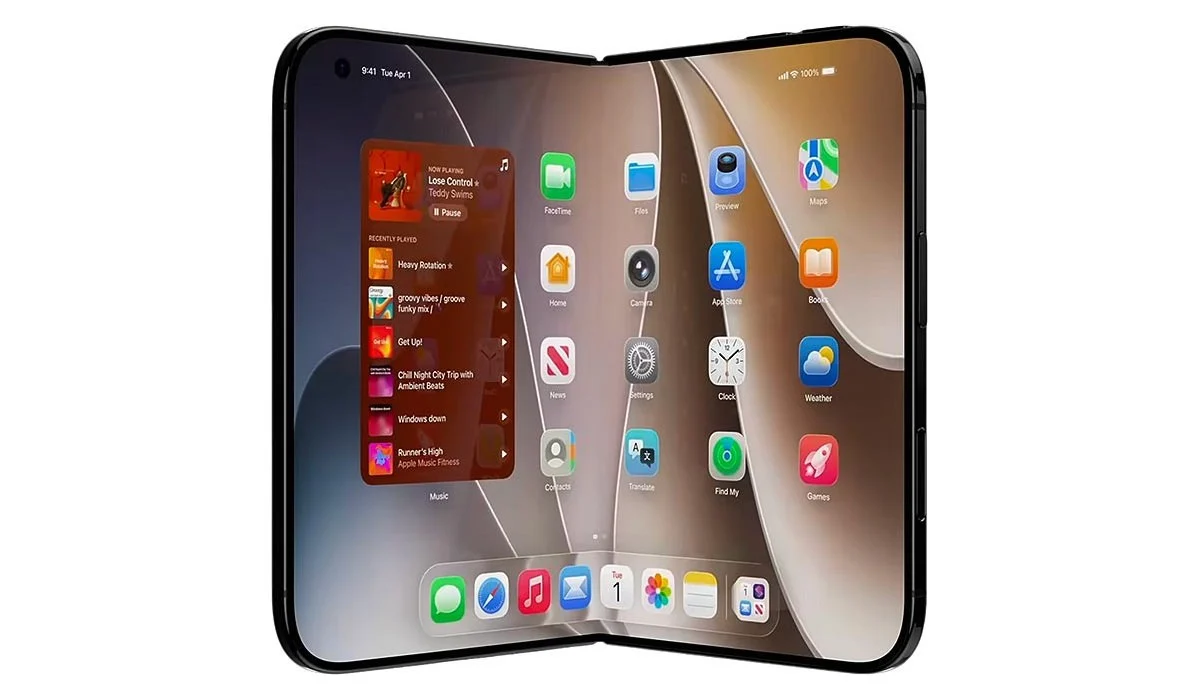
The highly anticipated iPhone Ultra, Apple’s rumored entry into the foldable smartphone market, is reportedly facing potential production delays, casting a shadow of uncertainty over its retail availability. This latest development stems from a recent report indicating that Foxconn, Apple’s primary manufacturing partner, has encountered significant hurdles in the production process, particularly concerning the device’s critical hinge mechanism and the durability of its folding display. The news reignites a cycle of conflicting rumors that have alternately suggested an on-schedule launch and a deferment, leaving consumers and industry observers alike in a state of flux regarding the groundbreaking device’s debut. While the iPhone Ultra is still widely expected to be unveiled alongside the forthcoming iPhone 18 Pro and iPhone 18 Pro Max at Apple’s traditional September event, the core question now pivots from its announcement to its actual in-store availability.
The latest intelligence, primarily emanating from supply chain sources, details that Foxconn is grappling with "final adjustments" to the manufacturing process, necessitated by these production issues. The specifics point to complexities inherent in the foldable form factor, with the hinge design and the long-term resilience of the folding screen being the primary points of contention. Such challenges are not entirely unprecedented in the nascent foldable phone segment, where pioneering manufacturers have frequently navigated similar technical obstacles. However, for a company renowned for its meticulous product launches and stringent quality control like Apple, these production bottlenecks could significantly impact the initial rollout strategy. The duration required to resolve these intricate manufacturing problems remains undisclosed, contributing to the speculative nature of the iPhone Ultra’s market debut.
The Evolving Landscape of Foldable Smartphones and Apple’s Strategic Entry
Apple’s purported foray into the foldable smartphone market with the iPhone Ultra marks a significant strategic move, indicative of the company’s intent to capture a share of this rapidly evolving, premium segment. The foldable phone market, while still relatively niche, has demonstrated substantial growth potential since its inception. Pioneered by manufacturers such as Samsung with its Galaxy Fold series, Huawei with the Mate X, and Motorola with its revamped Razr, the segment has witnessed a steady refinement in technology and design. Early models were often plagued by durability concerns, screen creasing, and prohibitive costs, leading to cautious consumer adoption. However, successive generations have addressed many of these initial flaws, enhancing hinge mechanisms, improving display resilience, and gradually optimizing the user experience.
Apple, known for its measured approach to new product categories, typically enters markets once they have matured sufficiently for the company to introduce a highly refined and polished product. This strategy was evident with the iPod, iPhone, and Apple Watch, where Apple wasn’t necessarily the first to market but often redefined it through superior integration and user experience. The potential introduction of an "iPhone Ultra" aligns with Apple’s recent branding strategy, which reserves the "Ultra" moniker for its most premium, cutting-edge, and high-performance devices, such as the Apple Watch Ultra and the M-series Ultra chips. This suggests that the foldable iPhone would not merely be a novelty but a top-tier offering designed to push the boundaries of smartphone technology and command a premium price point, further justifying the current advice for consumers to "keep saving up to make sure you reach the device’s very high price tag."
A Chronology of Anticipation: The iPhone Ultra Rumor Mill
The journey to the iPhone Ultra’s potential launch has been characterized by a persistent and often contradictory stream of leaks and analyst reports, creating a dynamic "will it, won’t it?" narrative. This rollercoaster of speculation began several years ago, with initial whispers emerging in late 2021 and early 2022 about Apple exploring flexible display technologies and patenting various foldable hinge designs. These early reports, often attributed to supply chain analysts and industry insiders, suggested Apple was conducting extensive research and development into a foldable device, with some projecting a launch as early as 2023 or 2024.
As 2023 progressed, prominent analysts like Ming-Chi Kuo and Ross Young, known for their accurate predictions regarding Apple’s supply chain, began to weigh in. Some reports indicated that Apple’s foldable device, then often referred to as the "iPhone Fold" or simply "foldable iPhone," might be delayed until 2025 or even 2026. These delays were frequently attributed to Apple’s exacting standards for durability and user experience, with the company reportedly unwilling to compromise on these aspects for the sake of an early market entry. The challenges of mass-producing a durable folding display and a robust hinge mechanism were cited as primary reasons for a potential deferment.
However, the narrative shifted again in late 2023 and early 2024, with counter-reports suggesting that development was progressing more smoothly than anticipated. These optimistic assessments fueled hopes for a 2024 launch, potentially alongside the standard iPhone lineup. Such reports often highlighted Apple’s accelerated internal testing and advancements in manufacturing processes. This period saw a heightened sense of anticipation, with the possibility of an iPhone Ultra being unveiled at the September event, even if its retail availability might be staggered.
The most recent cycle of reports, including the one under consideration, introduces fresh doubts. After a period where some sources indicated the device was "actually not delayed," the pendulum has swung back, with new information pointing towards production issues at Foxconn. This latest development underscores the inherent complexity and secrecy surrounding Apple’s unreleased products, where reliable information often trickles out from various points in the intricate global supply chain, leading to a fragmented and sometimes conflicting picture. The current situation suggests that while the unveiling may proceed as scheduled, the crucial aspect of consumer availability remains very much in question.
Technical Hurdles and the Complexities of Foldable Manufacturing
The reported production issues at Foxconn — specifically concerning the hinge and the durability of the folding screen — highlight the profound engineering challenges inherent in foldable smartphone design. The hinge mechanism, in particular, is a marvel of micro-engineering. Unlike traditional smartphones, a foldable device’s longevity and user experience are heavily reliant on the quality and robustness of its hinge. Manufacturers have experimented with various designs, including U-shaped hinges, waterdrop hinges, and multi-link mechanisms, each presenting its own set of advantages and disadvantages in terms of thickness, creasing, and dust resistance. Precision engineering is paramount to ensure smooth folding and unfolding, prevent debris ingress, and distribute stress evenly across the display. Any minute deviation in component tolerance or assembly can lead to premature wear, creaking, or even device failure. For Apple, known for its seamless mechanical designs, perfecting this aspect is non-negotiable.
Equally critical is the durability of the folding screen. Early foldable displays, often protected by a layer of flexible plastic (CPI – Colorless Polyimide), were susceptible to scratches and damage. The industry has since largely transitioned to Ultra-Thin Glass (UTG), which offers superior scratch resistance and a more premium feel. However, UTG still presents challenges in terms of its inherent flexibility and resistance to repeated folding. The material science involved in creating a durable, crease-resistant, and visually impeccable folding display is incredibly complex. Factors such as the display’s substrate, the protective layers, and the adhesive used all play a role in its longevity. Production issues related to "durability" could encompass a range of problems, from micro-fractures in the UTG to delamination of display layers or issues with the anti-reflective coatings under repeated stress.
The implications of these technical hurdles for Foxconn’s mass production efforts are significant. Scaling up production of such complex components, while maintaining Apple’s rigorous quality standards, can lead to lower yield rates, increased manufacturing costs, and, crucially, delays. Foxconn, as Apple’s long-standing manufacturing partner, possesses unparalleled experience in large-scale production. However, even for an entity of its caliber, transitioning from prototype to mass production for an entirely new form factor, especially one with known inherent complexities, can expose unforeseen bottlenecks and necessitate extensive retooling and process adjustments. These adjustments, while vital for product quality, inevitably consume time and push back projected launch timelines.

Broader Implications for Apple’s Product Strategy and Market Position
The potential delay of the iPhone Ultra carries broader implications for Apple’s product strategy and its standing in the fiercely competitive smartphone market. The introduction of a foldable iPhone is not merely about launching a new device; it’s about signaling Apple’s commitment to innovation and its ability to adapt to emerging form factors. While the iPhone Pro and Pro Max lines continue to dominate the premium conventional smartphone segment, a foldable device would allow Apple to tap into a nascent, high-growth category and potentially redefine it with its signature blend of hardware and software integration.
Should the iPhone Ultra’s retail launch be significantly delayed beyond its unveiling, it could create a perception gap between announcement and availability, potentially dampening initial consumer excitement. However, Apple has a history of managing staggered launches, and its loyal customer base often demonstrates remarkable patience for highly anticipated products. The "very high price tag" associated with the iPhone Ultra also suggests it will target a premium niche, where consumers are likely less price-sensitive and more willing to wait for a perfected product.
From an investor perspective, while short-term delays might cause minor fluctuations, Apple’s long-term strength lies in its ecosystem and consistent innovation. A delay, if ultimately leading to a more robust and superior product, could be viewed positively in the long run. Competitors, particularly Samsung, which currently leads the foldable market, might gain a temporary advantage from Apple’s potential delay. However, Apple’s entry is expected to significantly validate and expand the foldable market as a whole, ultimately benefiting all players by boosting consumer interest and technological investment.
Inferred Industry Reactions and Analyst Outlook
Industry analysts, accustomed to Apple’s opaque development process, often rely on a combination of supply chain checks, patent filings, and historical patterns to infer the company’s plans. The general consensus among these observers is that Apple is indeed working on a foldable device, and its eventual entry into the market is almost a certainty. However, there’s also an understanding that Apple will not rush a product to market if it doesn’t meet its rigorous standards for quality, durability, and user experience. Therefore, reports of production delays, while frustrating for eager consumers, are often viewed through the lens of Apple prioritizing perfection over punctuality.
Investor reactions to such news are typically measured. Apple’s stock performance is influenced by a multitude of factors, and while a delay in a new product category might generate some concern, the company’s robust financial health, strong recurring service revenues, and consistent performance of its core product lines often provide a buffer. Analysts frequently reiterate that Apple’s long-term value proposition is tied to its ability to innovate and expand its ecosystem, making the eventual success of a foldable iPhone more critical than its precise launch date.
Consumer sentiment, as implied by the article’s advice to "keep saving up," suggests a strong appetite for an Apple-branded foldable. The mystique surrounding Apple’s unreleased products often builds significant anticipation. While a delay might test the patience of some, the enduring loyalty of Apple’s user base, coupled with the brand’s reputation for delivering polished products, means that many will likely continue to anticipate the iPhone Ultra’s eventual arrival, regardless of a slight shift in its timeline.
Supporting Data and Market Trajectories
The foldable smartphone market, despite its current challenges, represents a significant growth vector within the broader smartphone industry. According to various market research firms, the global foldable phone market is projected to grow at a compound annual growth rate (CAGR) exceeding 20% over the next five to seven years, reaching tens of millions of units annually. For instance, Counterpoint Research has projected robust growth, indicating a burgeoning market that Apple would be strategically positioned to capitalize on. While conventional smartphone sales have somewhat stagnated, the foldable segment offers a premium price point and a novel user experience, attracting consumers seeking cutting-edge technology.
Apple’s dominance in the premium smartphone segment (devices priced above $800) is well-established, consistently capturing a significant share of profits and revenues in this category. The introduction of an "iPhone Ultra" would reinforce this position, allowing Apple to maintain its lead in innovation and capture a new stratum of high-spending consumers. The company’s unique ability to integrate hardware, software, and services also positions it to offer a distinctive foldable experience that competitors might struggle to replicate.
The production cycles for new Apple devices are notoriously complex and typically involve thousands of suppliers and millions of components. Minor adjustments in the final stages of manufacturing are not uncommon, especially for a product featuring a novel form factor like a foldable screen and hinge. However, for a device of the iPhone Ultra’s significance, these adjustments can have cascading effects, potentially delaying crucial milestones like certification, logistics, and retail distribution.
The Path Forward and Unofficial Outlook
As is customary, Apple maintains a tight-lipped approach to unreleased products, and no official statement regarding the iPhone Ultra’s status is expected until its formal unveiling. The industry will continue to monitor supply chain reports, analyst notes, and regulatory filings for further clues regarding the device’s development and manufacturing progress. The resolution of the reported production issues at Foxconn, specifically pertaining to the hinge and display durability, will be paramount for a smooth and timely market launch.
Ultimately, while the precise "when" of the iPhone Ultra’s retail availability remains fluid and subject to the resolution of these manufacturing complexities, the "if" of Apple’s entry into the foldable market appears increasingly certain. The company’s strategic imperative to innovate, its track record of refining emerging technologies, and the growing potential of the foldable segment all point towards the eventual debut of a premium, cutting-edge iPhone Ultra. For now, consumers and industry watchers are left to navigate the ongoing speculation, with the September unveiling event serving as a critical juncture for more definitive information, even if the actual purchase remains a future prospect. The ongoing saga underscores the formidable engineering challenges involved in bringing truly revolutionary technology to mass market, even for a company with Apple’s unparalleled resources and expertise.