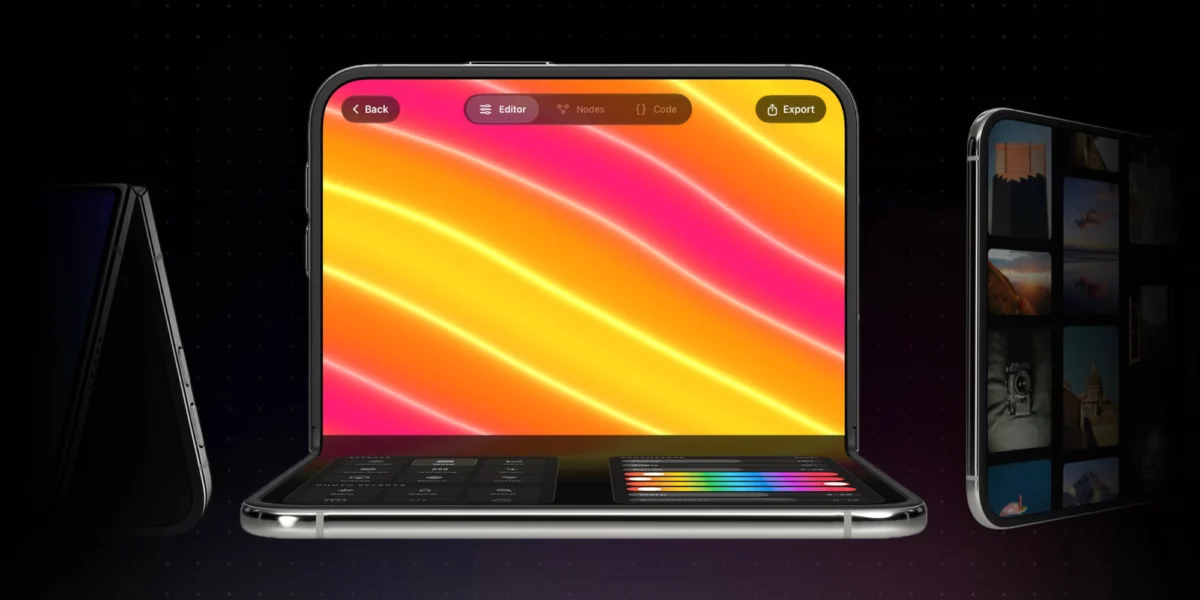
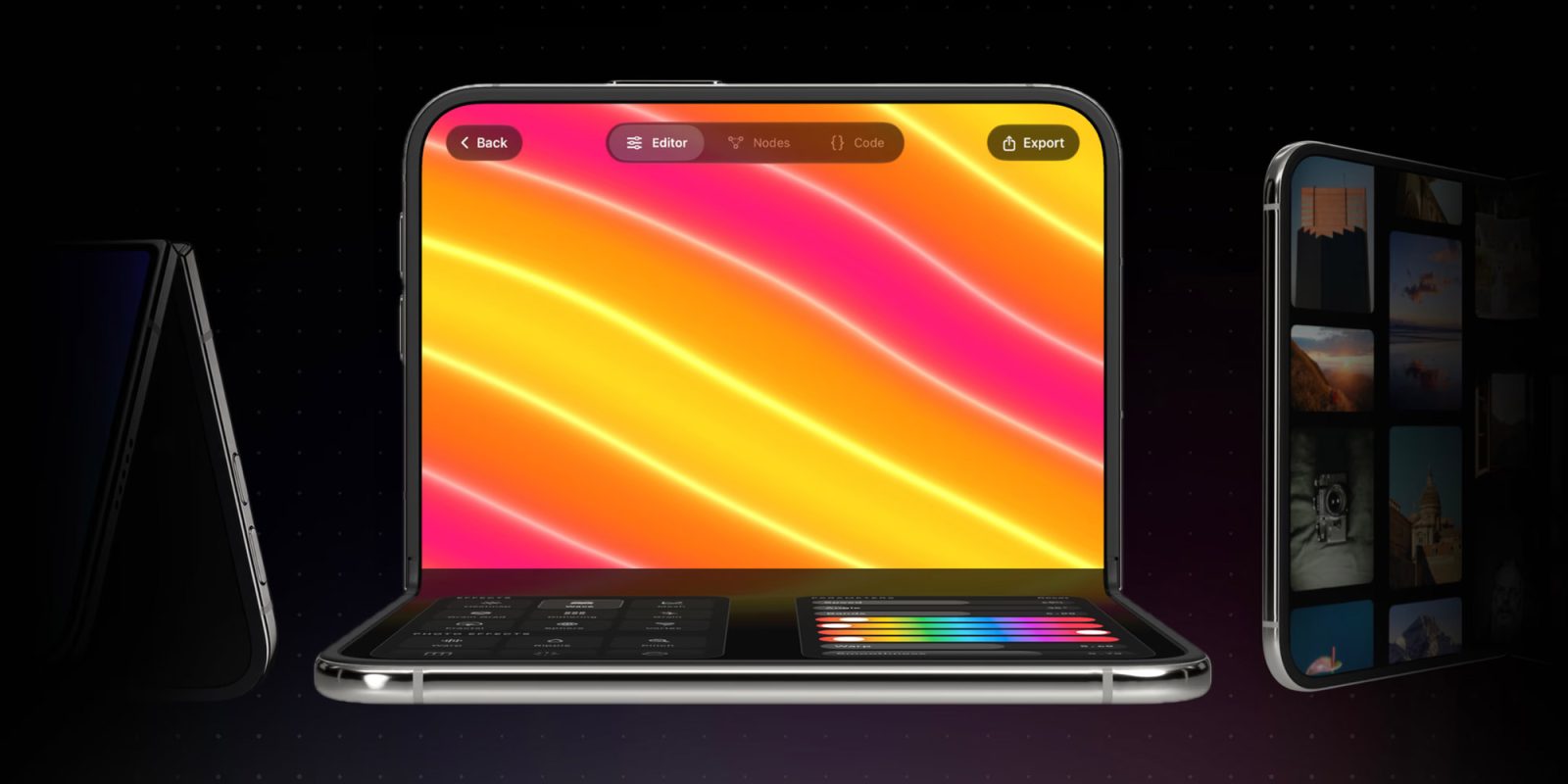
The landscape of mobile software development is undergoing a rapid transformation as platforms adapt to new hardware form factors. Following Apple’s recent release of Xcode 27.1 beta 1—which introduced foundational support for building and testing applications tailored to the anticipated iPhone Duo—AI-powered coding platform Bitrig has announced a comprehensive update. The company has officially integrated support for iPhone Duo development into its ecosystem, headlined by an interactive, physics-based 3D simulator that allows developers to fold, tilt, rotate, and dynamically position the dual-screen device in real time.
This development marks a significant step forward for the platform, which has evolved from an experimental text-to-code utility into a robust environment capable of handling complex hardware integrations. As software engineers begin exploring how user interfaces behave across folding and dual-screen configurations, tools that bridge the gap between traditional coding and physical interaction modeling are becoming increasingly vital.
From Vibe-Coding Utility to Professional Development Suite
Bitrig initially entered the market as a lightweight conversational programming tool—colloquially referred to as a vibe-coding application—designed to translate text or voice prompts into functional native SwiftUI applications that executed directly on an iOS device. By lowering the barrier to entry for rapid prototyping, the platform gained traction among hobbyists and designers looking to visualize software concepts instantly without navigating the traditional setup overhead of the Apple developer ecosystem.
However, recognizing the demands of professional software engineers and complex enterprise workflows, the company aggressively expanded its product roadmap. Earlier this year, Bitrig released a dedicated macOS application. This expansion granted users seamless access to the full Xcode toolchain, an integrated device simulator, on-device testing capabilities, and streamlined project export functionality. Furthermore, the platform integrated direct distribution pathways through TestFlight and the Apple App Store, positioning itself as a serious contender in the AI-assisted software development market.
The integration of iPhone Duo support is the latest evolution of this strategy, aligning the platform’s cloud and desktop capabilities with the bleeding edge of Apple’s hardware roadmap.
A Closer Look at the Interactive 3D iPhone Duo Simulator
Developing software for novel hardware form factors presents unique design challenges, particularly regarding screen continuity, multitasking layouts, and physical folding mechanics. Traditional flat-screen simulators often fall short when evaluating how a user might physically interact with a hinge or dual-display interface.
To address this friction point, Bitrig’s engineering team designed a fully interactive 3D simulation environment for the iPhone Duo. Unlike static preview panes, this tool renders a volumetric, highly responsive model of the device. Developers can manipulate the hardware virtually—testing interface adaptability through various folding angles, rotational tilts, and spatial positions.
This spatial freedom enables development teams to stress-test adaptive layouts, fluid window resizing, and contextual touch controls before deploying code to physical hardware prototypes. By visualizing how UI elements respond to physical transformations in real time, designers can preemptively resolve layout bugs and ergonomics issues inherent to dual-screen devices.
Seamless Version Control and Migration Workflows

Transitioning between beta environments and stable production tools has historically been a logistical hurdle for iOS development teams. Introducing experimental SDKs often risks breaking existing production pipelines or complicating version control protocols across distributed teams.
Bitrig has sought to mitigate these integration challenges by building robust environment management directly into its platform architecture. According to Kyle Macomber, co-founder and chief executive officer of Bitrig, the updated software is engineered to simplify multi-version Xcode management.
"Bitrig helps you manage multiple versions of Xcode, so you can start preparing your app for iPhone Duo with the beta and switch back to Xcode 27 to build and release updates," Macomber explained regarding the platform’s workflow capabilities.
This capability ensures that development teams do not have to isolate their experimental branch testing on separate, dedicated machines. Instead, engineers can maintain active production cycles for current iOS releases while simultaneously exploring dual-screen optimizations within the same workspace. Such flexibility is crucial for enterprise-grade applications aiming for day-one compatibility with new Apple hardware releases.
Chronology of the iPhone Duo Ecosystem
The rapid convergence of development tools around the iPhone Duo reflects a compressed timeline of hardware leaks, software preparation, and third-party tooling adaptation:

- October 2025: Bitrig launches its initial text-and-voice-to-SwiftUI prototyping application on iOS, establishing a foothold in generative software development.
- March 2026: The platform scales up its professional utility by launching a dedicated macOS application, introducing full Xcode toolchain integration, on-device testing, and App Store export tools.
- Mid-September 2026: Apple releases Xcode 27.1 beta 1, officially opening the API and simulation pathways for third-party developers to begin crafting experiences for the rumored iPhone Duo.
- Late September 2026: Capitalizing on the beta release, Bitrig rolls out comprehensive iPhone Duo support, featuring its proprietary interactive 3D hardware simulator and multi-Xcode environment management.
Broader Industry Implications and Future Outlook
The introduction of dual-screen and foldable technology into the iOS ecosystem represents a profound paradigm shift for mobile user interface design. For over a decade, the standard smartphone form factor has remained remarkably consistent—a rigid slab of glass and aluminum with fixed screen boundaries. Standardized Human Interface Guidelines (HIG) established by Apple have long relied on these single-pane assumptions.
With the advent of the iPhone Duo, developers must rethink core application architectures. Navigation hierarchies, media consumption layouts, keyboard inputs, and drag-and-drop multitasking paradigms must adapt to surfaces that can split, fold, or merge dynamically.
Third-party development platforms like Bitrig play a crucial democratization role during these foundational hardware transitions. By providing accessible, high-fidelity simulation environments early in the product cycle, these tools lower the technical friction that typically delays ecosystem adoption. When hardware manufacturers introduce radical form factors, the success of the platform often hinges not just on the technical specifications of the device, but on the breadth and quality of software available at launch.
As Apple continues to iterate through the Xcode 27.1 beta lifecycle leading up to an eventual hardware unveiling, developer adoption of tools capable of modeling complex spatial and physical interactions will likely accelerate. Platforms that successfully streamline the transition between traditional flat-screen development and multi-surface engineering are poised to define the next generation of mobile software architecture. Developers seeking to evaluate Bitrig’s new capabilities and access its documentation can review implementation guides directly via the official Bitrig developer portal.