The universal promise of USB-C—a single, reversible connector capable of handling power, data, and video output for every device in a consumer’s ecosystem—has long been hampered by a lack of visual standardisation. While the USB Implementers Forum (USB-IF) has established rigorous technical specifications for the interface, the physical presentation of these cables has remained inconsistent. Consumers are frequently left to guess the capabilities of a cable based solely on its appearance, leading to widespread frustration and the potential for hardware performance bottlenecks.
This industry-wide issue is now being addressed by LTTStore, the retail arm of the popular technology media outlet Linus Media Group, through the release of their "TrueSpec" cable line. By etching technical specifications directly onto the connector housing, the company is attempting to standardize a form of consumer-facing labeling that experts argue should have been mandatory years ago.
The Evolution of a Universal Standard
The history of USB-C is a decade-long saga of rapid innovation paired with poor market communication. When the USB Type-C specification was first introduced in 2014, it was marketed as the "one cable to rule them all." By 2016, major smartphone manufacturers began abandoning proprietary charging ports, and by 2020, the standard had become the default for laptops, gaming consoles, and peripherals.
![It took way too long for someone to make USB-C cables that say what they can actually do [Gallery]](https://9to5google.com/wp-content/uploads/sites/4/2026/09/ltt-truespec-cables-1.jpg?quality=82&strip=all&w=1600)
However, the flexibility of the USB-C protocol is both its greatest strength and its primary weakness. The physical connector is identical regardless of the internal wiring, which dictates whether a cable supports 20W "slow" charging or 240W Power Delivery (PD) 3.1, or whether it handles data at 480Mbps (USB 2.0) or a staggering 80Gbps (USB4 Version 2.0).
In the absence of clear labeling, consumers often encounter a "black box" scenario. A user might purchase a high-end monitor expecting 4K output, only to find the image fails to display because the bundled cable was only designed for low-wattage charging. This ambiguity has fueled an entire secondary market of "cable testers" and has led to consumer protection concerns regarding false advertising by budget third-party manufacturers who utilize the USB-C form factor without meeting the necessary signal integrity standards.
Anatomy of the TrueSpec Initiative
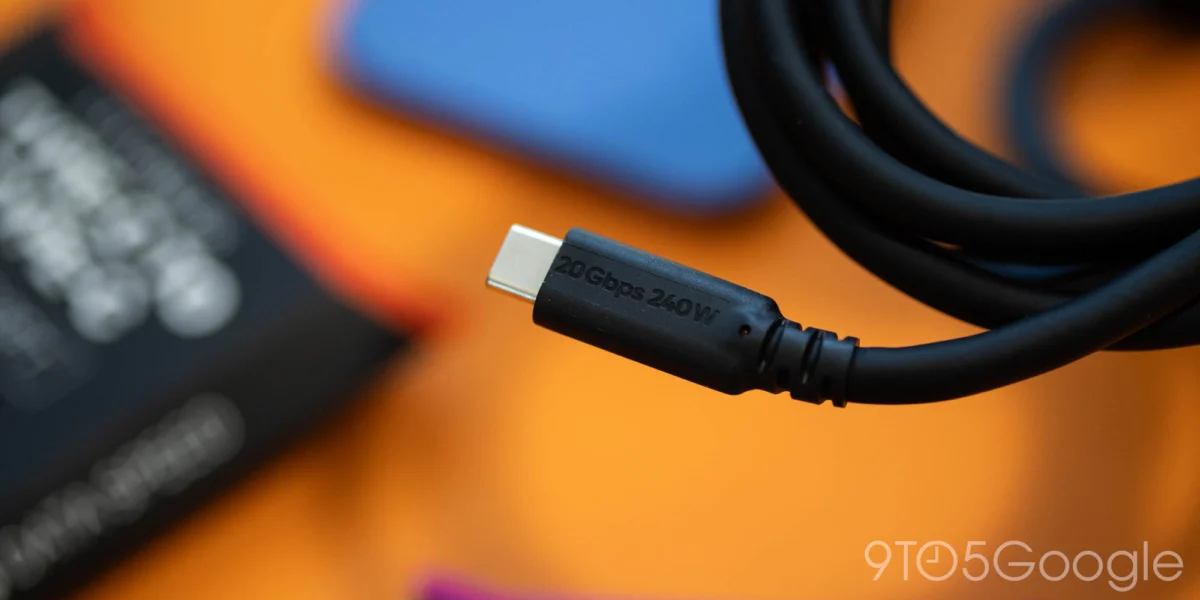
The LTTStore "TrueSpec" line attempts to bridge this information gap. Each cable features laser-etched specifications on the aluminum connector shell, clearly stating the maximum wattage and data throughput.
According to the product specifications provided by the manufacturer, the cables utilize high-gauge copper wiring to meet these benchmarks consistently. The build quality, characterized by a thick, durable rubberized TPE (thermoplastic elastomer) jacket, is designed for longevity—a necessity given the high power levels these cables are rated to handle. While the resulting cable is notably heavier and less flexible than standard-issue charging cables, the design trade-off is intended to prioritize safety and verified performance over portability.
![It took way too long for someone to make USB-C cables that say what they can actually do [Gallery]](https://9to5google.com/wp-content/uploads/sites/4/2026/09/ltt-truespec-cables-2.jpg?quality=82&strip=all&w=800)
The pricing structure—ranging from approximately $17 for USB-A to USB-C iterations to $22 for USB-C to USB-C variants—positions these cables in the premium tier. This pricing reflects the cost of rigorous compliance testing and the inclusion of E-marker chips, which are necessary in cables capable of handling more than 60W of power to safely negotiate current between the charger and the device.
Industry Context and Standardization Efforts
The industry is not entirely without guidelines, though enforcement has been historically lax. The USB-IF has released multiple iterations of the "USB-C Cable Logo Usage Guidelines," which provide manufacturers with a framework for identifying cable capabilities through branding and icons. However, these guidelines are largely voluntary for many peripheral manufacturers, and the complexity of the naming conventions—which have shifted from USB 3.0 to 3.1 Gen 1, 3.2 Gen 2, and now USB4—has only served to deepen consumer confusion.
By printing the actual numbers—such as "100W" and "10Gbps"—directly onto the hardware, the TrueSpec initiative bypasses the need for the average consumer to decipher cryptic marketing acronyms. Several other niche accessory manufacturers have experimented with similar labeling, but the LTTStore effort represents the most significant push toward normalization from a high-visibility brand.
Legal and industry analysts suggest that if this trend continues, it may force major OEM manufacturers to adopt similar labeling on bundled cables. The European Union’s recent mandates regarding the "Common Charger" directive have already forced a level of hardware convergence; it is increasingly likely that subsequent regulatory phases could mandate clearer labeling to prevent e-waste caused by consumers discarding "incompatible" cables that they cannot identify.
![It took way too long for someone to make USB-C cables that say what they can actually do [Gallery]](https://9to5google.com/wp-content/uploads/sites/4/2026/09/ltt-screwdrivers.jpg?quality=82&strip=all)
The Broader Ecosystem: Beyond Cables
The launch of the TrueSpec line aligns with a broader industry trend toward user-serviceability. Alongside these cables, LTTStore has expanded its footprint in the precision tool market, offering specialized screwdriver kits designed for modern consumer electronics.
The emphasis on providing high-quality, clearly labeled tools for device maintenance—such as replacing aging lithium-ion batteries or upgrading internal storage—signals a shift in consumer behavior. As devices become more difficult to repair due to adhesive and proprietary fasteners, the availability of professional-grade tools and clearly marked accessories is becoming a focal point for the "Right to Repair" movement.
Analysis of Future Implications
The implications of the TrueSpec approach are twofold. First, it places a premium on transparency. If a company labels a cable as "100W/10Gbps," it assumes legal and reputational liability for those specs. This forces a higher level of quality control throughout the manufacturing supply chain, as any deviation from the printed label becomes immediately apparent to the end-user.
Second, it highlights a potential shift in how consumers value accessories. For years, the market was flooded with "disposable" cables. By positioning these cables as semi-permanent hardware components, LTTStore is tapping into a market segment that values reliability over low cost.
![It took way too long for someone to make USB-C cables that say what they can actually do [Gallery]](https://9to5google.com/wp-content/themes/ninetofive/dist/images/google-preferred-source-badge-dark.png)
However, there remain significant hurdles. The weight and thickness required for high-wattage, high-speed cables remain a point of friction for users who prioritize the thin, lightweight cables often included with smartphones. Furthermore, as the USB standard continues to evolve toward even higher speeds and power delivery, the challenge will be to ensure that these labels remain legible and that the manufacturing process can keep pace with rapidly changing technical specifications without becoming cost-prohibitive.
Ultimately, the TrueSpec initiative serves as a litmus test for the industry. If consumers demonstrate a willingness to pay a premium for verified performance and clarity, other manufacturers will likely follow suit. If the market continues to favor the cheapest possible cable, the "Wild West" of USB-C confusion will persist. For now, however, the project provides a tangible, practical solution to a problem that has persisted for nearly a decade, demonstrating that even the most "universal" standards require a human-centric approach to be truly effective.