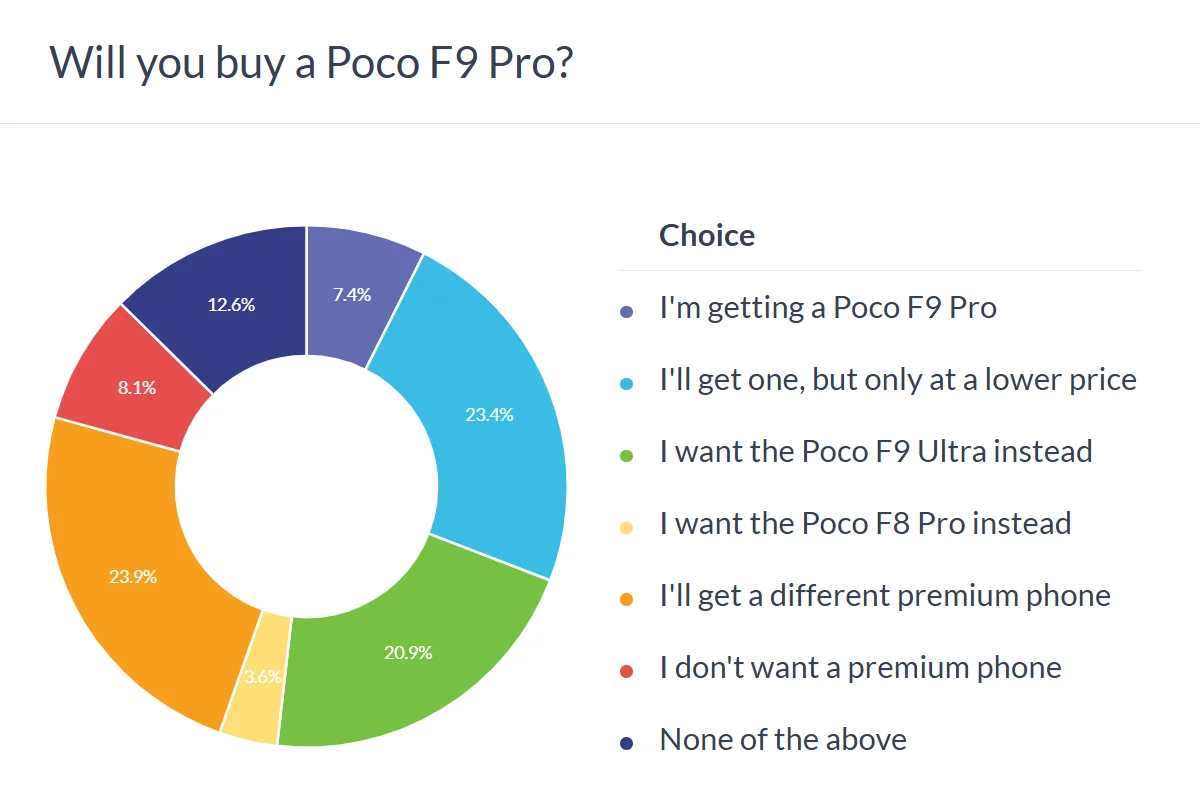
The latest market pulse check, derived from extensive community polling and early consumer adoption trends, confirms a definitive hierarchy within Xiaomi’s newest smartphone lineup. While both the Poco F9 Ultra and the Poco F9 Pro entered the market with high expectations, the Ultra has emerged as the clear frontrunner, effectively overshadowing its Pro counterpart. This trend, captured in the wake of last week’s engagement survey, suggests that while Poco’s brand equity remains strong, consumers are increasingly discerning when it comes to the value proposition of flagship-tier devices.
Chronology of the Poco F9 Launch
The rollout of the Poco F9 series follows a strategic calendar typical of Xiaomi’s aggressive mid-year release schedule. Following weeks of speculative leaks regarding the Snapdragon 8 Elite Gen 5 chipset, the devices were officially unveiled to global markets. The "early bird" pricing period—a hallmark of the Poco launch strategy—was designed to drive immediate volume. However, the initial market reaction, as evidenced by our poll, indicated a degree of price sensitivity among the core demographic.
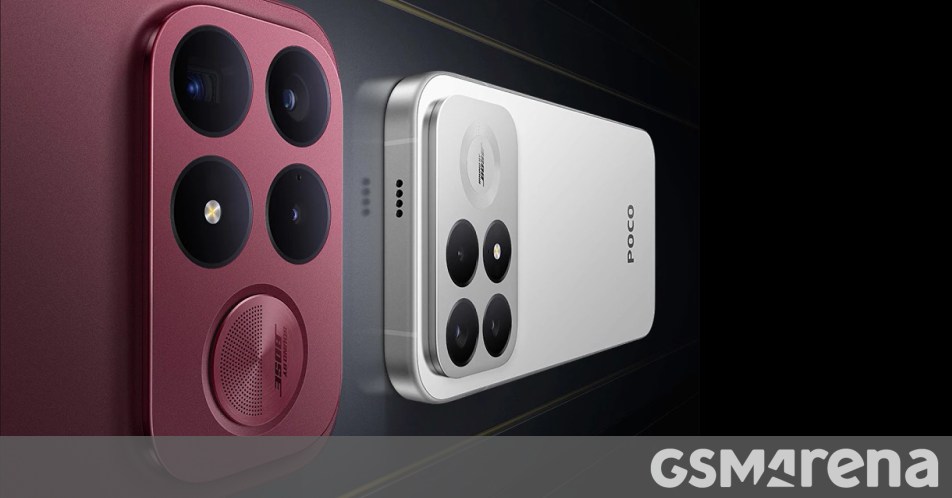
The timeline of the launch began with the announcement of both models, followed by a week-long period where prospective buyers weighed the specs of the Ultra against the Pro. The data shows that the "Ultra" branding has successfully communicated a superior feature set to the consumer base, resulting in a higher conversion rate for the premium model despite the steeper entry price.
Comparative Analysis: Hardware and Specifications
The primary point of divergence between the two devices lies in the trade-offs regarding battery longevity and photographic capability. While both handsets share the high-performance Snapdragon 8 Elite Gen 5 chipset—ensuring that raw computational power is largely uniform across the range—the Ultra distinguishes itself through hardware endurance.
The Poco F9 Ultra boasts an 8,050mAh battery, a significant jump from the 6,500mAh capacity found in the F9 Pro. In an era where power-hungry applications and high-refresh-rate displays are standard, this 1,550mAh delta has proven to be a decisive factor for power users. Furthermore, the Ultra’s 200MP main camera sensor provides a tangible marketing and functional advantage over the Pro, which, despite also featuring a 200MP main shooter, is hindered by a secondary 50MP telephoto lens with a limited 2.5x optical zoom (60mm equivalent).

The comparative data points suggest that the market is currently favoring the "maximum hardware" approach. Consumers have shown little interest in reverting to the previous generation, the F8 Ultra, largely because the F9 generation’s upgrades, while specific, address critical pain points such as sensor resolution and overall power density.
Pricing Dynamics and Consumer Sentiment
A recurring theme in the feedback gathered from the poll is the perceived high cost of the initial launch phase. With the F9 Ultra starting at $730 (€830) and the F9 Pro starting at $650 (€740), many potential buyers expressed hesitation. However, historical data regarding the Poco F-series indicates that these prices are rarely static.
Poco’s established business model relies heavily on rapid price corrections and periodic promotional cycles. Market analysts observe that the initial "sticker shock" is often mitigated within the first quarter of release as retail partners introduce rebates and bundles. As seen in previous cycles, the sentiment regarding these devices tends to improve significantly once the street price aligns more closely with the perceived mid-range value of the brand. The current poll reflects a "wait-and-see" approach for many, particularly regarding the Pro model, which may see a surge in adoption once discount windows open.

The Broader Ecosystem and Competitive Pressure
The internal competition between the Ultra and the Pro is only one facet of a more complex market landscape. The presence of the Xiaomi 17T and 17T Pro series adds an additional layer of complexity for the consumer. These devices, which share some of the internal architecture of the Poco line, serve as direct competitors for market share within the Xiaomi ecosystem.
This "friendly fire" is a calculated strategy by the parent company to capture various segments of the market. While the Poco F-series focuses on performance-per-dollar ratios, the 17T series often targets users who prioritize build quality, software refinement, and different aesthetic profiles. The data suggests that potential buyers are cross-shopping these models, forcing a segment of the audience to decide between the raw power of the F9 Ultra and the more balanced, feature-rich profile of the Xiaomi 17T.
Official Market Positioning
While specific sales volume figures are proprietary, the trend in consumer preference highlights a shift in expectations for the "Pro" moniker. In years past, a Pro model was synonymous with the best a brand had to offer. With the introduction of the "Ultra" tier, the Pro is effectively being pushed into a "sub-flagship" category.
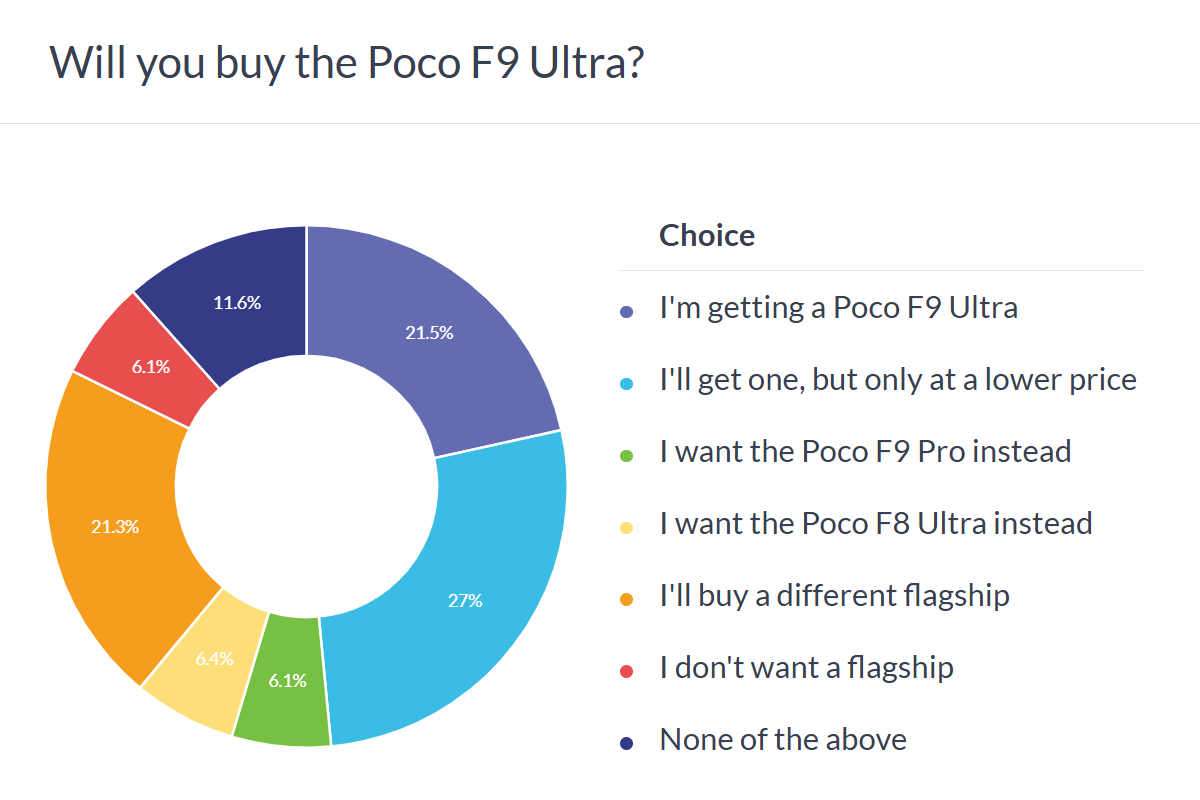
Industry experts note that this is a deliberate move to segment the market. By clearly differentiating the Ultra, Xiaomi can justify a higher price floor while maintaining the Pro as an accessible entry point for those who do not require the absolute maximum in battery or imaging capabilities. However, the poll results serve as a warning to manufacturers: if the feature gap between the Pro and the Ultra is perceived as too wide, the Pro may struggle to find its identity, leading to cannibalization by the Ultra model.
Implications for Future Smartphone Iterations
The lessons from the F9 launch suggest several implications for the future of mobile hardware development:
- Battery Capacity as a Differentiator: The 8,050mAh capacity of the F9 Ultra has clearly resonated with a market tired of frequent charging. Future designs will likely prioritize physical footprint vs. energy density as a primary competitive metric.
- The Ceiling of Camera Megapixels: While 200MP sensors are now common, the secondary lens configurations—specifically telephoto capabilities—are becoming the new battleground for mid-to-high-tier devices. The Pro’s 2.5x limitation was highlighted as a weakness, suggesting that consumers are becoming more knowledgeable about optical zoom versus software-enhanced cropping.
- Pricing Elasticity: The brand loyalty commanded by Poco is robust, but it is not infinite. The current pricing structure is testing the upper limits of what the community considers "fair" for the brand. Future iterations will likely need to be more aggressive with base-model pricing or offer more distinct hardware advantages in the Pro tier to maintain competitive relevance.
Conclusion
The data from the Poco F9 launch cycle presents a clear picture of a brand in transition. The F9 Ultra has successfully secured its position as the preferred choice for enthusiasts, driven by superior endurance and imaging capabilities. Meanwhile, the F9 Pro sits in an awkward middle ground, waiting for price adjustments to trigger mass-market appeal. As the initial launch fervor subsides, the focus will shift to how effectively the manufacturer manages the remaining inventory and whether the projected discounts can elevate the Pro to its intended sales targets. For now, the consumer has spoken: in the high-stakes world of performance-oriented smartphones, the "Ultra" designation carries significant weight, and for many, it is worth the premium.