Advanced Micro Devices (AMD) has officially unveiled its X100 series of embedded Accelerated Processing Units (APUs), marking a significant strategic expansion of its high-performance Strix Halo architecture into the demanding realms of physical AI and industrial robotics. These new processors are meticulously engineered for continuous 24/7 operation and a projected 10-year product lifecycle, addressing the stringent reliability and longevity requirements of embedded applications. This move positions AMD as a formidable competitor against established players in the burgeoning embedded AI market, including Intel and Nvidia.
A New Frontier for Strix Halo: The X100 Series Explained
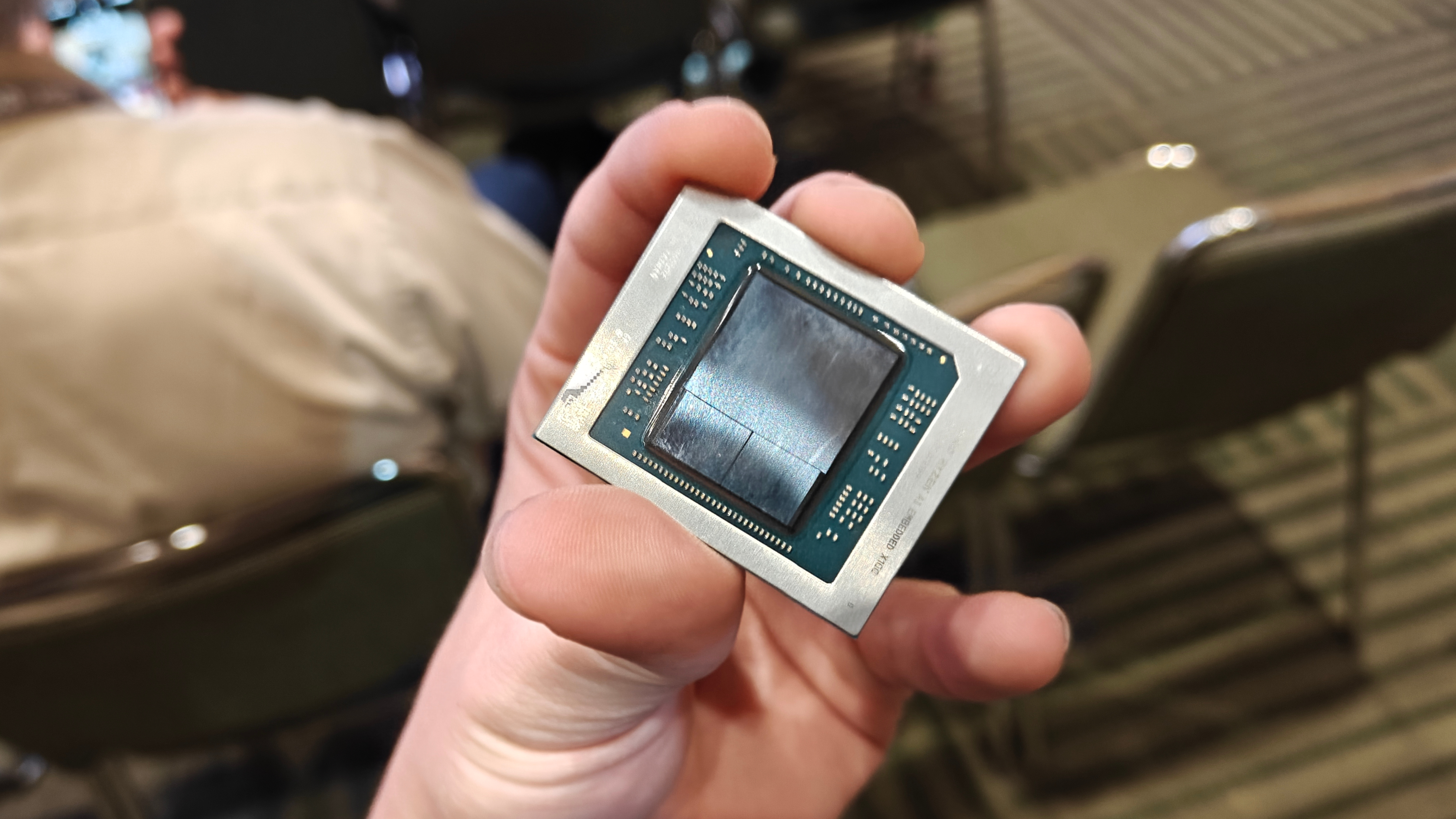
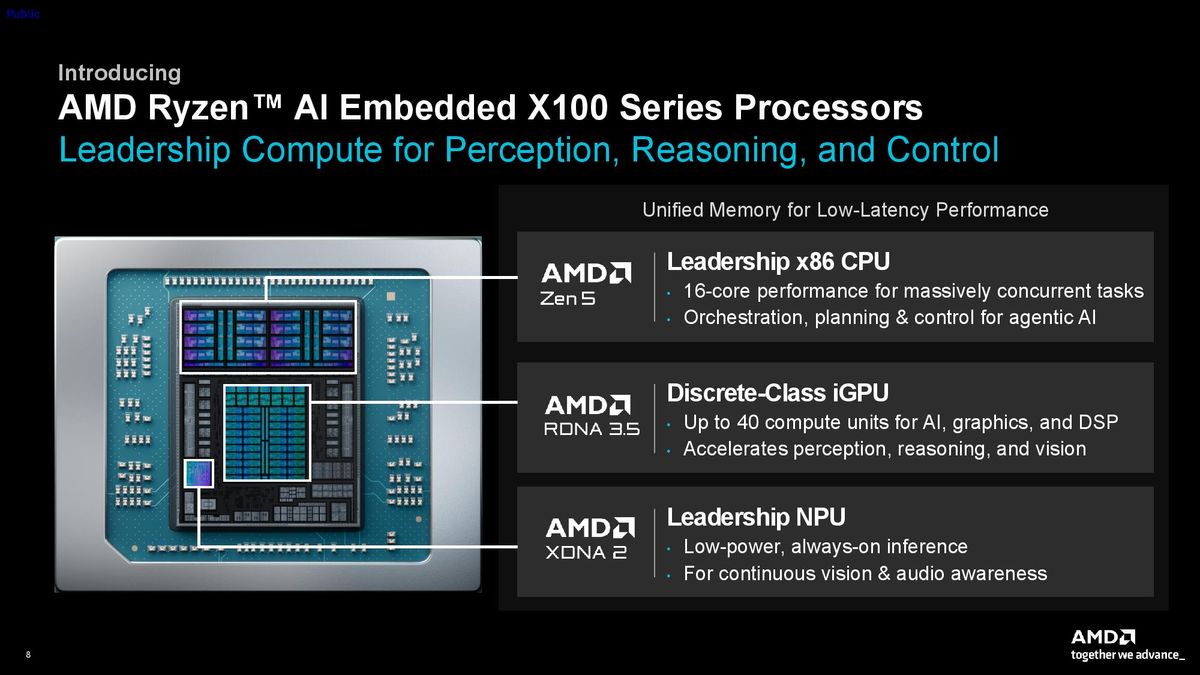
The X100 series introduces three distinct SKUs, directly mirroring the initial Strix Halo models designed for client devices. The flagship offering, the X199, boasts an impressive configuration featuring 16 Zen 5 CPU cores and 40 RDNA 3.5 Graphics Compute Units (CUs). Stepping down in core count, the X188 integrates 12 Zen 5 cores and 32 RDNA 3.5 CUs, while the X168 rounds out the lineup with eight Zen 5 cores and the same 32 RDNA 3.5 CUs. While precise clock speeds for each model remain under wraps, AMD has indicated that the series will offer boost clocks reaching up to 5.1 GHz. A critical enhancement for these embedded solutions is the support for up to 128 GB of unified memory, which significantly reduces latency and improves overall data throughput—a vital attribute for complex AI workloads.
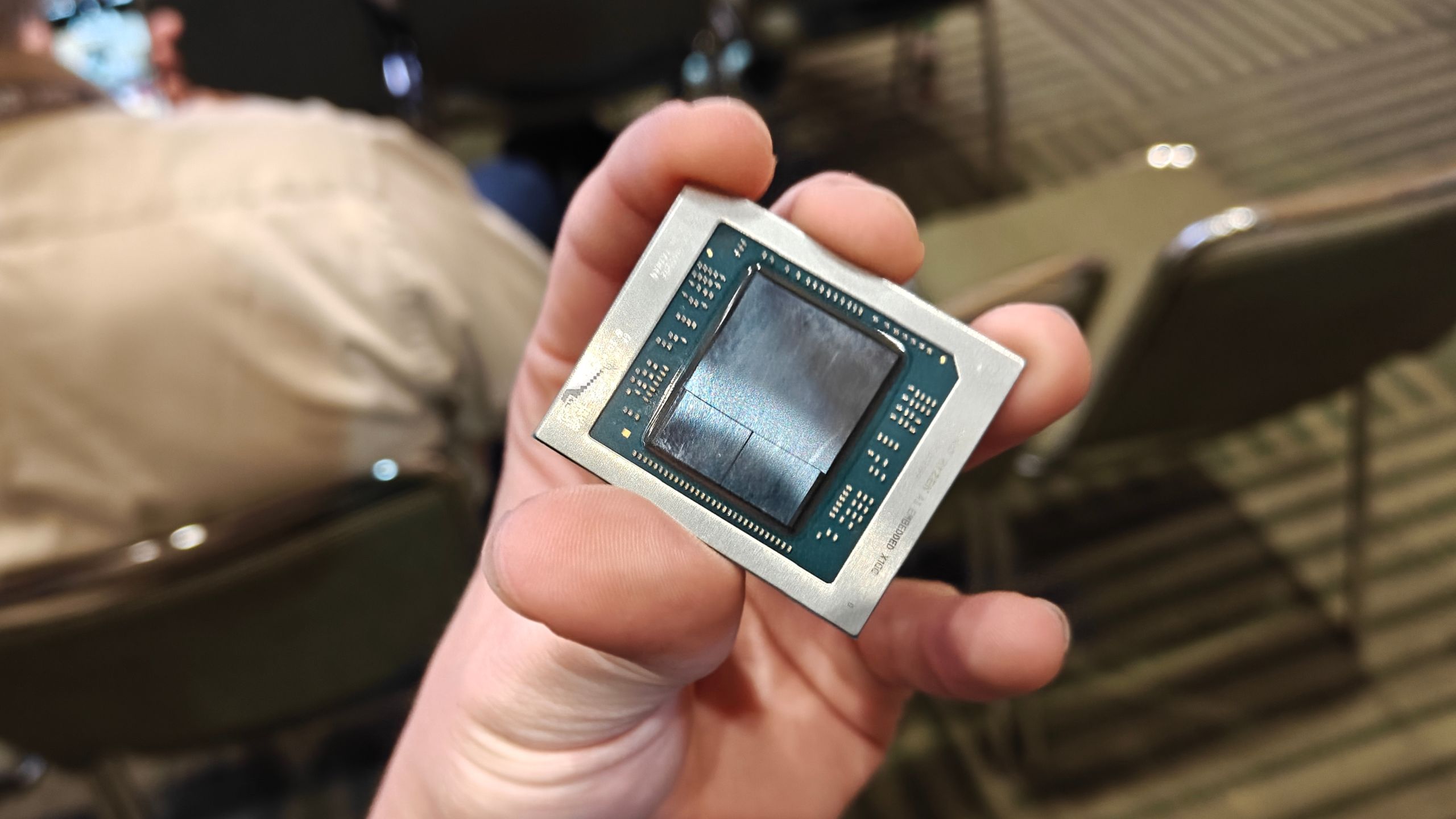
Central to the X100 series’ AI capabilities is the integrated XDNA 2 Neural Processing Unit (NPU), delivering up to 50 TOPS (Tera Operations Per Second) of AI performance. This dedicated AI accelerator is designed to efficiently handle on-device inference tasks, offloading computation from the CPU and GPU to enhance power efficiency and real-time responsiveness. The processors also feature a configurable Thermal Design Power (TDP) ranging from 45W to 120W, providing flexibility for diverse application environments, from power-constrained edge devices to high-performance industrial controllers. Furthermore, their robust design allows for an extended operating temperature range, from a frigid -40 degrees Celsius to a blistering 105 degrees Celsius, underscoring their suitability for harsh industrial conditions where conventional client-grade hardware would fail.
Architectural Foundation: Powering the Embedded Future
The X100 series leverages AMD’s latest architectural innovations. The Zen 5 CPU cores represent the cutting edge of AMD’s processor design, promising substantial improvements in instruction per cycle (IPC) performance, crucial for general-purpose computing tasks and complex control algorithms in robotics. The RDNA 3.5 graphics architecture, an evolution of the RDNA 3 found in consumer GPUs, provides robust visual processing capabilities, essential for tasks like machine vision, sensor fusion, and real-time data visualization in robotics and industrial automation. The integrated GPU’s performance can also be harnessed for parallel processing tasks, further boosting overall system throughput for AI and simulation.
The XDNA 2 NPU is AMD’s dedicated hardware accelerator for AI workloads. Its architecture is optimized for common neural network operations, allowing for rapid execution of AI models with high energy efficiency. This is particularly beneficial for applications requiring continuous inference, such as object detection, predictive maintenance, and autonomous navigation. The tight integration of these three compute engines—CPU, GPU, and NPU—on a single SoC (System-on-Chip) is a core tenet of AMD’s strategy. This integration minimizes data transfer bottlenecks between discrete components, leading to lower latency, higher bandwidth, and ultimately, more responsive and efficient AI-driven systems.
The Rigorous Demands of Embedded and Industrial Applications
The transition from client-focused APUs to embedded solutions is not merely a rebranding exercise; it involves significant engineering and validation to meet the unique requirements of industrial and mission-critical applications. The emphasis on a 24/7 operational lifespan and a 10-year product lifecycle is paramount for sectors like manufacturing, aerospace, defense, and medical devices. These industries demand components that can operate continuously without failure for extended periods, often in challenging environmental conditions. A long product lifecycle also ensures supply chain stability and reduces the cost and complexity of hardware refreshes for customers.
The extreme operating temperature range (-40°C to 105°C) highlights the ruggedness of the X100 series, making it suitable for deployment in unconditioned industrial environments, outdoor installations, or specialized machinery where temperature control is difficult or impractical. The configurable TDP further enhances versatility, allowing system designers to optimize for performance or power efficiency based on specific application needs and thermal envelopes. This level of robustness differentiates embedded-grade hardware from consumer-grade counterparts, which are typically designed for controlled indoor environments and shorter lifespans.
Navigating the Competitive Landscape: Intel and Nvidia
AMD’s entry into the high-performance embedded AI space with the X100 series directly challenges Intel and Nvidia, both of whom have well-established presences in this market. Intel, having recently launched its Panther Lake SoCs also tailored for physical AI, is a primary competitor. Intel’s strategy similarly emphasizes integrated solutions, recognizing the benefits of consolidating compute resources on a single chip. However, AMD asserts that its X100 range is physically larger and packs more silicon, suggesting a potential advantage in raw processing power for more demanding deployments.
Nvidia, with its dominant Jetson platform, particularly the AGX Thor series, represents another formidable rival. Nvidia’s Jetson modules are widely adopted in robotics and edge AI due to their powerful GPUs and comprehensive software ecosystem (CUDA). AMD’s decision to directly benchmark against Nvidia’s Thor T5000 signifies its ambition to capture market share from the incumbent leader. The battle in this segment will likely hinge not just on raw hardware performance but also on the strength of developer ecosystems, software tools, and ease of integration.
Performance Claims and the Call for Independent Verification
AMD released a series of performance benchmarks, comparing its flagship X199 against Intel’s Core Ultra X7 358H and Nvidia’s Thor T5000. Against the Intel chip, AMD claimed leads of 1.2X in GeekBench 6.1 and 1.3X in PassMark for general CPU performance, alongside a 1.5X lead in an unofficial SPECrate 2017 integer workload test. In graphics, the X199 reportedly achieved 1.4X faster Vulkan and 1.7X faster OpenGL performance (measured with GFXBench 5 on Ubuntu), and a 1.6X lead in Unigine Heaven Extreme. For AI workloads, AMD cited a 1.4X improvement in Time to First Token (TTFT) and 3.5X faster tokens per second in Llama-bench, utilizing a Vulkan backend at a 45W TDP.
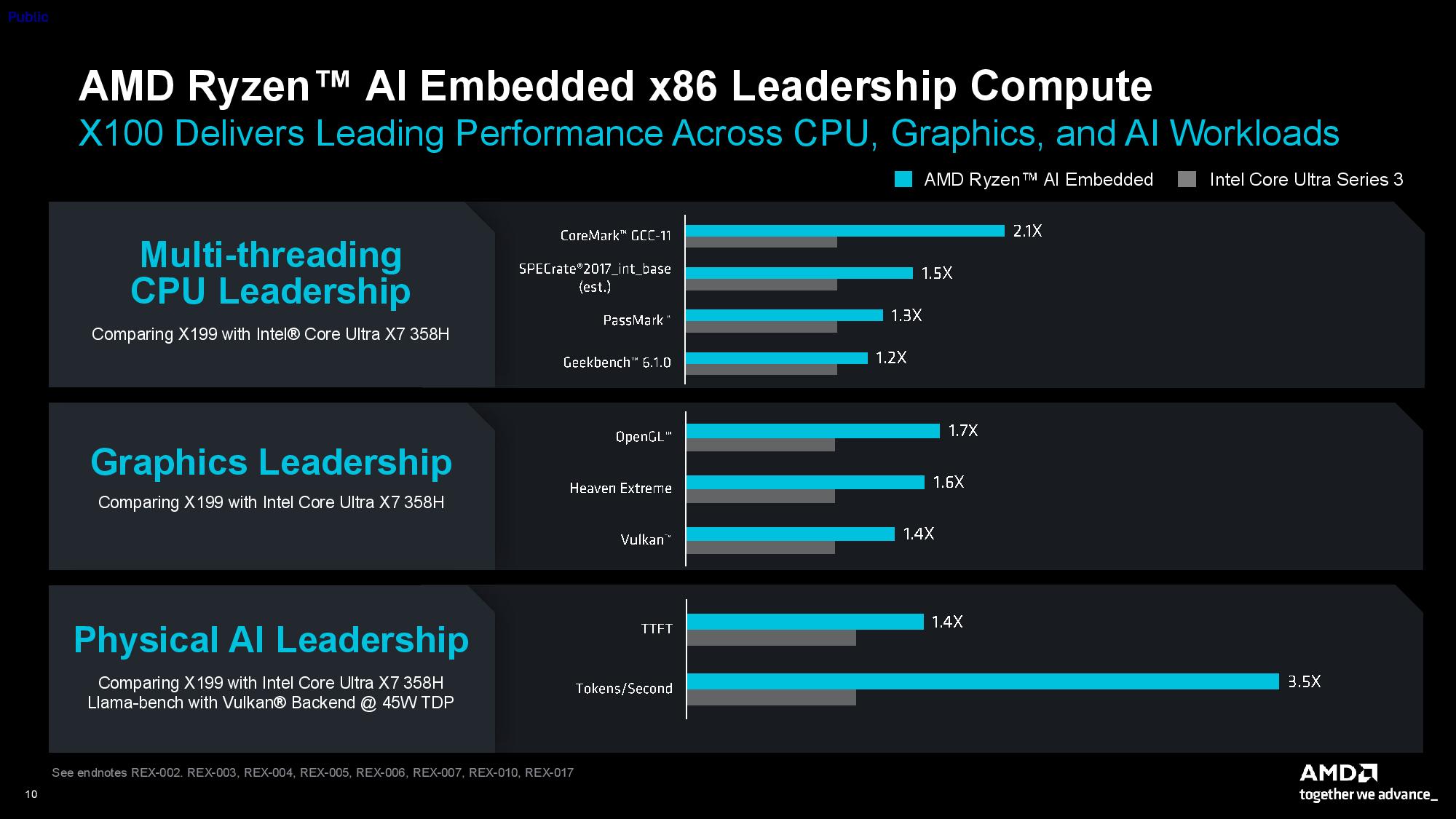
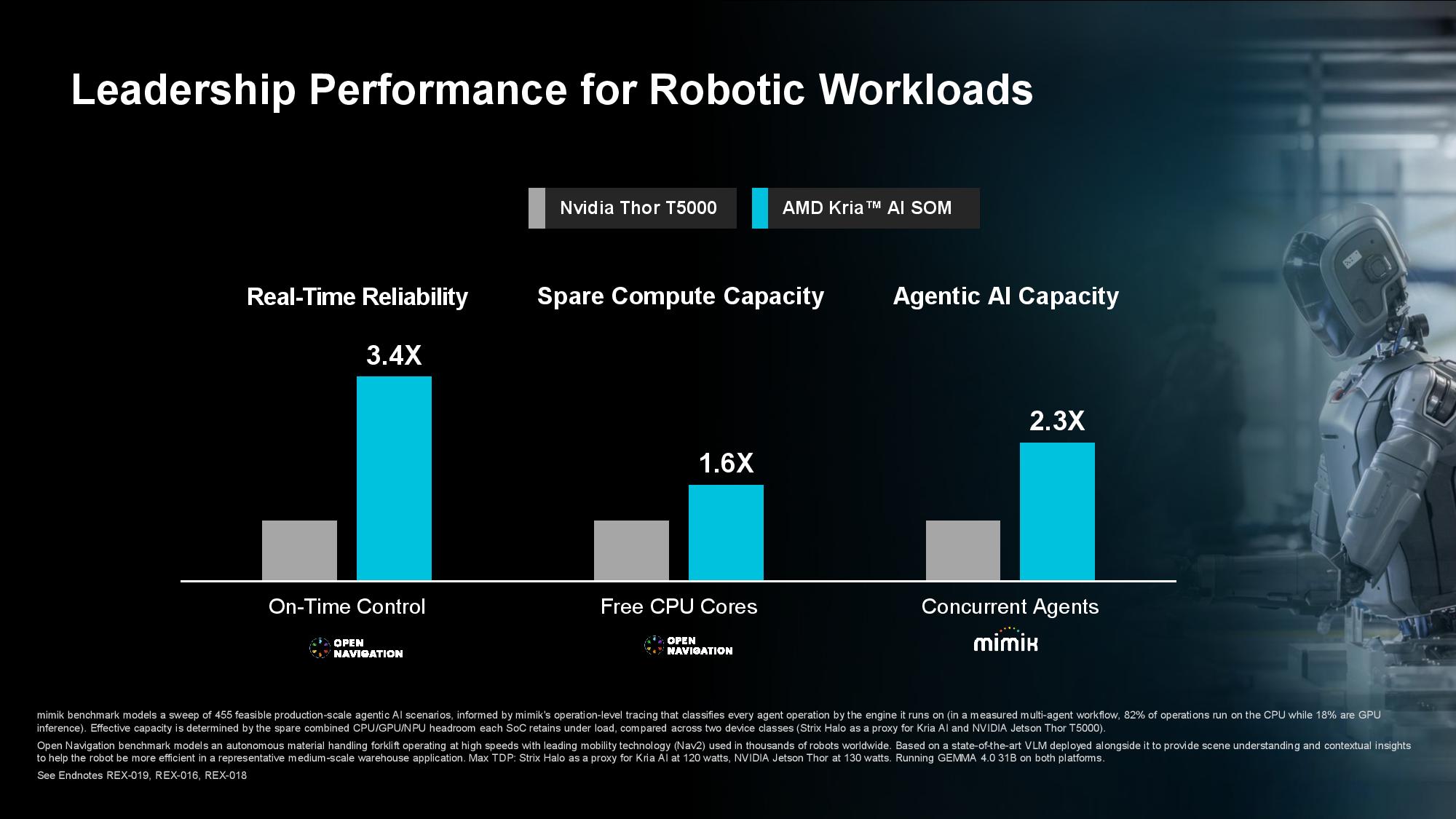
However, AMD itself provided a crucial caveat regarding these benchmarks. The comparisons were not strictly "apples-to-apples." The AMD Ryzen AI Max 395+ was "configured to reflect Ryzen AI Embedded X199 specifications" and tested on a Maple reference board with optimized clock speeds (5.1 GHz CPU, 2.9 GHz GPU) and a sustained 45W TDP. In contrast, the Intel Core Ultra X7 358H was tested in an MSI Prestige 16 Flip AI+ with an enforced 30W TDP limit, and its 45W performance was "projected using scaling factors derived from public benchmark data." Similarly, benchmarks against Nvidia’s Thor T5000 were commissioned by AMD and performed by third parties (Open Navigation and Mimix), comparing Nvidia’s Jetson AGX Thor developer kit to a GMKtech EVO-X2 AI mini PC configured to reflect X199 specifications.
This methodology, while offering an initial glimpse into potential performance, necessitates a "massive dash of salt," as the article rightly points out. Independent verification under standardized, identical test conditions will be crucial to accurately assess the X100 series’ real-world performance advantage against its competitors. Thermal and power environments significantly impact chip performance, and direct comparisons in identical form factors are essential for meaningful evaluation in embedded applications.
The Kria SOM and Robotics Developer Platform: A Turnkey Approach
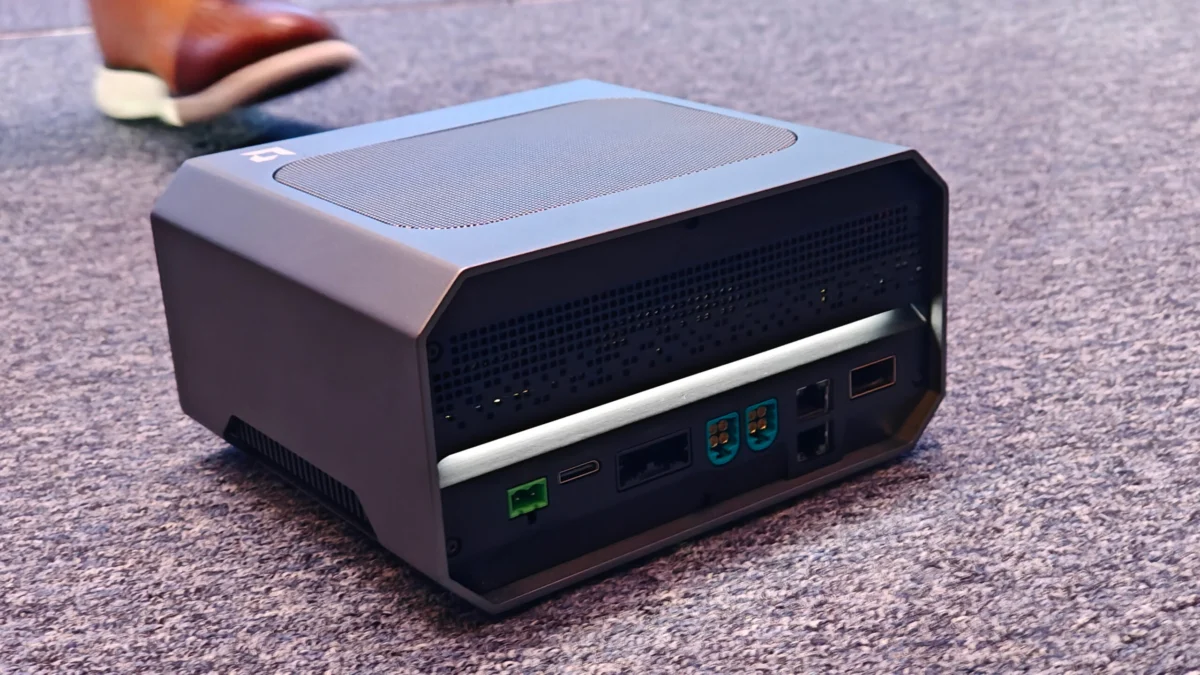
Beyond the raw silicon, AMD is offering the X100 models as part of a comprehensive ecosystem designed to accelerate development. The Kria System-on-Module (SOM) integrates the X100 APU onto a compact 120mm x 120mm board, adhering to the standardized COM-HPC form factor. This modular approach allows for easier integration into various industrial systems and faster time-to-market for hardware manufacturers.
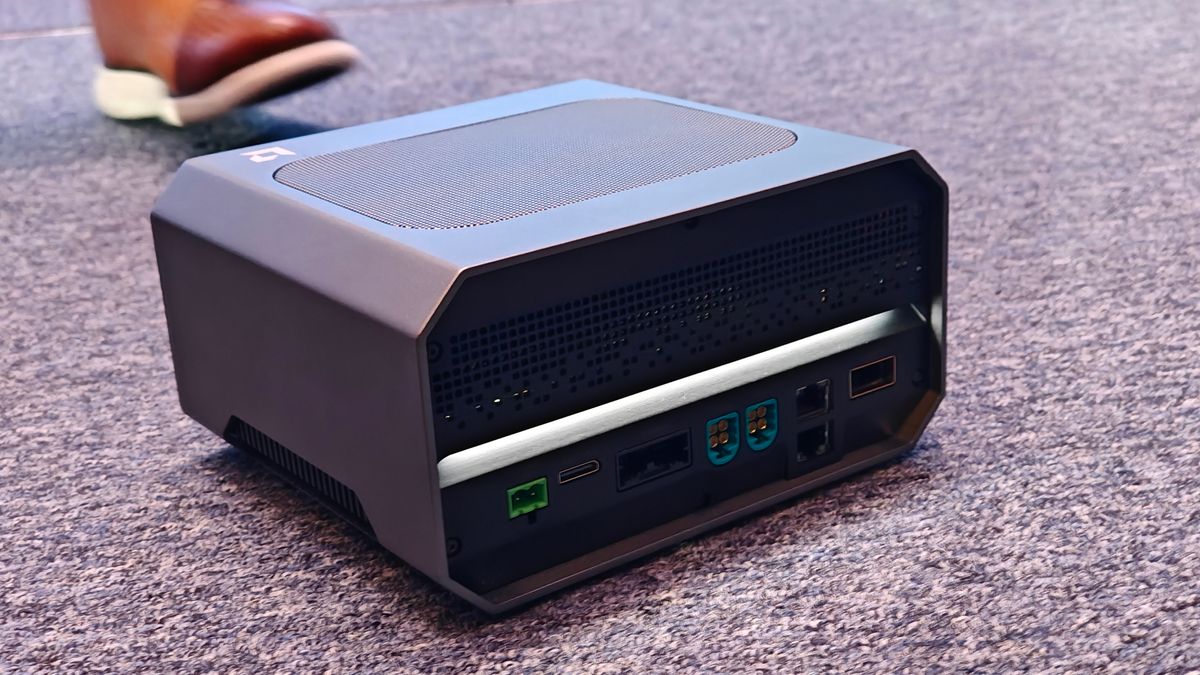
For developers, AMD is providing the Kria AI robotics developer platform, a fully integrated "turnkey" solution. This platform combines the X100 Kria SOM with an AMD Spartan UltraScale+ FPGA baseboard. The inclusion of an FPGA is a strategic differentiator, offering developers unparalleled flexibility for hardware acceleration of specific tasks, custom I/O, and real-time control that might be difficult to achieve with a fixed-function APU alone. The platform is designed with specialized connectivity for industrial cameras, network protocols, and robotic sensors, streamlining the development process for robotics engineers. The Kria AI robotics developer platform is currently available in early access, with full production slated for Q4 of this year, indicating a rapid path to market for this new offering.
Building a Software Ecosystem: Challenging CUDA with HIP
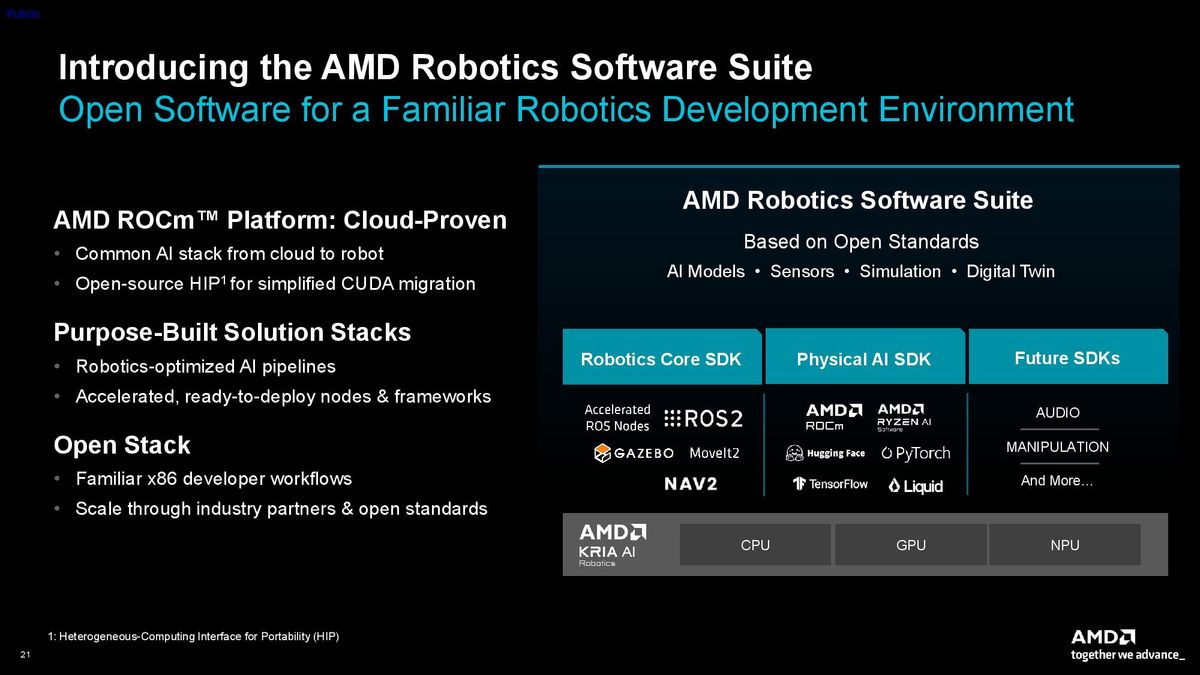
A critical aspect of competing in the AI and high-performance computing space is the strength of the software ecosystem. Nvidia’s CUDA platform has long been the industry standard, creating a significant barrier to entry for alternative architectures. AMD is actively working to siphon developers away from CUDA with its Heterogeneous-compute Interface for Portability (HIP) C++ portable code. The HIPIFY tool is AMD’s answer to easing the migration, claiming it can now automate 70-80% of the effort required to port CUDA code to HIP. This claim is based on internal testing involving the porting of 15 CUDA applications, totaling 1,199 lines of code, on a Ryzen AI Max+ 395 configured to match X199 specifications.
Improving the efficiency of the HIPIFY tool is vital for AMD’s broader strategy. A robust, easy-to-use software stack that supports existing AI frameworks (like TensorFlow, PyTorch) and provides seamless development experiences is as important as the hardware itself. By reducing the friction of porting code, AMD aims to make its platforms more attractive to developers who have invested heavily in CUDA-based solutions.
An End-to-End Vision for Robotics
AMD envisions the X100 Kria SOM as the "brain" of its robotics platform, but it’s part of a larger, end-to-end solution. The company plans to integrate its diverse portfolio of FPGAs and SoCs—including Spartan UltraScale+, Zynq UltraScale+, and Versal AI Edge Gen 2—to provide a comprehensive solution for complex robotic systems, particularly humanoid-style robots. This strategy suggests a tiered approach, where the X100 handles high-level AI inference and general computation, while other AMD FPGAs and adaptive SoCs manage real-time sensor processing, motor control, and other specialized functions at the "edge" of the robot. This holistic approach aims to provide developers with a complete, integrated hardware and software stack from a single vendor, simplifying design and deployment.
Market Implications and Future Outlook
The launch of AMD’s X100 series signifies a maturing embedded AI market and AMD’s serious commitment to it. The demand for intelligent edge devices and autonomous robotics is surging across industries, driven by the need for automation, efficiency, and real-time decision-making. By offering robust, long-lifecycle, high-performance APUs with integrated AI acceleration, AMD is directly addressing these evolving needs.
The competition with Intel and Nvidia will undoubtedly intensify, benefiting customers with more innovative and cost-effective solutions. Success for AMD will depend not only on the raw performance of the X100 series but also on its ability to cultivate a strong developer community, provide robust software tools, and establish reliable supply chains for the embedded market. As industrial automation and autonomous systems become increasingly sophisticated, integrated, power-efficient, and highly resilient computing platforms like the AMD X100 series will play a pivotal role in shaping the next generation of intelligent machines. The coming quarters will reveal how effectively AMD can translate its architectural prowess into tangible market share in this critical growth sector.