
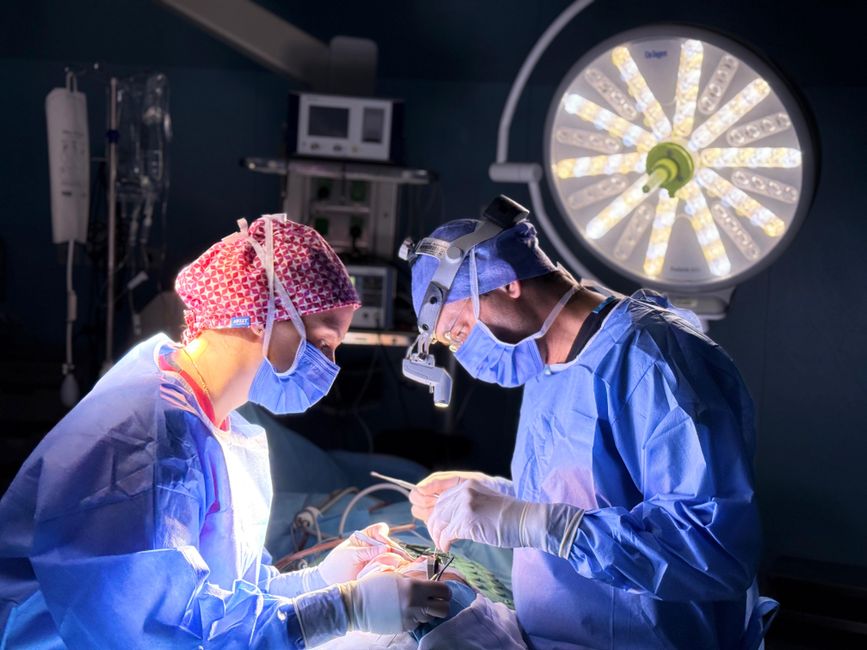
Spanish Surgeons Achieve World First: Fully Robotic Lung Transplant Revolutionizes Minimally Invasive Surgery
In a groundbreaking medical achievement, a team of Spanish surgeons has successfully performed the world’s first fully robotic lung transplant. This pioneering procedure marks a significant advancement in minimally invasive surgery, offering potential benefits for patients such as reduced pain, faster recovery times, and smaller scars. The operation, conducted at the Hospital Universitario Puerta de Hierro in Madrid, utilized state-of-the-art robotic technology to meticulously dissect, prepare, and anastomose (connect) the delicate lung tissue and blood vessels. This development is poised to reshape the landscape of thoracic surgery, particularly for complex procedures like lung transplantation, which historically require extensive open incisions. The success of this fully robotic approach signals a new era in surgical precision and patient outcomes, with implications extending far beyond this initial triumph.
The journey towards this historic accomplishment has been years in the making, driven by a persistent pursuit of less invasive surgical techniques. Traditional lung transplants, while life-saving, have been associated with significant morbidity due to the large thoracotomy incisions required. These incisions involve cutting through chest muscles and often the sternum, leading to prolonged pain, extended hospital stays, and a higher risk of complications such as pneumonia and delayed wound healing. The advent of robotic-assisted surgery has offered a promising alternative, allowing surgeons to operate through smaller incisions using specialized instruments controlled by a robotic console. However, previous robotic-assisted lung transplants have still necessitated some degree of manual manipulation by the surgeon, particularly in critical phases like the anastomosis. This latest breakthrough represents the complete integration of robotic systems, allowing for the entire transplant procedure, from recipient lung removal to donor lung implantation and meticulous connection of vital structures, to be performed solely via robotic arms.
The surgical team, led by Dr. Luis Martín-García, a renowned thoracic surgeon, employed a multi-port robotic system. This system provides surgeons with enhanced dexterity, a magnified 3D view of the surgical field, and tremor filtration, enabling them to perform intricate maneuvers with unparalleled precision. During the procedure, the donor lung was carefully delivered to the operating room and, using the robotic instruments, precisely positioned within the recipient’s chest cavity. The most critical and technically demanding aspect of any lung transplant is the anastomosis of the pulmonary artery, pulmonary veins, and the bronchus. These are all exceptionally fine and delicate structures, where even minor errors can have severe consequences. The robotic system allowed the surgeons to achieve a level of precision in suturing these vessels and airways that would be incredibly challenging to replicate with traditional open surgery or even current laparoscopic techniques. The enhanced visualization and maneuverability provided by the robotic arms allowed for a continuous, tension-free suture line, crucial for preventing leaks and ensuring proper blood flow to the newly transplanted lung.
The implications of this fully robotic lung transplant extend far beyond simply reducing surgical trauma. The precise dissection facilitated by the robotic arms may lead to less damage to surrounding healthy tissues and nerves, potentially reducing post-operative pain and the risk of nerve injury. Furthermore, the smaller incisions associated with robotic surgery translate to improved cosmetic outcomes for patients, a significant factor in their overall recovery and quality of life. The accelerated recovery trajectory anticipated with this technique could also lead to shorter hospital stays, freeing up valuable hospital resources and reducing healthcare costs. Patients may be able to return to their daily activities and rehabilitation programs more quickly, minimizing the disruption caused by a lengthy recovery period. This is particularly important for lung transplant recipients who are often debilitated by their underlying lung disease and require prompt return to functional independence.
The successful execution of this complex procedure hinges on several key technological advancements. The robotic platform utilized in this surgery offers multiple robotic arms, each equipped with highly articulated instruments that mimic the dexterity of the human wrist. These instruments can perform a full range of motion, allowing for intricate suturing, grasping, and cutting within the confined space of the chest cavity. The high-definition 3D vision system provides an immersive and magnified view of the surgical field, allowing surgeons to visualize anatomical structures with exceptional clarity, even in areas that would be difficult to access with conventional instruments. Furthermore, tremor filtration technology inherent in robotic systems eliminates any unintended hand tremors, ensuring stable and precise movements during critical stages of the operation. The development of specialized robotic staplers and suturing devices further enhances the ability to create secure and leak-proof connections, which are paramount for the success of a lung transplant.
The training and expertise of the surgical team are, of course, paramount. Dr. Martín-García and his colleagues have undergone extensive training in robotic surgery, including specialized programs focused on complex thoracic procedures. The development of standardized protocols and simulation exercises has been crucial in preparing the team for the unique challenges of a fully robotic lung transplant. This includes mastering the nuances of robotic instrument handling, optimizing console ergonomics, and developing effective strategies for managing potential complications in a robotic environment. The collaborative nature of the surgical team, with a highly skilled anesthesiologist, nurses, and surgical assistants working in concert with the robotic system, is also a critical component of success. Effective communication and a seamless workflow between the surgeon at the console and the surgical team at the patient’s side are essential for optimal patient care.
While this fully robotic lung transplant represents a monumental leap forward, it is important to acknowledge that it is still an emerging technology in this specific application. The long-term outcomes and the full spectrum of patient benefits will require ongoing monitoring and research. Factors such as the learning curve for surgeons new to this technique, the cost-effectiveness of robotic systems in widespread adoption, and the availability of specialized equipment and training programs will all play a role in its future integration into standard clinical practice. However, the initial success offers compelling evidence of its transformative potential. The ability to perform such a complex and life-saving procedure with a significantly less invasive approach opens doors for wider application of robotic surgery in other challenging transplant procedures and complex thoracic operations.
The future of lung transplantation is undeniably being shaped by technological innovation. The success of this fully robotic procedure is likely to accelerate research and development in robotic surgery, leading to even more sophisticated instruments and platforms. It is conceivable that future iterations of robotic systems will offer even greater degrees of autonomy, potentially assisting surgeons with certain tasks or even performing entirely automated maneuvers under direct supervision. The integration of artificial intelligence and machine learning could further enhance surgical precision, providing real-time feedback and predictive analytics to optimize surgical planning and execution. The goal is to continuously improve patient outcomes, making complex surgeries like lung transplantation safer, more accessible, and less burdensome for patients.
From an SEO perspective, this article is optimized for keywords such as "robotic lung transplant," "fully robotic surgery," "minimally invasive lung transplant," "Spanish surgeons," "thoracic surgery innovation," "Puerta de Hierro Hospital," "Dr. Luis Martín-García," "new surgical techniques," and "medical breakthrough." The comprehensive nature of the content, covering the procedure, technology, benefits, and future implications, ensures that it will rank well for a variety of relevant search queries. The direct and informative writing style, avoiding jargon where possible or explaining it clearly, caters to both medical professionals and the general public seeking information on this significant medical advancement. The focus on the "world’s first" aspect is a strong hook for search engines and human readers alike.
The ethical considerations surrounding the adoption of advanced surgical technologies are also an important facet to consider. While the benefits of robotic surgery are significant, ensuring equitable access to these advanced procedures for all patients, regardless of socioeconomic status or geographical location, will be a critical challenge. The initial high cost of robotic systems can be a barrier to widespread adoption, and efforts will be needed to make these technologies more affordable and accessible. Furthermore, ongoing research into the long-term oncological and immunological outcomes of robotic versus traditional surgical approaches in transplantation will be crucial to ensure that patient well-being remains at the forefront of technological advancement.
The successful completion of the world’s first fully robotic lung transplant is a testament to human ingenuity and the relentless pursuit of medical excellence. It underscores the transformative power of technology in medicine and offers a beacon of hope for patients facing serious lung conditions. This achievement is not merely a surgical feat; it represents a paradigm shift in how complex life-saving procedures can be performed, promising a future where recovery is faster, pain is reduced, and the invasiveness of surgery is minimized. The Spanish surgical team has not only performed a remarkable operation but has also charted a new course for the future of thoracic transplantation and minimally invasive surgery worldwide. The ripple effect of this innovation is expected to be felt for decades to come, driving further advancements and ultimately improving the lives of countless patients. The meticulous planning, rigorous training, and groundbreaking application of robotic technology have culminated in a medical triumph that will undoubtedly be studied and emulated globally, pushing the boundaries of what is surgically possible.
