The intersection of rock stardom and PC gaming subcultures recently collided in an unexpected fashion when Benjamin Burnley, the frontman of the multi-platinum band Breaking Benjamin, found himself at the center of a social media firestorm. During a live concert, Burnley paused the performance to address his audience regarding his personal endeavors in the modding community for the open-world role-playing game Fallout 4. The subsequent video footage, which depicted the singer discussing his "True First Person" mod while seemingly critiquing the toxic nature of online feedback, quickly went viral. However, as further details emerge, the narrative surrounding this event reveals a more nuanced story involving technical failures, the stresses of touring, and the intense, often exclusionary nature of hobbyist software development.
The Anatomy of an Onstage Interruption
The incident occurred during a Breaking Benjamin show, where the band experienced an unexpected technical setback: the singer’s drummer suffered a catastrophic failure of a snare drum head. In the high-pressure environment of a live performance, technical delays can lead to awkward silences that performers must navigate. According to a recent interview with Nexus Mods, a prominent platform for video game modifications, Burnley characterized his comments not as a premeditated manifesto, but as a spontaneous attempt to fill the void during the necessary equipment repair.
Burnley, who creates mods under the handle "Killemloud," admitted that the frustration he expressed was the result of a "perfect storm" of circumstances. He had been actively working on his personal modding projects during the downtime inherent in the grueling schedule of a national tour. At the time of the concert, the initial release of his True First Person mod had been met with a wave of harsh criticism from the modding community—a common, if painful, rite of passage for many developers. When the drumhead snapped, the frustration of these negative interactions remained fresh in his mind, leading him to address the crowd on the topic of online negativity.
Chronology of the Fallout 4 Modding Controversy
The sequence of events highlights how quickly digital content can bridge the gap between niche forums and mainstream discourse.
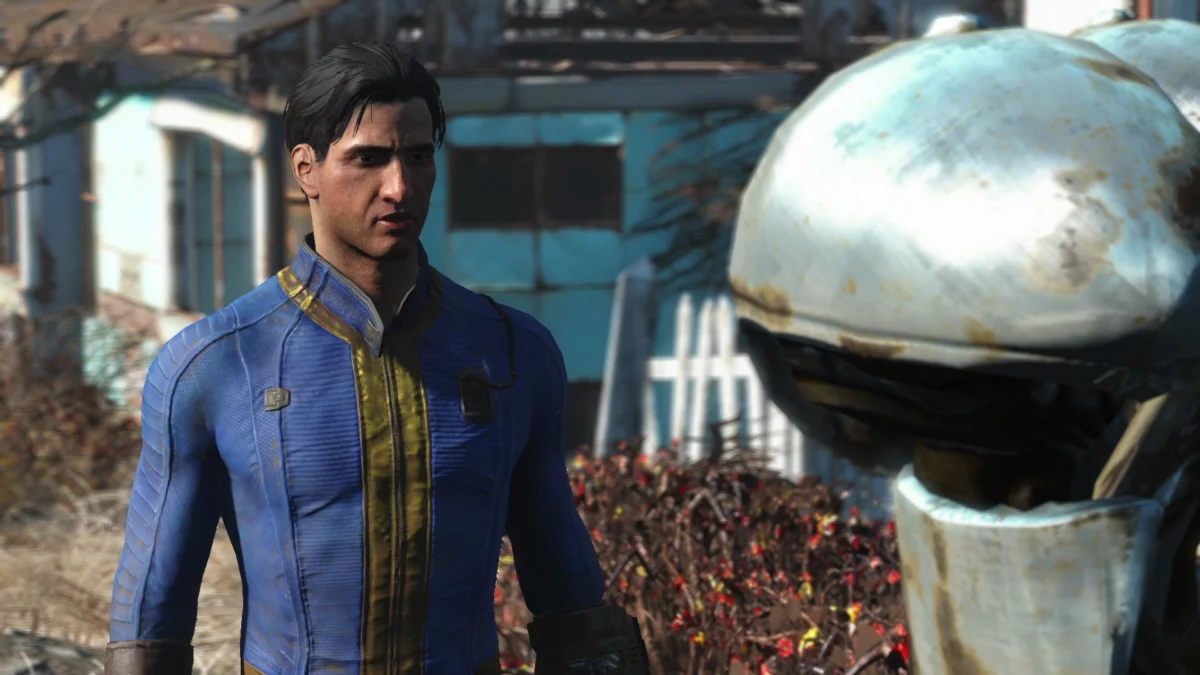
- Initial Development: Burnley begins work on his True First Person mod, a project designed to bridge the gap between his preferred VR gaming experiences and the "flat" (standard monitor) versions of Fallout 4 and The Elder Scrolls V: Skyrim.
- The Nexus Mods Release: The mod is uploaded to Nexus Mods. Shortly after, the author faces significant pushback regarding the functionality of the first version, leading to a period of development focused on responding to user feedback.
- The Concert Incident: During a live Breaking Benjamin performance, a snare drum malfunction forces the band to pause. Burnley speaks to the audience about his mod and the negative reception he encountered online.
- Viral Dissemination: Fan-recorded footage of the speech is uploaded to Reddit and other social media platforms. The initial framing of the video suggests the artist is prioritizing his hobby over his musical performance, leading to backlash from concert-goers and online commentators.
- Contextual Clarification: The original uploader of the video adds a note regarding the drum repair, and Burnley subsequently provides a detailed interview with Nexus Mods, explaining the off-the-cuff nature of his remarks.
Technical Motivations and VR Integration
To understand why a world-touring musician would dedicate his limited free time to game modification, one must look at the specific limitations of virtual reality gaming. Burnley is a vocal advocate for VR, citing titles like Fallout 4 VR and Skyrim VR as essential experiences. However, these ports often lack the polish of the original games or, conversely, create a disparity where the user becomes accustomed to a level of immersion that is absent in the non-VR version.
Burnley’s "True First Person" mod was conceived as a solution for his own touring lifestyle. When traveling on a tour bus, setting up a full VR rig is logistically impossible. Consequently, he found himself playing the standard version of Fallout 4 but felt disconnected from the immersion he had grown to love in VR. The mod, in his view, is a functional improvement that allows the player to remain in a first-person perspective at all times, mimicking the sensory experience of a virtual reality headset even while using a traditional screen and controller.
The project highlights the technical dedication often found within the modding community. Mod authors frequently spend hundreds of hours adjusting variables, fixing animation bugs, and ensuring compatibility with thousands of existing community mods—a process that is often thankless and prone to criticism from users who may not understand the complexity of the underlying game engine.
The Role of AI in Modern Modding
A notable detail in the discussion surrounding Burnley’s project is the "AI-assisted" tag assigned by Nexus Mods. The platform recently updated its policies to categorize mods that utilize artificial intelligence in more specific ways. This includes, but is not limited to, the use of AI for texture upscaling, dialogue generation, or code optimization.
While the exact extent of AI involvement in Burnley’s True First Person mod remains a subject of minor debate, the classification is indicative of a broader shift in the software development landscape. As AI tools become more accessible, mod authors are increasingly using them to automate tedious tasks. However, this has also led to friction within communities that prioritize manual craftsmanship. Nexus Mods’ decision to use specific labels aims to provide transparency, ensuring that users can distinguish between projects built entirely by hand and those that leverage generative software.
Broader Implications for Gaming Communities
The incident serves as a case study for the "para-social" relationships that exist between creators and their audiences. When a public figure, such as a rock star, enters a hobbyist space like the modding community, the power dynamics shift. The expectation of privacy in the creative process is often undermined by the fame of the creator.
Furthermore, the backlash faced by Burnley highlights a persistent issue within gaming: the toxicity of feedback loops. In the world of open-source modding, feedback is necessary for improvement, but the delivery of that feedback can often become abusive. Burnley’s approach—using humor and personal anecdotes to handle this negativity—is one of many coping mechanisms, though his position as a public figure made his response a matter of public scrutiny rather than a private venting session.
The Intersection of Music and Gaming
Breaking Benjamin has long been associated with the gaming industry, having contributed tracks to major titles like the Halo series. Burnley’s personal investment in the technical side of gaming—specifically the Bethesda Game Studios catalog—is consistent with his established public persona. However, this event underscores the blurred lines of the modern digital age. Musicians are no longer just performers; they are content creators, developers, and members of online subcultures.
As the lines between professional creative work and hobbyist development continue to dissolve, instances where the two collide will likely become more frequent. The "Fallout 4 incident," while ultimately a minor footnote in the history of the band, provides a valuable look at the dedication required to maintain a complex modding project and the unintended consequences of bringing those frustrations onto the stage. For the modding community, it serves as a reminder that behind every "author" name on a download page is a human being subject to the same stresses, technical failures, and emotional responses as any other person—even those who sell out arenas for a living.