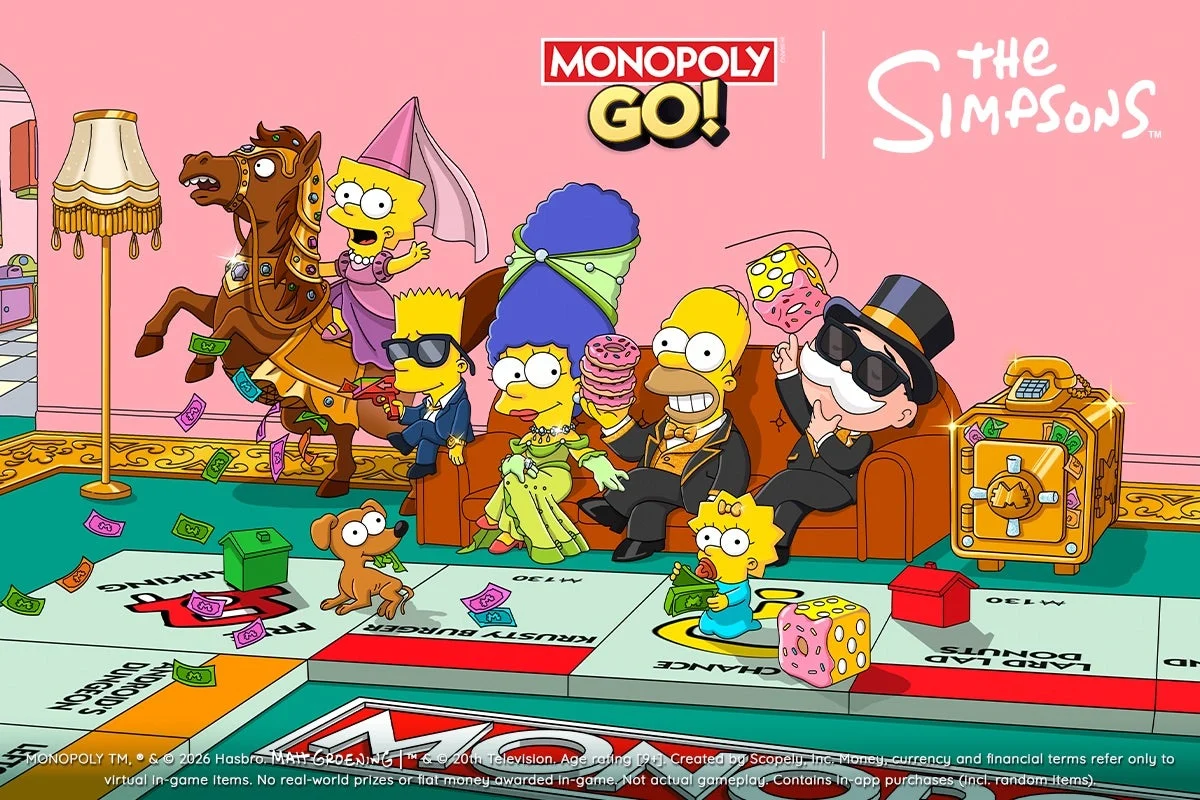
The mobile gaming landscape has witnessed one of its most significant crossover events in recent years as Scopely officially launched a comprehensive integration of The Simpsons into its powerhouse title, Monopoly Go. Following months of digital leaks and intense speculation within the gaming community, the collaboration brings America’s longest-running animated family into the highly lucrative digital board game ecosystem. Running from June 3 through July 29, the nearly two-month-long event represents a milestone not only for Monopoly Go but also for the broader mobile gaming industry, marking the first time in thirteen years that characters from The Simpsons have featured prominently in a mobile-exclusive game.
The partnership extends far beyond a simple skin or temporary game mode. Developer Scopely has collaborated directly with the creative forces behind the iconic television series to construct an immersive, narrative-driven environment that fundamentally alters the core experience of Monopoly Go. Players logging into the game during the event window will encounter transformed seasonal maps, specialized sticker sets, unique animated sequences, and a wealth of Easter eggs woven seamlessly into the traditional board game mechanics.
The Anatomy of the Crossover: Integration and Gameplay Mechanics
At the heart of the Monopoly Go and Simpsons crossover is a wholesale visual and thematic overhaul of the game’s virtual boards. Iconic landmarks from Springfield—ranging from the Simpson family residence at 742 Evergreen Terrace to the Nuclear Power Plant and Moe’s Tavern—have been meticulously recreated within the distinct aesthetic framework of Monopoly Go.
According to official briefings from Scopely, the integration touches nearly every facet of gameplay. Chance and Community Chest cards have been rewritten to reflect classic episodes and running gags from the television series. In a particularly notable mechanics update tailored to the theme, players can find themselves interacting with familiar figures such as Chief Wiggum, where strategic choices—such as bribing the quintessential Springfield police officer—allow players to navigate out of virtual jail.
Furthermore, the collaboration features the introduction of bespoke character interactions involving Homer, Marge, Bart, Lisa, and the perpetually scheming billionaire Montgomery Burns. These characters are not merely static backdrops; they actively participate in narrative arcs that shift and evolve as players progress through the seasonal milestones. The integration also introduces a dedicated collection of sticker sets centered around Springfield lore, providing completionists and regular players alike with new competitive goals and cosmetic rewards over the eight-week event duration.
A Cinematic Prelude: The Collaboration Between Scopely and Television Creators
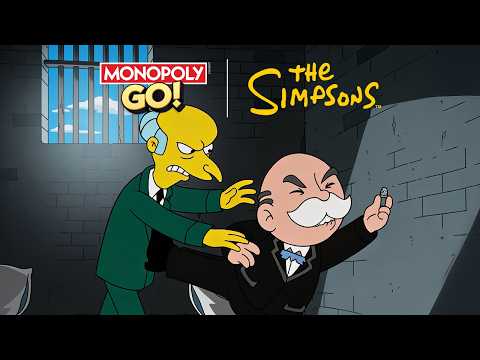
To herald the arrival of Springfield’s residents, the creative team behind The Simpsons produced an exclusive animated short film. The promotional short centers around a comical corporate rivalry between Mr. Burns and Mr. Monopoly, establishing a satirical narrative bridge between the two corporate-centric universes.
The production of original animated material specifically for a mobile game promotional campaign underscores the immense cultural and commercial weight of the partnership. Industry analysts note that collaborations of this magnitude require months of synchronized planning between rights holders—in this case, The Walt Disney Company, which acquired the intellectual property through its 2019 acquisition of 21st Century Fox—and agile mobile development studios like Scopely.
For The Simpsons, mobile gaming has historically been utilized sparingly. The last major mobile-exclusive release featuring the franchise was The Simpsons: Tapped Out, a city-builder released by Electronic Arts in 2012. The lengthy drought of mobile appearances makes the Monopoly Go crossover a noteworthy return to the interactive space for the animated sitcom, demonstrating the enduring commercial viability of the brand across non-traditional media platforms.
Strategic Significance and Market Context for Monopoly Go
The timing and scale of the Simpsons event highlight the ongoing evolution of Monopoly Go as a dominant force in the mobile gaming sector since its release in April 2023. Developed by Scopely—which was acquired by Saudi-backed Savvy Games Group for $4.9 billion shortly after the game’s launch—Monopoly Go rapidly ascended to become one of the most financially successful mobile titles globally, generating billions of dollars in consumer spending through its live-ops-driven monetization model.
Live-service games rely heavily on continuous content drops, time-limited events, and high-profile intellectual property partnerships to maintain player engagement and mitigate user churn. By securing a globally recognized entertainment franchise like The Simpsons, Scopely has positioned Monopoly Go to capture both lapsed players and nostalgic pop-culture enthusiasts. Industry observers suggest that cross-media collaborations of this caliber serve a dual purpose: they revitalize the daily active user metrics for mature mobile titles while introducing legacy intellectual properties to younger demographics who consume entertainment primarily through digital and mobile channels.
The economic implications for Scopely are substantial. Historically, major brand integrations in top-tier casual games result in significant spikes in daily active users (DAU) and average revenue per paying user (ARPPU). By structuring the event to span nearly two months—from early June to late July—Scopely has provided a long-tail runway for monetization, allowing players multiple cycles to complete themed albums, participate in competitive tournaments, and acquire event-specific currency.
Chronology of the Event and Player Preparation
The rollout of the Simpsons event follows a predictable yet frustrating pattern for modern game developers: information leakage. Weeks prior to the official announcement, data miners and insider forums had uncovered assets, dialogue lines, and visual designs pointing toward a forthcoming Springfield-themed update. Despite the widespread dissemination of these leaks, official confirmation from Scopely on June 2 provided the concrete parameters that stabilized community expectations.
The event timeline is structured as follows:
- Pre-Launch Phase (May 2023 – Late May 2024): Development, asset creation, and early internal testing of the crossover mechanics in coordination with television writers and animators.
- Leak Phase (Mid-to-Late May 2024): Unofficial data-mining reveals key art, character models, and map modifications, sparking widespread discussion across gaming communities.
- Official Reveal and Launch (June 3, 2024): Scopely formally debuts the event alongside the release of the Mr. Burns and Mr. Monopoly animated short film, opening the first wave of Springfield boards to the global player base.
- Event Duration (June 3 – July 29, 2024): An eight-week operational window featuring rotating tournaments, milestone rewards, sticker collection books, and narrative updates.
For players preparing to dive into the expanded digital board, community guides and developers have emphasized the importance of resource management. Because the event introduces specialized mechanics and competitive leaderboards, seasoned players often rely on daily promotional incentives—such as verified free dice links distributed by community networks—to maximize their progression through the initial tiers of the Springfield maps.
Broader Implications for the Mobile Gaming Industry
The success or failure of the Monopoly Go and Simpsons crossover will likely serve as a case study for future intellectual property integrations within casual mobile gaming. As traditional console and PC gaming budgets face increasing scrutiny, major entertainment conglomerates are looking toward mobile platforms not merely as secondary licensing ventures, but as primary arenas for sustained audience engagement.
Furthermore, the collaboration illustrates a shifting paradigm in how animated television properties maintain cultural relevance in the digital age. By embedding classic characters into interactive, persistent digital economies, rights holders can monetize nostalgia while creating fresh narrative experiences that appeal to contemporary audiences.
As the event unfolds over the coming weeks, industry analysts will closely monitor retention metrics, player sentiment, and monetization performance to gauge whether high-end cross-media partnerships can sustainably offset the rising acquisition costs in the fiercely competitive mobile gaming market. For the millions of daily players currently navigating the streets of virtual Springfield, however, the primary concern remains straightforward: securing enough digital currency and strategic rolls to outmaneuver Mr. Burns and claim the top spot on the seasonal leaderboard.