The human relationship with the natural world has long been mediated by distance, institutional barriers, and modern urban design. Yet across the United States, a distinct cohort of individuals is actively dismantling these barriers through unconventional preservation, immersive art, and visual advocacy. From the rugged shores of the Pacific Northwest to the ancient canopies of California and the sweeping vistas of America’s national parks, these changemakers are altering public perception not by preaching from afar, but by forging deeply tactile connections with the environment. Whether curating the physical flotsam of global shipping lanes, painting the biological chronicles of endangered forests, or transforming cinematic travelogues into active conservation campaigns, these visionaries represent a profound shift in how modern society engages with ecology.
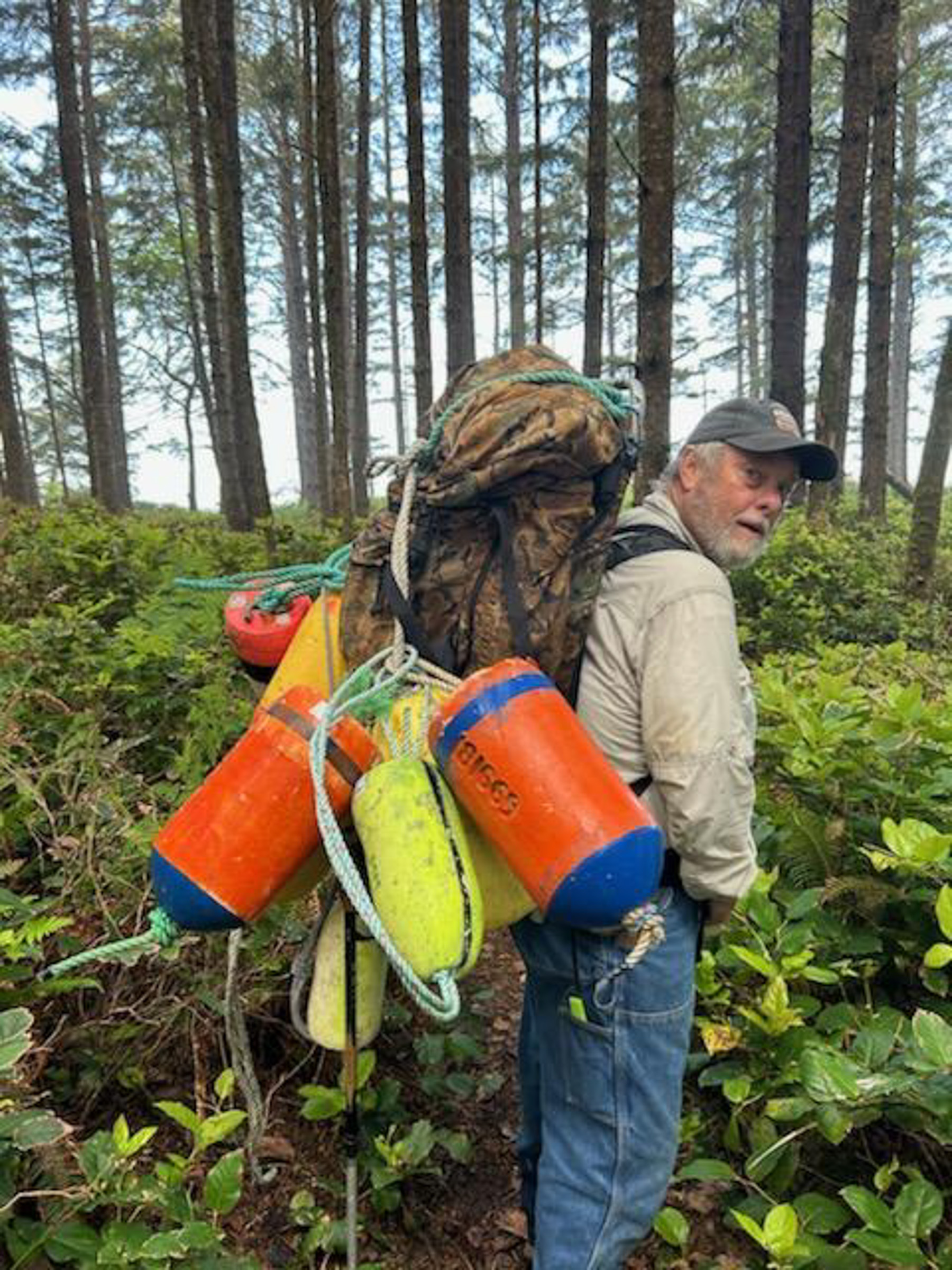
The Evolution of Extreme Beachcombing and Material History
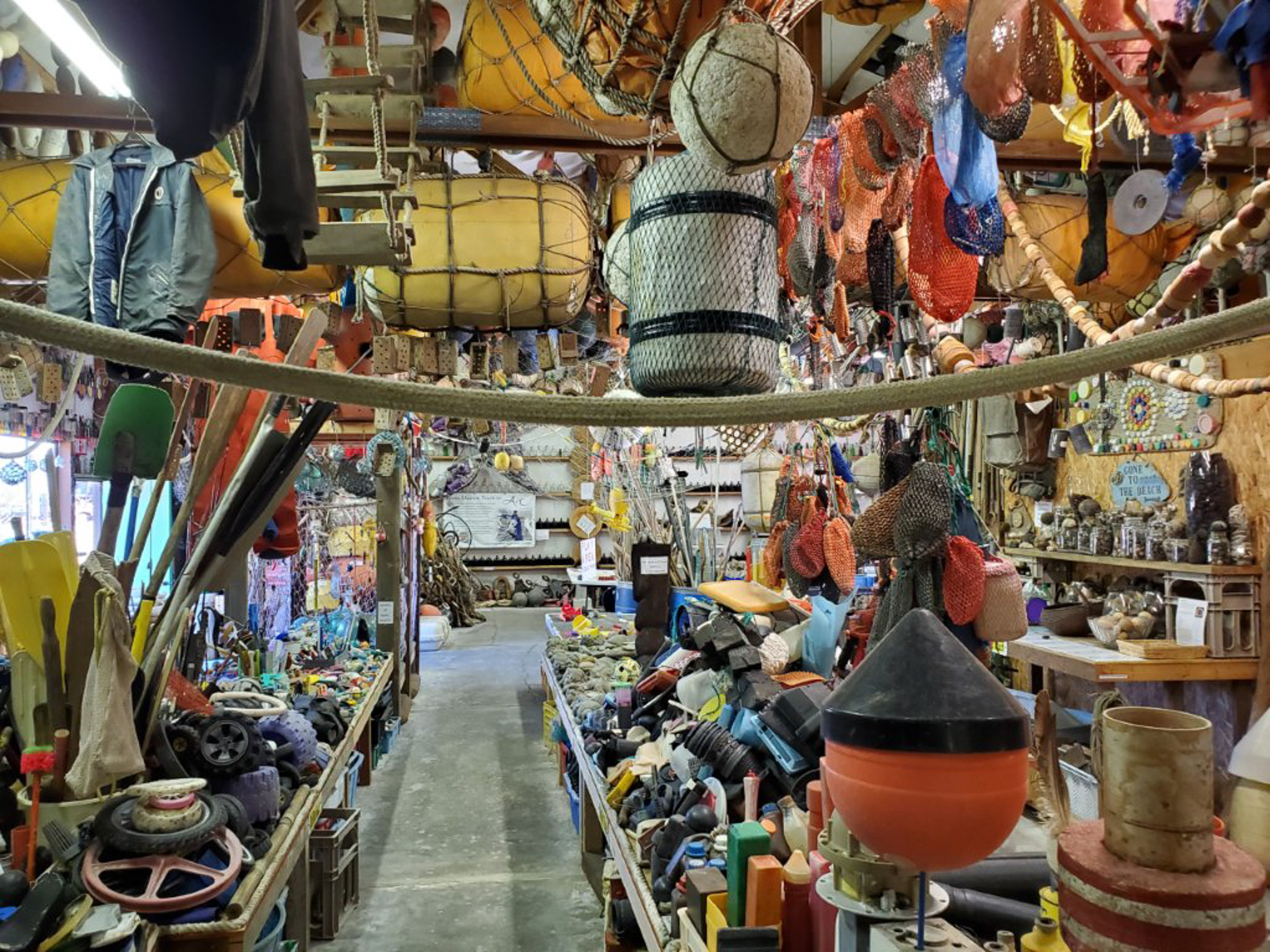
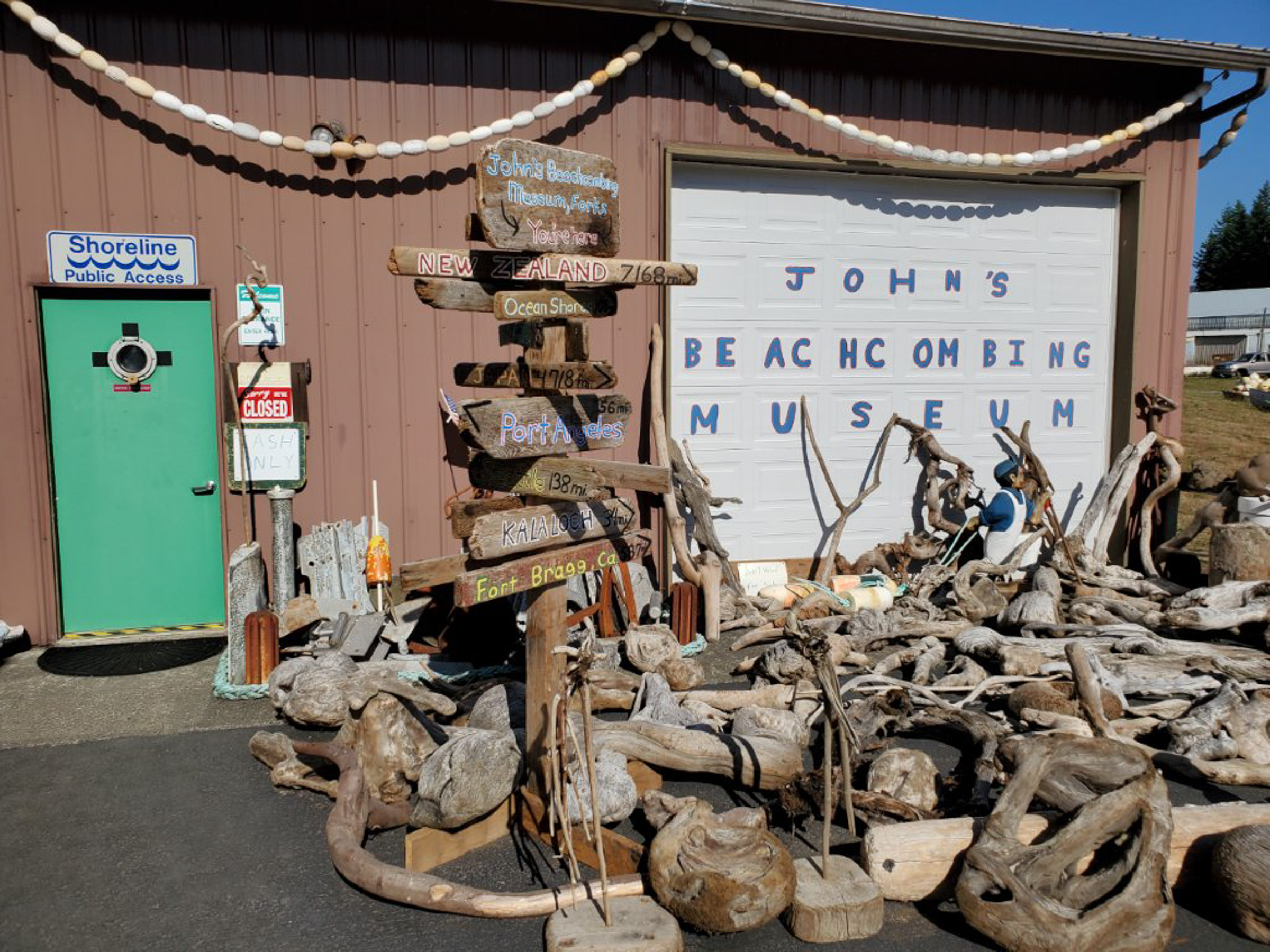
Along the wind-battered shores of Washington’s Olympic Peninsula, the physical detritus of global commerce meets the relentless tides of the Pacific Ocean. For nearly half a century, former plumber John Anderson has made these volatile coastlines his workplace. Operating what is recognized as the nation’s first dedicated beachcombing museum—housed appropriately within his former plumbing shop—Anderson has spent decades accumulating the cast-offs of maritime transit.
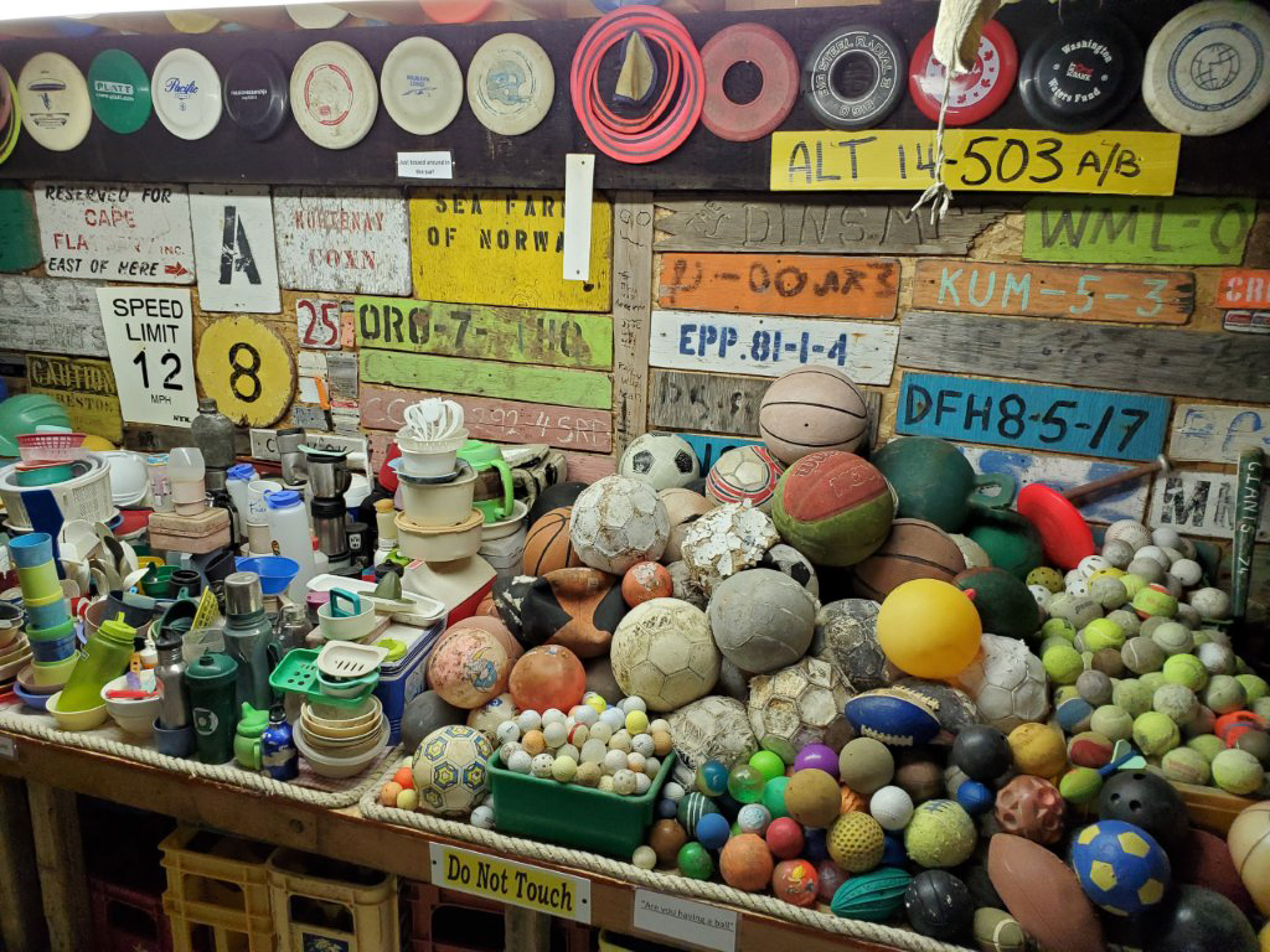
Anderson’s methodology far exceeds casual shoreline strolling; he defines his vocation as "extreme beachcombing." This rigorous pursuit involves solitary, multi-day hikes through dense, temperate rainforests and remote coastal stretches, occasionally enduring up to sixty-two consecutive hours of traversing harsh terrain to reach isolated deposition zones. The rewards of these arduous excursions are as eclectic as they are historically evocative: weather-beaten sneakers, vintage fishing lures, rows of aged Raggedy Ann dolls, and even high-tech anomalies such as a spinner cone retrieved from a Boeing 727 jet engine.
Beyond mere collection, Anderson’s work serves as an unconventional archive of human touch and maritime tragedy. He carefully preserves handwritten correspondence discovered inside washed-up glass bottles, maintaining a systematic archive in binders and, whenever possible, attempting to return these drifting messages to their original senders via traditional postal routes. By bridging the gap between anonymous oceanic flotsam and human narrative, Anderson transforms random maritime waste into a tangible chronicle of human connectivity and global currents.
Visualizing the Unseen: Art and Ecology in the Redwood Canopy
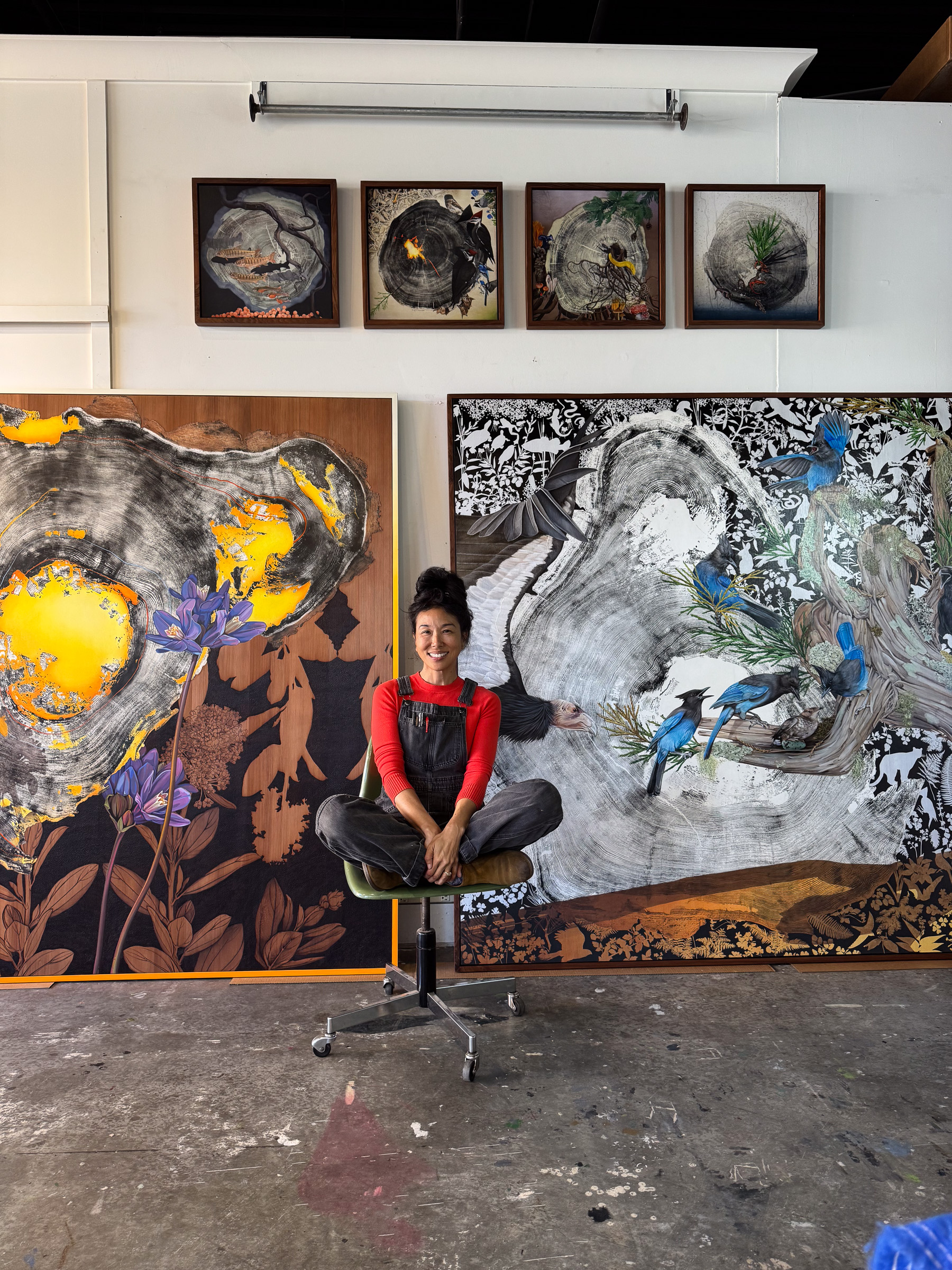
While Anderson examines the ocean’s harvest on the coast, artist Jane Kim plunges deep into the interior ecosystems of California to render the hidden timelines of ancient forests visible to the public. Kim’s artistic trajectory has long been defined by an ambition to pull conservation out of traditional galleries and place it directly into the public consciousness. Her past notable works include the expansive Migrating Mural series, which featured monumental portraits of native wildlife across urban facades, such as a fifty-foot monarch butterfly mural in downtown San Francisco.
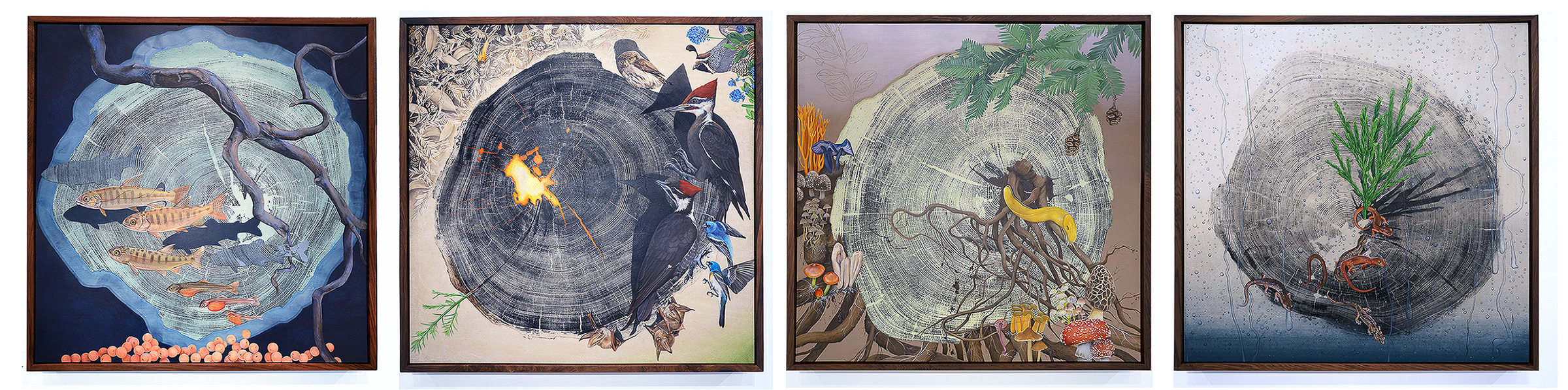
Kim’s recent endeavors, however, focus intimately on the ecology of ancient redwoods. Serving as the inaugural Forest Fellow for the conservation nonprofit Sempervirens Fund, Kim undertook rigorous field research that included collaborating with foresters to cut cross-sections—known in forestry as "cookies"—from old-growth redwood stumps near Silicon Valley. These wooden discs function as biological time capsules, bearing intricate concentric rings that record centuries of climatic shifts, historical wildfires, severe droughts, and rapid growth periods.
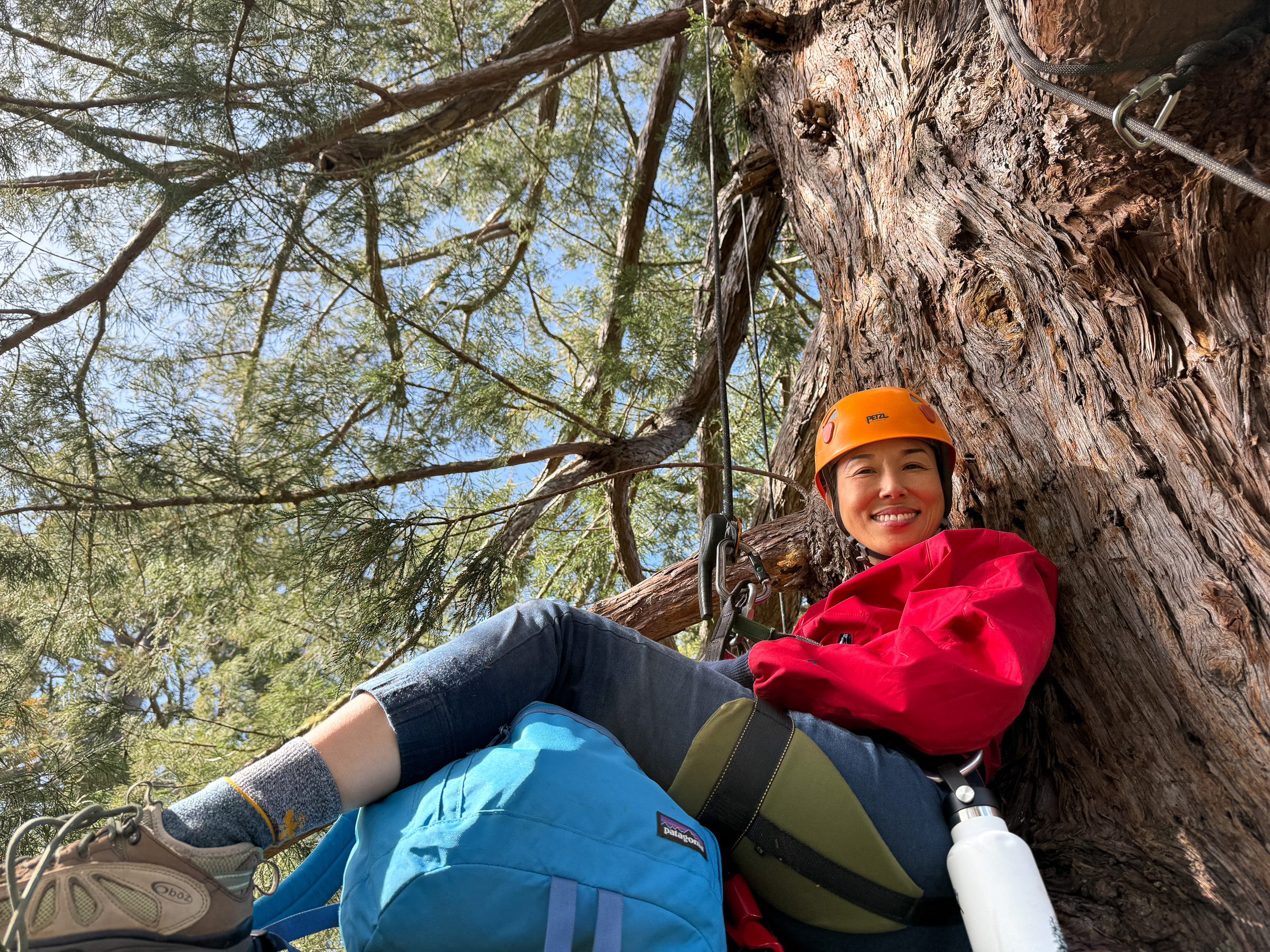
To fully comprehend the subject matter, Kim’s fellowship extended high into the air, where she climbed two hundred feet into the redwood canopy. This immersive vantage point exposed her to the complex, interdependent mechanics of the ecosystem, including fog-absorption processes, subterranean fungal networks, and the vital nutrient cycles shared with Pacific salmon populations. Translating these discoveries into monumental paintings and large-scale prints, Kim’s work illustrates ecological phenomena such as post-fire regeneration, framing the redwood not as an isolated arboreal giant, but as the central hub of a dynamic, interconnected living community.
From Cinematic Travelogues to Frontline Conservation Advocacy
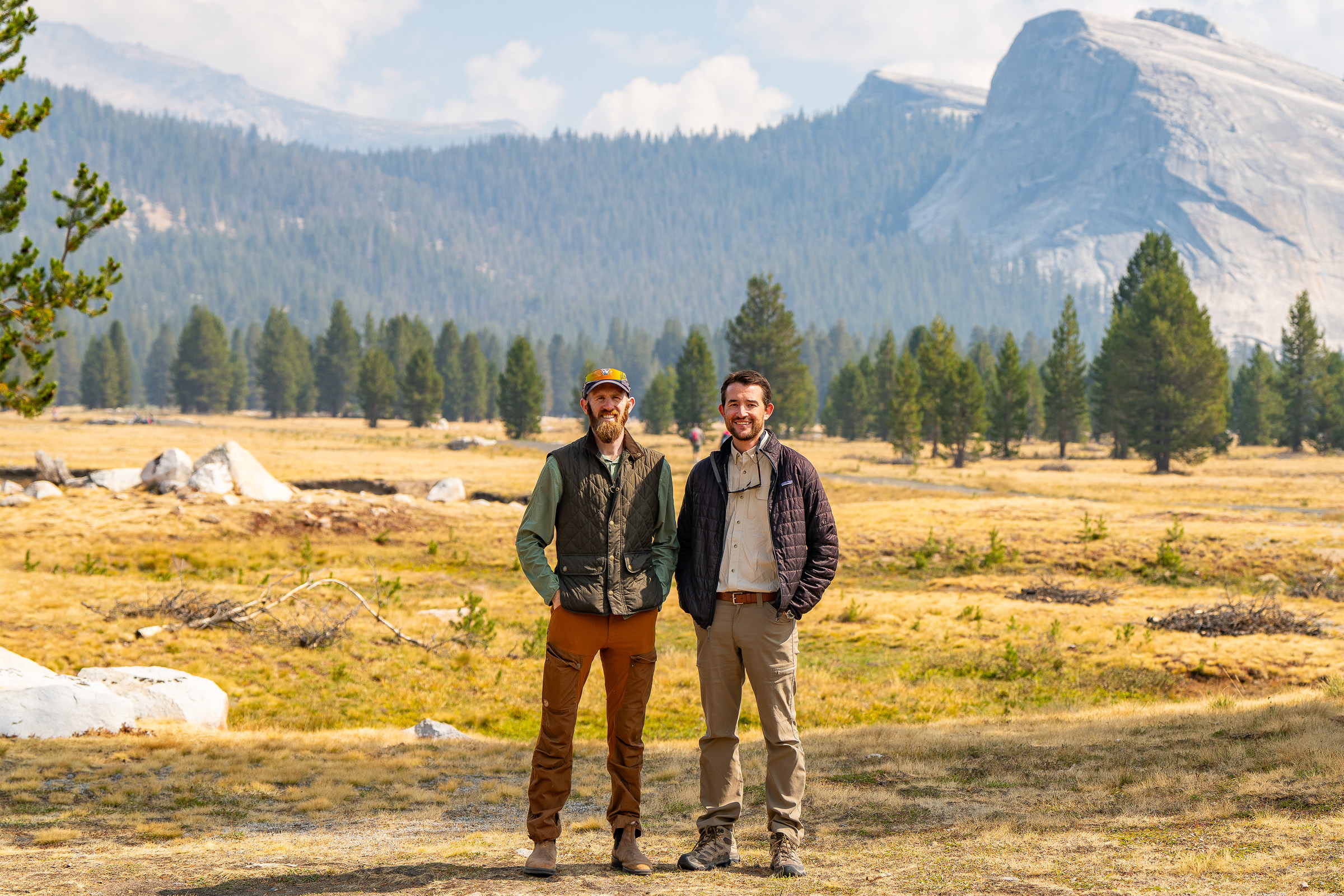
In the realm of digital media, brothers Jim and Will Pattiz have similarly revolutionized how millions of citizens perceive and value public lands. Operating under the banner of More Than Just Parks, the duo transformed a cross-country road trip—initially launched from Georgia in a borrowed Toyota Prius—into a decade-long crusade of cinematic environmental storytelling.
Armed with modest resources and immense determination, the brothers began documenting the stark beauty of America’s national parks, monuments, and wilderness areas. Their early productions, characterized by sweeping cinematic visuals and immersive audio design, quickly amassed millions of views online, inspiring a new generation of travelers to explore federally protected public lands. Recognizing the broader potential of their platform, the Pattiz brothers expanded their scope through official collaborations with the United States Forest Service, state tourism boards, and national conservation organizations. Their field assignments frequently involved navigating remote wilderness rivers, documenting active wildfires, participating in biological field studies such as bat-tagging operations in Nevada caves, and filming Alaskan salmon runs.
However, the evolution of More Than Just Parks mirrors a broader national trend in environmentalism: the transition from passive appreciation to active defense. What began primarily as a celebration of scenic landscapes has matured into a comprehensive public lands advocacy organization. Today, the brothers utilize their digital reach to conduct investigative journalism, perform policy analysis, and deploy digital activism tools—including congressional public lands scorecards, threatened public lands maps, and public action networks. In an era marked by shifting federal land policies and increasing environmental pressures, the Pattiz brothers have redirected their storytelling apparatus toward the protection of vulnerable ecosystems.
Broader Impact and Implications
The convergence of archival preservation, ecological artistry, and digital advocacy demonstrated by Anderson, Kim, and the Pattiz brothers highlights a vital evolution in modern environmental engagement. As industrial development and climate change continue to alter natural landscapes, traditional educational models often struggle to maintain public interest or emotional resonance.
By grounding environmental awareness in tangible artifacts, biological storytelling, and accessible digital media, these innovators bridge the abstract realities of global ecology with daily human experience. Whether examining the historical footprint of a plastic toy washed ashore in Washington, decoding the fire-scarred rings of a centuries-old California redwood, or mobilizing digital audiences to defend threatened federal wilderness areas, these changemakers prove that altering how the world sees nature is the critical first step toward ensuring its preservation.